


B-Tg(hPSMA-Luc) PC-3

• 322459

B-Tg(hPSMA-Luc) PC-3

Product nameB-Tg(hPSMA-Luc) PC-3
Catalog number322459
NCBI gene ID2346 (Human)
Chromosome7
AliasesPSM; FGCP; FOLH; GCP2; PSMA; mGCP; GCPII; NAALAD1
TissueProstate
DiseaseAdenocarcinoma, Grade IV

이 페이지에서

  • Description
  • Phenotypic analysis
  • Tumorigenicity

포스터

모두 보기

    출판물

      Description
      • Origin: The PC-3 cell line is an androgen-independent model derived from a bone metastasis of a high-grade prostatic adenocarcinoma in a 62-year-old male. It serves as a critical in vitro tool for advancing research in prostate cancer biology, particularly for investigating mechanisms of tumor progression, metastasis, and the development of therapeutic resistance.
      • Background Information: PSMA is a type II transmembrane glycoprotein belonging to the zinc-dependent exopeptidase superfamily, possessing folate hydrolase andneurocarboxypeptidase activities. It is expressed at low levels in tissues such as the kidney, brain, salivary glands, liver, ganglia, and small intestine, amongothers, but is highly expressed across all stages of prostate cancer (PC). This makes it an ideal target for the diagnosis and treatment of PC.
      • Gene targeting strategy: The expression cassette containing the human CDS for PSMA, and luciferase was randomly inserted into the genome B-Tg(hPSMA-Luc) PC-3.
      • Application: The B-Tg(hPSMA-Luc) PC-3 tumor models can be used for preclinical evaluation of monoclonal antibody drugs targeting human PSMA.
      Protein Expression Analysis

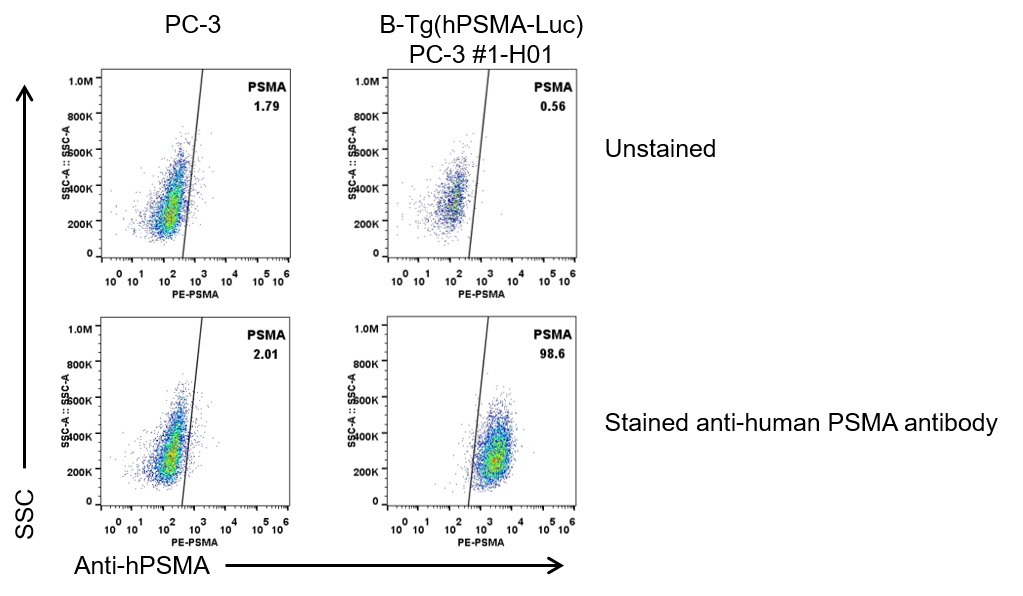
      PSMA expression analysis in B-Tg(hPSMA-Luc) PC-3 cells by flow cytometry. Single cell suspensions from wild-type PC-3 and B-Tg(hPSMA-Luc) PC-3 cultures were stained with species-specific anti-human PSMA antibody (Biolegend, 342504). Human PSMA was detected on the surface of B-Tg(hPSMA-Luc) PC-3 cells but not on wild-type PC-3 cells. The 1-H01 clone of B-Tg(hPSMA-Luc) PC-3 cells was used for in vivo experiments.

      Tumor Growth Curve & Body Weight Changes

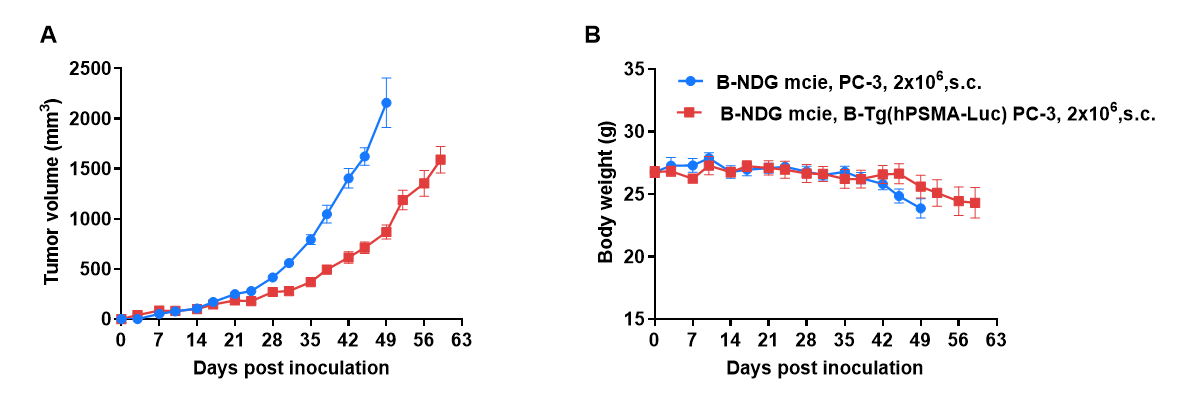
      Subcutaneous homograft tumor growth of B-Tg(hPSMA-Luc) PC-3 cells. B-Tg(hPSMA-Luc) PC-3 (2x10⁶) and wild-type PC-3 cells (2x10⁶) were subcutaneously implanted into B-NDG mice (female, 7-week-old, n=6). Tumor volume and body weight were measured twice a week. (A) Average tumor volume ± SEM. (B) Body weight (Mean± SEM). Volume was expressed in mm3 using the formula: V=0.5 X long diameter X short diameter2. As shown in panel A, B-Tg(hPSMA-Luc) PC-3 were able to establish tumors in vivo and can be used for efficacy studies.
      Protein Expression Analysis of Tumor Tissue

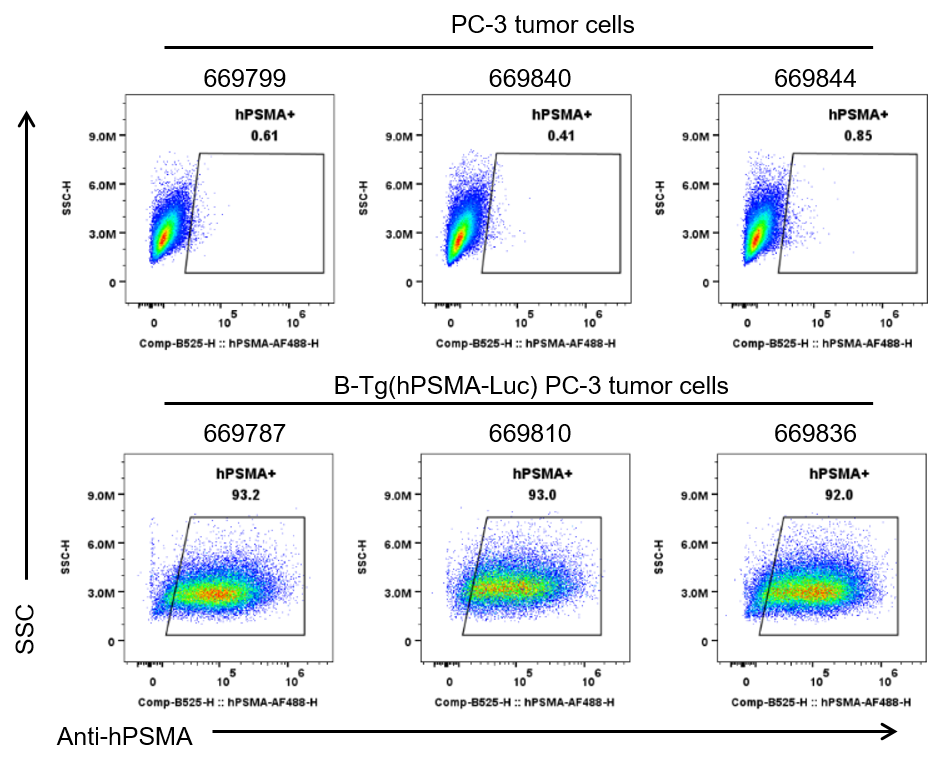
      B-Tg(hPSMA-Luc) PC-3 cells were subcutaneously transplanted into B-NDG mice (female, 7-week-old, n=6), and on 59 days post inoculation, tumor cells were harvested and assessed for human PSMA expression with anti-human PSMA (Biolegend, 342506) antibody by flow cytometry. As shown, human PSMA was highly expressed on the surface of tumor cells. Therefore, B-Tg(hPSMA-Luc) PC-3 cells can be used for in vivo efficacy studies of novel PSMA therapeutics.