RenNano를 이용하여, Biocytogen은 고잠재력 치료 표적을 위한 Hu-VHH 항체 라이브러리를 구축하고 있습니다. 이들 표적은 종양 관련 항원, GPCR, 면역 체크포인트, 사이토카인/케모카인, 신경 질환과 관련된 인자를 포함합니다.
Biocytogen은 Hu-VHH 관련 치료 분야에서, 세포 치료, 이중 특이성 및 다중 특이성 항체, ADC, RAC와 같은 분야의 전문성을 가진 글로벌 제약 및 생명공학 회사들과 협력하여, 대규모 Hu-VHH 개발 능력과 전문성을 결합해 혁신적이거나 최적의 클래스 잠재력을 가진 신약을 공동 개발하려고 적극적으로 협력 파트너를 찾고 있습니다.
Frequently Asked Questions (FAQs) About Hu-VHH Platform
1. What is a VHH antibody?
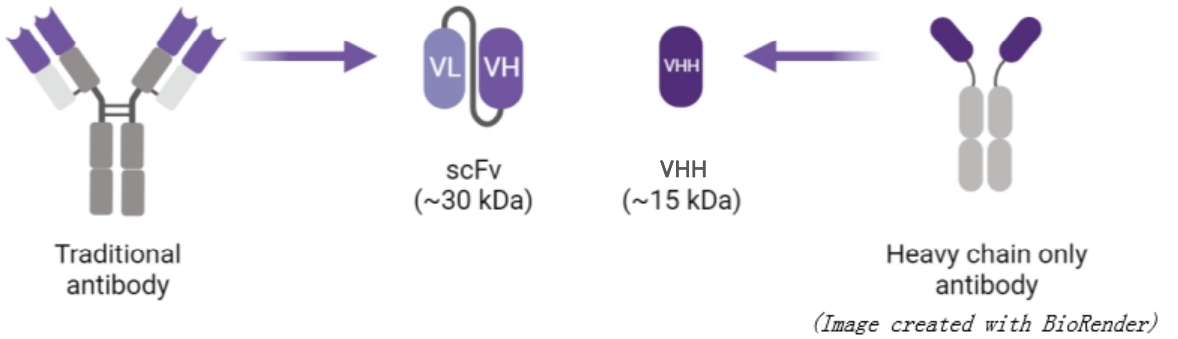
A VHH antibody is a single-domain antibody derived from the variable region of HCAbs. It independently recognizes and binds an antigen without a light chain. With a molecular weight of approximately 12-15 kDa, VHHs represent compact antigen-binding units that can serve as building blocks for diverse therapeutic antibody formats.
2. What are the key advantages of VHH antibodies?
VHH antibodies are compact single-domain binders with advantages in flexible molecular engineering and tissue penetration, especially in solid tumors and blood-brain barrier (BBB).
RenNano®-derived fully human VHHs also offer diverse CDR3 sequences, good specificity and affinity, and robust biological activity in both
in vitro and
in vivo studies.
3. How does Biocytogen discover and select fully human VHH antibody candidates?
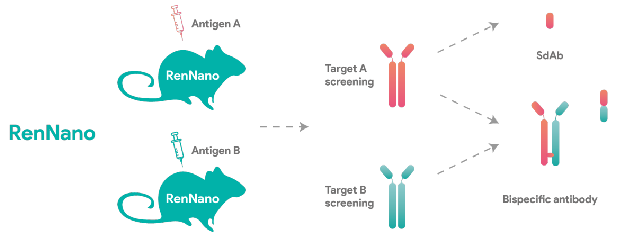
Following immunization of RenNano® mice, Biocytogen identifies VHH candidates efficiently through high-throughput Beacon B-cell sorting or
AI-powered RenSuper™ antibody discovery platform. AI-prioritized candidates subsequently undergo experimental validation for properties including binding, affinity, developability, and cross-reactivity.
4. What therapeutic targets does Biocytogen’s fully human VHH platform cover?
Biocytogen’s fully human VHH (Hu-VHH) platform covers therapeutic targets including
tumor-associated antigens,
GPCRs, immune checkpoints, cytokines and chemokines, and targets related to
neurological diseases. The platform also supports VHH discovery for
blood-brain barrier (BBB) penetration and
in vivo CAR-T delivery, expanding the potential applications of fully human VHH antibodies.
5. Why are Hu-VHHs well suited as building blocks for bispecific and multispecific therapeutics?
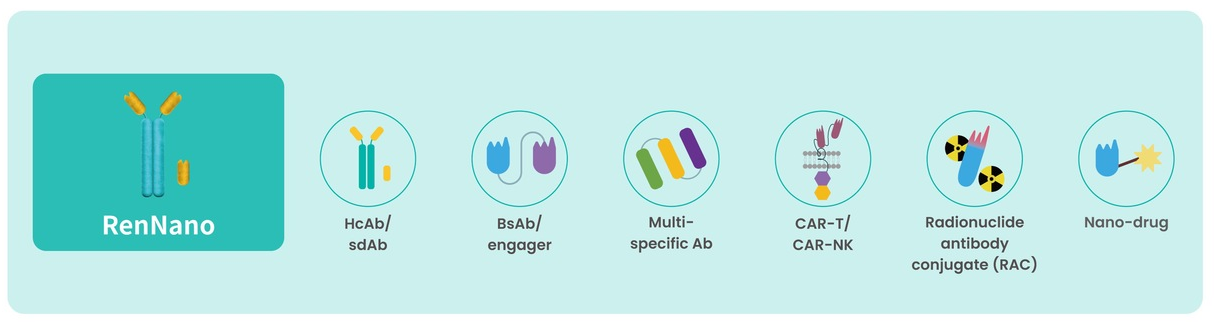
VHHs/HCAbs bind antigens without light chains, reducing risk of heavy-light chain mispairing. Their compact, modular structure makes them flexible building blocks for
bispecific and multispecific antibody engineering. For example, in multispecific
ADC design, a heavy-chain-only binder can serve as one targeting arm and be paired with a Fab, another HCAb, or other antibody formats to introduce additional binding specificities while simplifying molecular assembly.
6. When should drug developers choose a HCAb versus a single VHH format?
The choice depends on the intended therapeutic application. HCAb formats retain an Fc region for FcRn-mediated recycling and extended pharmacokinetics. They suit applications requiring sustained exposure, including immune cell engagers, bispecific or multispecific antibodies. Single VHH formats offer compact size and flexible integration into multispecific antibodies, conjugates, and CAR-T constructs. Their small size can improve tissue access and recognition of challenging epitopes.