

이 페이지에서
대사이상 관련 지방간염(MASH, Metabolic Dysfunction–Associated Steatohepatitis)은 이전에는 비알코올성 지방간염(NASH, Nonalcoholic Steatohepatitis)으로 불렸으며,비알코올성 지방간질환(NAFLD, Nonalcoholic Fatty Liver Disease) 범주 내의 진행성 대사성 간질환입니다. 이 질환은 간지방증、염증、간세포 손상 및 섬유화를 특징으로 하며,간경변 또는 간세포 암종으로 진행될 수 있습니다. 비만、인슐린 저항성 및 2형 당뇨병이 동시에 존재할 경우,질환 발병 및 진행 위험이 크게 증가합니다.
임상적으로 MASH는 지방간염、간세포 풍선화、간 섬유화 및 대사 기능 이상을 포함합니다. 질환 기전을 더 잘 이해하고 새로운 치료제를 평가하기 위해 MASH/NASH 마우스 모델은 전임상 간질환 연구에서 널리 사용됩니다. 이러한 모델에는 유전자 변형 모델、식이 유도 모델 또는 이 두 가지 방식을 결합한 모델이 포함됩니다.
바이오사이토젠(Biocytogen)은 MASH 발병 기전의 다양한 단계를 나타내는 검증된 여러 모델을 구축했으며,그 내용은 다음과 같습니다:
이 MASH/NASH 모델들은 기전 연구、약물 효능 시험 및 전임상 연구를 위한 신뢰할 수 있는 생체 내 플랫폼을 제공하며,이를 통해 항지방증、항염증 및 항섬유화 치료제의 발굴을 촉진합니다.
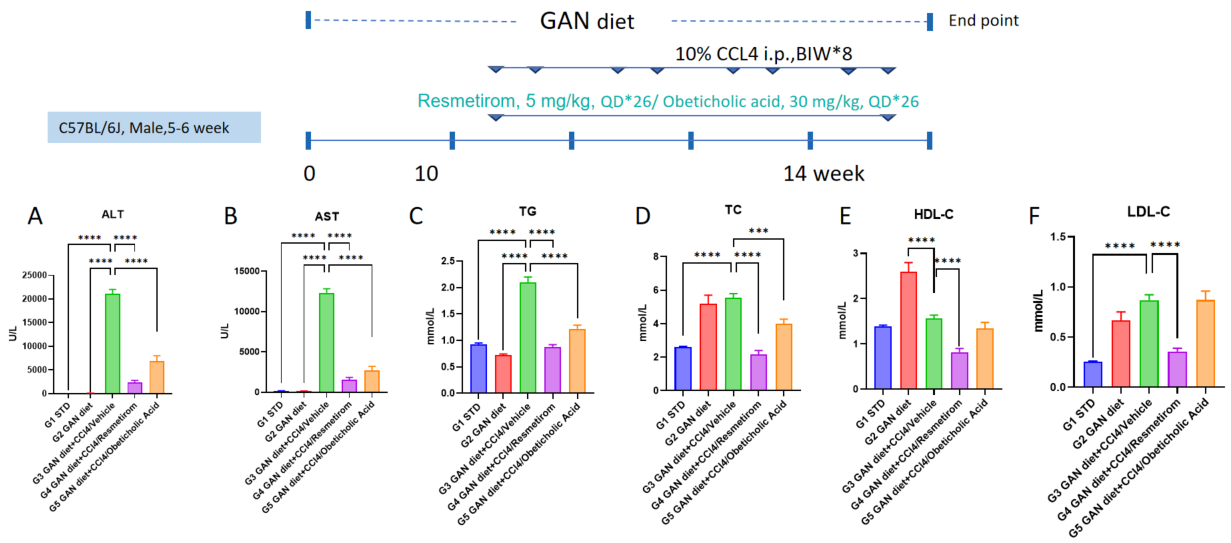
MGL3196과 OCA는 GAN 식이+CCL4로 유도된 NASH 마우스 모델의 증상을 완화시켰다. A-B, 모델링 및 치료군의 ALT 및 AST 수준. C-F, 모델링 및 치료군의 TG, TC, HDL-C, LDL-C 수준. 데이터는 평균 ± SEM으로 표시됩니다. 각 군 N = 9 마리의 마우스. *p<0.05, **p<0.01, ***p<0.001.
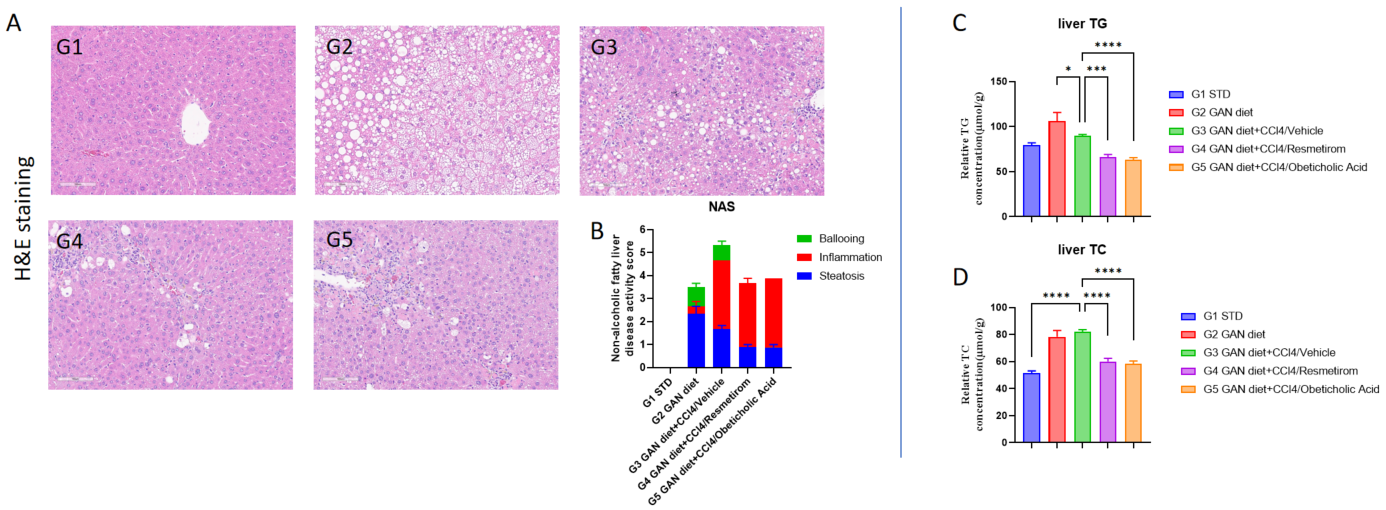
Resmetirom과 OCA는 NAS 점수를 감소시켰다. A, H&E 염색의 대표적인 이미지에서 NASH 정도를 나타냄. B, 외부 전문가 병리학자가 평가한 NAFLD 활동 점수(NAS). C-D, 치료 후 간의 TG 및 TC 함량. 데이터는 평균 ± SEM으로 표시됩니다. 각 군 N = 9-10 마리의 마우스. *p<0.05, **p<0.01, ***p<0.001.
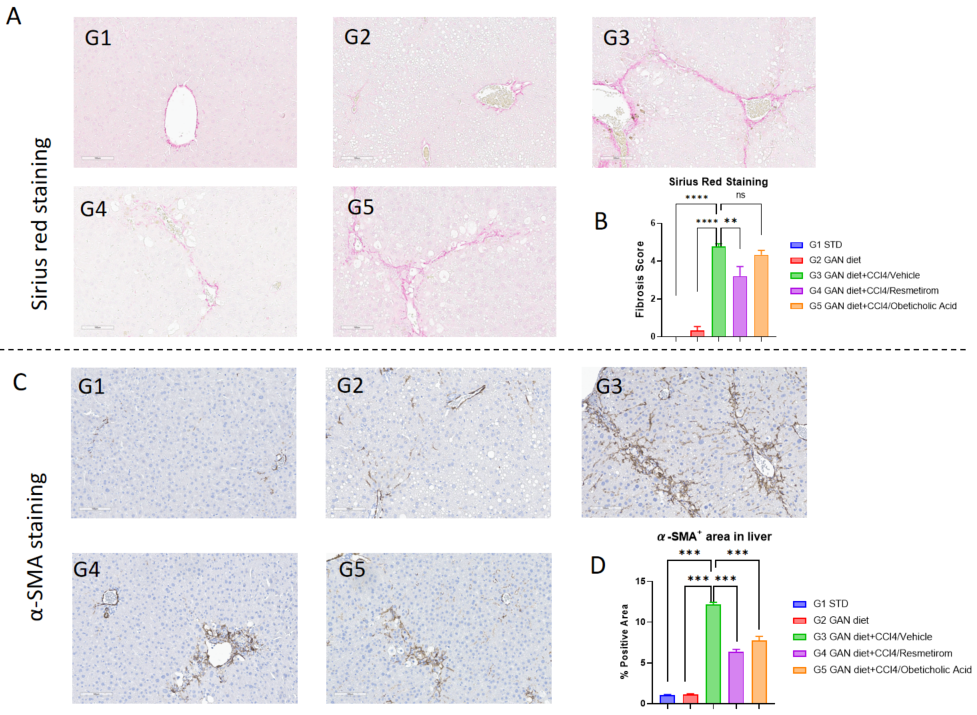
Resmetirom과 OCA는 간 섬유화를 완화시켰다. A, Sirius Red 염색의 대표적인 이미지에서 간 섬유화 정도를 보여줌(스케일: 200μm). B, Sirius Red 염색을 기반으로 평가된 간 섬유화 점수. C, IHC 염색의 대표적인 이미지에서 α-SMA 발현을 보여줌(스케일: 200μm). D, α-SMA 발현의 정량화된 데이터. 데이터는 평균 ± SEM으로 표시됩니다. 각 군 N = 9 마리의 마우스. *p<0.05, **p<0.01, ***p<0.001, ****p<0.0001.

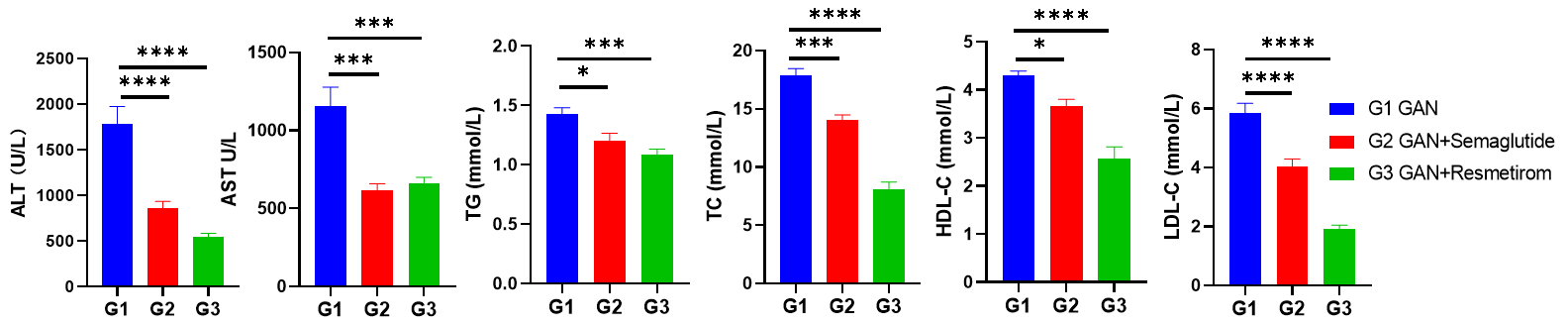
MGL3196과 Semaglutide는 Gubra-Amylin 식이 유도 NASH 모델에서 B-ob/ob 마우스의 증상을 완화시켰다. A-B, 모델링 및 치료군의 ALT 및 AST 수준. C-F, 모델링 및 치료군의 TG, TC, HDL-C, LDL-C 수준. 데이터는 평균 ± SEM으로 표시됩니다. 각 군 N = 9 마리의 마우스. *p<0.05, **p<0.01, ***p<0.001.
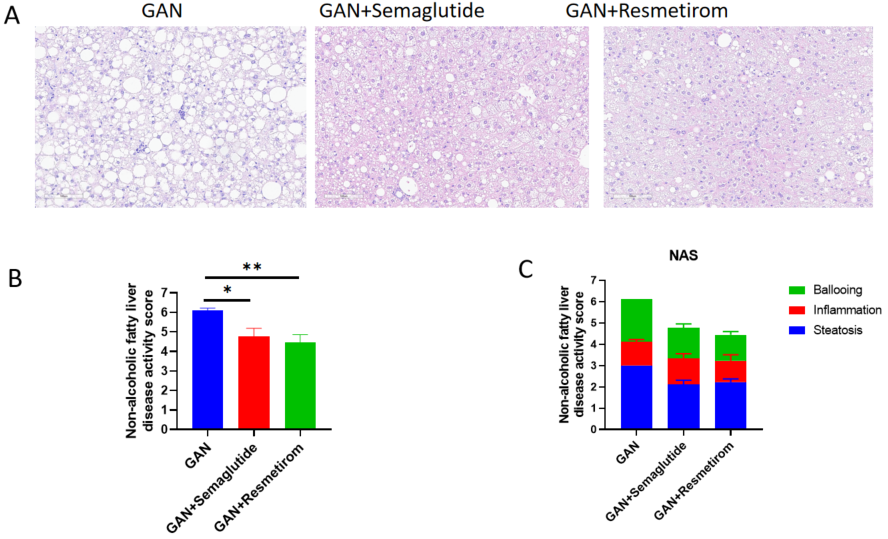
Semaglutide와 Resmetirom은 GAN 식이 유도 B-ob/ob 마우스의 NAS 점수를 감소시켰다. A, H&E 염색의 대표적인 이미지에서 NASH 정도를 보여줌. B-C, 외부 전문가 병리학자가 평가한 NAFLD 활동 점수(NAS). 데이터는 평균 ± SEM으로 표시됩니다. 각 군 N = 9 마리의 마우스. *p<0.05, **p<0.01.
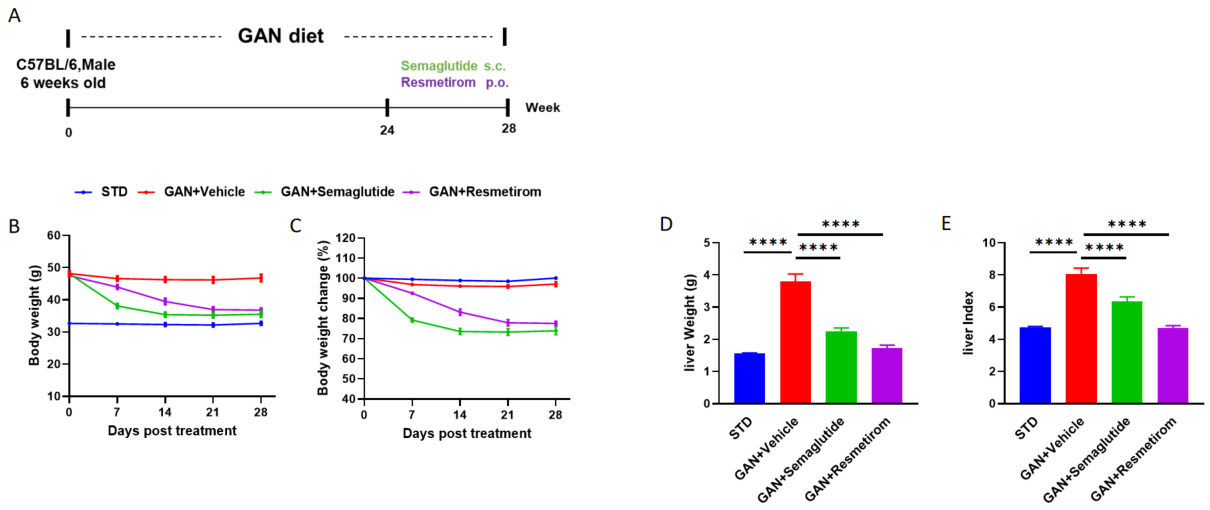
GAN 식이 유도 NASH 모델(C57BL/6 마우스). A, GAN DIO-NASH 마우스의 모델링 및 치료를 나타내는 실험 설계. B-C, 치료 후 체중 및 체중 변화 비율. D-E, 연구 종료 시 간 무게 및 간 지수. 각 군 N = 9-10 마리의 마우스. *p<0.05, **p<0.01, ***p<0.001, ****p<0.0001.
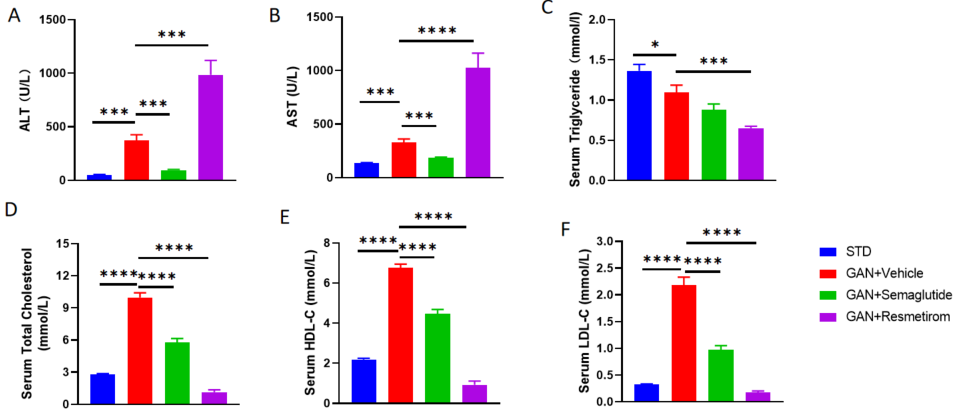
GAN 식이 유도 NASH 모델(C57BL/6 마우스). A-B, 연구 종료 시 각 군의 ALT 및 AST 수준 분석. C-F, 연구 종료 시 각 군의 혈청 TG, TC, HDL-C, LDL-C 수준. 데이터는 평균 ± SEM으로 표시됩니다. 각 군 N = 9-10 마리의 마우스. *p<0.05, **p<0.01, ***p<0.001, ****p<0.0001.
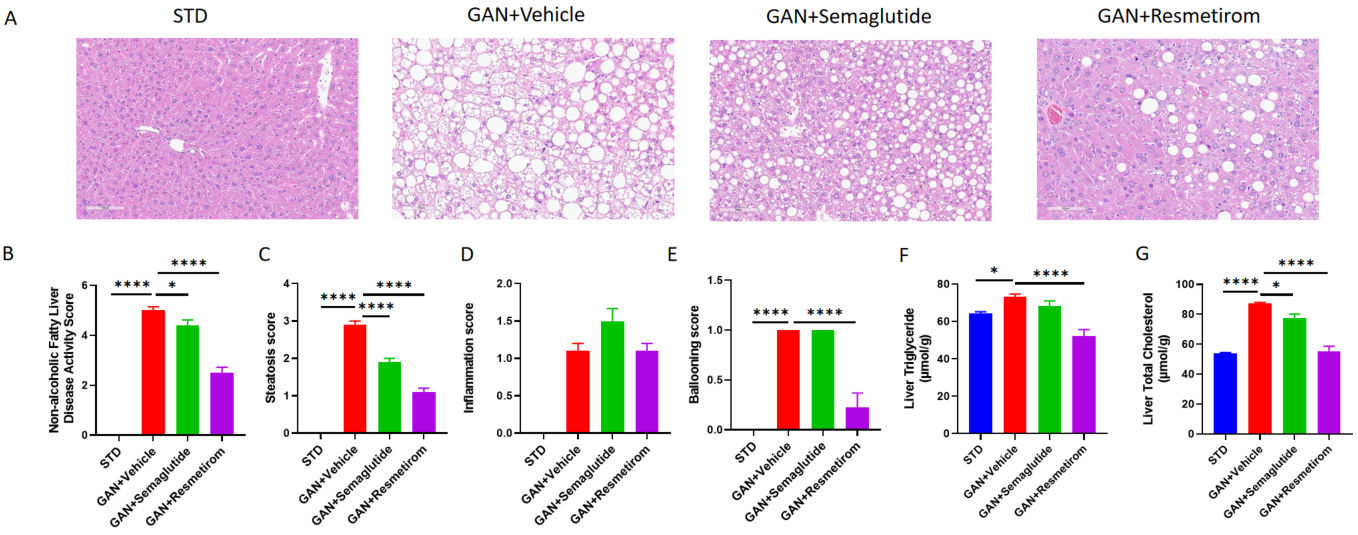
Semaglutide와 Resmetirom은 GAN DIO-NASH 모델에서 간 조직학적 영향을 미쳤다. A, H&E 염색의 대표적인 이미지에서 NASH 정도를 보여줌. B-E, NAFLD 활동 점수(NAS), 지방 변성 점수, 풍선 변성 점수 및 염증 점수의 조직학적 평가. F-G, 연구 종료 시 TG 및 TC 함량. 데이터는 평균 ± SEM으로 표시됩니다. 각 군 N = 9-10 마리의 마우스. *p<0.05, **p<0.01, ***p<0.001.
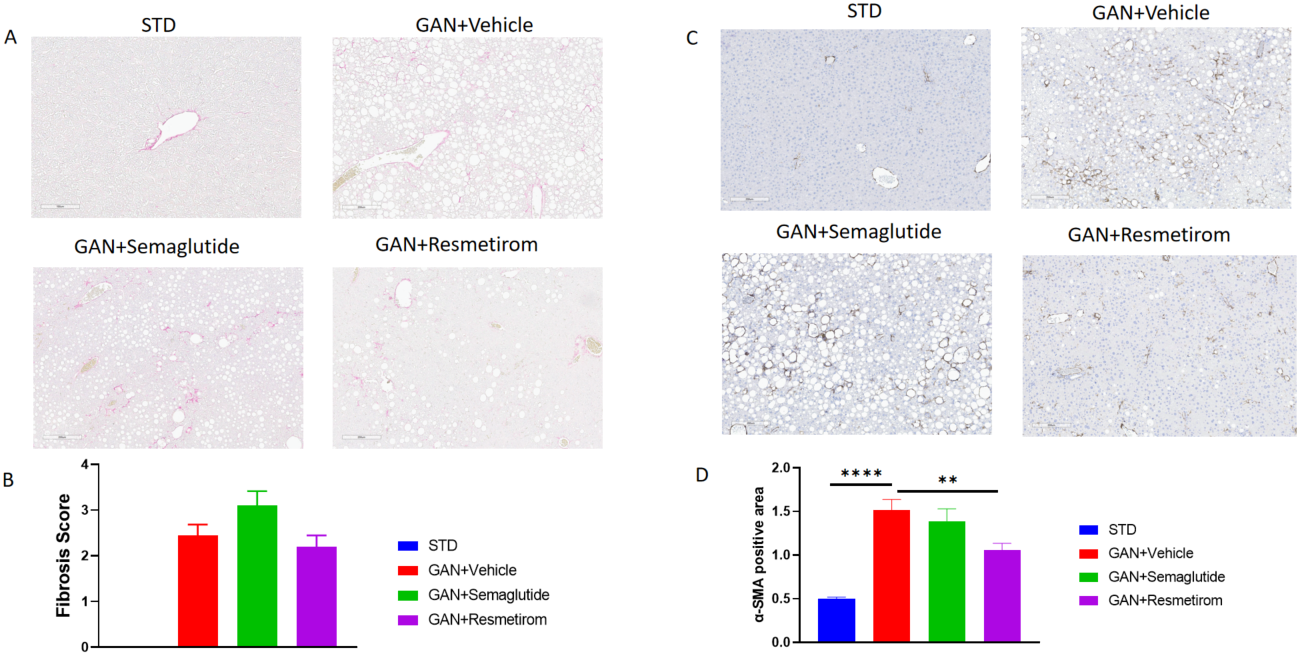
A, Sirius Red 염색의 대표적인 이미지에서 간 섬유화 정도를 보여줌(스케일: 200μm). B, Sirius Red 염색을 기반으로 평가된 간 섬유화 점수. C, IHC 염색의 대표적인 이미지에서 α-SMA 발현을 보여줌(스케일: 200μm). D, α-SMA 발현의 정량화된 데이터. 데이터는 평균 ± SEM으로 표시됩니다. 각 군 N = 9-10 마리의 마우스. *p<0.05, **p<0.01, ***p<0.001, ****p<0.0001.
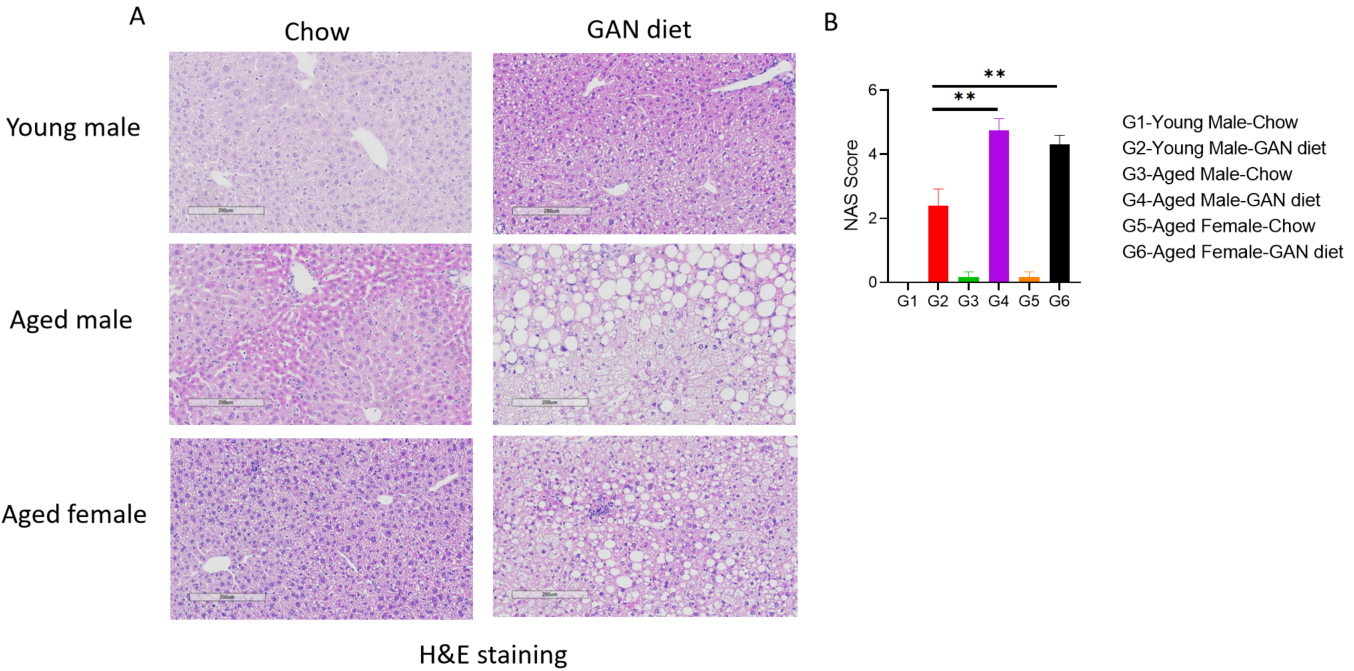
Gubra-Amylin 식이 유도 NASH(비알콜성 지방간염)는 고령 마우스에서 발생한다. A, 12주 유도 후 H&E 염색의 대표적인 이미지. B, 외부 전문가 병리학자가 평가한 NAFLD 활동 점수(NAS). 각 군 N = 6-10 마리의 마우스. 데이터는 평균 ± SEM으로 표시됩니다. **: p<0.01.

8주령 C57BL/6 수컷 마우스는 표준식(SDT) 또는 고지방 메티오닌 담즙 결핍식을 4주 또는 6주 동안 제공받음.
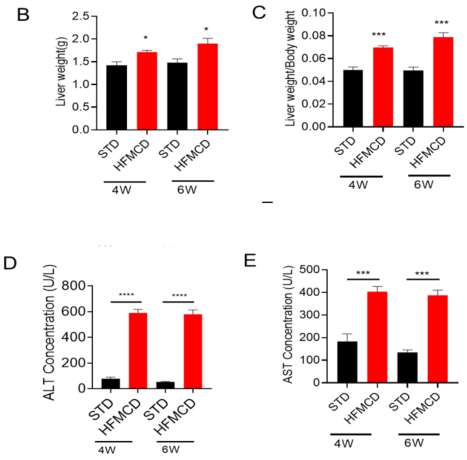
HFMCD 유도 NASH 모델의 표현형 분석. A, 모델링 다이어그램. B-C, 4주 및 6주 유도 후 간 무게 및 간 무게/체중 비율; 각 군 n = 5 마리의 마우스. D-E, HFMCD 유도 후 ALT 및 AST 수준. 데이터는 평균 ± SEM으로 표시됩니다. *p<0.05, ***p<0.001, ****p<0.0001.
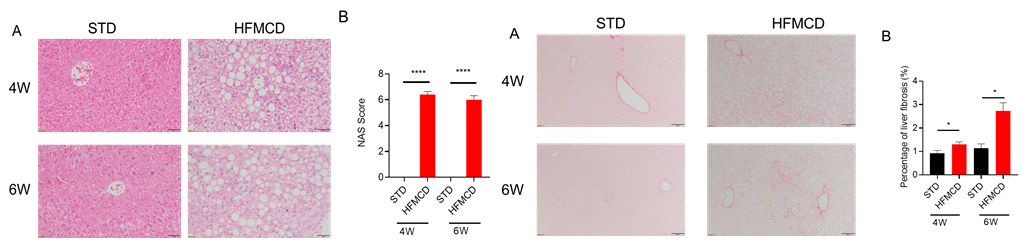
HFMCD 유도 NASH 마우스 모델의 H&E 및 Sirius Red 염색 분석. A, HFMCD 그룹의 H&E 염색 대표 이미지에서 간 지방 변성 및 염증 증가를 나타냄. B, 외부 전문가 병리학자가 평가한 NAFLD 활동 점수(NAS), HFMCD 유도 후 NAS가 유의미하게 증가. 스케일: 50μm. 데이터는 평균 ± SEM으로 표시됩니다. 각 군 N = 6 마리의 마우스. *p<0.05, ****p<0.0001.
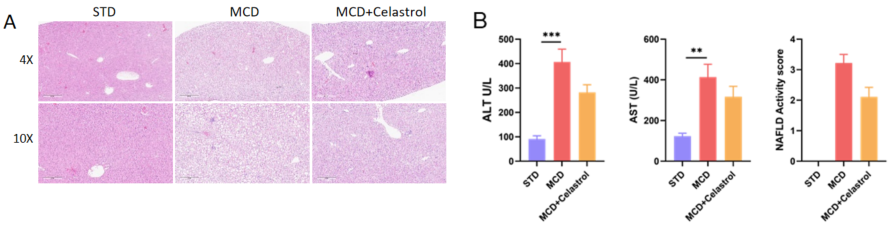
HFMCD 유도 NASH 마우스 모델에서 H&E 염색, 간 기능 지표 및 NAFLD 활동 점수 분석. A, Celastrol 치료 후 H&E 염색의 대표적인 이미지에서 간 지방 변성 및 염증 감소를 보여줌. B, MCD 유도 후 ALT/AST 변화. NAFLD 활동 점수(NAS) 통계. 데이터는 평균 ± SEM으로 표시됩니다. 각 군 N = 6 마리의 마우스. **p<0.01, ***p<0.001.
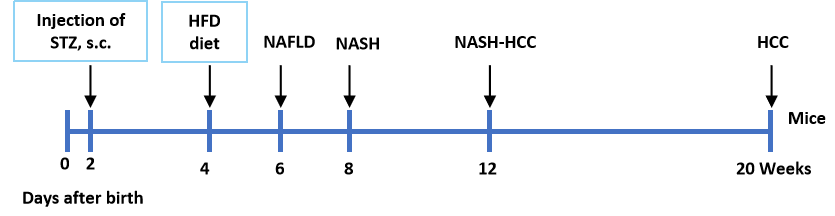
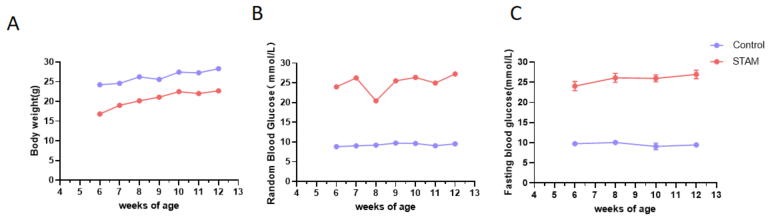
STAM 모델의 특징 분석. 신생雄마우스는 2일째에 STZ를 주사하고 4주령부터 고지방식(HFD)을 공급받음. A-C, 유도 후 체중 및 혈당 변화. 각 군 N = 8 마리의 마우스.
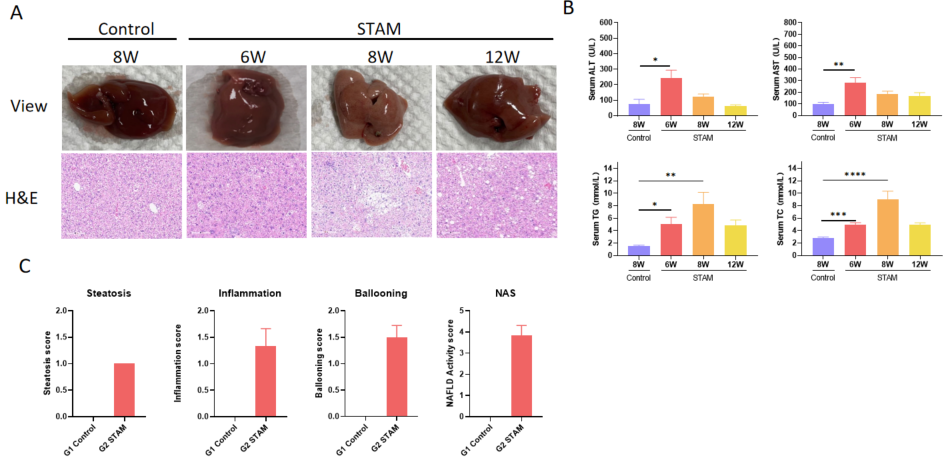
STAM 모델의 특징 분석. A, 6주, 8주 및 12주 유도 후 H&E 염색의 대표적인 이미지. B, STAM 모델의 특징을 나타내는 혈액 생화학 결과. C, NAFLD 활동 점수. 데이터는 평균 ± SEM으로 표시됩니다. 각 군 N = 8 마리의 마우스. *p<0.05, **p<0.01, ***p<0.001, ****p<0.0001.
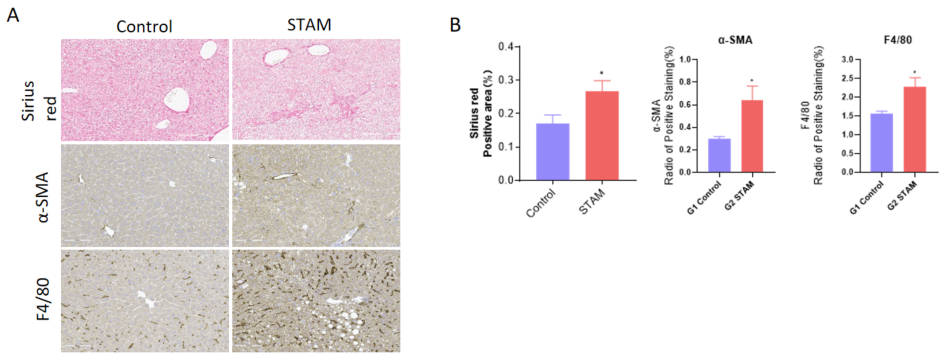
STAM 모델에서 섬유화 및 염증 분석. A, 9주 유도 후 Sirius Red 및 IHC 염색의 대표적인 이미지. B, Sirius Red 및 IHC 염색의 정량화된 데이터. 데이터는 평균 ± SEM으로 표시됩니다. 각 군 N = 8 마리의 마우스. *p<0.05.
| GAN diet+CCL4 | GAN diet | HFMCD | STAM | |||
| Animal | C57BL/6 | C57BL/6 | C57BL/6 (Aged) | B-ob/ob | C57BL/6 | C57BL/6 (Neonatal) |
| Obesity | + | + | + | + | - | - |
| Dyslipidemia | + | + | + | + | Decreased TG and TC | + |
| Hepatomegaly | + | + | + | + | + | + |
| Liver enzymes | + | + | + | + | + | + |
| Steatosis | + | + | + | + | + | + |
| Inflammation | + | Mild | + | + | + | + |
| Fibrosis | + | Mild | Mild | Mild | + | + |
| Induction period (weeks) | 14 | 20-35 | 12-20 | 12-16 | 4-8 | 6-9 |
참고 문헌