Description
CXCR3: A key chemokine receptor in immune cell trafficking and autoimmune diseases.
- Gene Information: C-X-C motif chemokine receptor 3 (CXCR3, also known as CD183 or GPR9) is a protein-coding gene located on chromosome Xq13.1. It encodes a G protein-coupled receptor (GPCR) belonging to the CXC chemokine receptor family.
- Protein Expression: CXCR3 is primarily expressed on activated T lymphocytes (particularly Th1 and CD8+ CTL cells), NK cells, and certain epithelial and endothelial cells. Three main splice variants exist: CXCR3-A mediates chemotaxis and cell proliferation; CXCR3-B inhibits endothelial proliferation and angiogenesis; and CXCR3-alt serves as a functional isoform for CXCL11.
- Signaling Pathway: CXCR3 exerts its effects by binding to three primary interferon-inducible ligands: CXCL9, CXCL10, and CXCL11. Ligand binding activates the downstream Gαi signaling pathway, leading to PLCβ activation, intracellular calcium mobilization, and MAPK/ERK cascade initiation, which drives integrin activation and cell migration.
- Therapeutic Inhibition: By blocking ligand binding (especially CXCL10) or inhibiting downstream signaling, CXCR3 antagonists interrupt the positive feedback loop of “IFN-γ→CXCL10→CXCR3+ T cells, reducing tissue-specific T cell infiltration and ameliorating inflammation in autoimmune diseases such as vitiligo, rheumatoid arthritis, and inflammatory bowel disease.
Targeting strategy
CXCR3
- The full coding region of mouse Cxcr3 was replaced by human CXCR3 coding region sequences in B hCXCR3 mice.
CXCR3 Protein Expression in Spleen
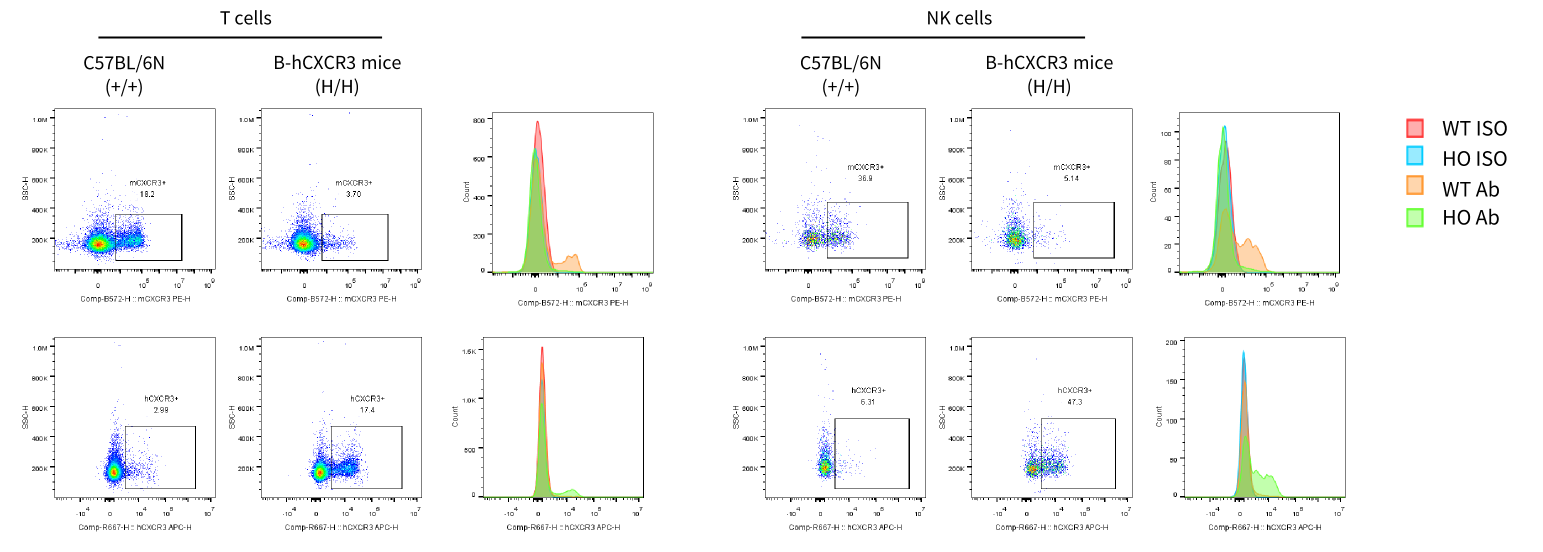
- Mouse CXCR3 was detected on T cells and NK cells in wild-type C57BL/6N mice, but not in B-hCXCR3 mice.
- Human CXCR3 was detected on T cells and NK cells in B-hCXCR3 mice, but not in wild-type C57BL/6N mice.
Mouse and human CXCR3 expression analysis in splenocytes. Splenocytes were collected from wild-type C57BL/6N mice, homozygous B-hCXCR3 mice. CXCR3 expression on T cells and NK cells was analyzed by flow cytometry using anti-mouse CXCR3 antibody (Biolegend, 126505) and anti-human CXCR3 antibody (Biolegend, 353707).
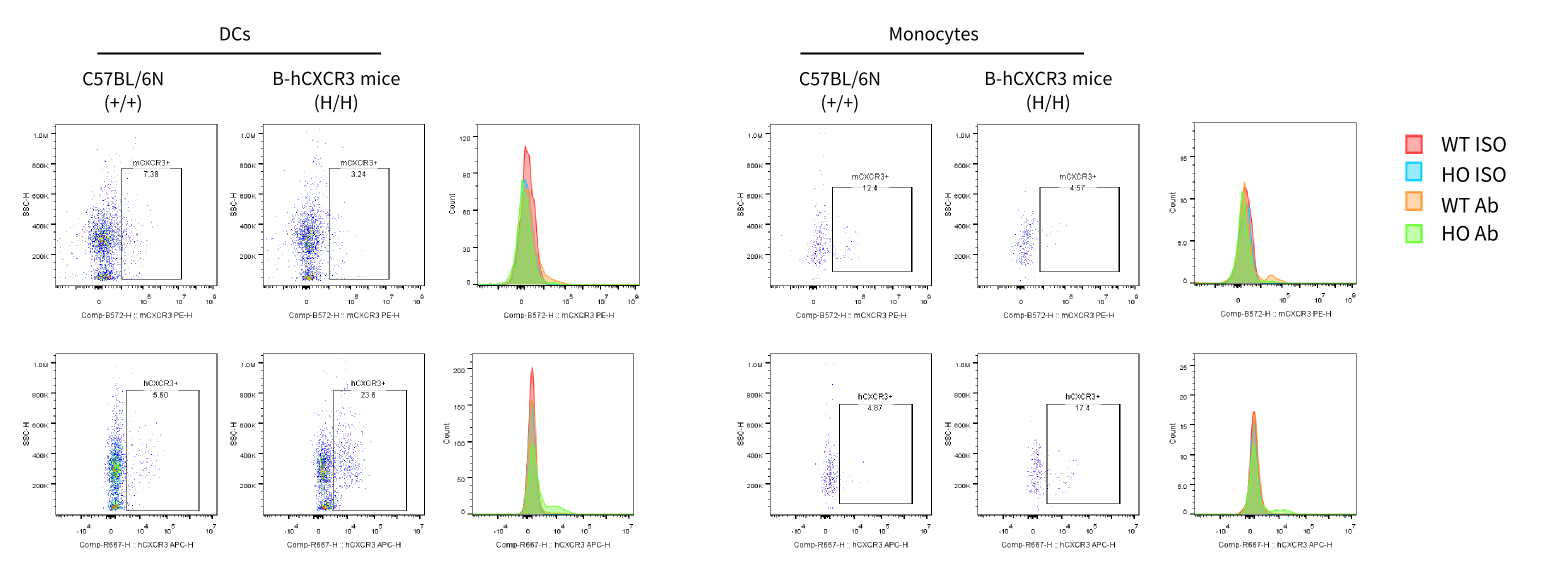
- Mouse CXCR3 was detected on DCs and monocytes in wild-type C57BL/6N mice, but not in B-hCXCR3 mice.
- Human CXCR3 was detected on DCs and monocytes in B-hCXCR3 mice, but not in wild-type C57BL/6N mice.
Mouse and human CXCR3 expression analysis in splenocytes. Splenocytes were collected from wild-type C57BL/6N mice, homozygous B-hCXCR3 mice. CXCR3expression on DCs and monocytes was analyzed by flow cytometry using anti-mouse CXCR3 antibody (Biolegend, 126505) and anti-human CXCR3 antibody (Biolegend, 353707).
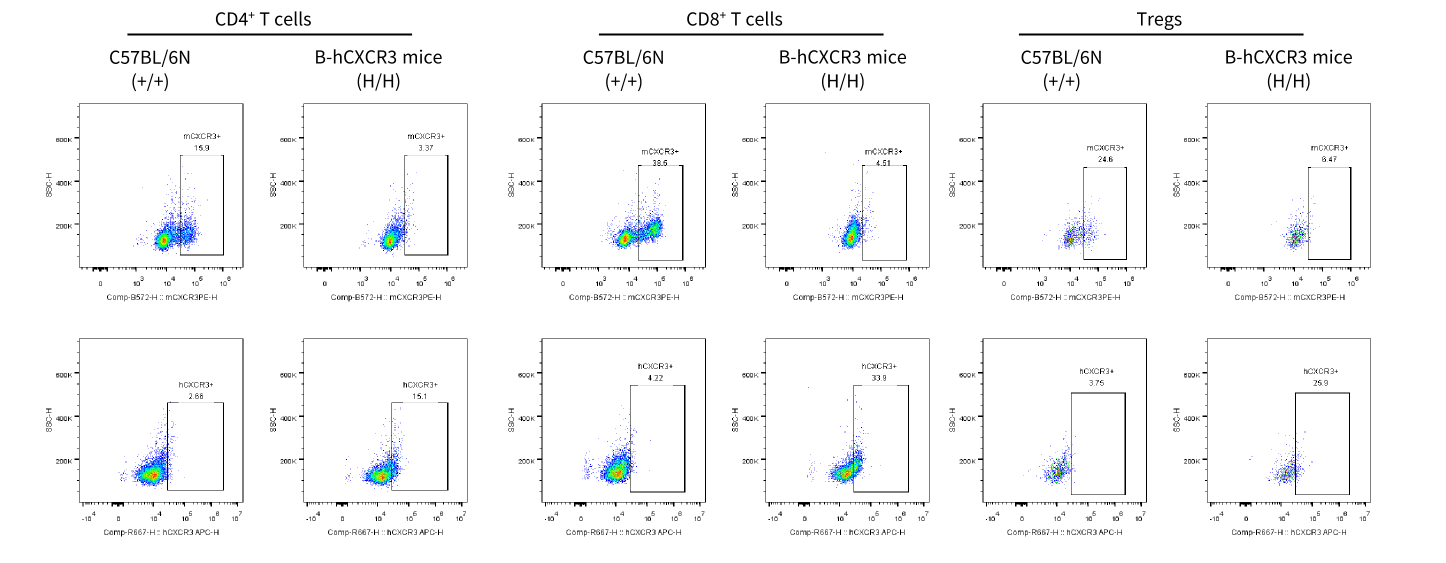
- Mouse CXCR3 was detected on CD4+ T cells, CD8+ T cells, and Tregs in wild-type C57BL/6N mice, but not in B-hCXCR3 mice.
- Human CXCR3 was detected on CD4+ T cells, CD8+ T cells, and Tregs in B-hCXCR3 mice, but not in wild-type C57BL/6N mice.
Mouse and human CXCR3 expression analysis in splenocytes. Splenocytes were collected from wild-type C57BL/6N mice, homozygous B-hCXCR3 mice. CXCR3expression on CD4+ T cells, CD8+ T cells, and Tregs was analyzed by flow cytometry using anti-mouse CXCR3 antibody (Biolegend, 126505) and anti-human CXCR3 antibody (Biolegend, 353707).
* When publishing results obtained using this animal model, please acknowledge the source as follows: The animal model [B-hCXCR3 mice] (Cat# 110969) was purchased from Biocytogen.