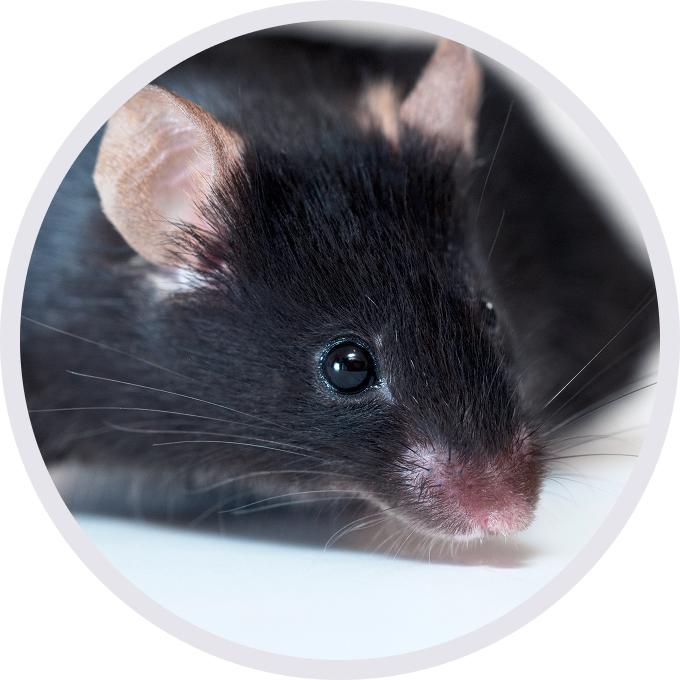
C57BL/6JNifdc-Apptm1(APP*K670N*M671L*V717I )Bcgen /Bcgen • 113380

APP: plays an essential role in the pathogenesis of Alzheimer's disease (AD)

APP

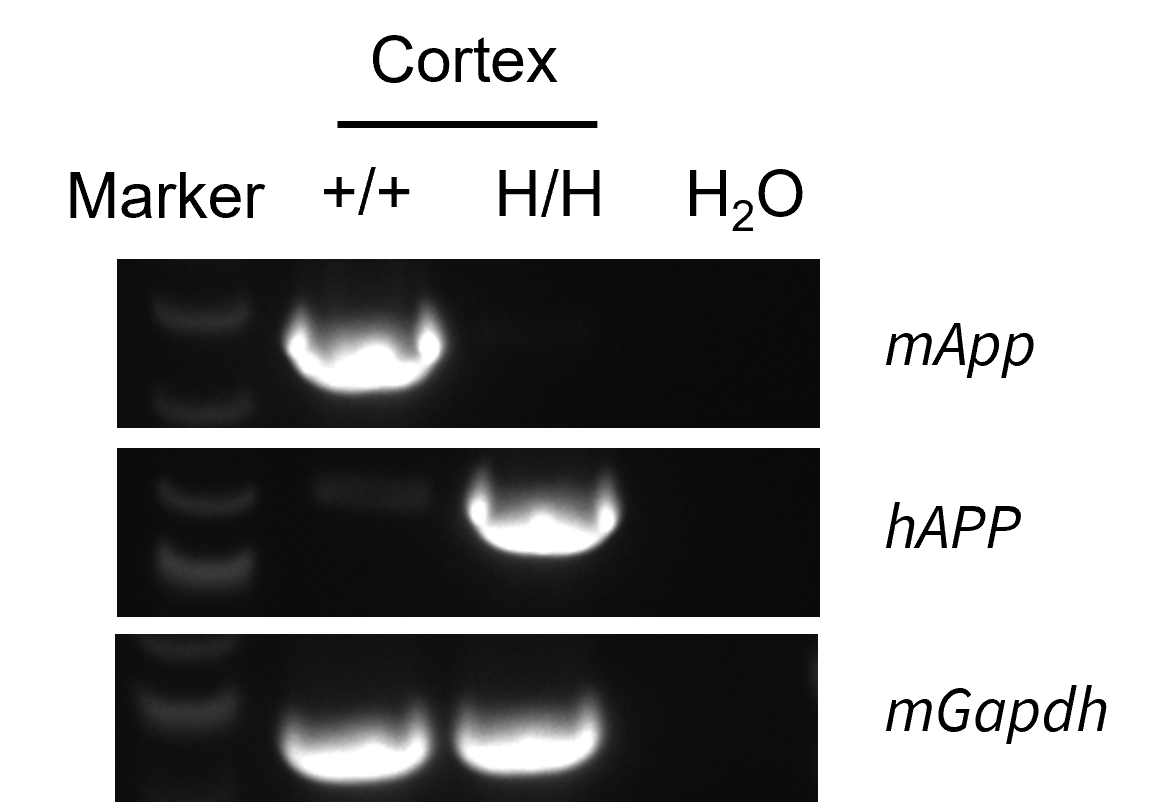
Strain-specific APP expression analysis in wild-type C57BL/6 mice and homozygous B-hAPP*K670N*M671L*V717I mice. Cortex RNA was isolated from wild-type C57BL/6 mice (+/+) and homozygous B-hAPP*K670N*M671L*V717I mice (H/H), then cDNA libraries were synthesized by reverse transcription, followed by PCR with mouse or human APP primers. Human APP mRNA was detectable only in homozygous B-hAPP*K670N*M671L*V717I mice but not in wild-type mice.
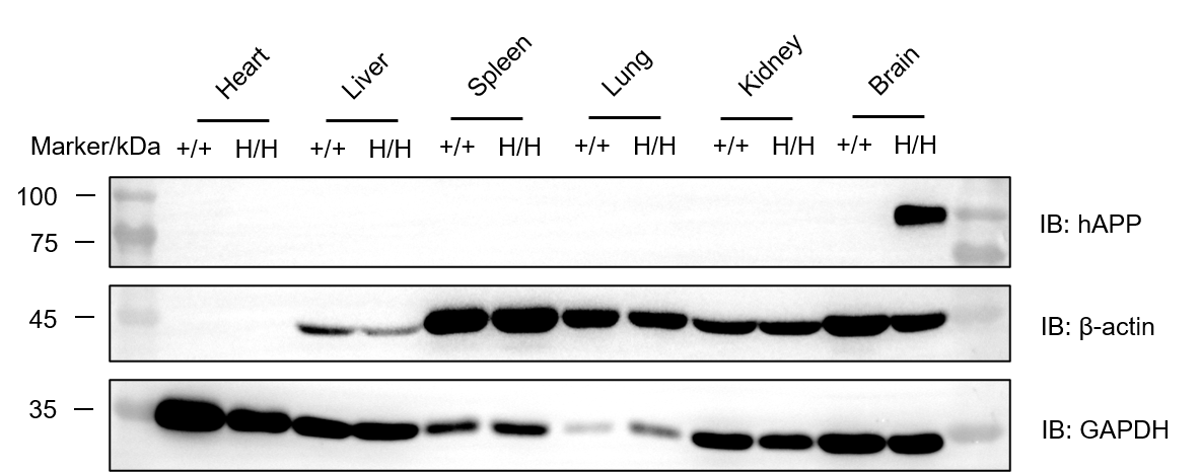
Protein expression analysis of APP in homozygous B-hAPP*K670N*M671L*V717I mice. Various tissue lysates were collected from wild-type C57BL/6 mice (+/+) and homozygous B-hAPP*K670N*M671L*V717I mice (H/H), and then analyzed by western blot with species-specific anti-APP antibody (abcam, ab133588). 50 μg total protein was loaded for western blotting analysis. Human APP was detected in brain from homozygous B-hAPP*K670N*M671L*V717I mice but not in wild-type mice.
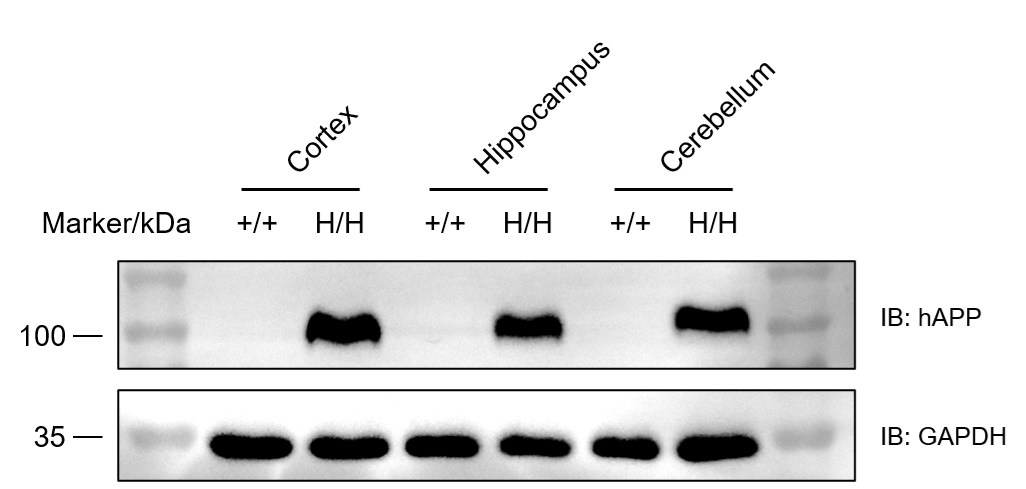
Protein expression analysis of APP in homozygous B-hAPP*K670N*M671L*V717I mice. Various tissue lysates were collected from wild-type C57BL/6 mice (+/+) and homozygous B-hAPP*K670N*M671L*V717I mice (H/H), and then analyzed by western blot with species-specific anti-APP antibody (abcam, ab133588). 50 μg total protein was loaded for western blotting analysis. Human APP was detected in cortex, hippocampus and cerebellum from homozygous B-hAPP*K670N*M671L*V717I mice but not in wild-type mice.
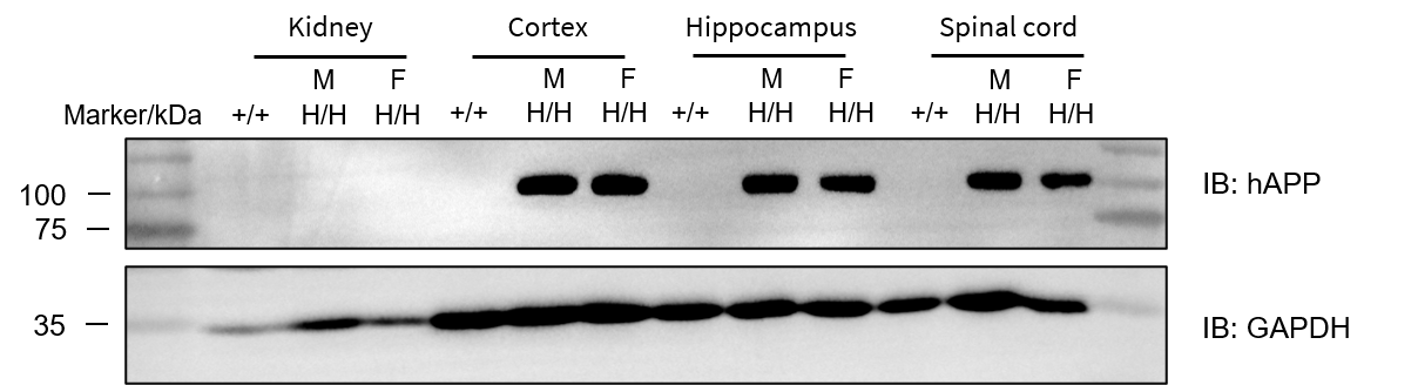
Protein expression analysis of APP in homozygous B-hAPP*K670N*M671L*V717I mice. Various tissue lysates were collected from wild-type C57BL/6 mice (+/+) and homozygous B-hAPP*K670N*M671L*V717I mice (H/H), and then analyzed by western blot with species-specific anti-APP antibody (Abcam, ab133588). 40 μg total proteins were loaded for western blotting analysis. Human APP was only detected in cortex, hippocampus and spinal cord from homozygous B-hAPP*K670N*M671L*V717I mice but not in wild-type mice. There was no significant difference in the expression of human APP between female and male mice from homozygous B-hAPP*K670N*M671L*V717I mice. M, Male; F, Female.
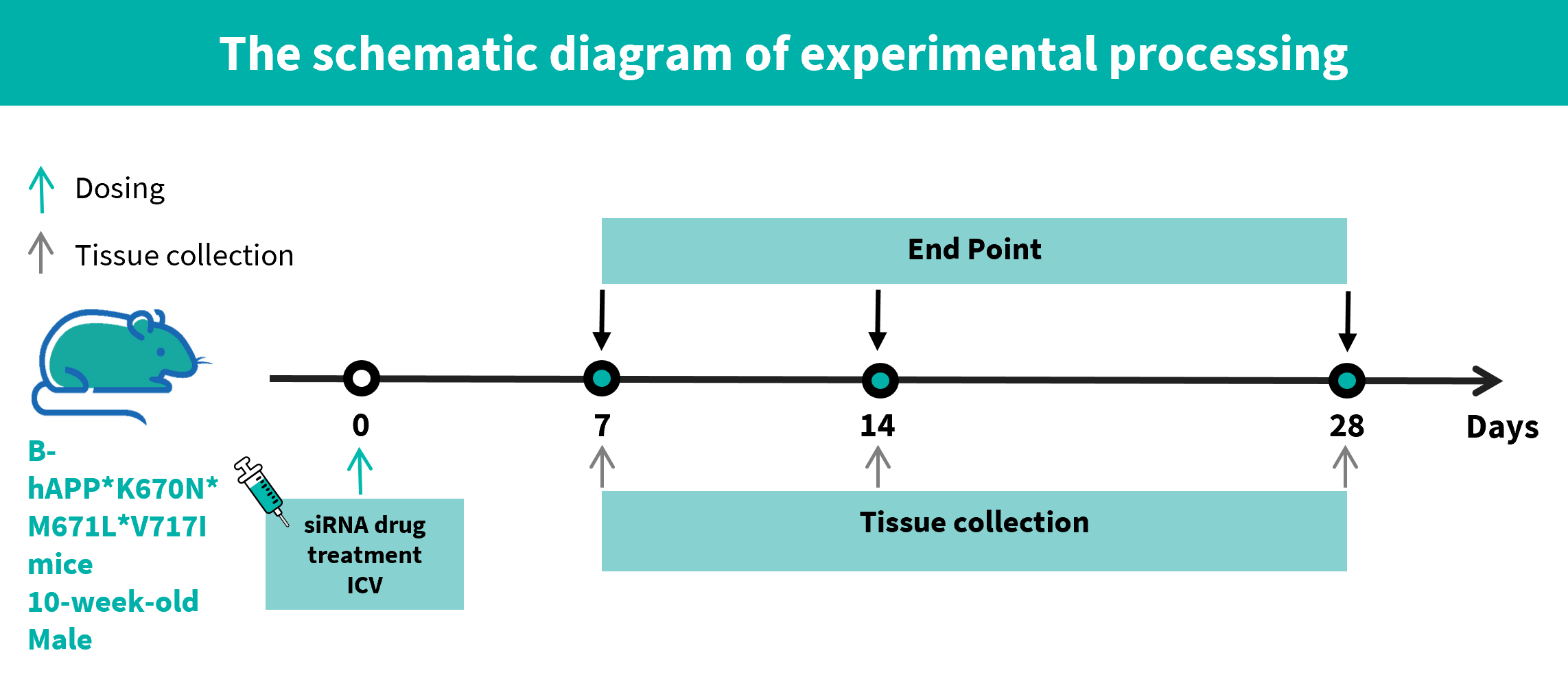
Experimental schedule for the inhibitory efficiency of the siRNA drugs in B-hAPP*K670N*M671L*V717I mice. B-hAPP*K670N*M671L*V717I mice were randomly divided into two groups (n=4/group, 10-week-old, male). The ALN-APP analog (provided by client) and vehicle were administered to the mice individually by intra-cerebroventricular injection (ICV). The mice were sacrificed on day 7, day 14 and day 28, respectively. Then the hippocampus, cortex and spinal cord tissue were collected to detect the human APP mRNA by qRT-PCR.

The inhibitory efficiency of the siRNA drugs against human APP in B-hAPP*K670N*M671L*V717I mice. The expression of human APP mRNA in hippocampus, cortex and spinal cord was detected by qRT-PCR. The human APP mRNA in the treatment group (G2) was significantly reduced compared to the control group (G1), demonstrating that B-hAPP*K670N*M671L*V717I mice provide a powerful preclinical model for in vivo evaluation of human APP targeted nucleic acid drugs. Values are expressed as mean ± SEM. Significance was determined by unpaired test. ***P < 0.001.
This experiment was conducted in collaboration with the client using B-hAPP*K670N*M671L*V717I mice.