B-hCD20 mice

C57BL/6N-Ms4a1tm2(MS4A1)Bcgen/Bcgen • 111231

B-hCD20 mice

Product nameB-hCD20 mice
Catalog number111231
Strain nameC57BL/6N-Ms4a1tm2(MS4A1)Bcgen/Bcgen
Strain backgroundC57BL/6N
NCBI gene ID931 (Human)
AliasesB1; S7; Bp35; CD20; FMC7; CVID5; LEU-16

이 페이지에서

  • Description
  • Targeting strategy
  • Phenotypic analysis
  • Physiological data
  • FAQ section

포스터

모두 보기

    출판물

      Description

      CD20 is a hallmark surface marker of B cells. It emerges at the pre-B stage and is downregulated as B cells differentiate into plasma cells. CD20 is broadly expressed on normal B cells and on about 95% of malignant B lymphocytes, while it is not expressed on hematopoietic stem cells, plasma cells, or most non-hematopoietic tissues—making it a well-validated target for B-cell lymphoma and autoimmune disease therapy.

      CD20 humanized mice (B-hCD20) were generated by replacing the coding region of the murine Cd20 gene with the human CD20 coding sequence, enabling physiological expression of human CD20 under endogenous regulatory control.

      Validation studies show that human CD20 is detectable only in homozygous CD20 humanized mice (B-hCD20). Importantly, CD20 humanization does not measurably alter immune cell distribution in spleen, blood, or lymph nodes, nor does it affect routine hematology profiles or liver function indicators (e.g., ALT and AST). Humoral immunity remains intact, and anti-human CD20 antibodies can effectively deplete B cells in CD20 humanized mice (B-hCD20).

      Key Advantage

      • Species-specific CD20 expression: Human CD20 is detectable only in CD20 humanized mice (B-hCD20), enabling evaluation of anti-human CD20 therapeutics in a physiologically relevant setting.
      • Preserved immune composition and baseline health: Humanization of CD20 does not change the overall frequency/distribution of immune cell types in spleen, blood, or lymph nodes, and does not alter blood composition/morphology or liver-related indicators (ALT/AST).
      • Functional pharmacology readiness: Anti–human CD20 antibodies can effectively eliminate B cells in CD20 humanized mice (B-hCD20), supporting pharmacodynamic and safety evaluation for B-cell lymphoma and autoimmune disease–related programs.

      Validation

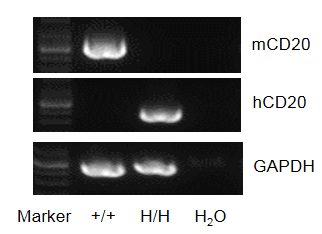
      • mRNA expression validation: RT-PCR shows mouse Cd20 mRNA is detectable only in wild-type C57BL/6 mice, while human CD20 mRNA is detectable only in homozygous CD20 humanized mice (B-hCD20).
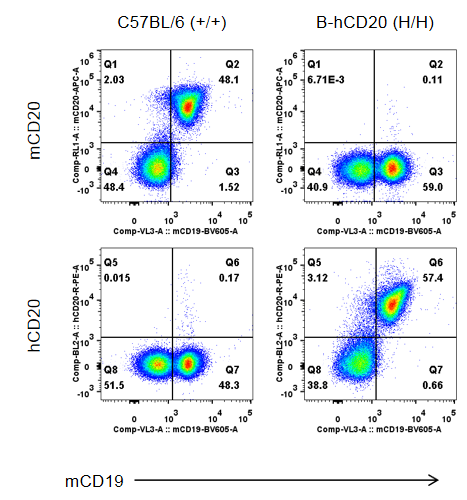
      • Protein expression validation: Flow cytometry confirms mouse CD20 protein is detected only on B cells from wild-type C57BL/6 spleen, whereas human CD20 is exclusively detected in homozygous CD20 humanized mice (B-hCD20).
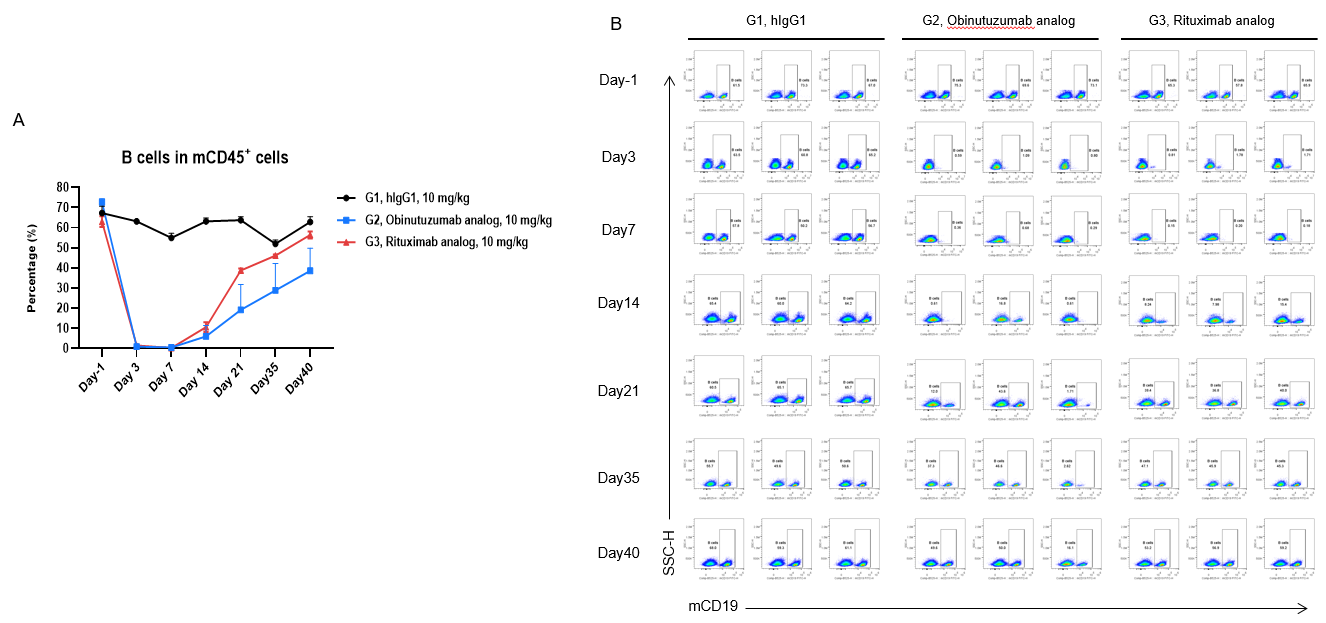
      • Functional validation (B-cell depletion): Obinutuzumab analog and rituximab analog (in house) effectively eliminate B cells in CD20 humanized mice (B-hCD20) as assessed by flow cytometry of blood B cells.

      Applications

      CD20 humanized mice (B-hCD20) provide a translational in vivo platform for pharmacodynamic, efficacy, and safety evaluation of CD20-targeting therapeutics in B-cell malignancies and autoimmune diseases.

      Targeting strategy

      In CD20 humanized mice (B-hCD20), exons 2-7 of the mouse Cd20 gene, which encode the full-length protein from the ATG to the STOP codon, are replaced by the human counterparts. The mouse Cd20 promoter, as well as the 5’ and 3’ untranslated regions (UTR), are retained. This allows human CD20 expression to be driven by the endogenous mouse Cd20 promoter, while disrupting transcription and translation of the mouse Cd20 gene.

      CD20 mRNA Expression Analysis in CD20 humanized mice (B-hCD20) by RT-PCR

      Strain-specific analysis of CD20 mRNA expression was performed in wild-type C57BL/6 mice and homozygous CD20 humanized mice (B-hCD20) by RT-PCR. Splenocytes were collected from wild-type C57BL/6 mice (+/+) and homozygous CD20 humanized mice (H/H), followed by cDNA synthesis by reverse transcription and PCR amplification. Mouse Cd20 mRNA was detectable only in wild-type C57BL/6 mice, whereas human CD20 mRNA was detectable only in homozygous CD20 humanized mice (B-hCD20) and not in wild-type mice.

      CD20 Protein Expression Analysis in Spleen of CD20 Humanized Mice (B-hCD20) by Flow Cytometry

      Strain-specific CD20 expression analysis was performed in splenocytes from wild-type C57BL/6 mice and homozygous CD20 humanized mice (B-hCD20) by flow cytometry. Splenocytes were collected from wild-type C57BL/6 mice (+/+) and homozygous CD20 humanized mice (B-hCD20, H/H). CD20 protein expression was analyzed using anti-mouse CD20 antibody (BioLegend, 152107) and anti-human CD20 antibody (BioLegend, 302305) by flow cytometry. Mouse CD20 was detectable only in wild-type C57BL/6 mice, whereas human CD20 was exclusively detectable in homozygous CD20 humanized mice (B-hCD20) and absent in wild-type controls.

      Frequency of Leukocyte Subpopulations in Spleen of CD20 Humanized Mice (B-hCD20) by Flow Cytometry

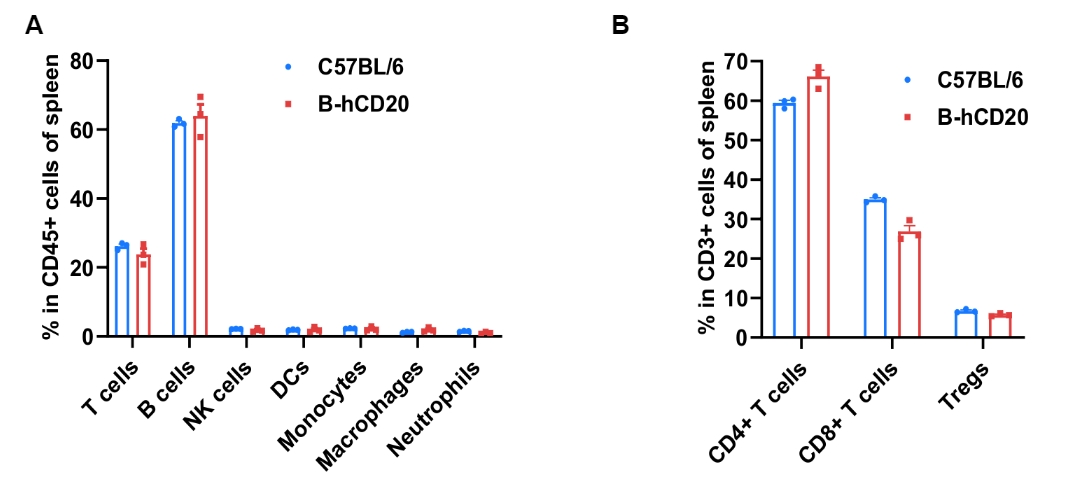
      Frequency of leukocyte subpopulations in spleen of CD20 humanized mice (B-hCD20) by flow cytometry. Splenocytes were isolated from wild-type C57BL/6 mice (+/+) and homozygous CD20 humanized mice (B-hCD20, H/H) (female, 9-week-old, n=3). (A) Flow cytometry analysis of the splenocytes was performed to assess the frequency of leukocyte subpopulations. (B) Frequencies of T cell subpopulations. Percentages of T cells, B cells, NK cells, DCs, monocytes, macrophages, neutrophils, CD4+ T cells, CD8+ T cells, and Tregs in B-hCD20 mice were similar to those in C57BL/6 mice, demonstrating that the humanization of CD20 does not change the frequency or distribution of these cell types in the spleen. Values are expressed as mean ± SEM.

      Frequency of Leukocyte Subpopulations in Blood of CD20 Humanized Mice (B-hCD20) by Flow Cytometry

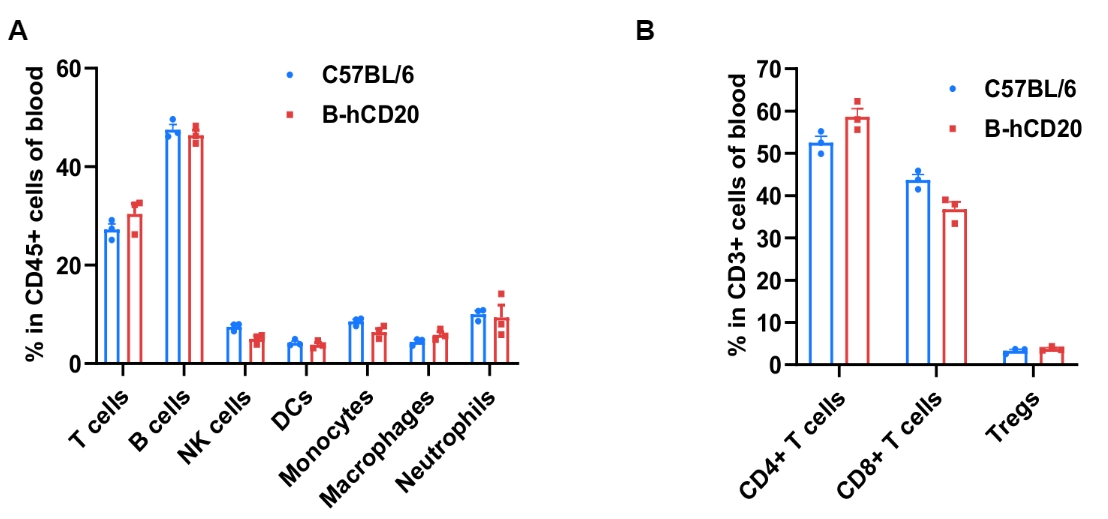
      Frequency of leukocyte subpopulations in blood of CD20 humanized mice (B-hCD20) by flow cytometry. Blood cells were isolated from wild-type C57BL/6 mice (+/+) and homozygous CD20 humanized mice (B-hCD20, H/H) (female, 9-week-old, n=3). (A) Flow cytometry analysis was performed to assess the frequency of leukocyte subpopulations in blood. (B) Frequencies of T cell subpopulations were analyzed. Percentages of T cells, B cells, NK cells, DCs, monocytes, macrophages, neutrophils, CD4+ T cells, CD8+ T cells, and Tregs in CD20 humanized mice (B-hCD20) were comparable to those in C57BL/6 mice. Values are expressed as mean ± SEM.

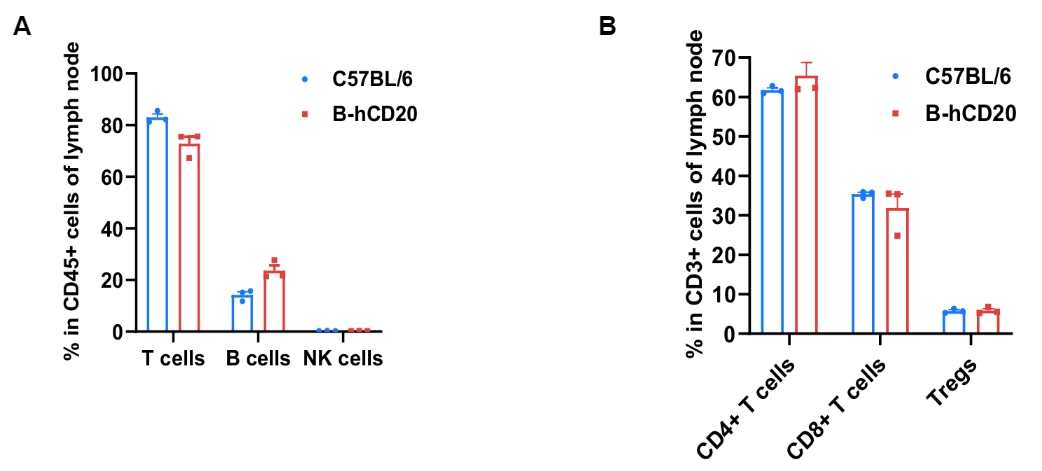
      Frequency of Leukocyte Subpopulations in Lymph Nodes of CD20 Humanized Mice (B-hCD20) by Flow Cytometry

      Frequency of leukocyte subpopulations in lymph nodes of CD20 humanized mice (B-hCD20) by flow cytometry. Leukocytes were isolated from wild-type C57BL/6 mice (+/+) and homozygous CD20 humanized mice (B-hCD20, H/H) (female, 9-week-old, n=3). (A) Flow cytometry analysis of the leukocytes was performed to assess the frequency of leukocyte subpopulations. (B) Frequencies of T cell subpopulations. Percentages of T cells, B cells, NK cells, CD4+ T cells, CD8+ T cells and Tregs in CD20 humanized mice (B-hCD20) were similar to those in C57BL/6 mice, demonstrating that the humanization of CD20 does not change the frequency or distribution of these cell types in the lymph node. Values are expressed as mean ± SEM.

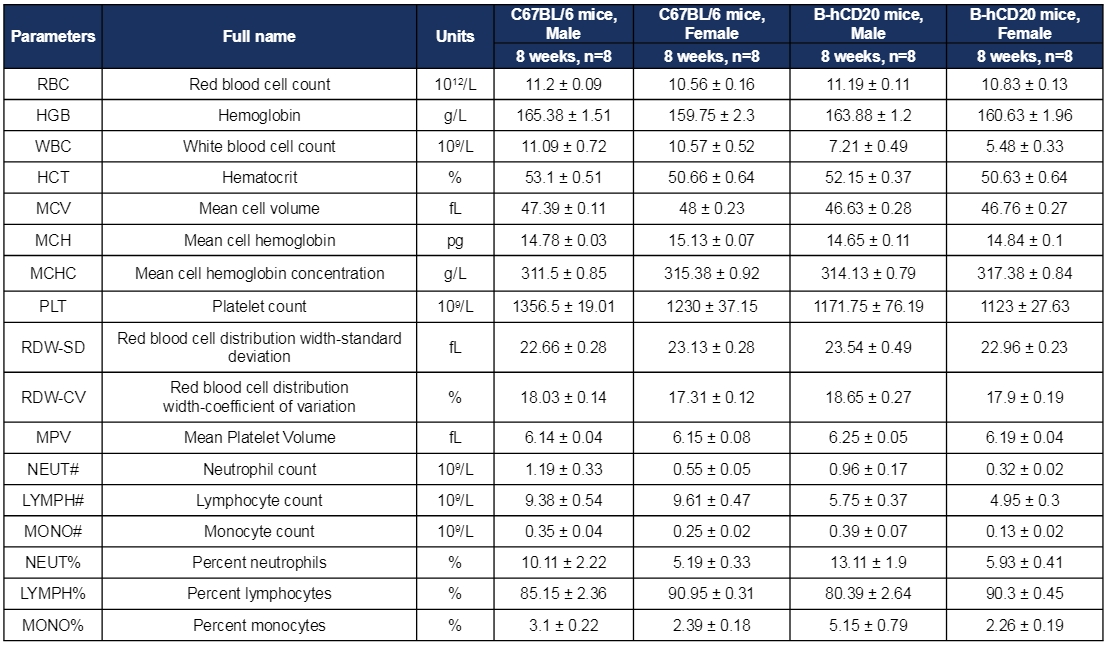
      Hematology Analysis of CD20 Humanized Mice (B-hCD20)

      Complete blood count (CBC) of CD20 humanized mice (B-hCD20). Hematological parameters were analyzed in male and female wild-type C57BL/6 mice (C57BL/6) and homozygous CD20 humanized mice (B-hCD20) (8 weeks old, n=8). Data are expressed as mean ± SD.

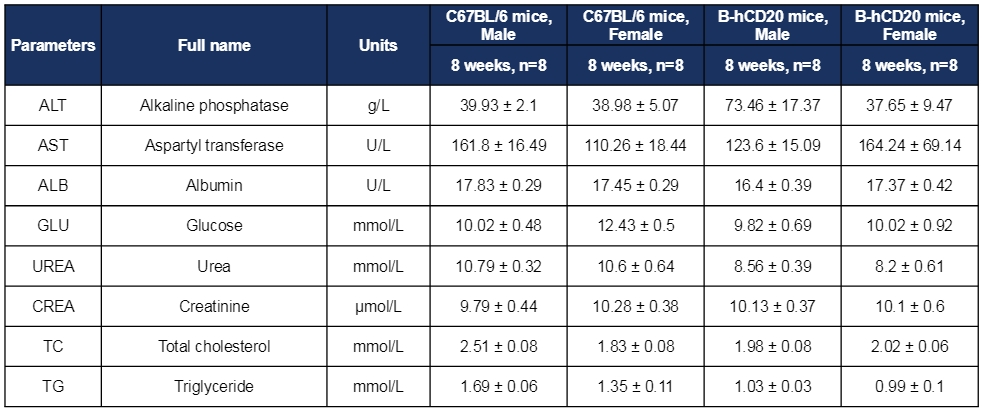
      Biochemistry Analysis of CD20 Humanized Mice (B-hCD20)

      Biochemical analysis of serum parameters in CD20 humanized mice (B-hCD20). Serum biochemical parameters were measured in male and female wild-type C57BL/6 mice and homozygous CD20 humanized mice (B-hCD20) (8 weeks old, n=8). Values are expressed as mean ± SD.

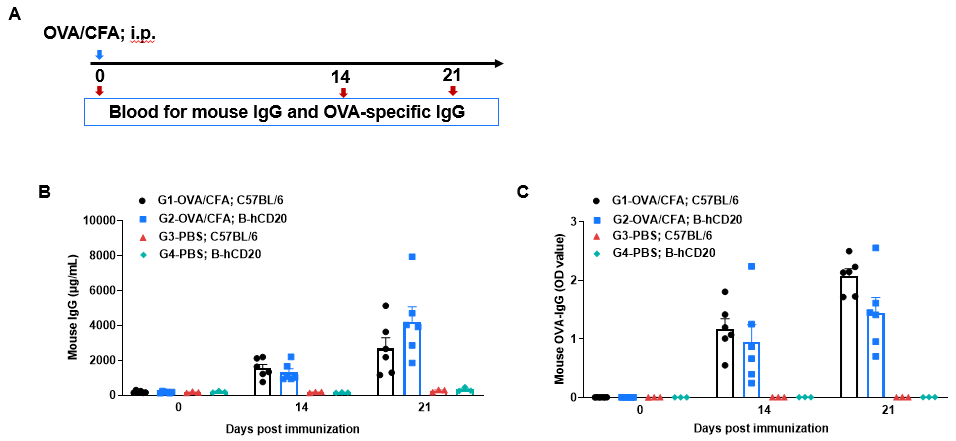
      IgG Analysis of CD20 Humanized Mice (B-hCD20) Immunized with OVA/CFA

      IgG analysis of CD20 humanized mice (B-hCD20) following OVA/CFA immunization. CD20 humanized mice (B-hCD20) (n=6) were intraperitoneally immunized with OVA/CFA or PBS on Day 0. Blood samples were collected on Day 0, Day 14, and Day 21 and analyzed by ELISA using mouse IgG antibody and OVA-specific IgG antibody. (A) Schematic diagram of the immunization schedule and blood collection timeline. (B) Serum mouse IgG levels after immunization. (C) Serum OVA-specific IgG levels after immunization. Concentrations of mouse IgG and OVA-specific IgG were significantly increased after immunization. This indicates that humanized CD20 does not affect B cell-related humoral immunity.

      B Cell Depletion by CD20 Antibody in CD20 Humanized Mice (B-hCD20)

      B cell depletion by CD20 antibody in CD20 humanized mice (B-hCD20). Sterile anti-human CD20 antibody Obinutuzumab analog (in house), Rituximab analog (in house), and the control hIgG1 were administered into CD20 humanized mice (B-hCD20, female, 6-week-old, n=3) through a single tail vein injection. Blood was collected after treatment. After red blood cell lysis, the frequency of mCD19+ B cells was analyzed by flow cytometry. (A) The proportion of B cells in the CD45+ cell population during treatment. (B) Representative FACS images of B cells in the blood. The results indicate that Obinutuzumab analog (in house) and Rituximab analog (in house) can effectively eliminate B cells in CD20 humanized mice (B-hCD20).

      Frequently Asked Questions (FAQs) About CD20 Humanized Mice (B-hCD20)

      Q1: What are CD20 humanized mice (B-hCD20)?

      CD20 humanized mice (B-hCD20) are genetically engineered mice in which the coding region of the mouse Cd20 gene is replaced with the human CD20 coding sequence. This enables physiological expression of human CD20 under the control of the endogenous mouse regulatory elements, providing a relevant in vivo platform for evaluating anti-human CD20 therapeutics.

      Q2: How is human CD20 expression validated in CD20 humanized mice (B-hCD20)?

      Validation studies demonstrate that human CD20 mRNA and protein are exclusively detectable in homozygous CD20 humanized mice (B-hCD20), while absent in wild-type controls. Flow cytometry confirms specific expression on B cells, and anti-human CD20 antibodies effectively recognize and bind to CD20-positive B cells in this model.

      Q3: Does CD20 humanization affect immune cell development or general health?

      Comprehensive immunophenotyping shows that CD20 humanized mice (B-hCD20) maintain normal immune cell distribution in spleen, blood, and lymph nodes. Hematological parameters, liver function markers (e.g., ALT, AST), and humoral immune responses remain comparable to wild-type mice, indicating that CD20 humanization does not disrupt physiological immune development or systemic health.

      Q4: What are the main applications of CD20 humanized mice (B-hCD20)?

      CD20 humanized mice (B-hCD20) are widely used for in vivo pharmacodynamic, efficacy, and safety evaluation of anti-human CD20 antibodies. This model supports preclinical studies in B-cell lymphoma, autoimmune diseases, and other CD20-targeted therapeutic research programs.


      * When publishing results obtained using this animal model, please acknowledge the source as follows: The animal model [B-hCD20 mice] (Cat# 111231) was purchased from Biocytogen.