

CD38 is a 42-kDa glycoprotein, also known as T10. It is an ADP-ribosyl hydrolase expressed on B cells, NK cells, and a subset of T cells, as well as in the brain, muscle, and kidney. In mice, CD38 expression is downregulated on germinal center B cells and plasma cells, whereas this downregulation is not observed in humans. By functioning as both a cyclase and a hydrolase, CD38 mediates lymphocyte activation, adhesion, and the metabolism of cADPR and NAADP. CD31 also serves as a known ligand for CD38.
NAD⁺ is broken down into byproducts that circulate in the bone marrow plasma within the myeloma niche, accumulating various amounts of ADO. Most ADO is taken up by purinergic cell receptors (ADORs) expressed by bone cells or immune cells within the niche. The outcome is either suppression of the anti-tumor activity of immune cells (Teff, NK cells, TAMs) or an increase in regulatory T cells (Tregs), mesenchymal-derived stromal cells (MDSCs), or dendritic cells (DCs), all of which suppress immune activity against tumors.
Increased expression of CD38 is an unfavorable diagnostic marker in chronic lymphocytic leukemia and is associated with enhanced disease progression. CD38 is also the therapeutic target of daratumumab (Darzalex), which is approved for the treatment of multiple myeloma.
Key Advantages
Validation
Application


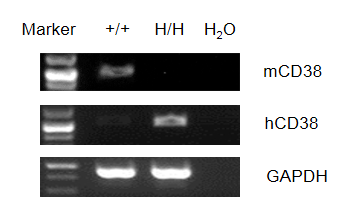
Species-specific analysis of mouse and human CD38 mRNA expression in wild-type C57BL/6 mice and CD38 humanized mice by RT-PCR. Total RNA was isolated from spleen tissues of wild-type C57BL/6 mice (+/+) and homozygous CD38 humanized mice (H/H). cDNA was synthesized by reverse transcription, followed by PCR amplification using mouse-specific Cd38 and human-specific CD38 primers.
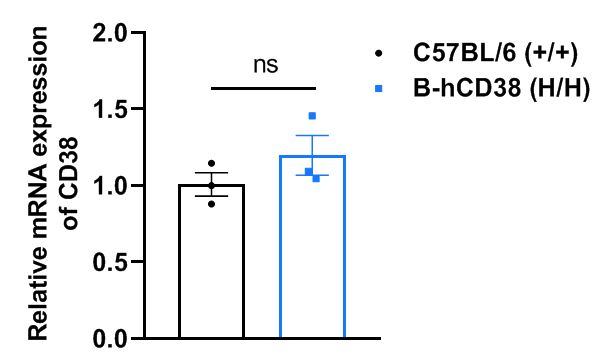
Species-specific analysis of mouse and human CD38 mRNA expression in wild-type C57BL/6 mice and CD38 humanized mice by RT-qPCR. Splenocytes were collected from wild-type C57BL/6 mice and homozygous CD38 humanized mice (female, 10 weeks old, n = 3). Mouse and human CD38 mRNA expression levels were analyzed by quantitative real-time PCR (RT-qPCR). Values are expressed as mean ± SEM. Statistical significance was determined using an unpaired t-test. *p < 0.05, **p < 0.01, ***p < 0.001.
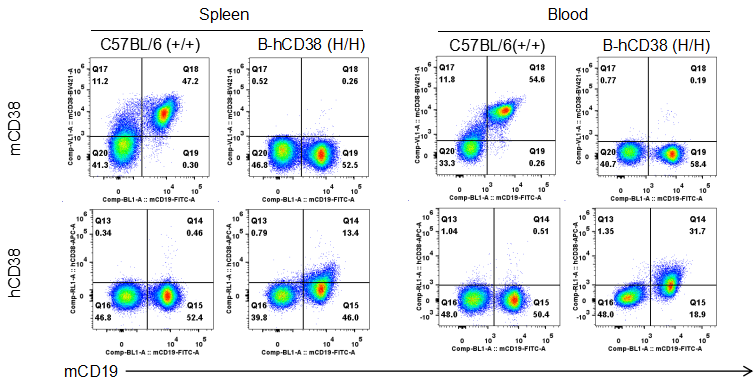
Strain-specific analysis of mouse and human CD38 protein expression in wild-type C57BL/6 mice and CD38 humanized mice by flow cytometry. Spleen and peripheral blood samples were collected from wild-type C57BL/6 mice and homozygous CD38 humanized mice (H/H). Mouse and human CD38 protein expression was analyzed by flow cytometry using species-specific anti-mouse CD38 (BioLegend, 102732) and anti-human CD38 (BioLegend, 356606) antibodies.
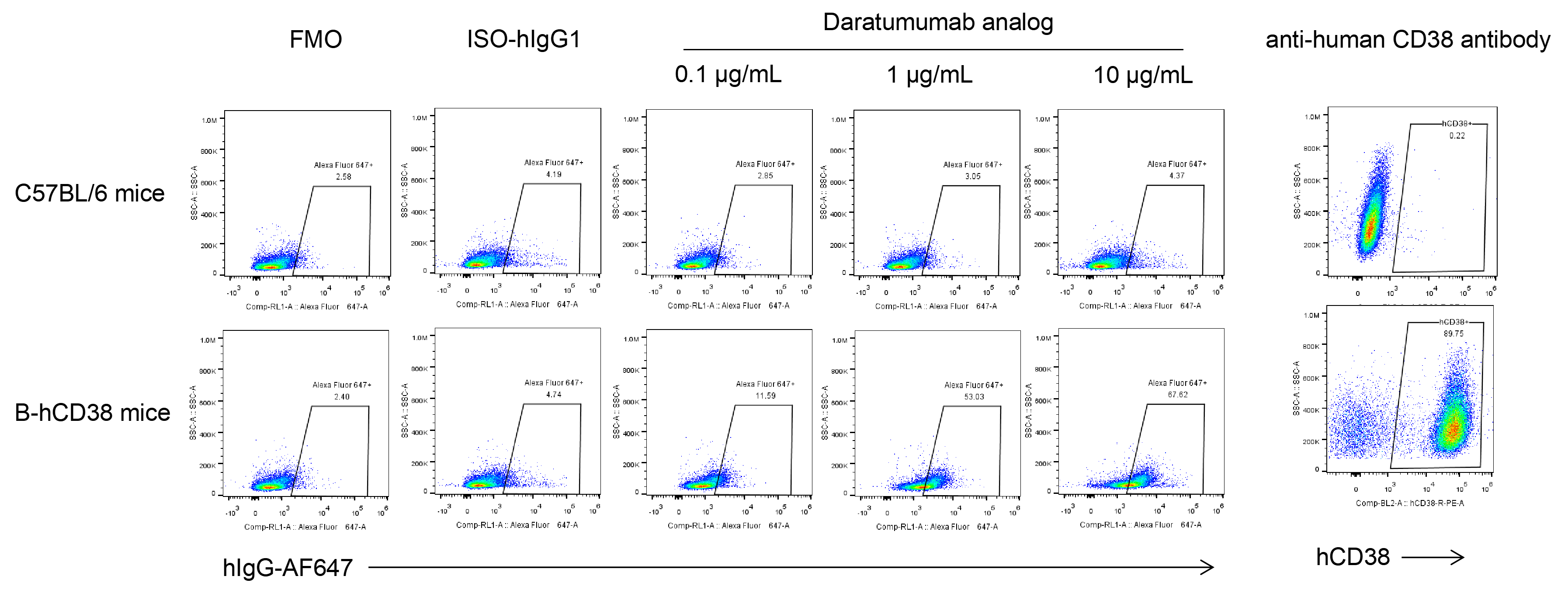
Anti-human CD38 antibody binding assay in CD38 humanized mice. Splenocytes were collected from wild-type C57BL/6 mice and homozygous CD38 humanized mice and analyzed by flow cytometry with anti-hCD38 antibody Daratumumab analog (in-house) and anti-human CD38 antibody (Biolegend, 356606).
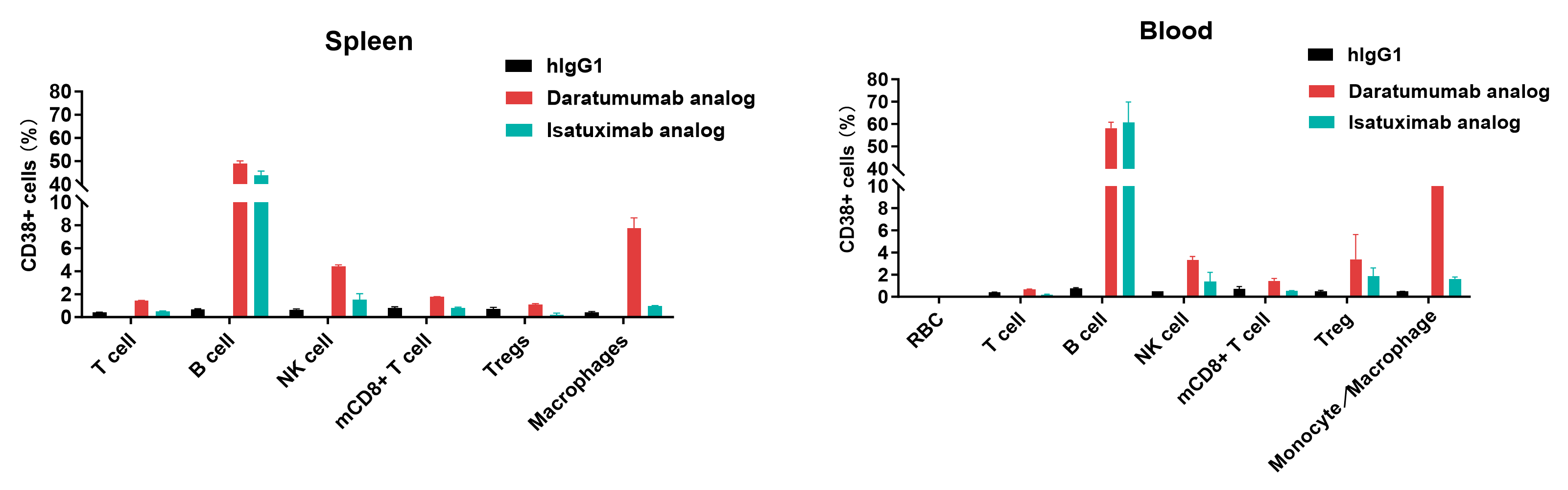
Anti-human CD38 antibody binding assay CD38 humanized mice. Spleen and blood were collected from homozygous CD38 humanized mice and analyzed by flow cytometry with anti-hCD38 antibody Daratumumab analog (provided by the client) and Isatuximab analog (provided by the client).
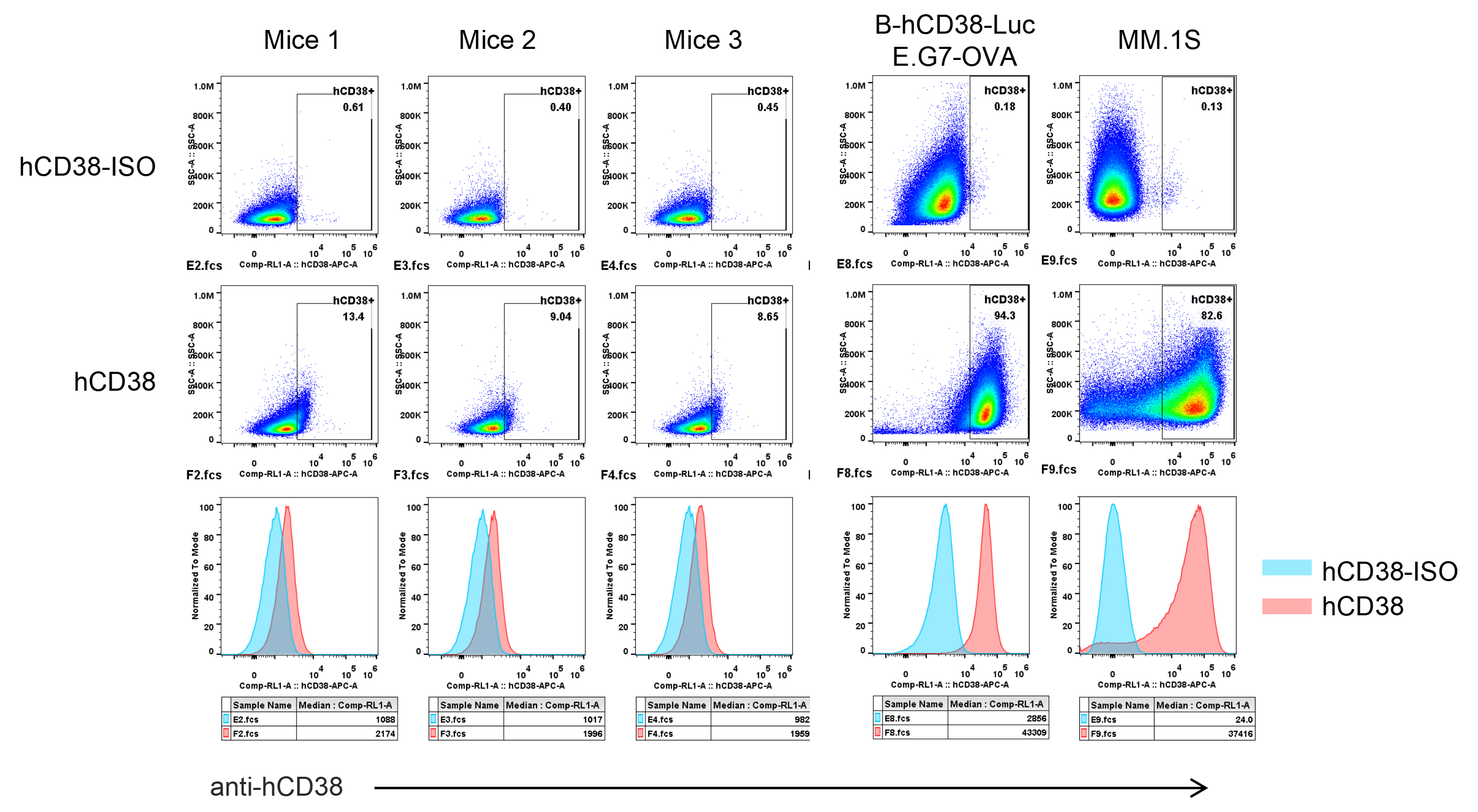
The binding of anti-CD38 antibody Daratumumab analog (in-house) to mouse B cells of CD38 humanized mice, mouse T-cell lymphoma B-hCD38-Luc E.G7-OVA, and human multiple myeloma cells MM.1S. was assessed by FACS.

In vitro antibody-dependent cellular cytotoxicity (ADCC) analysis using CD38-expressing target cells from CD38 humanized mice and tumor cell lines. Splenic B cells isolated from CD38 humanized mice, mouse T-cell lymphoma B-hCD38-Luc E.G7-OVA cells, and human multiple myeloma MM.1S cells were used as target cells. FcR-TANK effector cells were added at an effector-to-target (E:T) ratio of 5:1. Following the addition of varying concentrations of an anti-human CD38 antibody, cells were incubated at 37°C for 4 hours, and specific target cell lysis was assessed by flow cytometry. (A) Cytotoxicity results using splenic B cells from three individual CD38 humanized mice. (B) Cytotoxicity results using B-hCD38-Luc E.G7-OVA and MM.1S tumor cells.

Analysis of leukocyte subpopulations by flow cytometry in immune organs and blood. Splenocytes, peripheral blood, and lymph nodes were isolated from C57BL/6JNifdc mice and homozygous CD38 humanized mice (female, 8-week-old, n = 4). Single live cells were gated on the CD45⁺ population and analyzed by flow cytometry as indicated. Values are expressed as mean ± SEM.

Analysis of T-cell subpopulations by flow cytometry in immune organs and blood. Splenocytes, peripheral blood, and lymph nodes were isolated from C57BL/6JNifdc mice and homozygous CD38 humanized mice (female, 8-week-old, n = 4). Single live cells were gated on the TCRβ⁺ T-cell population and analyzed by flow cytometry as indicated. Values are expressed as mean ± SEM.


In vivo antitumor efficacy of anti-human CD38 antibodies in a B-hCD38-Luc E.G7-OVA tumor model using CD38 humanized mice. (A) Tumor growth curves showing that treatment with in-house anti-human CD38 antibodies, daratumumab analog and isatuximab analog, inhibited the growth of B-hCD38-Luc E.G7-OVA tumors in CD38 humanized mice. (B) Body weight changes during treatment. Values are expressed as mean ± SEM.
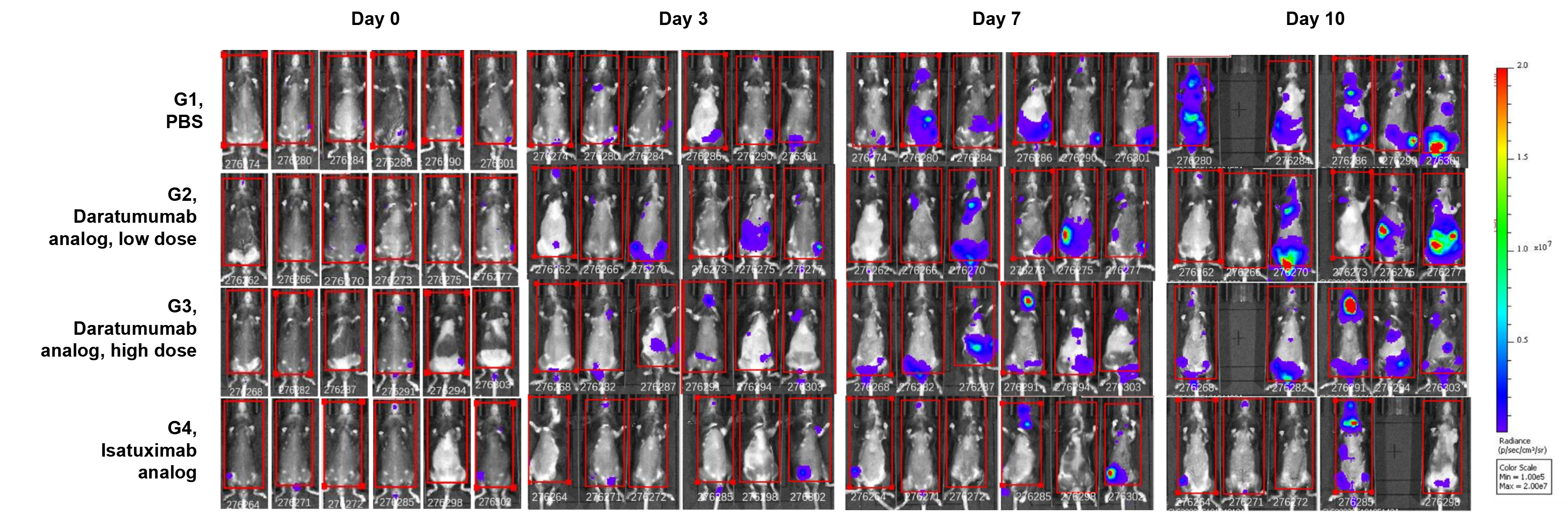
In vivo bioluminescence imaging of B-hCD38-Luc E.G7-OVA tumor cells in CD38 humanized mice following anti-human CD38 antibody treatment. Murine T-cell lymphoma B-hCD38-Luc E.G7-OVA cells were intravenously injected via the tail vein into homozygous CD38 humanized mice (female, 6 weeks old, n = 6). Mice were assigned to treatment groups when the total bioluminescence flux reached approximately 10⁶ Ig, after which they received anti-human CD38 antibody treatment. In vivo bioluminescence imaging was performed on days 0, 3, 7, and 10.

Q: What should be noted when using CD38 humanized mice (B-hCD38, #110046)?
A: In CD38 humanized mice (B-hCD38, #110046), the extracellular domain of CD38 is only partially humanized rather than fully humanized. Therefore, it is necessary to verify the binding of anti-human CD38 antibodies to CD38 humanized mice (B-hCD38, #110046) before starting in vivo experiments.
Q: What is the difference between CD38 humanized mice #110046 (B-hCD38) and CD38 humanized mice #113475 (B-hCD38 ad)?
A: The targeting strategy for CD38 humanized mice (B-hCD38, #110046) is humanization of a portion of the CD38 extracellular domain. CD38 humanized mice (B-hCD38 ad, #113475) were humanized with the full-length CD38 genome sequence, resulting in the expression of the full-length human CD38 protein.