B-hCD3E/hCD20/hCD79B mice

C57BL/6-Cd3etm2(CD3E)Bcgen Ms4a1tm2(MS4A1)Bcgen Cd79btm1(CD79B)Bcgen/Bcgen • 113087


B-hCD3E/hCD20/hCD79B mice

Catalog Number: 113087
Strain Name: C57BL/6-Cd3etm2(CD3E)Bcgen Ms4a1tm2(MS4A1)Bcgen Cd79btm1(CD79B)Bcgen/Bcgen
Strain Background: C57BL/6
NCBI gene ID: 916,931,974 (Human)
Aliases: T3E; TCRE; IMD18; CD3epsilon; B1; S7; Bp35; CD20; FMC7; CVID5; LEU-16; B29; IGB; AGM6; Igbeta
---
라이선스 옵션 제공 가능
B-hCD3E/hCD20/hCD79B mice

이 페이지에서

  • Description
  • Targeting strategy
  • Phenotypic analysis

포스터

모두 보기

    출판물

      Description
      • CD3 consists of four protein chains (CD3E, CD3D, CD3G and CD3Z), which are important biological markers on the T cell membrane. CD3 can form a TCR/CD3 complex with the T cell receptor, participating in the regulation of T cell antigen recognition, signal transduction and T cell development. CD20 is a marker of B cells, and it begins to express in Pre-B cells and loses expression after differentiating into plasma cells. CD20 is expressed on the surface of normal and about 95% malignant B lymphocytes, but not expressed in hematopoietic stem cells, plasma cells, or other normal tissues. CD20 is regarded as an ideal target for the treatment of B-cell lymphoma and autoimmune diseases. CD79B encodes an Ig-β protein that forms part of the antigenic component in B cells. The CD79A and CD79B proteins together form a heterodimeric complex, and their interaction with immunoglobulin heavy chains is crucial for the expression of B-cell receptor (BCR) on the cell surface and the subsequent initiation of signaling pathways triggered by BCR activation.
      • B-hCD3E/hCD20/hCD79B mice were obtained by mating B-hCD3E mice(110008), B-hCD20 mice(111231) and B-hCD79B mice(111096). In this mice, the exons 2-6 of mouse Cd3e gene that encode the extracellular domain were replaced by human CD3E exons 2-7. The exons 1-4 of mouse Cd79b gene that encode the extracellular domain were replaced by human CD79B exons 1-4 in B-hCD3E/hCD20/hCD79B mice.
      • Application: This product is used to assess the pharmacodynamics and toxicity of trispecific antibodies, CAR T-cell therapy, or ADC drugs for treating various B-cell lymphomas.
      Targeting strategy

      CD3E

      • The exons 2-6 of mouse Cd3e gene that encode the extracellular domain were replaced by human CD3E exons 2-7 in B-hCD3E/hCD20/hCD79B mice.

      CD20

      • The exons 2-7 of mouse Cd20 gene that encode the full-length protein were replaced by human CD20 exons 2-7 in B-hCD3E/hCD20/hCD79B mice.

      CD79B

      • The exons 1-4 of mouse Cd79b gene that encode the extracellular domain were replaced by human CD79B exons 1-4 in B-hCD3E/hCD20/hCD79B mice.
      mRNA Expression Analysis
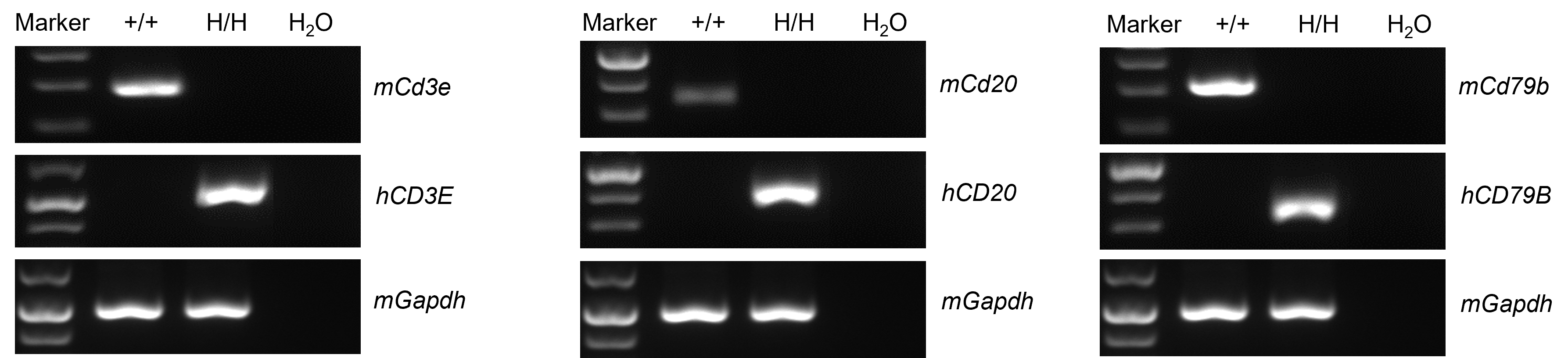
      • Mouse Cd3e, Cd20 and Cd79b mRNA was only detectable in wild-type mice, but not in homozygous B-hCD3E/hCD20/hCD79B mice.
      • Human CD3E, CD20 and CD79B mRNA was exclusively detectable in homozygous B-hCD3E/hCD20/hCD79B mice.

      Species specific analysis of CD3E, CD20 and CD79B mRNA expression in wild-type C57BL/6 mice and homozygous B-hCD3E/hCD20/hCD79B mice by RT-PCR. Blood cells RNA was isolated from wild-type C57BL/6 mice (+/+) and homozygous B-hCD3E/hCD20/hCD79B mice (H/H) ), and then cDNA libraries were synthesized by reverse transcription, followed by PCR with mouse or human CD3E, CD20, and CD79B primers.
      mRNA expression analysis in blood
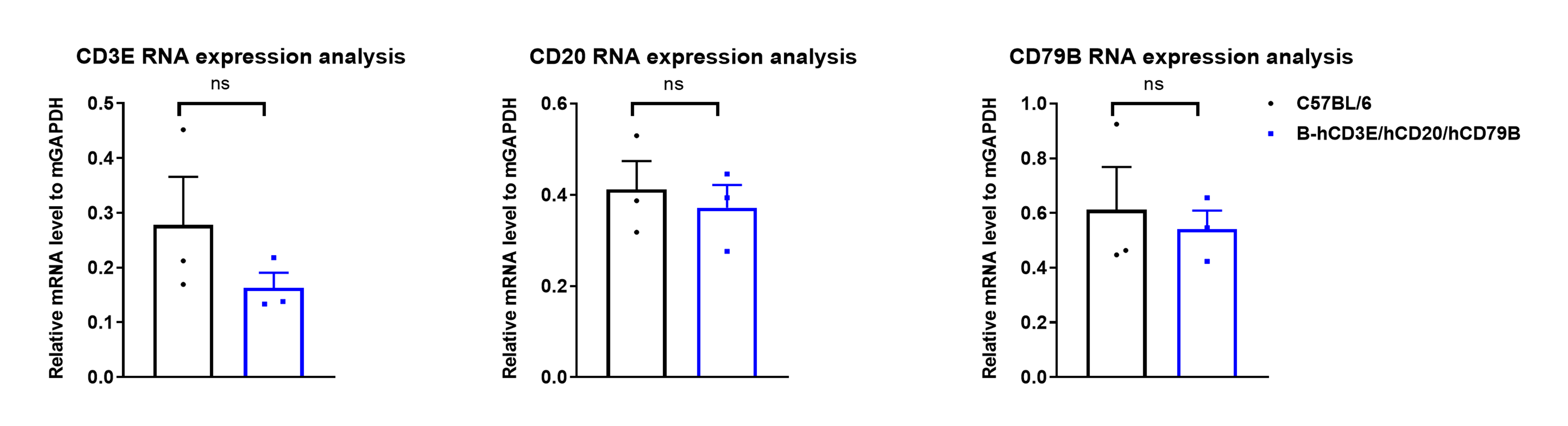
      • The mRNA expression level of human CD3E, CD20 and CD79B in homozygous B-hCD3E/hCD20/hCD79B mice was similar to those in the wild-type C57BL/6 mice, demonstrating that humanization of CD3E, CD20 and CD79B does not change the CD3E, CD20 and CD79B expression.

      Species specific analysis of CD3E, CD20 and CD79B mRNA expression in wild-type C57BL/6 mice and homozygous B-hCD3E/hCD20/hCD79B mice by RT-qPCR. Blood cells RNA was isolated from wild-type C57BL/6 mice (+/+) and homozygous B-hCD3E/hCD20/hCD79B mice (H/H) ), and then cDNA libraries were synthesized by reverse transcription, followed by RT-qPCR with CD3E, CD20, and CD79B primers. Values are expressed as mean ± SEM. Significance was determined by unpaired t-test. 
      Protein expression analysis
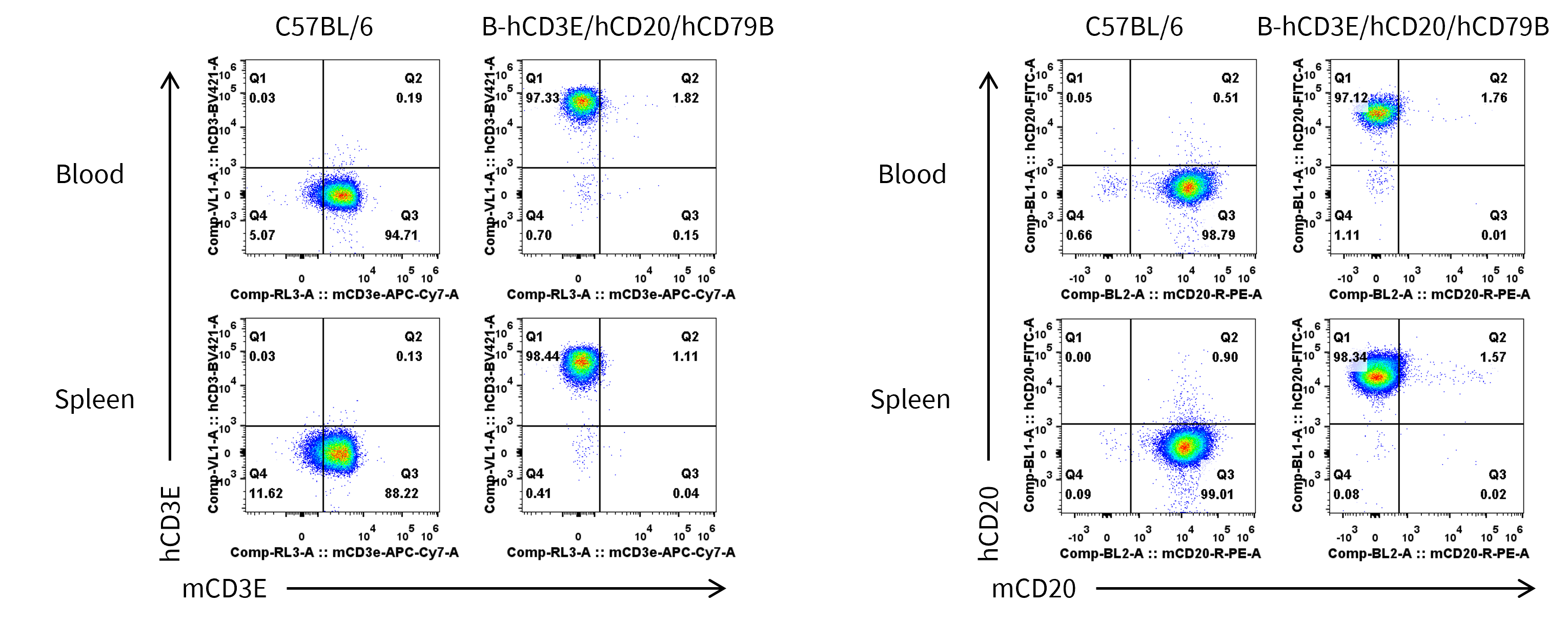
      • Mouse CD3E and CD20 were exclusively detectable in wild-type C57BL/6 mice, but not in homozygous B-hCD3E/hCD20/hCD79B mice.
      • Human CD3E and CD20 were exclusively detectable in homozygous B-hCD3E/hCD20/hCD79B mice.

      Strain specific CD3E and CD20 expression analysis in wild-type C57BL/6 mice and homozygous B-hCD3E/hCD20/hCD79B mice by flow cytometry. Splenocytes and blood were collected from wild-type C57BL/6 mice and homozygous B-hCD3E/hCD20/hCD79B mice (H/H). Protein expression was analyzed with anti-mouse CD3E antibody (Biolegend, 100330), anti-human CD3E antibody (BD Pharmingen, 562426), anti-mouse CD20 antibody (Biolegend, 152106) and anti-human CD20 antibody (Biolegend, 302304) by flow cytometry.
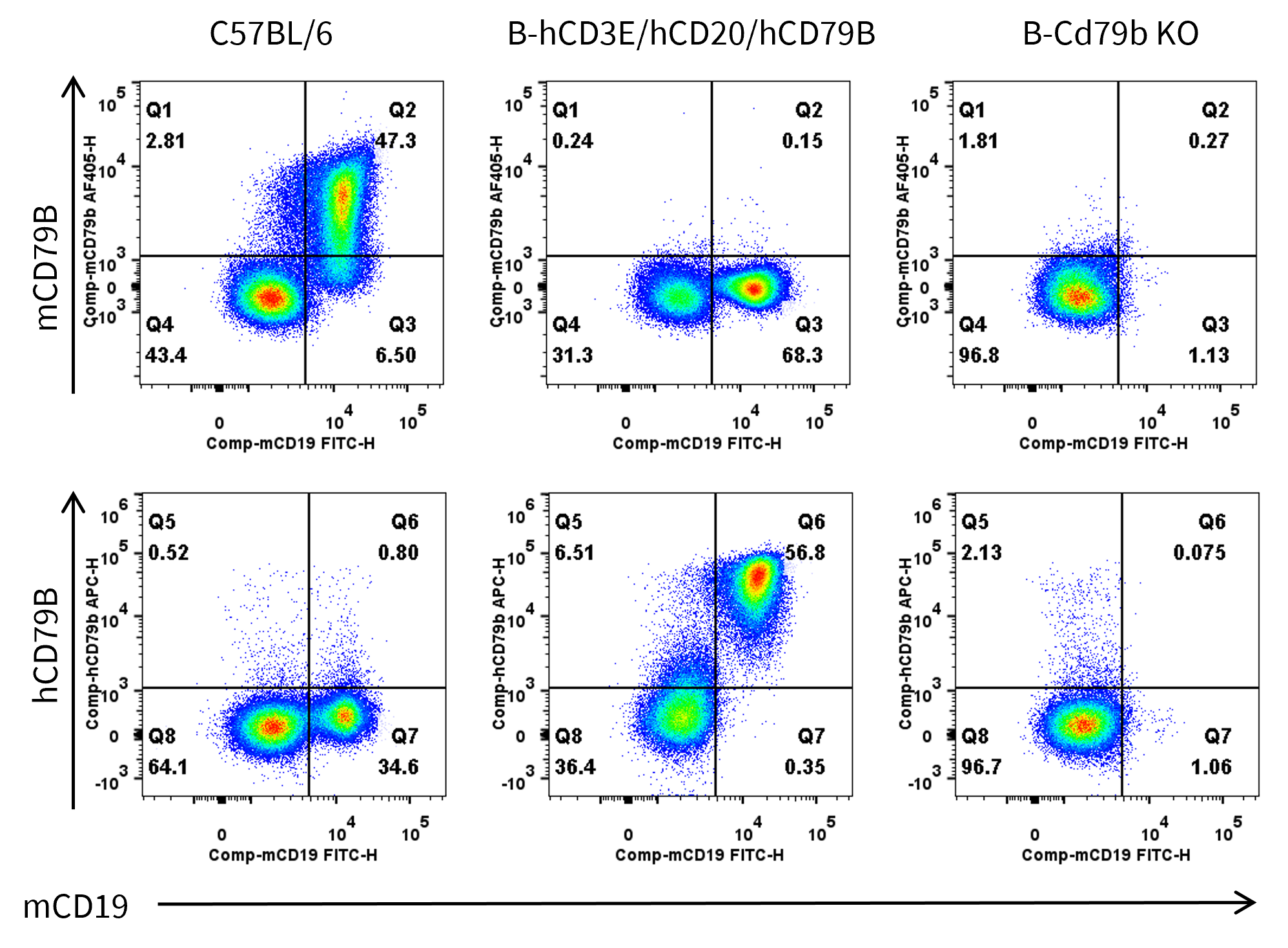
      • Mouse CD79B was only detectable in wild-type C57BL/6 mice, but not in homozygous B-hCD3E/hCD20/hCD79B mice. Human CD79B was exclusively detectable in homozygous B-hCD3E/hCD20/hCD79B mice.

      Strain specific CD79B expression analysis in wild-type C57BL/6 mice and homozygous B-hCD3E/hCD20/hCD79B mice by flow cytometry. Splenocytes were collected from wild-type C57BL/6 mice and homozygous B-hCD3E/hCD20/hCD79B mice. Protein expression was analyzed with anti-mouse CD79B antibody (R&D, FAB6814V) and anti-human CD79B antibody (Biolegend, 341406) by flow cytometry.
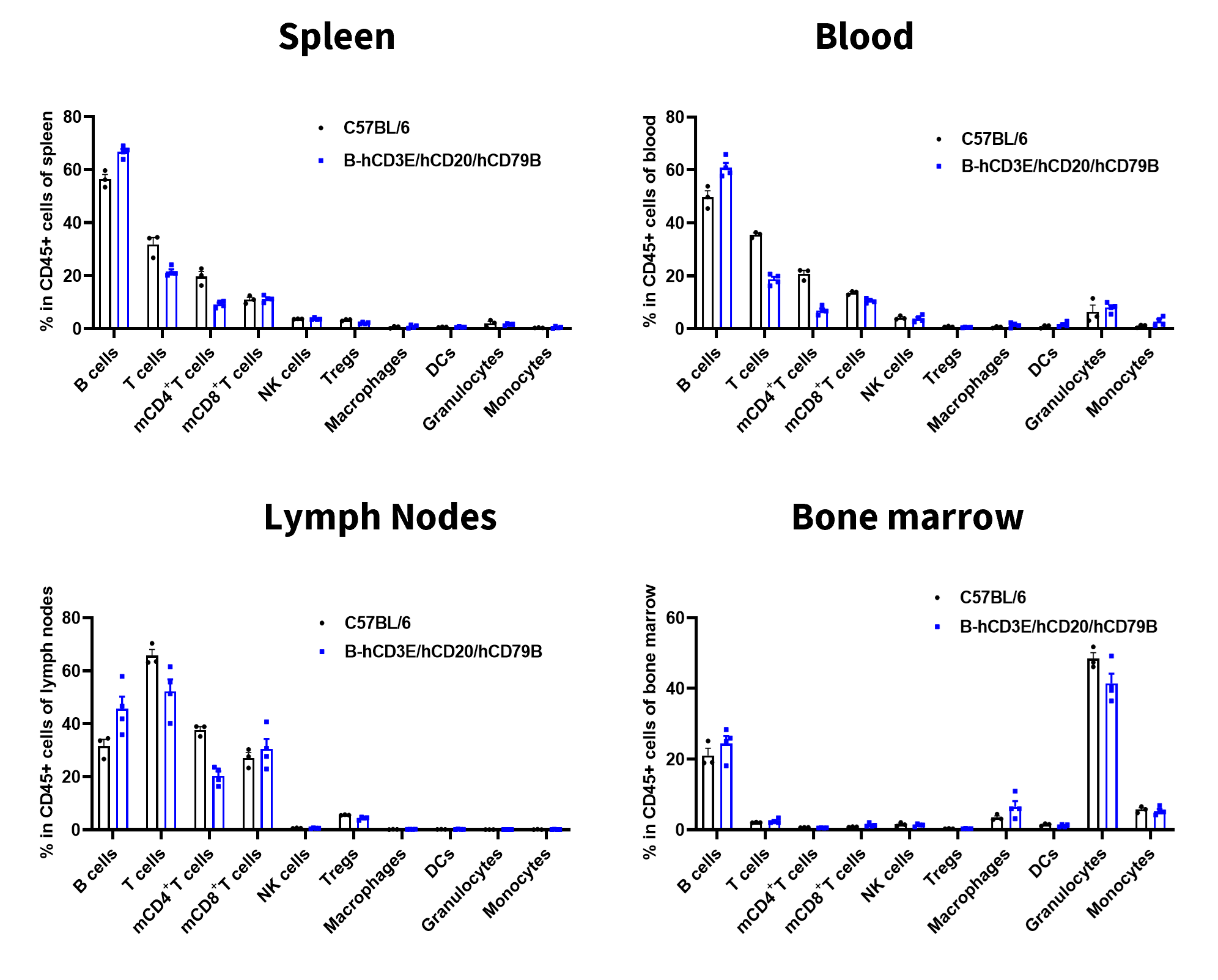
      Analysis of Leukocyte Subpopulations
      • The frequencies of T cells, CD4⁺ T cells, CD8⁺ T cells, Tregs, B cells, NK cells, DCs, granulocytes, monocytes, and macrophages in homozygous B-hCD3E/hCD20/hCD79B mice were similar to those in C57BL/6 mice.
      • Humanization of CD3E, CD20, and CD79B does not affect normal immune cell development or splenic distribution.

      Analysis of leukocyte subpopulations by flow cytometry in immune organs and blood. Splenocytes, peripheral blood, and lymph nodes were isolated from C57BL/6 and B-hCD3E/hCD20/hCD79B mice (female, 12-15-week-old, n = 3). Single live cells were gated on the CD45⁺ population and analyzed by flow cytometry as indicated. Values are expressed as mean ± SEM.

      Homozygous CD79B knockout mice exhibit arrested development of B cells at the pro-B cell stage, and the number of B cells in the spleen sharply decreases. (doi: 10.1084/jem.194.4.455. )
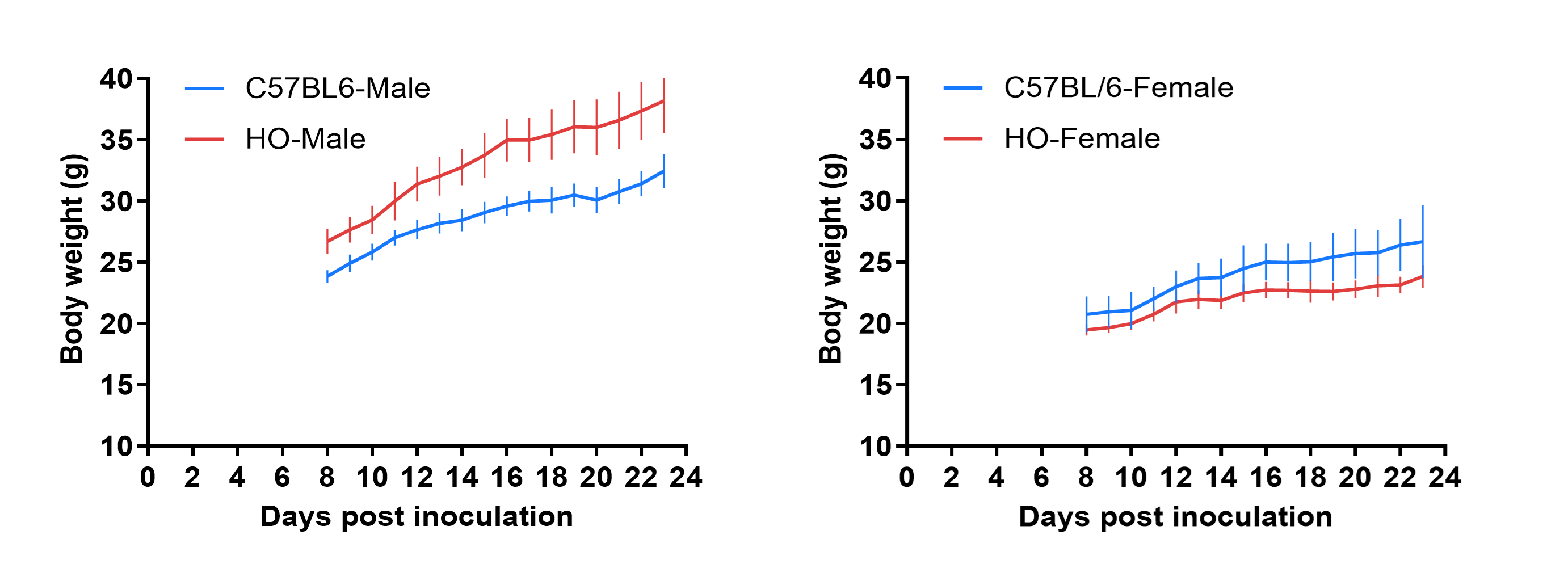
      Growth Curve

      Growth curve of B-hCD3E/hCD20/hCD79B mice. Eight-week-old mice were grouped by sex (10 males and 10 females, respectively). Body weight was measured on the same day of every week and lasted for 15. The minimum and maximum body weights shown in the table were calculated from the mean ± SD.
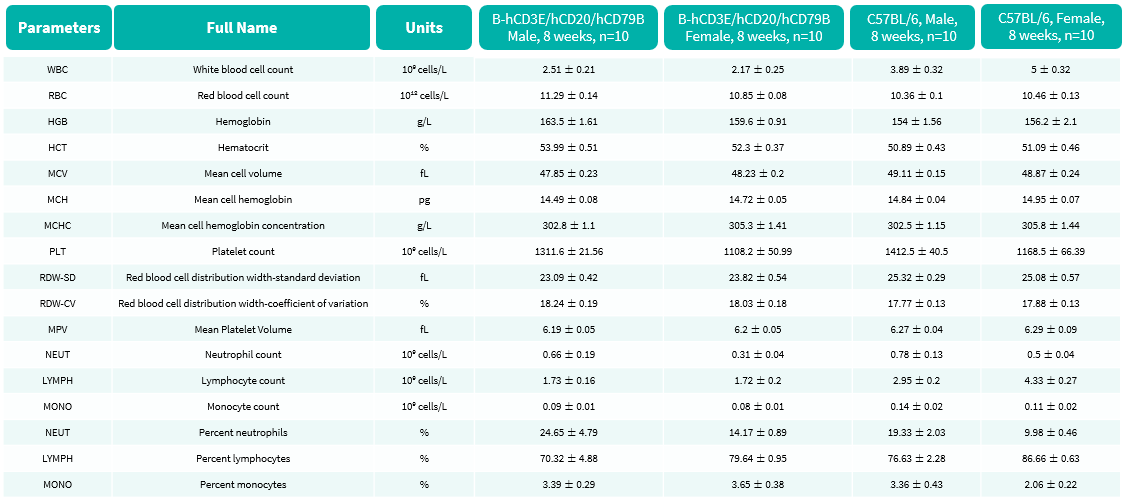
      Hematology Analysis
      • No significant differences were observed compared with wild-type mice.

      Complete blood count (CBC) of B-hCD3E/hCD20/hCD79B mice. Values are expressed as mean ± SD.
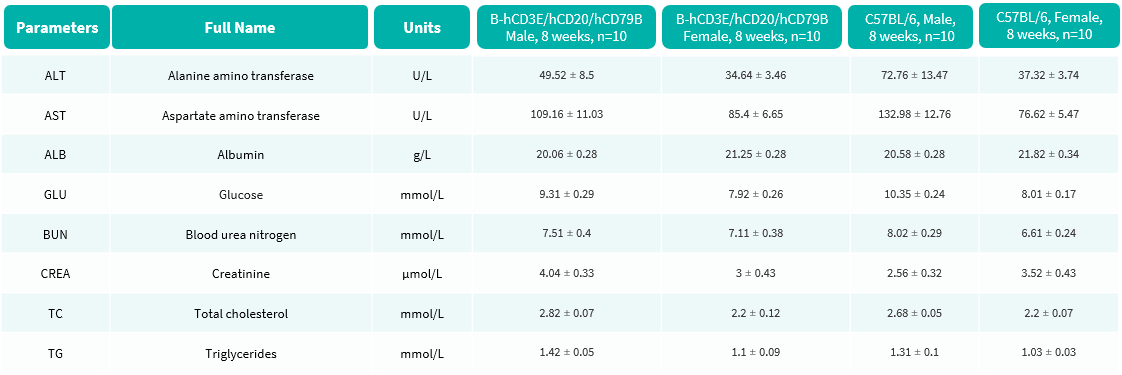
      Biochemistry Analysis
      • No significant differences were observed compared with wild-type mice.

      Blood biochemical parameters of B-hCD3E/hCD20/hCD79B mice are shown. Values are expressed as mean ± SD.
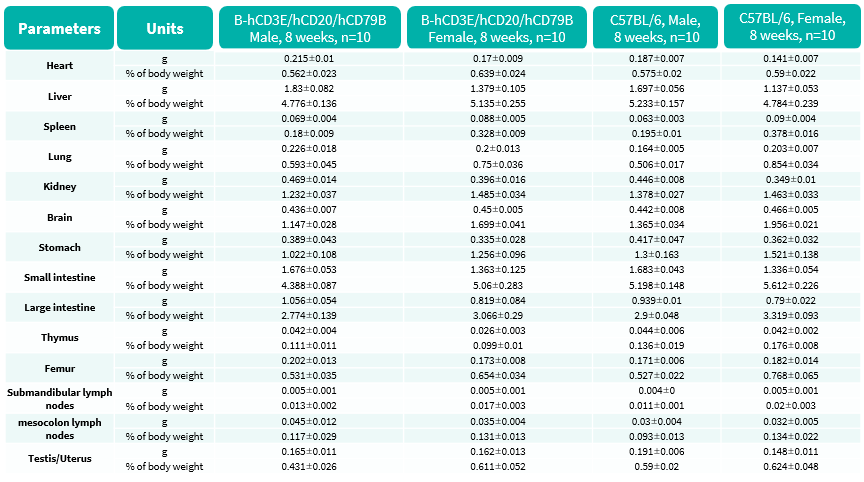
      Organ Weight
      • No abnormalities were observed.

      Average weights of major organs in B-hCD3E/hCD20/hCD79B mice.
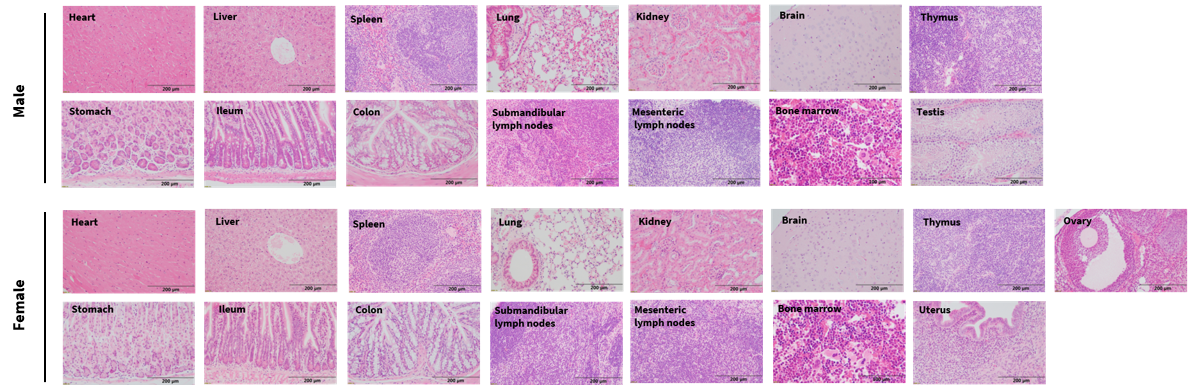
      Histopathological Analysis
      • No obvious abnormalities were observed in any organs examined (heart, liver, spleen, lung, kidney, brain, thymus, stomach, ileum, colon, submandibular lymph nodes, mesenteric lymph nodes, bone marrow, testis, uterus and ovary).

      Histopathological analysis of organs in B-hCD3E/hCD20/hCD79B mice. The main organs of B-hCD3E/hCD20/hCD79B mice were isolated at 23 weeks of age and analyzed with H&E staining (male, n=10; female, n=10). Scale bar: 200 μm.

      * When publishing results obtained using this animal model, please acknowledge the source as follows: The animal model [B-hCD3E/hCD20/hCD79B mice] (Cat# 113087) was purchased from Biocytogen.