
C57BL/6N-Slc3a2tm1(SLC3A2)Bcgen/Bcgen • 110983

Key Advantages:
Model Validation:
Applications:

Gene targeting strategy for B-hCD98HC mice. The exons 2-10 of mouse CD98HC gene that encode extracellular domain are replaced by human CD98HC exons 4-12 in B-hCD98HC mice. The genomic region of mouse CD98HC gene that encodes cytoplasmic portion is retained. The promoter, 5’UTR and 3’UTR region of the mouse gene are also retained. The chimeric CD98HC expression is driven by endogenous mouse CD98HC promoter, while mouse CD98HC gene transcription and translation will be disrupted.

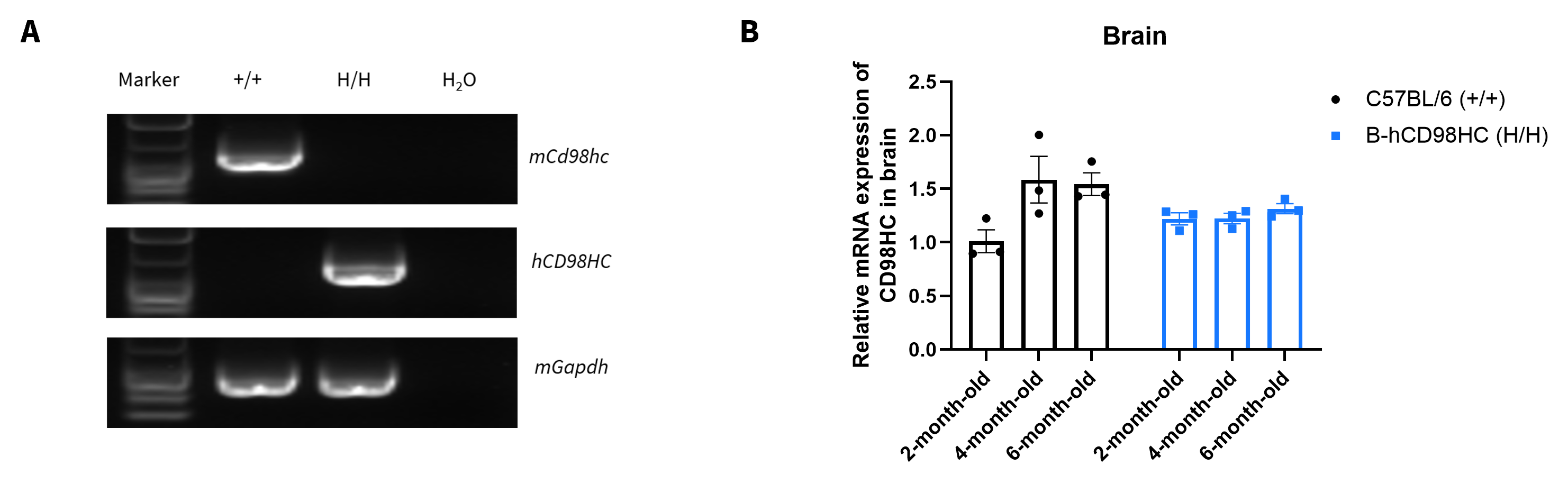
Strain-specific CD98HC expression analysis in wild-type C57BL/6 mice and homozygous B-hCD98HC mice. (A) Kidney RNA was isolated from wild-type C57BL/6 mice (+/+) and homozygous B-hCD98HC mice (H/H), then cDNA libraries were synthesized by reverse transcription, followed by PCR with mouse or human CD98HC primers. (B) Quantitative real-time PCR (qRT-PCR) analysis of relative CD98HC mRNA expression in the brain of male wild-type C57BL/6 mice and homozygous B-hCD98HC mice at 2, 4 and 6-months of age. Expression levels were normalized to CD98HC expression in brain of 2-month-old C57BL/6 male mice. Values are expressed as mean ± SEM.
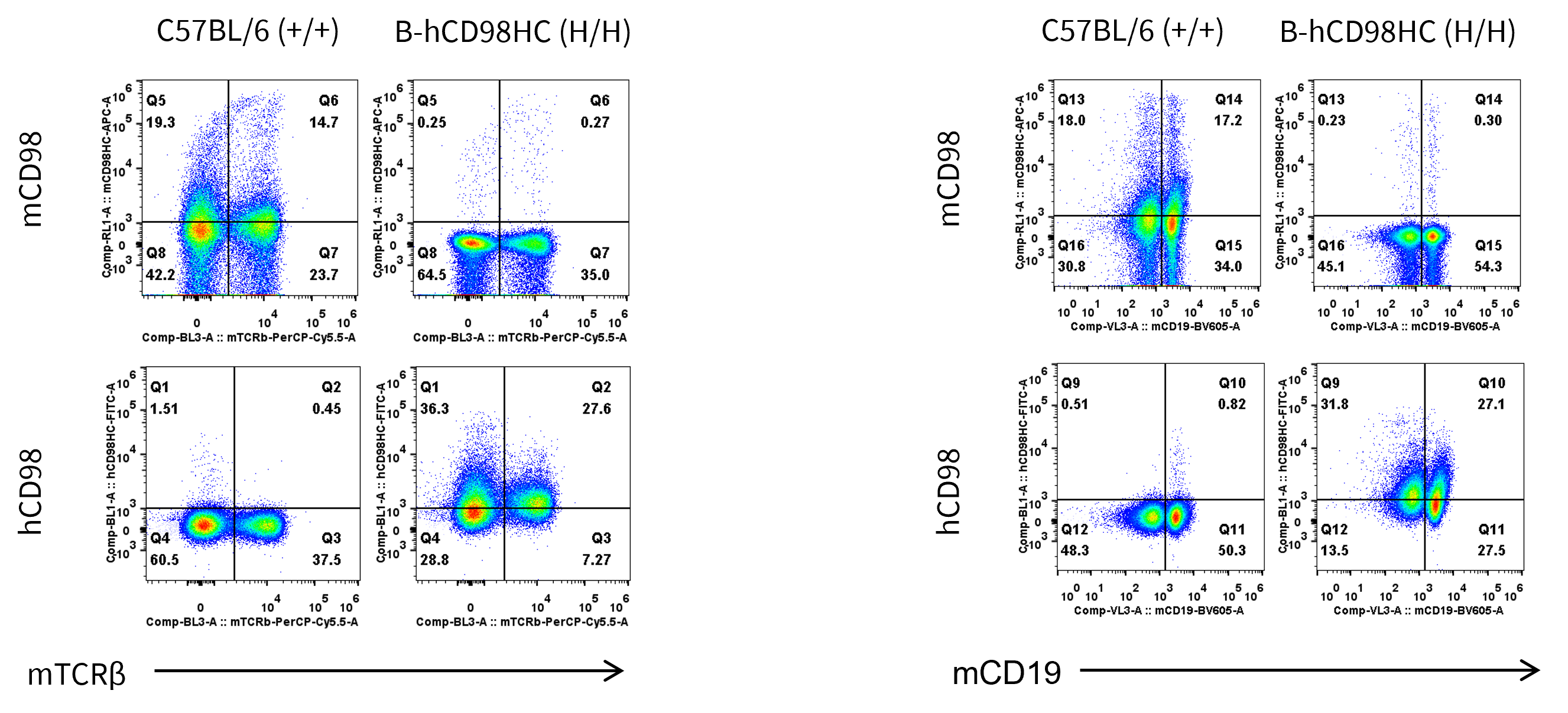
Strain specific CD98HC expression analysis in wild-type C57BL/6 mice and homozygous humanized B-hCD98HC mice. Splenocytes were collected from wild-type C57BL/6 mice (+/+) and homozygous B-hCD98HC mice (H/H) (female, 7-week-old, n=1). Protein expression was analyzed with anti-mouse CD98HC antibody (Biolegend, 128211) and anti-human CD98HC antibody (Biolegend, 315603) by flow cytometry.
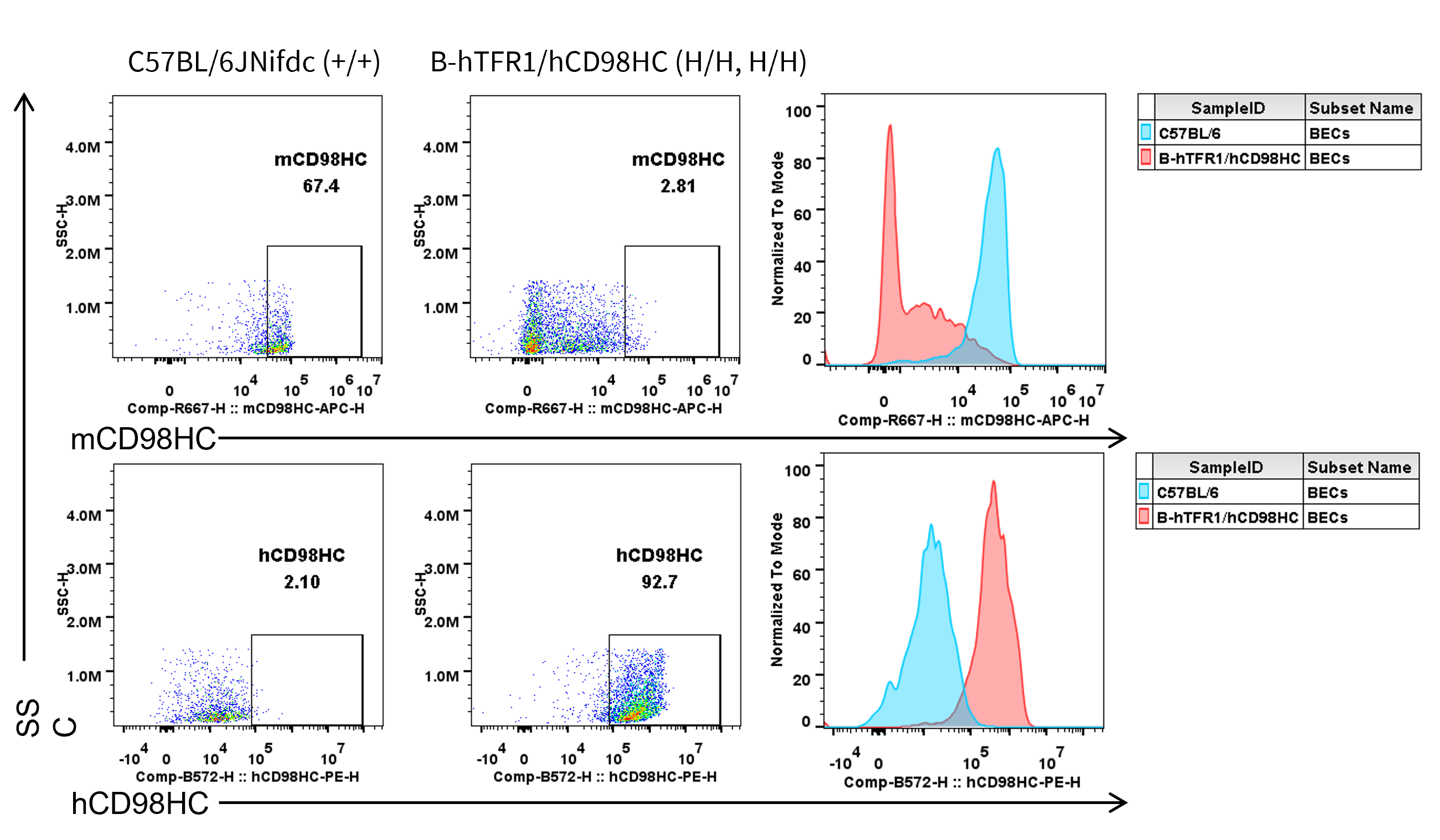
Strain specific CD98HC expression in wild-type C57BL/6JNifdc and homozygous B-hTFR1/hCD98HC mice by flow cytometry. Brain cells were collected from wild-type C57BL/6JNifdc (+/+) and homozygous B-hTFR1/hCD98HC mice (H/H, H/H) and analyzed by flow cytometry with anti-mouse CD98HC antibody (Biolegend, 128211) and anti-human CD98HC antibody (231161-CD98BBBB-h1.L produced in-house).
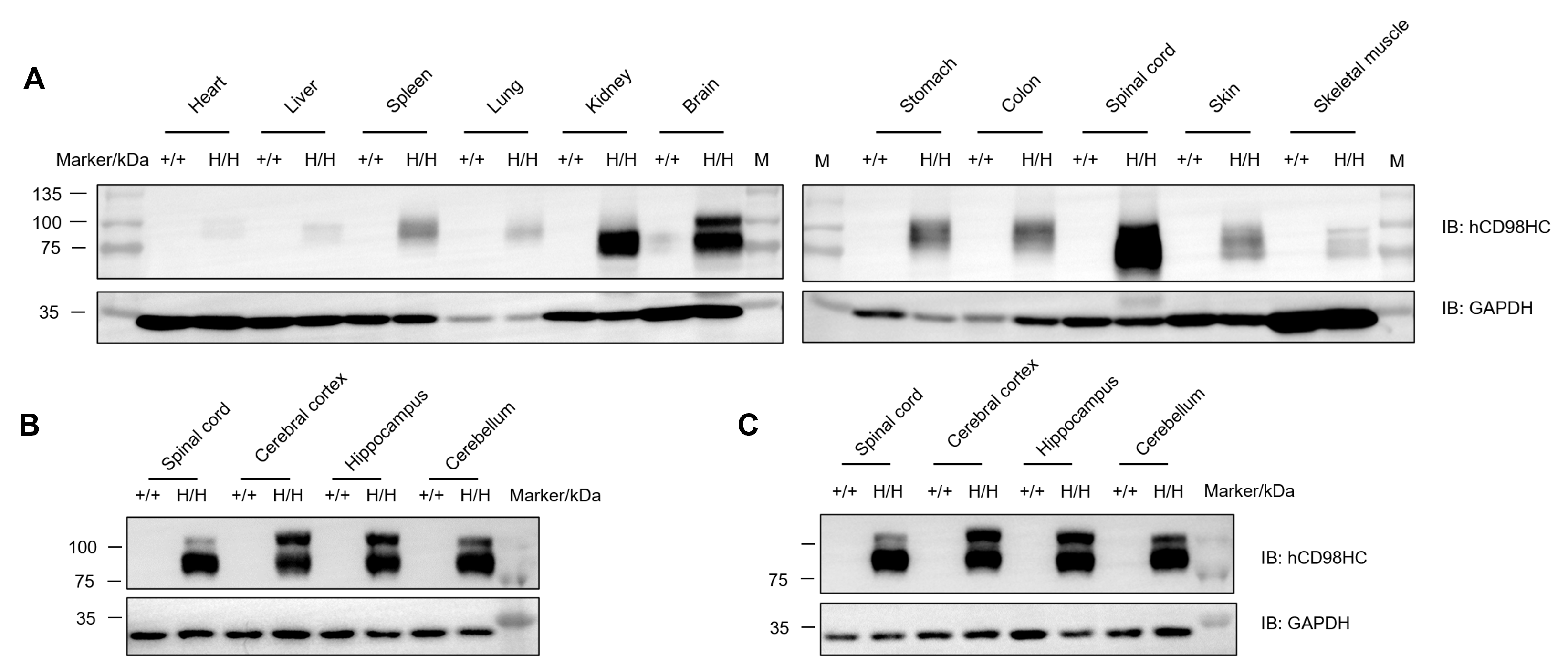
Western blot analysis of hCD98HC protein expression in homozygous B-hCD98HC mice.
Various tissue lysates were collected from wild-type C57BL/6 and homozygous B-hCD98HC mice (H/H), and then analyzed by western blot with species-specific anti-human CD98 antibody (Abcam, ab307587). (A) Male. (B) Male. (C) Female.
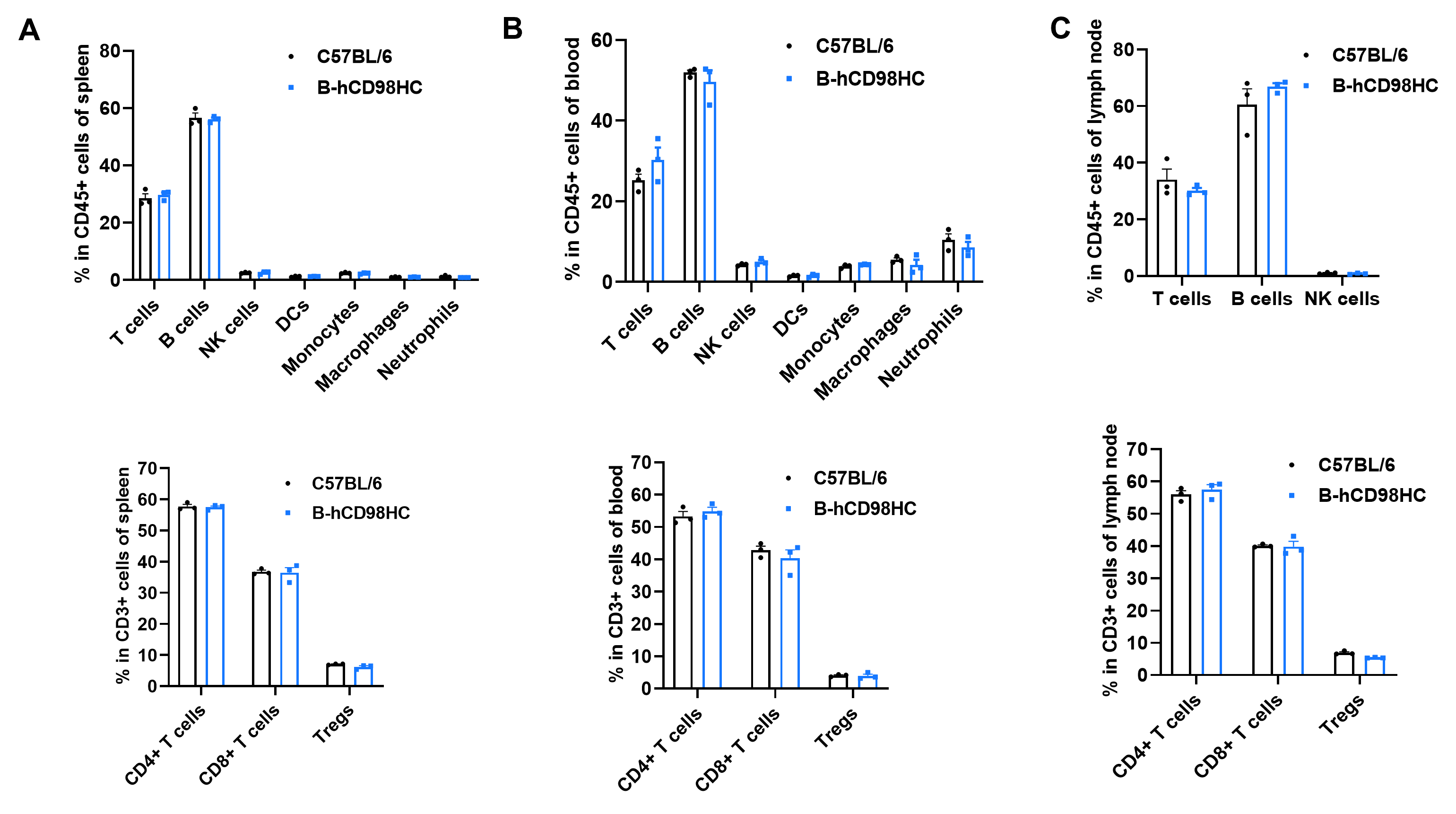
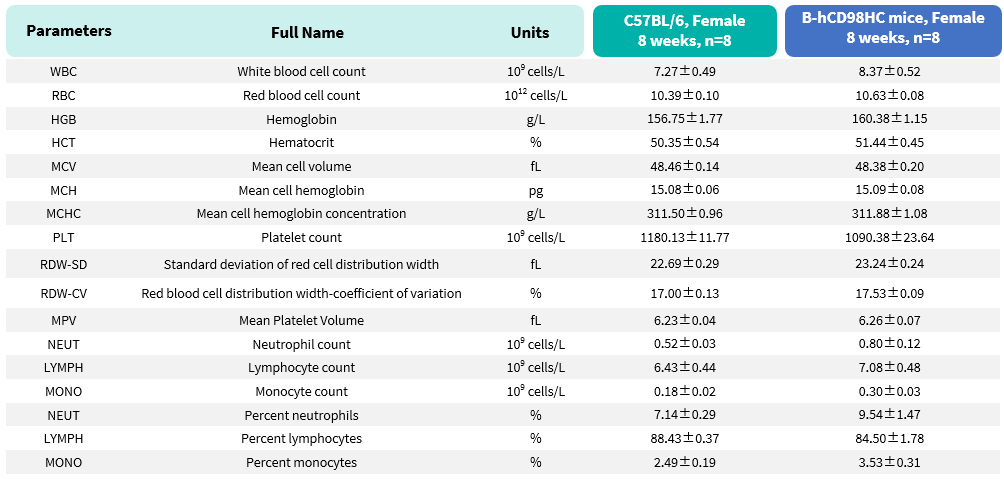
Complete blood count (CBC) of B-hCD98HC mice. Values are expressed as mean ± SD.
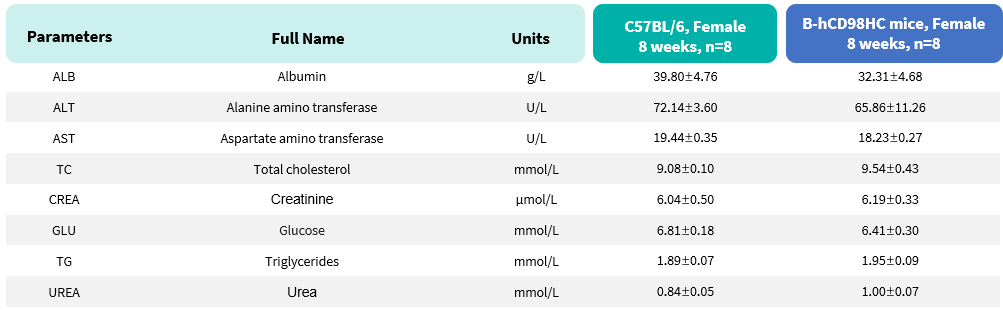
Biochemical test of B-hCD98HC mice. Values are expressed as mean ± SD.


In vivo pharmacokinetic (PK) evaluation of anti-human CD98HC antibody. B-hCD98HC mice (n=2, female, 8-week-old) were injected with control IgG (10 mpk) and anti-human CD98HC antibody (CD98BBBB-h1.L analog, monovalent, produced in house, 13.3 mpk) via tail vein. Brain and serum were taken for in vivo PK evaluation. Brain concentrations, serum concentrations, and brain-to-serum ratio of anti-human CD98HC antibody were quantified. Graphs represent mean ± SEM.
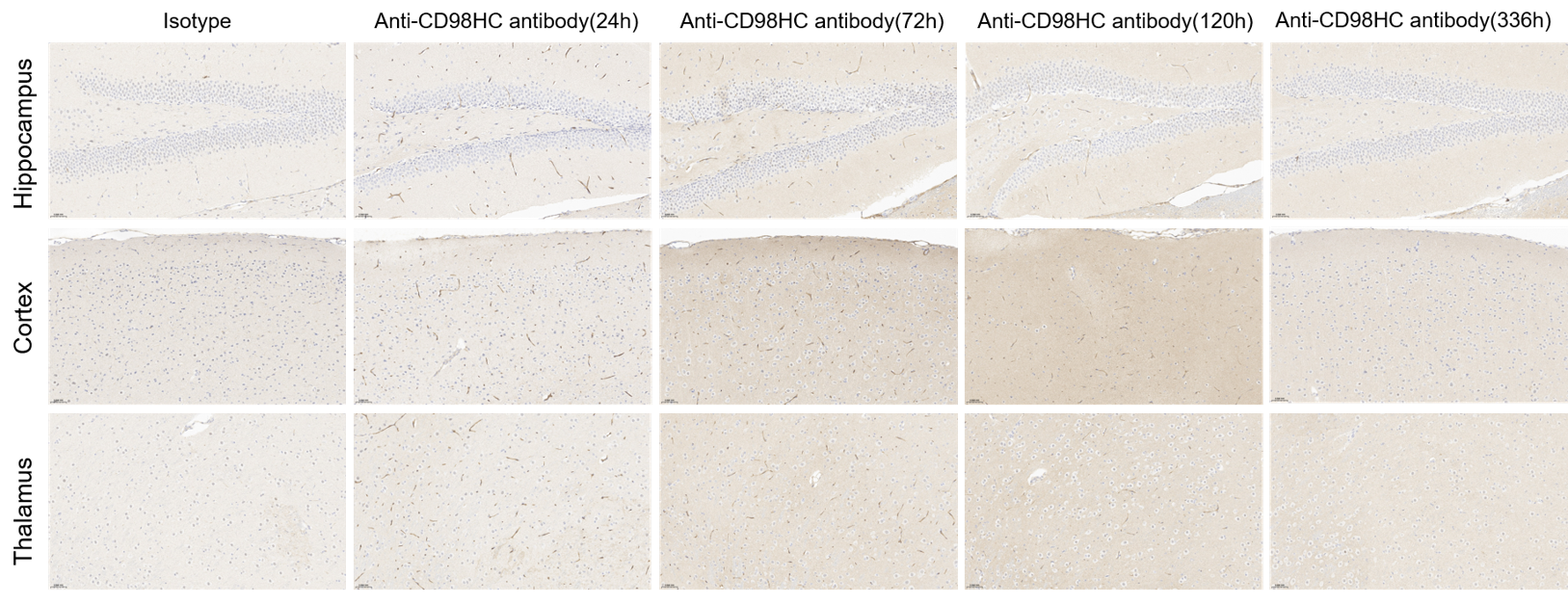
IHC staining of anti-CD98HC Abs penetrate brain parenchyma. B-hCD98HC mice were injected with control IgG (10 mpk) and anti-human CD98HC antibody (CD98BBBB-h1.L analog, monovalent, produced in house, 13.3 mpk) via tail vein. Brain comparts were taken for IHC staining after 120 h. Blue: nucleus; dark brown: antibodies.
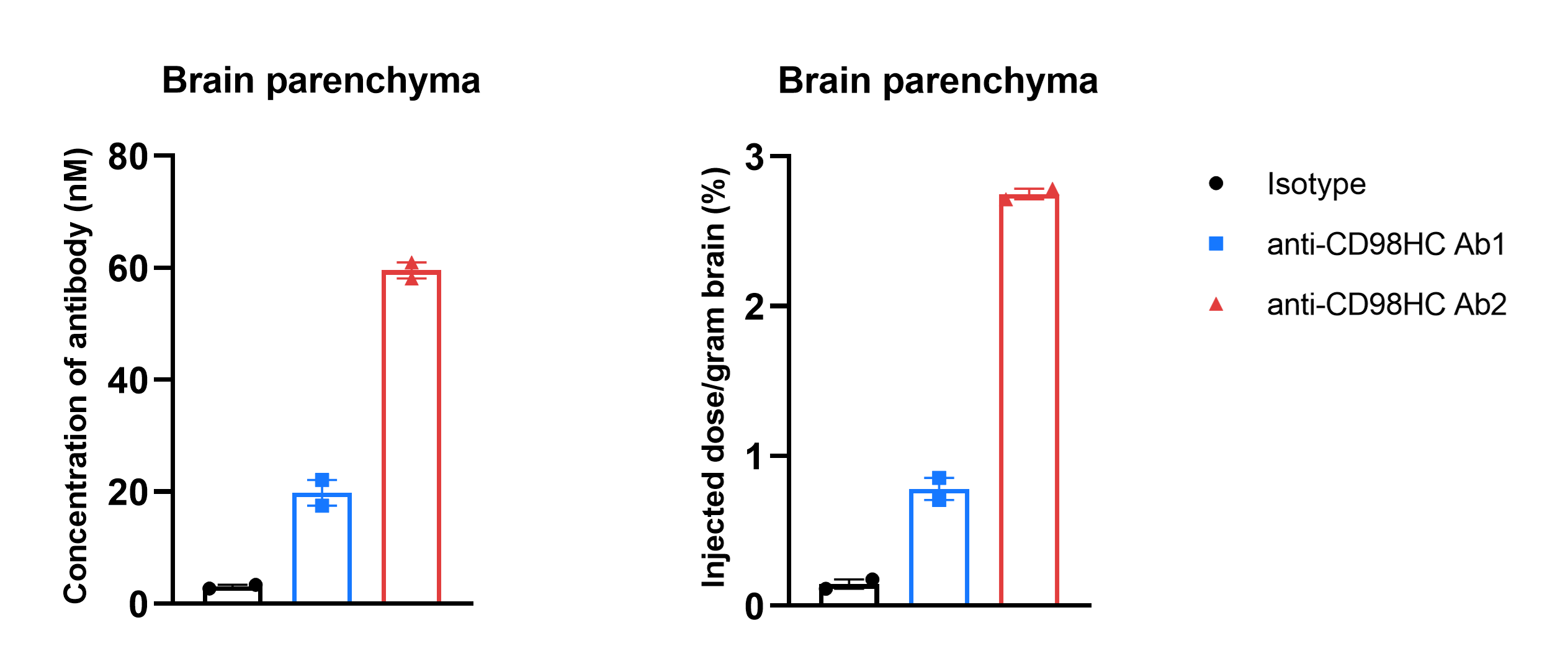
In vivo PK evaluation and comparison of different anti-CD98HC antibodies. B-hCD98HC mice (n=2, 8-week-old) were injected with Isotype IgG (20 mpk) and anti-human CD98HC antibodies (Ab1 and Ab2, produced in house according to patent) via tail vein. Brain were taken for in vivo PK evaluation after dosing 5 days. Brain concentrations (A) and % of injection/gram brain (B) were quantified. As shown in panel, anti-CD98HC Ab2 exhibited higher brain exposure. Graphs represent mean ± SEM.
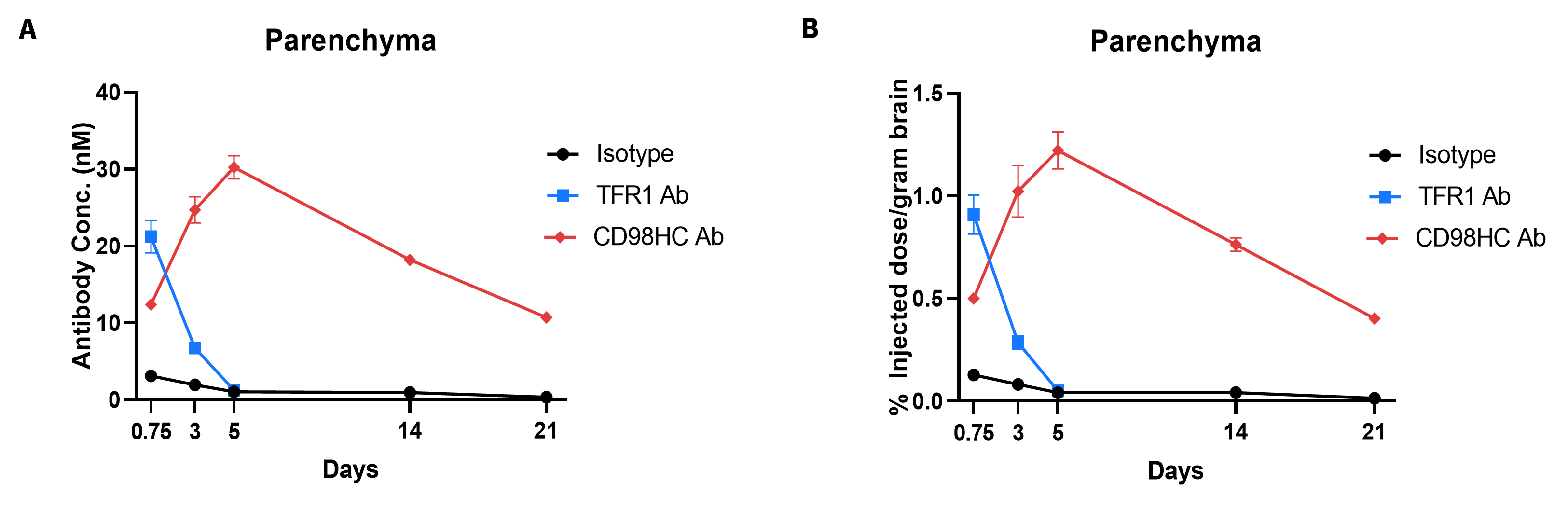
In vivo PK evaluation and comparison of anti-human TFR1 and anti-CD98HC antibody.
B-hTFR1/hCD98HC mice (n=2, female, 8-week-old) were injected with control IgG (10 mpk) anti-human TFR1 antibody (TFR1 Ab, JR-141 analog, monovalent, produced in house, 12.56 mpk) and anti-human CD98HC antibody (CD98HC Ab, CD98BBBB-h1.L analog, monovalent, produced in house, 13.3 mpk) via tail vein. Brain were taken for in vivo PK evaluation after dosing 18 h and 3, 5, 14, 21 days. Brain concentrations (A) and % of injection/gram brain (B) were quantified. As shown in panel, anti-human TFR1 antibody exhibited higher brain exposure in 24 h after dose, while anti-CD98HC antibody exhibited higher brain exposure in 72 h after dose. The results confirmed that B-hTFR1/hCD98HC mice enables uptake of an intravenously administered anti-human TFR1 antibody or anti-human CD98HC antibody, and this mice can be used for the comparison of penetration efficacy of shuttle molecules targeting TFR1 or CD98HC. Graphs represent mean ± SEM.