C57BL/6-Lrrk2tm1(LRRK2*G2019S)Bcgen/Bcgen • 113065

LRRK2: Biological Roles and Therapeutics Strategies

LRRK2

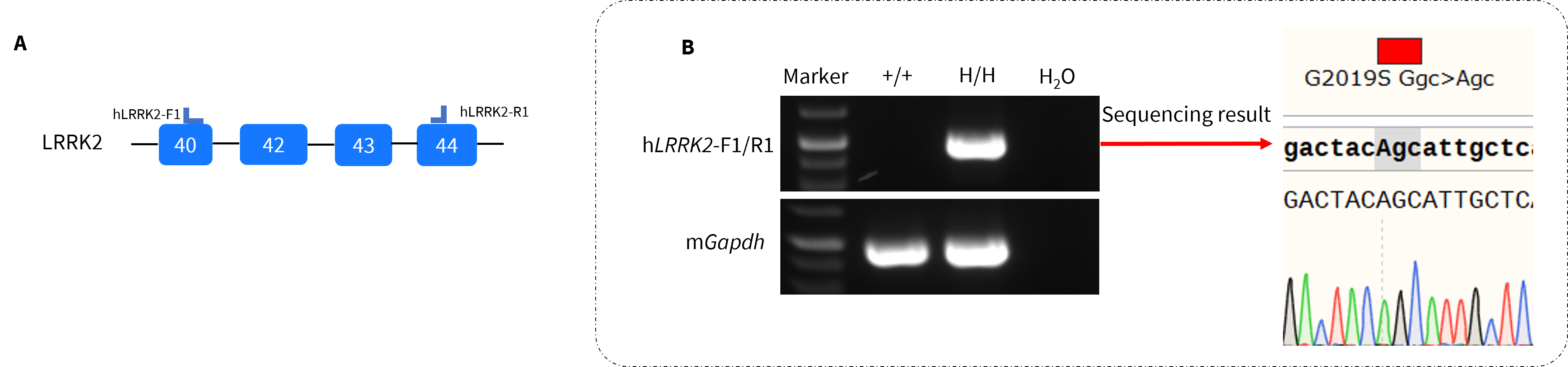
Strain specific analysis of LRRK2 mRNA expression in wild-type C57BL/6JNifdc and B-hLRRK2*G2019S mice by RT-PCR and sequencing. Brian RNA were isolated from wild-type C57BL/6JNifdc mice (+/+) and homozygous B-hLRRK2*G2019S mice (H/H), then cDNA libraries were synthesized by reverse transcription, followed by PCR with mouse or human LRRK2 primers. Mouse Lrrk2 mRNA was only detectable in wild-type mice, human LRRK2 mRNA was exclusively detectable in homozygous B-hLRRK2*G2019S mice but not in wild-type mice. The point mutation of G2019S was confirmed via Sanger sequencing.
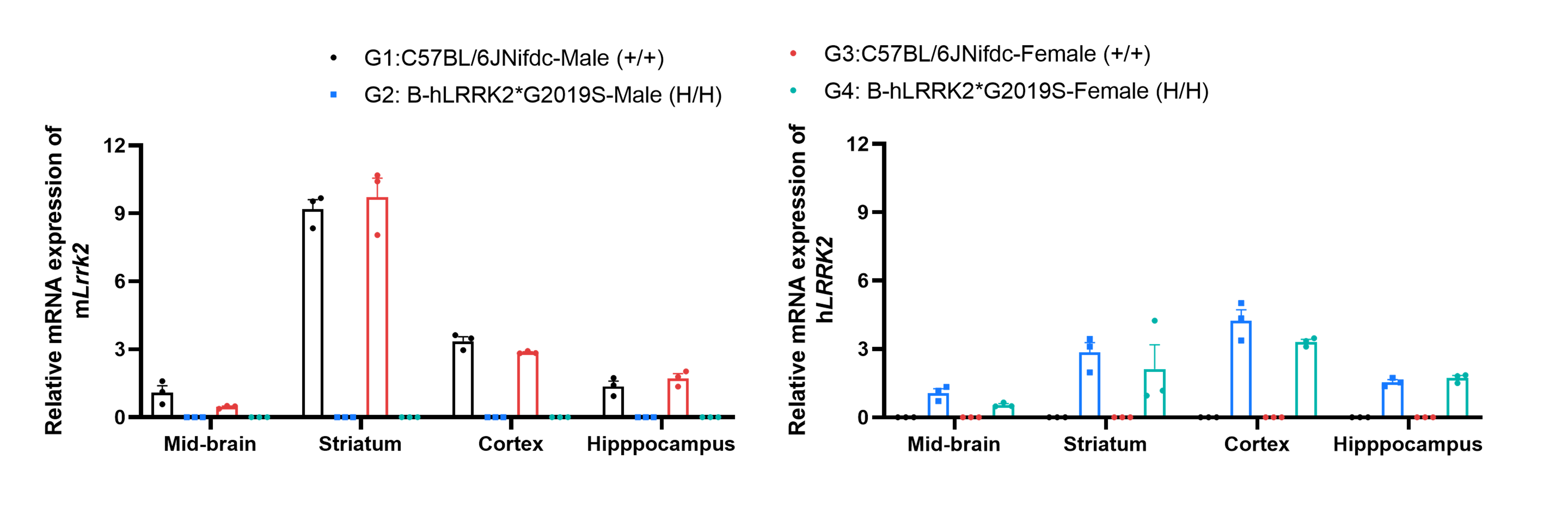
Strain specific analysis of LRRK2 mRNA expression in wild-type C57BL/6JNifdc mice and B-hLRRK2*G2019S by RT-qPCR. Striatum, mid-brain, cortex and hippocampus RNA were isolated from wild-type C57BL/6JNifdc mice (+/+) and homozygous B-hLRRK2*G2019S mice (H/H, n=3 per sex, 12-week-old), then cDNA libraries were synthesized by reverse transcription, followed by RT-qPCR with mouse or human LRRK2 primers. Mouse Lrrk2 mRNA was only detectable in wild-type mice, human LRRK2 mRNA was exclusively detectable in homozygous B-hLRRK2*G2019S mice but not in wild-type mice. Mouse Gapdh served as the internal reference gene, and strain-specific LRRK2 expression in other tissues was normalized to mid-brain expression in male mice. Values are expressed as mean ± SEM.
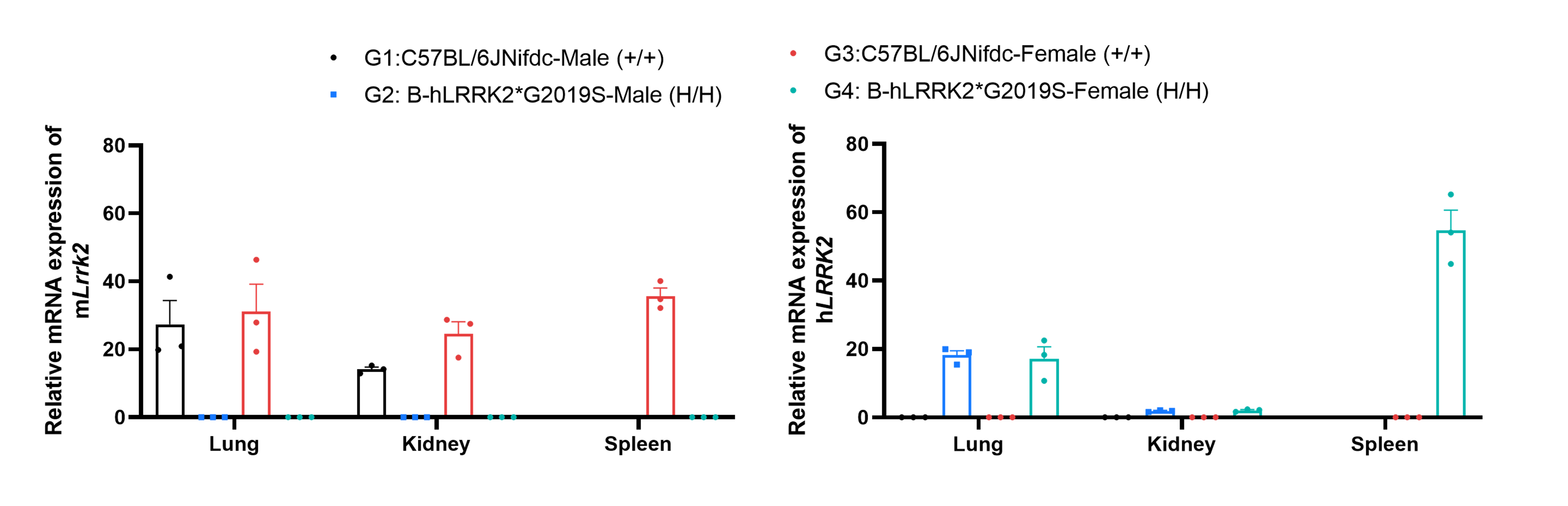
Strain specific analysis of LRRK2 mRNA expression in wild-type C57BL/6JNifdc mice and B-hLRRK2*G2019S by RT-qPCR. Lung, kidney and spleen RNA were isolated from wild-type C57BL/6JNifdc mice (+/+) and homozygous B-hLRRK2*G2019S mice (H/H, n=3 per sex, 12-week-old), then cDNA libraries were synthesized by reverse transcription, followed by RT-qPCR with mouse or human LRRK2 primers. Mouse Lrrk2 mRNA was only detectable in wild-type mice, human LRRK2 mRNA was exclusively detectable in homozygous B-hLRRK2*G2019S mice but not in wild-type mice. Mouse Gapdh served as the internal reference gene, and strain-specific LRRK2 expression in other tissues was normalized to mid-brain expression in male mice. Spleen samples were only collected from female mice, therefore, no spleen data are available for male mice. Values are expressed as mean ± SEM.
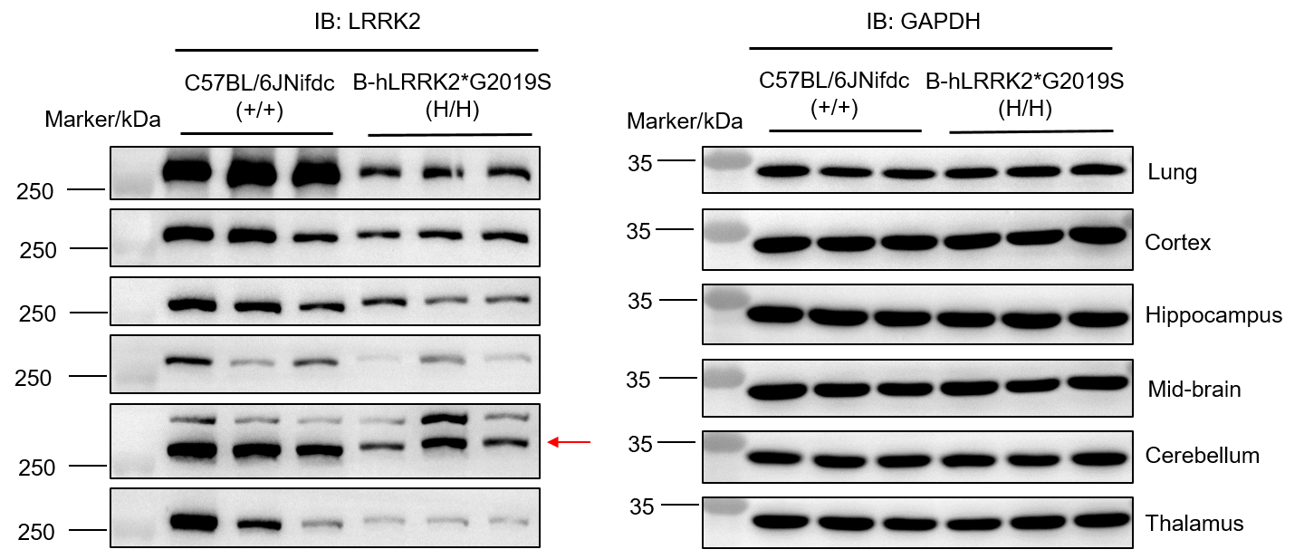
Western blot analysis of LRRK2 protein expression in homozygous B-hLRRK2*G2019S mice. Various tissue were collected from wild-type C57BL/6JNifdc mice (+/+) and homozygous B-hLRRK2*G2019S mice (H/H), and then analyzed by western blot with anti-LRRK2 antibody (Abcam, ab133474). 40 μg total proteins were loaded for western blotting analysis. LRRK2 was detected in both wild-type mice and homozygous B-hLRRK2*G2019S mice, as the antibody cross-recognized both human and mouse LRRK2.

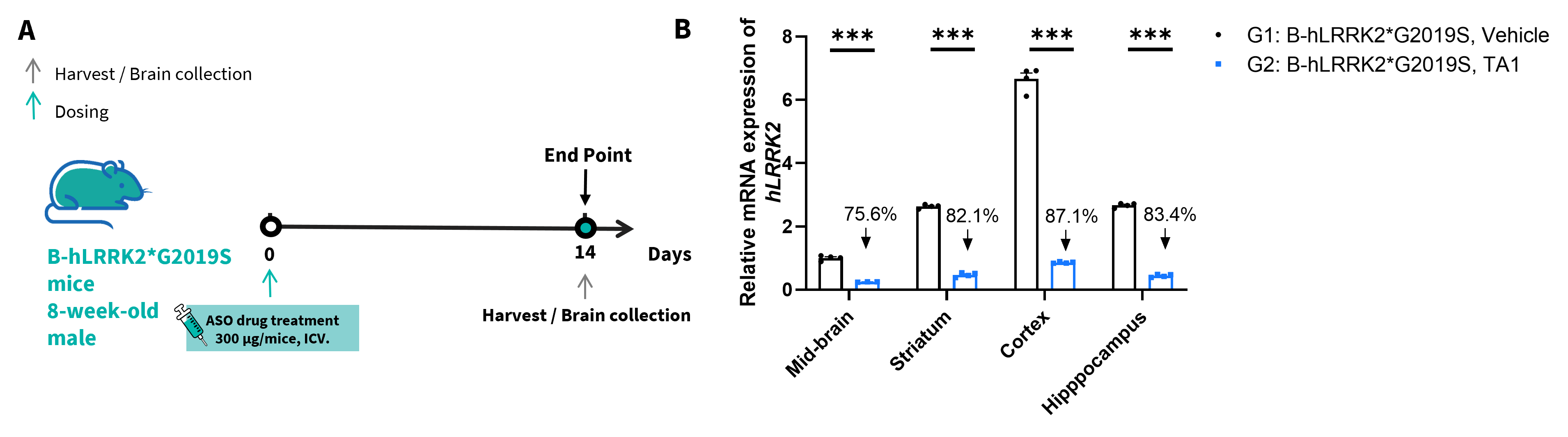
The inhibitory efficiency of the LRRK2-targeted small nucleic acid drug in homozygous B-hLRRK2*G2019S mice. B-hLRRK2*G2019S mice were randomly divided into 2 groups (n=4, 8-week-old, male). The human LRRK2-targeted nucleic acid drug (Test Article 1, TA1, produced in-house according to a patent) and artificial cerebrospinal fluid (αCSF) were administered to the mice individually. The mice were sacrificed on day 14, and the brains (cortex, hippocampus, mid-brain and striatum) were collected to detect the human LRRK2 expression by qRT-PCR. (A) The schematic diagram of experimental processing. (B) The expression of human LRRK2 mRNA in cortex, hippocampus, mid-brain and striatum. Gapdh served as an internal reference gene, and LRRK2 expression in other tissues was normalized to that in the mid-brain. The human LRRK2 mRNA in the treatment group was significantly reduced compared to the control group. Values are expressed as mean ± SEM. Significance was determined by 2-way ANOVA. *P < 0.05, **P < 0.01, ***P < 0.001.