당신도 좋아할 수 있습니다
Rheumatoid arthritis (RA) is a chronic autoimmune disease that affects approximately 0.5% to 1% of the global population, with higher prevalence observed in industrialized countries. Characterized by persistent joint inflammation, RA can lead to significant pain, swelling, and eventual joint destruction if left untreated (Firestein 2003; Aletaha et al. 2018).
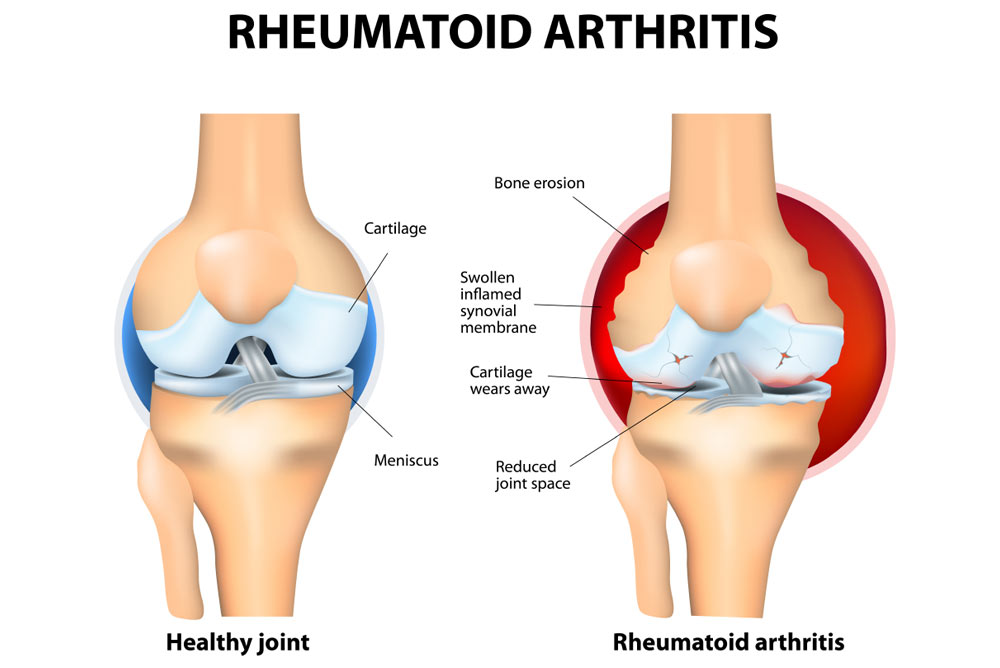
Healthy Joint Compared to RA Joint (Source: Chris Bailey Orthopaedics)
The pathogenesis of RA involves a complex interplay of genetic and environmental factors that disrupt immune tolerance. This disruption leads to the activation of pro-inflammatory pathways, including the overproduction of cytokines such as tumor necrosis factor-alpha (TNF-α), interleukin-6 (IL-6), and interleukin-1 (IL-1), which contribute to synovial inflammation and joint damage. Additionally, autoantibody-producing B cells play a crucial role in disease progression (Kondo et al. 2021).
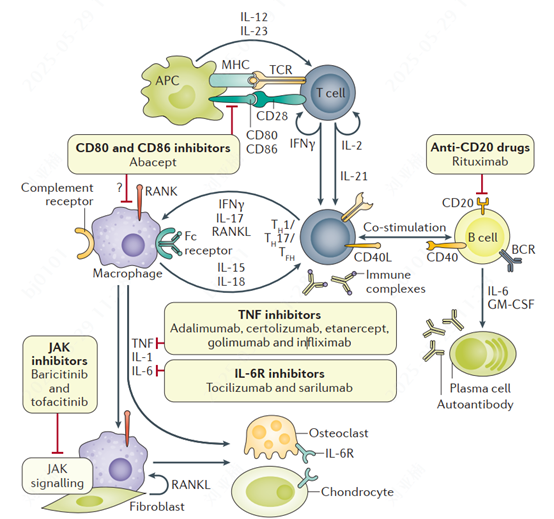
Advancements in RA treatment have significantly improved patient outcomes. While conventional disease-modifying antirheumatic drugs (DMARDs) like methotrexate remain foundational, the introduction of biologics (e.g., infliximab, tocilizumab, abatacept) targeting pro-inflammatory cytokines, along with small-molecule inhibitors that interfere with intracellular signaling pathways involved in inflammation (e.g., JAK inhibitors), has transformed the therapeutic landscape. These targeted therapies offer more precise control of disease activity, reducing inflammation and preventing joint damage (Radu et al. 2021; Brown et al. 2024; Fujii et al. 2024).
|
Current Therapeutic Landscape for RA (Smolen et al. 2018)
Despite these advancements, challenges remain in optimizing treatment strategies and understanding individual patient responses. Ongoing research into the immunopathology of RA and the development of novel therapeutics continues to be essential in the quest to improve quality of life for those affected by this debilitating disease.
To accelerate preclinical RA drug development, Biocytogen offers induced RA disease models, and validated humanized mouse models for high-impact targets like IL-6, TNF-α, CD40, and more. These models enable robust in vivo evaluation of drug efficacy and safety, bridging the gap to clinical success.
Featured Humanized Mouse Models: Looking for a different target? These are just the highlights—we offer a wider range of models to support your RA and immunology research.
|
Case Study 1: Anti-Human IL-6 Antibody Mitigates CIA in IL-6/IL-6R Humanized Mice |
|
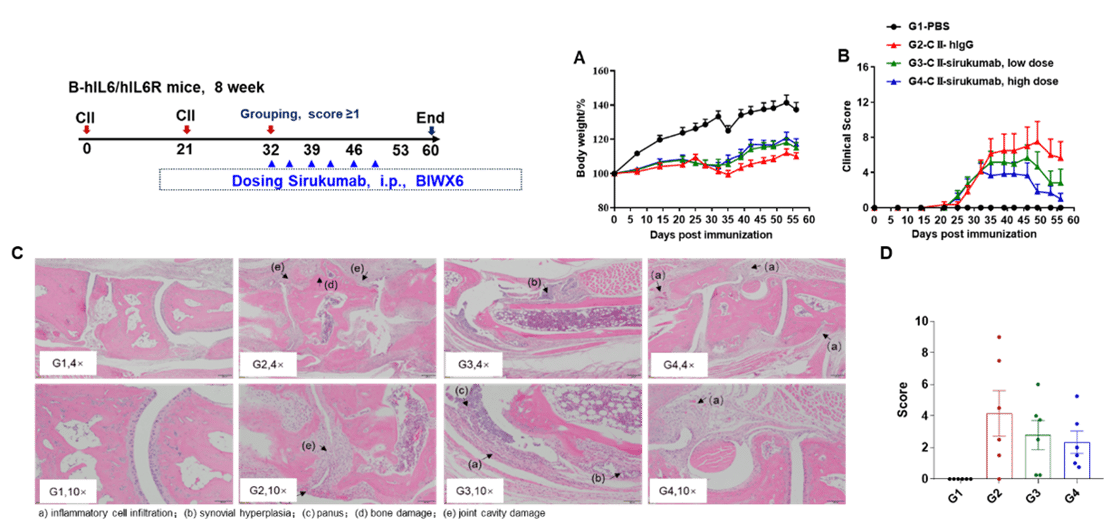
Sirukumab (in house) treatment improved clinical outcomes in B-hIL6/hIL6R mice with collagen-induced arthritis (CIA). Dose-dependent benefits were observed in body weight (A) and clinical scores (B). Histopathological analysis of joints confirmed reduced inflammation and tissue damage, as shown by H&E staining (C) and histology scores (D). Mean ± SEM.
|
Case Study 2: Anti-Human TNF-α Antibody Alleviates CIA in TNFA/TNFR2/TNFR1 Humanized Mice |
|
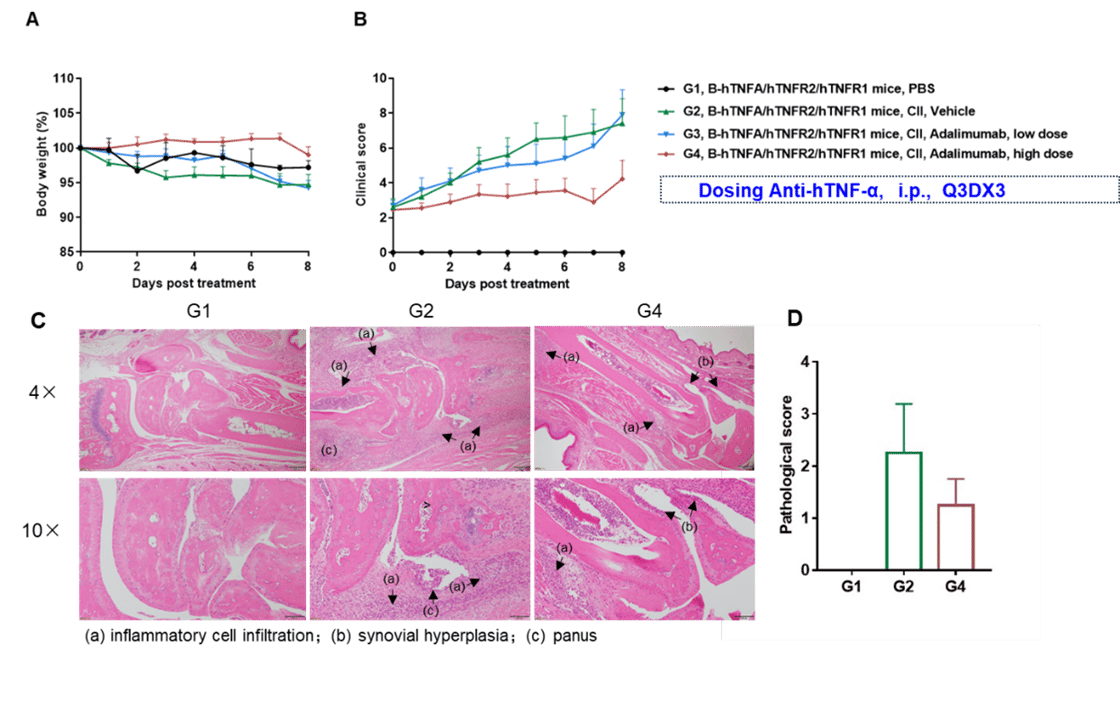
Adalimumab (in house) reduced arthritis severity in B-hTNFA/hTNFR2/hTNFR1 mice with collagen-induced arthritis (CIA). High-dose adalimumab (G4) improved body weight (A) and significantly lowered clinical scores (B) compared to controls. Joint histology revealed reduced inflammation, confirmed by H&E staining (C) and pathology scores (D). Mean ± SEM.
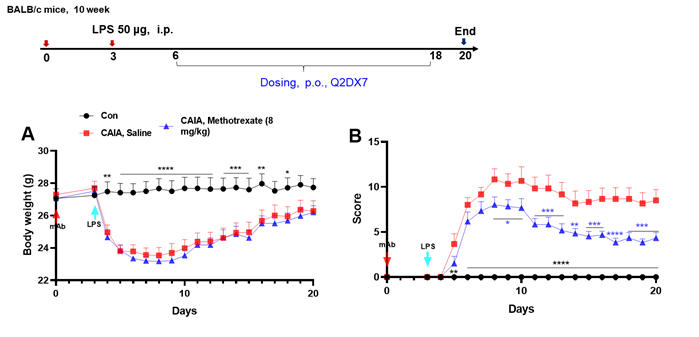
Case Study 3: Methotrexate alleviated Collagen Antibody Induced Arthritis (CAIA) Effects of methotrexate on collagen antibody induced arthritis (CAIA). Mice received mAb injection on day 0, LPS injection on day 3. Body weight (A) and clinical score (B) were recorded every day from day 3. Mean ± SEM. |
Explore How Biocytogen’s Cutting-Edge Humanized Models Can Support Your RA Therapeutic Pipeline! |
References:
Firestein, Gary S. "Evolving concepts of rheumatoid arthritis." Nature 423.6937 (2003): 356-361.
Aletaha, Daniel, and Josef S. Smolen. "Diagnosis and management of rheumatoid arthritis: a review." Jama 320.13 (2018): 1360-1372.
Kondo, Naoki, Takeshi Kuroda, and Daisuke Kobayashi. "Cytokine networks in the pathogenesis of rheumatoid arthritis." International journal of molecular sciences 22.20 (2021): 10922.
Radu, Andrei-Flavius, and Simona Gabriela Bungau. "Management of rheumatoid arthritis: an overview." Cells 10.11 (2021): 2857.
Brown, Philip, Arthur G. Pratt, and Kimme L. Hyrich. "Therapeutic advances in rheumatoid arthritis." Bmj 384 (2024).
Fujii, Takayuki, et al. "Management and treatment outcomes of rheumatoid arthritis in the era of biologic and targeted synthetic therapies: evaluation of 10-year data from the KURAMA cohort." Arthritis Research & Therapy 26.1 (2024): 16.
Smolen, Josef, Daniel Aletaha, Anne Barton, et al. "Rheumatoid arthritis." Nature Reviews Disease Primers 4 (2018): 18001.