B-hATXN3*(CAG)n mice

C57BL/6-Atxn3tm1(ATXN3*(CAG)n)Bcgen/Bcgen • 113577


B-hATXN3*(CAG)n mice

Catalog Number: 113577
Strain Name: C57BL/6-Atxn3tm1(ATXN3*(CAG)n)Bcgen/Bcgen
Strain Background: C57BL/6
NCBI gene ID: 4287 (Human)
Aliases: AT3; JOS; MJD; ATX3; MJD1; SCA3
---
라이선스 옵션 제공 가능
B-hATXN3*(CAG)n mice

이 페이지에서

  • Description
  • Targeting strategy
  • Phenotypic analysis

포스터

모두 보기

    출판물

      Description
      • Gene Information: ATXN3 gene is located on human chromosome 14q32.1. Pathogenic CAG trinucleotide repeat expansion within its coding region causes spinocerebellar ataxia type 3 (SCA3).
      • Protein Expression: ATXN3 protein is ubiquitously expressed across mammalian tissues, with high abundance in the central nervous system.
      • Signaling Pathway: As a deubiquitinating enzyme, ATXN3 modulates ubiquitin-proteasome system. It regulates transcription factors, DNA damage response and autophagy. Mutant ATXN3 disrupts protein clearance, triggers proteotoxic stress and impairs neuronal survival signaling cascades.
      • Therapeutic Inhibition: Current strategies target mutant ATXN3 via antisense oligonucleotides or RNA interference. Enhancing autophagy and proteasome activity facilitates aggregate clearance. Modulating polyQ toxicity and neuroinflammation are promising approaches to slow SCA3 neurodegeneration.
      Targeting strategy

      ATXN3

      • The mouse Atxn3 are replaced by human ATXN3 gene including promoter, 5’UTR, coding sequence and 3’UTR regions. n=73 CAG copies are inserted into human ATXN3 exon 10 in B-hATXN3*(CAG)n mice.
      • The mouse Atxn3 gene transcription and translation will be disrupted.
      mRNA Expression Analysis
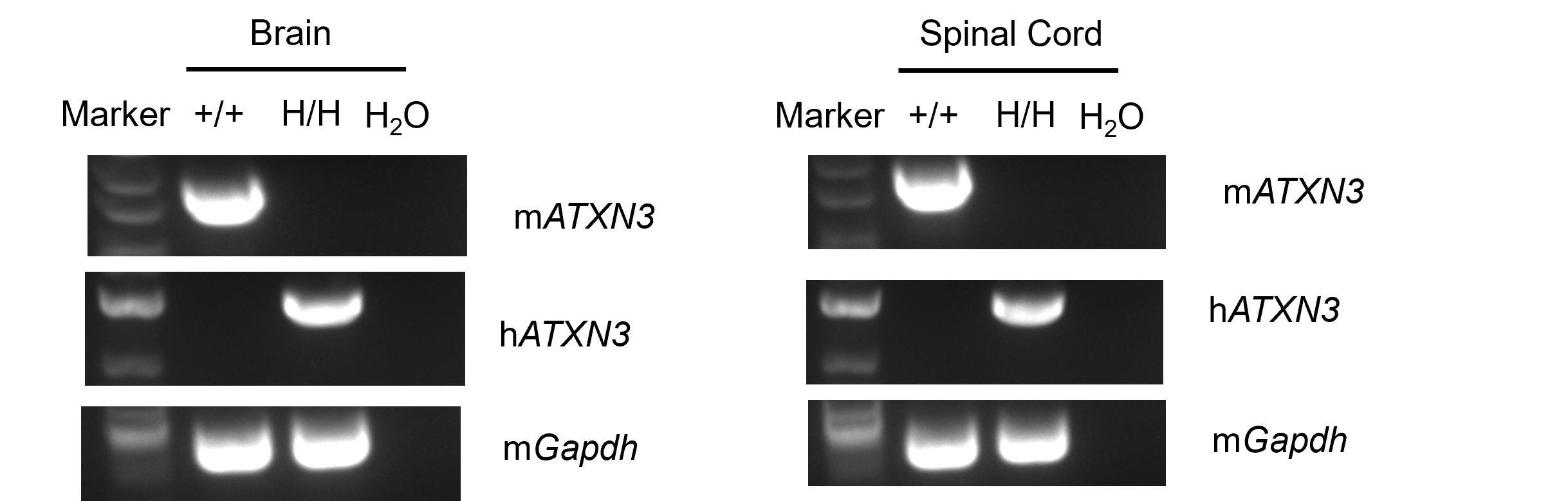
      • Mouse ATXN3 mRNA was only detectable in wild-type mice.
      • Human ATXN3 mRNA was exclusively detectable in homozygous B-hATXN3*(CAG)n mice but not in wild-type mice.
      • Human ATXN3 sequence was confirmed via Sanger sequencing.

      Strain specific analysis of ATXN3 mRNA expression in wild-type C57BL/6JNifdc mice and homozygous B-hATXN3*(CAG)n mice by RT-PCR. Brain and spinal cord RNA were isolated from wild-type C57BL/6JNifdc mice (+/+) and homozygous B-hATXN3*(CAG)n mice (H/H), then cDNA libraries were synthesized by reverse transcription, followed by PCR with mouse or human ATXN3 primers.
      Protein Expression Analysis
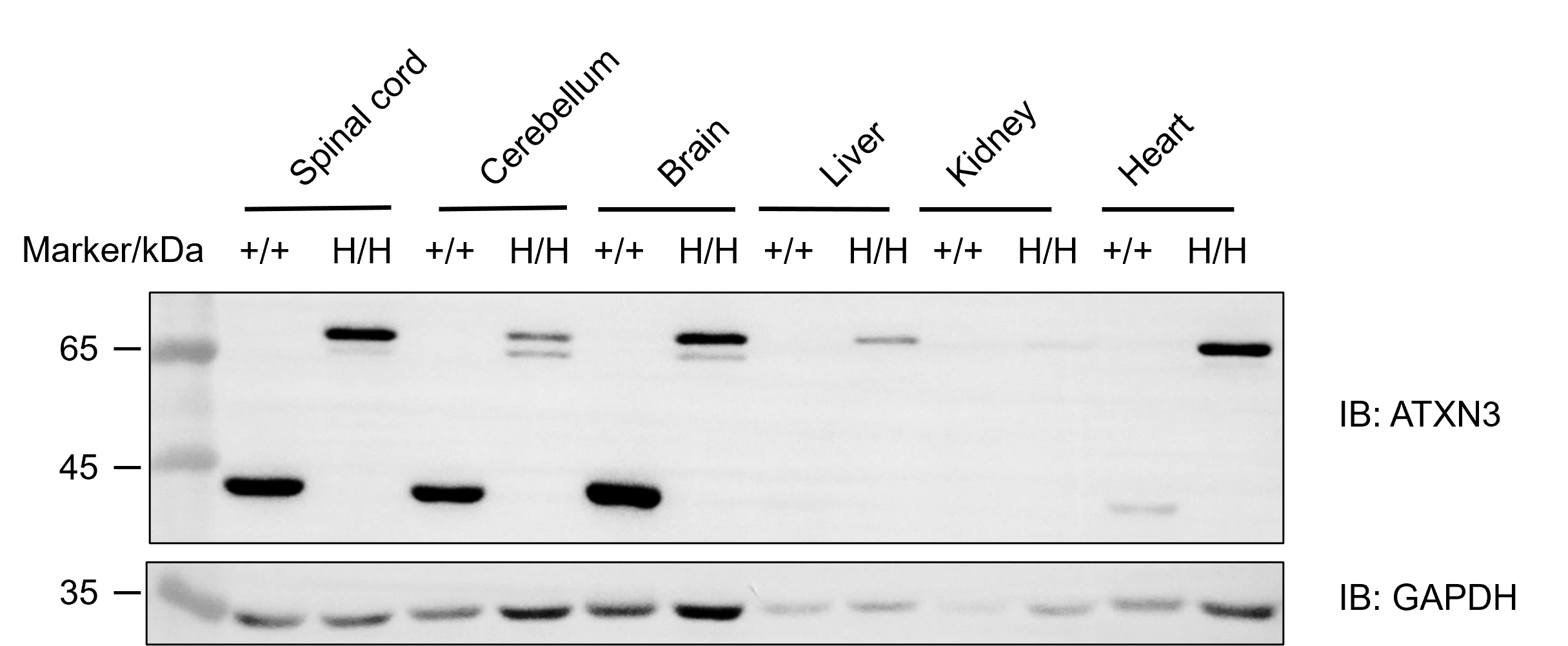
      • ATXN3 protein was detectable in both wild-type C57BL/6JNifdc and homozygous B-hATXN3*(CAG)n mice, as the antibody was cross-reactive between human and mouse.
      • The larger protein band in homozygous B-hATXN3*(CAG)n mice is due to multiple CTG repeats introduced into ATXN3 exon 10, which incorporate extra glutamine residues into the protein.

      Western blot analysis of ATXN3 protein expression in homozygous B-hATXN3*(CAG)n mice. Various tissue lysates were collected from wild-type C57BL/6JNifdc mice (+/+) and homozygous B-hATXN3*(CAG)n mice (H/H), and then analyzed by western blot with anti-ATXN3 antibody (Abcam, ab259828). 40 μg total protein was loaded for western blotting analysis.
      Clasping Tests
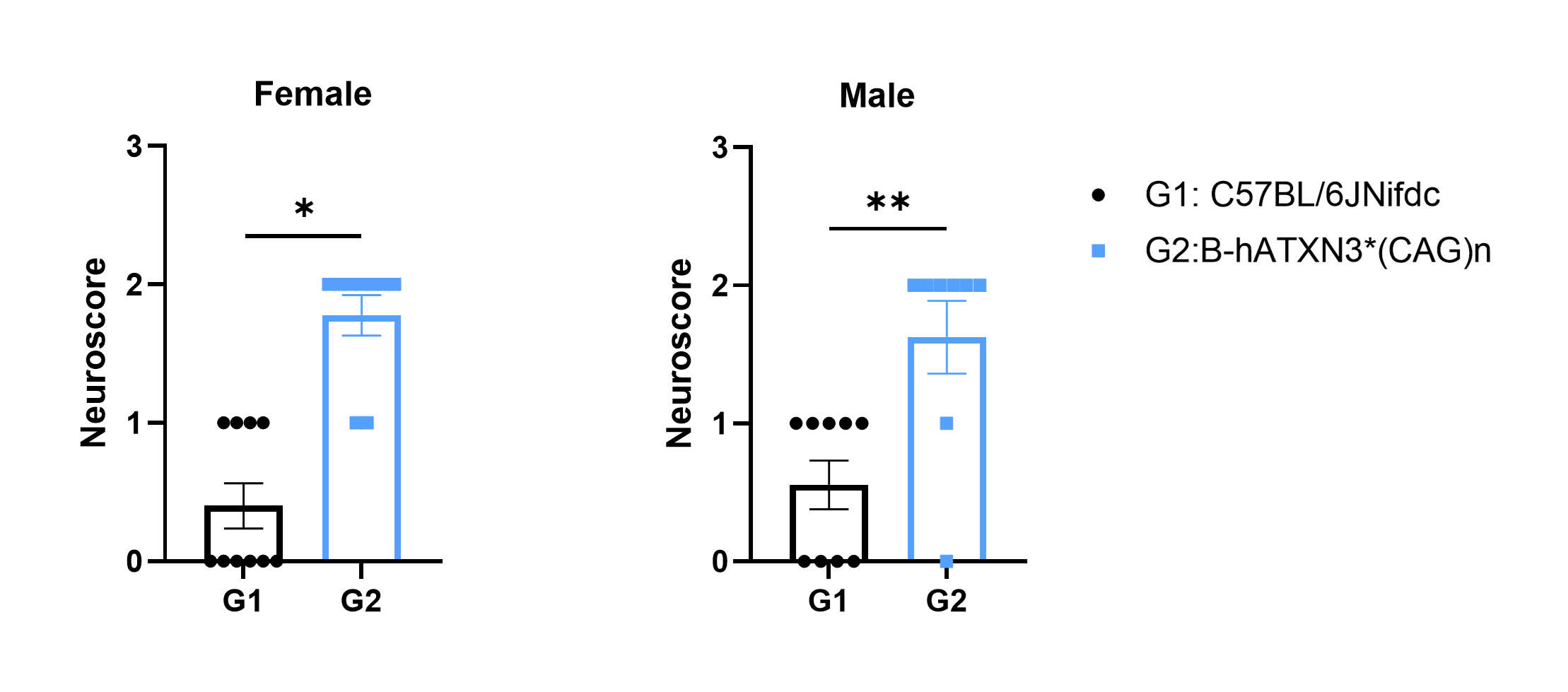
      • Homozygous B-hATXN3*(CAG)n mice show significantly higher clinical scores, suggesting impaired neurological function.

      Behavioral performance in wild-type C57BL/6JNifdc and homozygous B-hATXN3*(CAG)n mice. Clasping tests were conducted to assess the behavioral performance in 2-month-old female (A) and male (B) wild-type C57BL/6JNifdc (n=10) and B-hATXN3*(CAG)n mice (female, n=9; male, n=8). Values are expressed as mean ± SEM. Significance was determined by one-way ANOVA. ***P < 0.001.
      Grip Strength
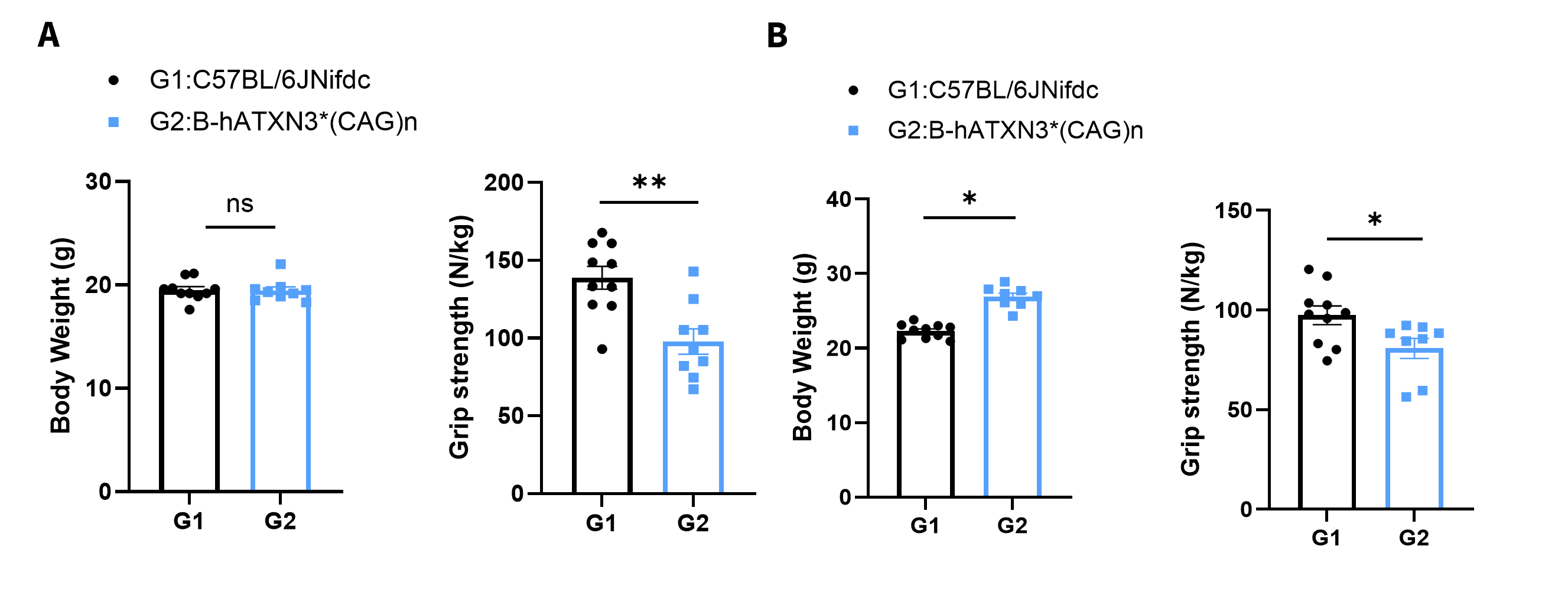
      • The grip strength of homozygous B-hATXN3*(CAG)n mice was decreased compared with wild-type mice, showing grip strength impairments of homozygous B-hATXN3*(CAG)n mice.

      Behavioral performance in wild-type C57BL/6JNifdc and homozygous B-hATXN3*(CAG)n mice. Grip strength tests were conducted to assess the foreleg muscular strength and grip ability of female (A) and male (B) wild-type C57BL/6JNifdc (n=10) and homozygous B-hATXN3*(CAG)n mice (female, n=9; male, n=8). All grip strength measurements are normalized to the individual animal’s body weight. Values are expressed as mean ± SEM. Significance was determined by one-way ANOVA.  *P < 0.05, **P < 0.01, ***P < 0.001.
      Rotarod Test

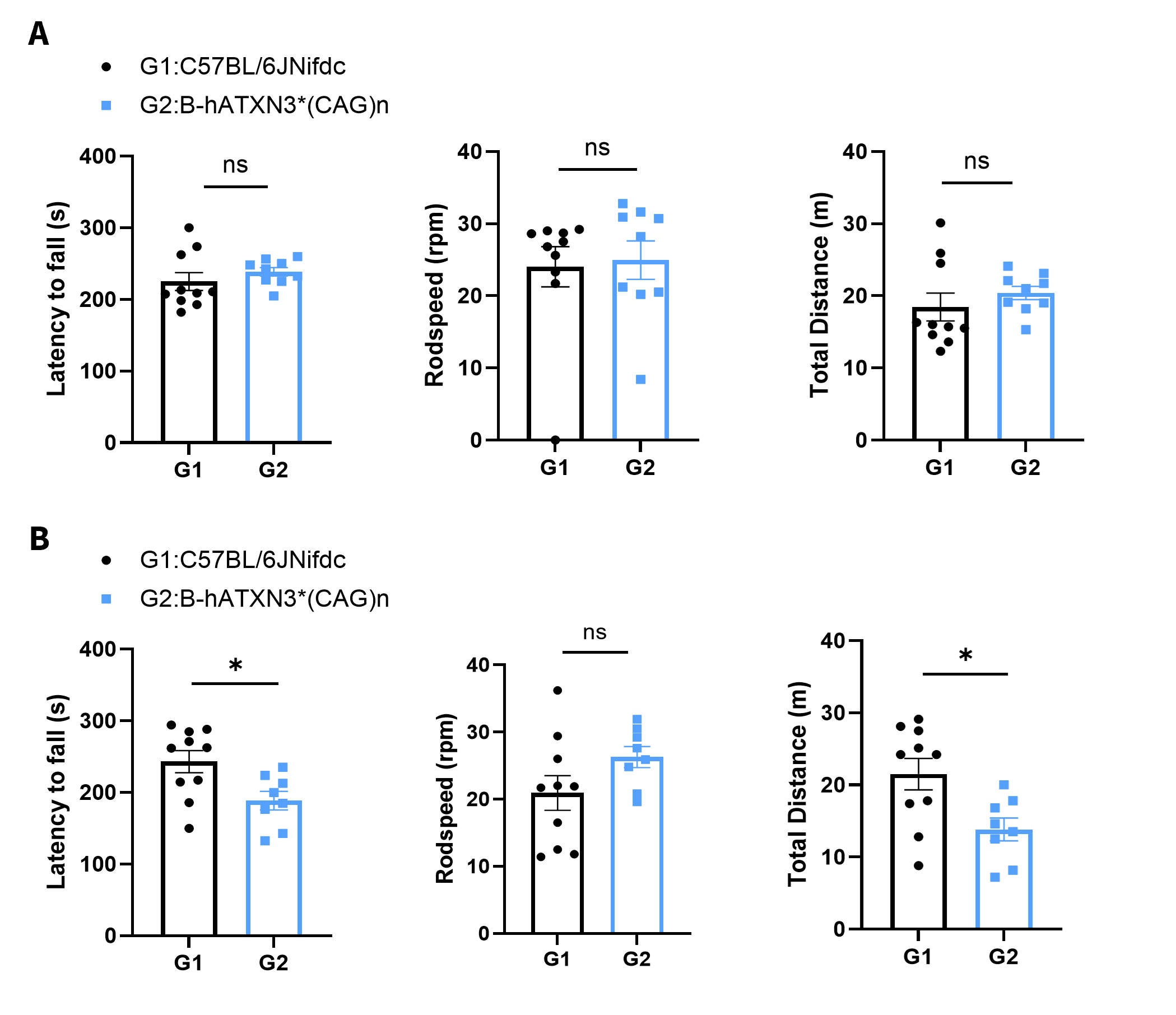
      Behavioral performance in wild-type C57BL/6JNifdc and homozygous B-hATXN3*(CAG)n mice. Rotarod tests were conducted to assess the motor coordination, balance, and endurance of female (A) and male (B) wild-type C57BL/6JNifdc (n=10) and homozygous B-hATXN3*(CAG)n mice (female, n=9; male, n=8). The latency to fall, rodspeed and total distance were decreased in male B-hATXN3*(CAG)n mice, showing motor impairments of male B-hATXN3*(CAG)n mice. Values are expressed as mean ± SEM. Significance was determined by one-way ANOVA.  *P < 0.05, **P < 0.01, ***P < 0.001.

      * When publishing results obtained using this animal model, please acknowledge the source as follows: The animal model [B-hATXN3*(CAG)n mice] (Cat# 113577) was purchased from Biocytogen.