
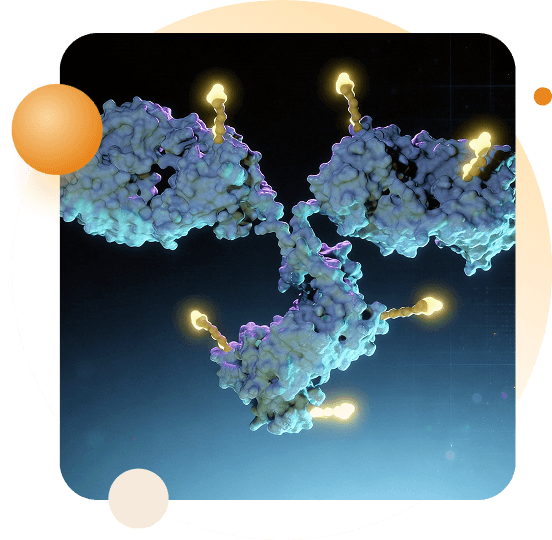
B7-H3 × MUC1 Bispecific ADC (BCG041)

Asset ID: BCG041
Targets: B7-H3 × MUC1
  • Aliases:
  • B7-H3: CD276, 4Ig-B7-H3, B7H3, B7RP-2; MUC1: Mucin 1, CD227, CA 15-3, EMA, KL-6
  • Modality:
  • Bispecific ADC (BsADC)
  • Payload Design:
  • BLD1102 linker–payload system containing BCPT02
  • Development Stage:
  • Preclinical
  • Indications:
  • Non-small cell lung cancer (NSCLC), small cell lung cancer (SCLC), esophageal, gastric, breast, and head and neck cancers
  • Key Differentiation:
  • First-in-class B7-H3 × MUC1 bispecific ADC targeting proximal MUC1, with high target specificity, enhanced internalization, robust PDX efficacy, and favorable PK supporting development for heterogeneous solid tumors.
  • Partnership Opportunity:
  • Available for licensing and co-development
B7-H3 × MUC1 Bispecific ADC (BCG041) banner

이 페이지에서

  • BCG041 Asset Highlights
  • Preclinical Data
  • Partnership Opportunities
  • FAQs

포스터

모두 보기

    BCG041: A First-in-Class B7-H3 × MUC1 Bispecific ADC Designed to Address MUC1 Druggability Challenges

    B7-H3 × MUC1 Dual-Target ADC Strategy for Heterogeneous Solid Tumors

    • Dual-target tumor cell engagement: BCG041 co-engages B7-H3 (CD276), a tumor-associated antigen (TAA) broadly upregulated across multiple tumors, with Mucin 1 (MUC1), a biologically distinct epithelial tumor antigen, to maximize tumor cell coverage and mitigate antigen escape in heterogeneous solid tumors.
    • Bypassing the MUC1 "Sink Effect": BCG041 is engineered to selectively engage the membrane-proximal region of MUC1 rather than highly shed extracellular domains, bypassing decoy binding by circulating MUC1 fragments to support more efficient tumor-associated engagement and payload delivery.
    • Target specificity: BCG041 shows selective binding to B7-H3 and MUC1 without cross-reacting to other B7 or MUC family homologs, supporting strict target fidelity and expanding the therapeutic window for solid tumor ADC development.
    • Competitive differentiation: BCG041 is a first-in-class bispecific ADC designed to address tumor heterogeneity through complementary targeting of membrane-proximal MUC1 and broadly expressed B7-H3. This dual-target strategy enhances tumor coverage while overcoming limitations associated with shed MUC1. Supported by strong preclinical efficacy and a favorable PK profile, BCG041 is well positioned for clinical translation.

    RenLite® Fully Human Common Light Chain Antibody Backbone

    Built on the RenLite® platform, BCG041 utilizes common light chain technology to eliminate heavy/light chain mispairing, ensure seamless assembly, simplify manufacturing, and provide a developable antibody backbone for the B7-H3 × MUC1 bispecific ADC drug development.

    Proprietary BLD1102 Linker–Payload Design for ADC Drug Development

    BCG041 is conjugated with Biocytogen's proprietary BLD1102 linker–payload system containing BCPT02, a topoisomerase I (TOP1) inhibitor payload designed to drive potent ADC-mediated cytotoxicity in solid tumor drug development.
    • Payload-driven cytotoxic coverage: BCPT02 combines high payload potency with strong bystander killing to eliminate both target-positive and neighboring tumor cells.
    • Developability-oriented linker design: BLD1102 linker is designed for superior hydrophilicity, controlled payload release, and high circulation stability, enhancing ADC developability and therapeutic performance.

    Excellent Preclinical Performance

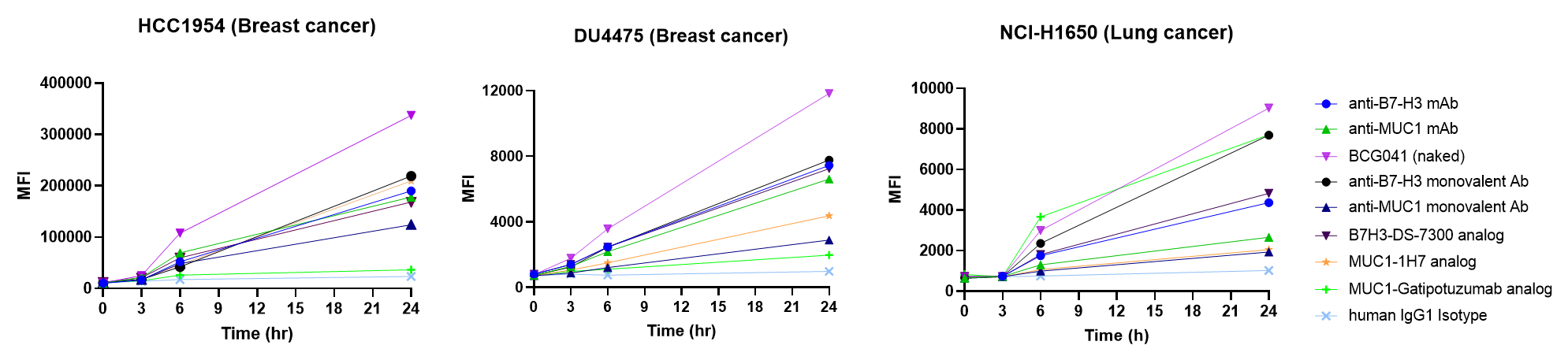
    • BCG041 demonstrated synergistically enhanced binding and improved internalization across B7-H3/MUC1-expressing breast and lung cancer cells, supporting efficient dual-target tumor cell engagement and payload delivery (Figure 1 & Figure 2).
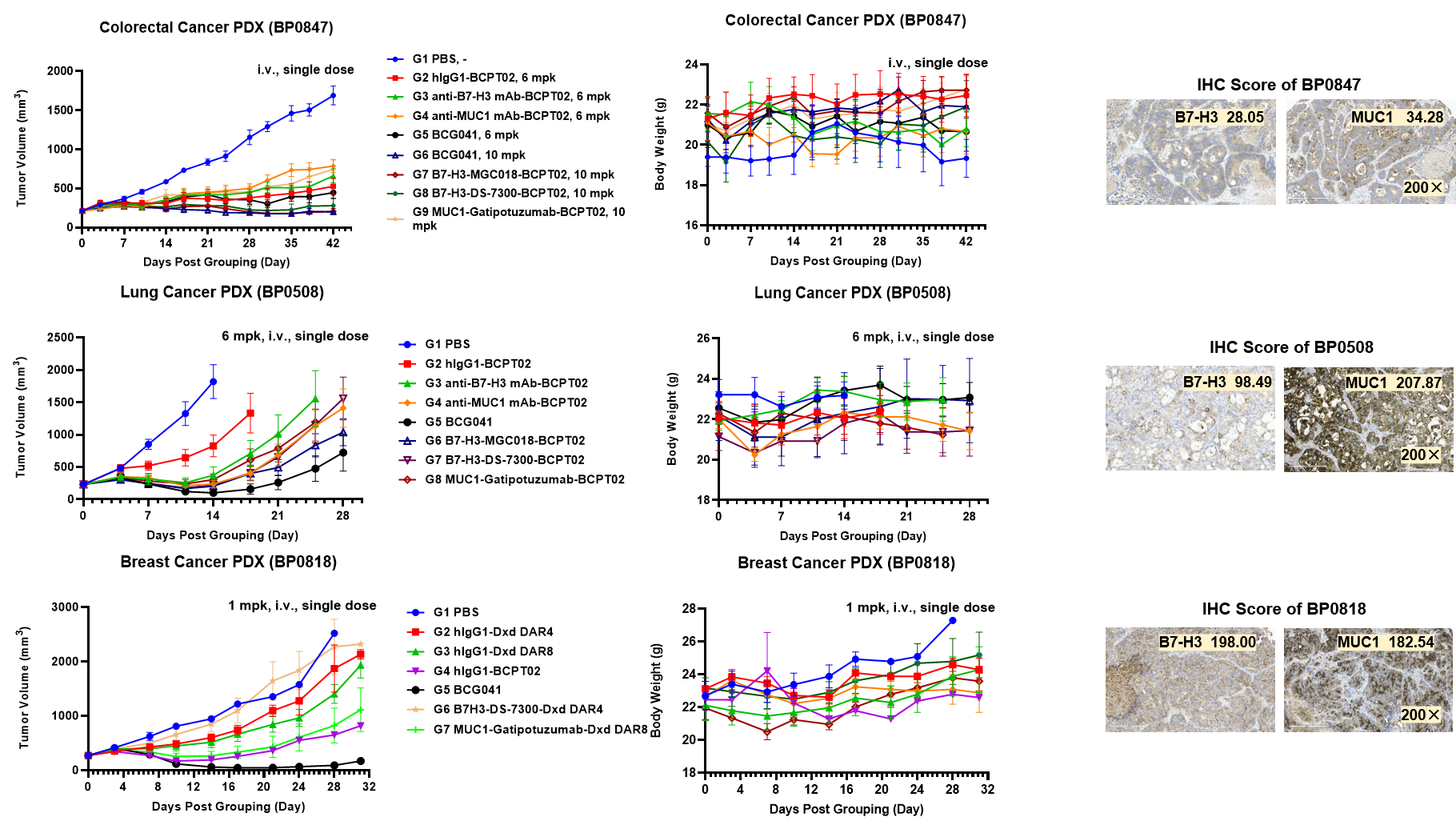
    • BCG041 showed robust antitumor activity across colorectal, lung, and breast cancer PDX models, demonstrating differentiated efficacy compared with BCPT02-conjugated single-target ADC controls and benchmark ADC analogs (Figure 3).
    • Across evaluated PDX models, BCG041 maintained stable body weights comparable to control groups, with no treatment-related weight loss observed, supporting a favorable preliminary tolerability profile.
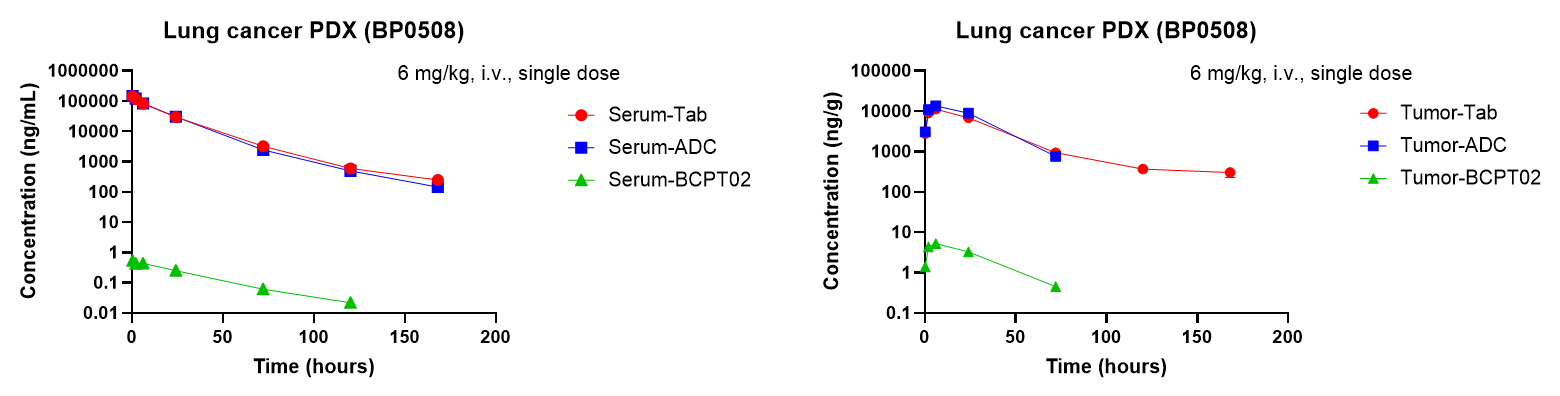
    • In a lung cancer PDX model, BCG041 maintained intact ADC exposure with minimal premature payload release, supporting a favorable PK profile and tumor-associated payload delivery (Figure 4).

    Potential Indications

    BCG041 is being evaluated as a B7-H3/MUC1-directed bispecific ADC drug development asset for solid tumors. Potential development areas include non-small cell lung cancer (NSCLC), small cell lung cancer (SCLC), esophageal cancer, gastric cancer, breast cancer, and head and neck cancers.

    Preclinical Data Highlights Supporting BCG041 B7-H3 × MUC1 Bispecific ADC Drug Development

    The preclinical data package supporting BCG041, generated from Biocytogen internal preclinical studies, includes synergistically enhanced binding, improved internalization, robust antitumor activity across multiple PDX models, and a favorable pharmacokinetic profile with excellent bloodstream stability and tumor accumulation. Together, these data support the development of BCG041 as a B7-H3 × MUC1 bispecific for heterogeneous solid tumors.

    BCG041 Demonstrates Synergistically Enhanced Binding in B7-H3/MUC1 Dual-Expressing Tumor Cells

    MFI-concentration binding curves showing superior BCG041 binding in HCC1954 breast cancer, DU4475 breast cancer, and NCI-H1650 lung cancer cells compared with parental antibodies, monovalent controls, and DS-7300, 1H7 and Gatipotuzumab benchmark analogs
    Figure 1. Antigen binding analysis of BCG041 in B7-H3/MUC1 dual-expressing tumor cells. Across HCC1954 breast cancer, DU4475 breast cancer, and NCI-H1650 lung cancer cells, BCG041 showed enhanced binding activity compared with parental monoclonal antibodies, monovalent antibody controls, and single-target benchmark analogs including DS-7300 (B7-H3 ADC), 1H7, and Gatipotuzumab (MUC1 ADC). These results demonstrate that BCG041 achieves synergistically enhanced tumor cell binding, supporting its bispecific design for improved tumor cell engagement and broader coverage in heterogeneous solid tumors.
    BCG041 Shows Enhanced Internalization to Support Efficient Payload Delivery

    MFI-time internalization curves showing enhanced internalization of BCG041 in HCC1954, DU4475, and NCI-H1650 tumor cells compared with parental antibodies, monovalent controls, and DS-7300, 1H7, and Gatipotuzumab benchmark analogs.
    Figure 2. Internalization kinetics of BCG041 in B7-H3/MUC1-expressing tumor cells. In the same cancer cell panel used for binding analysis, BCG041 demonstrated stronger internalization over time compared with parental monoclonal antibodies, monovalent antibody controls, and benchmark analogs including DS-7300, 1H7, and Gatipotuzumab analog. These data indicate that B7-H3 × MUC1 dual-target engagement translates into enhanced cellular uptake, supporting efficient intracellular delivery of the BCPT02 payload.
    BCG041 Demonstrates Robust Antitumor Activity in Multiple PDX Models

    Tumor growth and body weight curves showing robust antitumor activity of BCG041-BCPT02 in BP0847 colorectal cancer, BP0508 lung cancer, and BP0818 breast cancer PDX models after single intravenous dosing, with no body weight loss observed.
    Figure 3. In vivo tumor growth and body weight analysis of BCG041-BCPT02 in multiple PDX models. BCG041-BCPT02 was evaluated after a single intravenous dose in BP0847 colorectal cancer, BP0508 lung cancer, and BP0818 breast cancer PDX models. Across the evaluated models, BCG041-BCPT02 demonstrated robust tumor growth inhibition compared with BCPT02-conjugated single-target ADC controls and benchmark ADC analogs. Body weight profiles remained comparable to control groups, with no body weight loss observed, supporting a favorable preliminary tolerability profile.
    BCG041 Exhibits a Favorable PK Profile with Excellent Bloodstream Stability and Tumor Accumulation

    Concentration-time curves showing serum and tumor levels of total antibody, intact ADC, and released BCPT02 payload after a single 6 mg/kg intravenous dose of BCG041-BCPT02 in the BP0508 lung cancer PDX model.
    Figure 4. Pharmacokinetic (PK) profile of BCG041 in the BP0508 lung cancer PDX model. Following a single 6 mg/kg i.v. dose of BCG041-BCPT02, serum and tumor concentrations of total antibody (-TAb), intact ADC (-ADC), and released payload (-BCPT02) were measured over time. Serum TAb and ADC showed comparable exposure, while released BCPT02 remained minimal, supporting bloodstream stability and limited premature payload release. In tumor tissue, delayed Tmax and higher BCPT02 exposure relative to serum supported tumor accumulation and localized payload exposure.

    Explore BCG041 Partnership Opportunities

    Biocytogen welcomes partnership discussions to further evaluate this B7-H3 × MUC1 bispecific ADC asset.

    Frequently Asked Questions (FAQs) About BCG041 B7-H3 × MUC1 Bispecific ADC

    1. How does BCG041 address limitations of previous MUC1- or B7-H3-targeted ADC approaches?

    BCG041 leverages the cooperative co-expression topology of B7-H3 and MUC1 as a dual-anchor framework to counteract antigen heterogeneity and clonal evasion, ensuring tumor engagement despite single-antigen dynamics. Crucially, while conventional MUC1 ADCs are constrained by systemic clearance via the circulating antigen "sink effect," BCG041 selectively engages the membrane-proximal stalk of MUC1 to bypass decoy binding by shed fragments, guaranteeing efficient internalization and uncompromised payload delivery within the tumor microenvironment (TME).

    2. What makes the engineering behind BCG041 unique?

    BCG041 is built on Biocytogen's proprietary RenLite® platform. It utilizes a fully human IgG1κ common-light-chain backbone that delivers high binding affinity and strong developability. This advanced engineering minimizes the risk of chain mispairing, supporting efficient and scalable CMC manufacturing for clinical development of a differentiated B7-H3 × MUC1 bispecific ADC candidate.

    3. How does the BCG041 payload system support both safety and efficacy?

    BCG041 features an optimized, protease-cleavable hydrophilic linker conjugated to BCPT02—a potent topoisomerase I inhibitor—with a high drug-to-antibody ratio (DAR) of approximately 8. Engaging two targets simultaneously promotes faster internalization, widening the therapeutic window. Notably, in preclinical cachectic breast cancer models, BCG041 delivered superior antitumor efficacy while promoting unique body weight recovery in diseased mice, supporting a preliminary tolerability profile compared with benchmark ADC analogs.

    4. Which cancer types are the primary targets for BCG041 B7-H3 × MUC1 bispecific ADC?

    Because B7-H3 and MUC1 are widely co-expressed across a multitude of high-prevalence solid tumors, BCG041 is designed for a massive global patient population. Key targeted indications include breast, lung, colorectal, prostate, esophageal, gastric, head and neck, and metastatic ovarian cancers.
