이 페이지에서

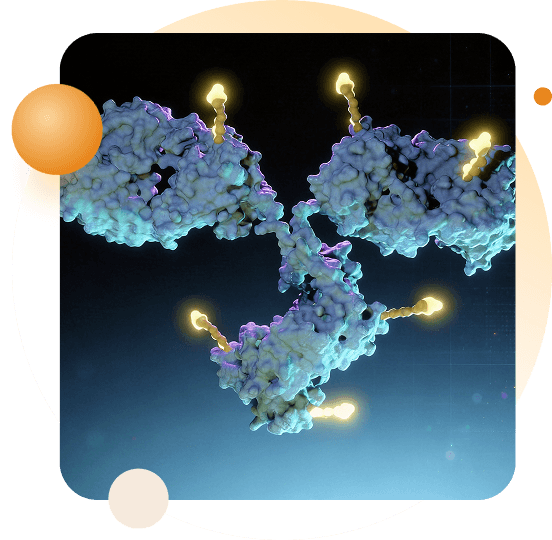
Built on the RenLite® platform , BCG015 utilizes fully human common light chain technology to support ADC developability, physicochemical stability, and efficient internalization. While BCG015 is currently developed as a single-target TM4SF5 ADC, this parent backbone also supports easy plug-and-play for potential upgrades to TM4SF5-based bispecific ADC formats and helps mitigate heavy/light chain mispairing risks during future engineering.
BCG015 is conjugated with Biocytogen's proprietary BLD1102 linker–payload system containing BCPT02 , a topoisomerase I (TOP1) inhibitor payload designed to drive potent ADC-mediated cytotoxicity in solid tumor drug development.

The supporting preclinical data package for BCG015, generated from Biocytogen internal preclinical studies, includes TM4SF5 target validation, internalization, target-dependent cell killing, and in vivo efficacy in HCC CDX and PDX models. Together with favorable tolerability in ongoing toxicology assessments in canines and non-human primates, these data support the development of BCG015 as a differentiated TM4SF5-targeting ADC for the treatment of HCC.
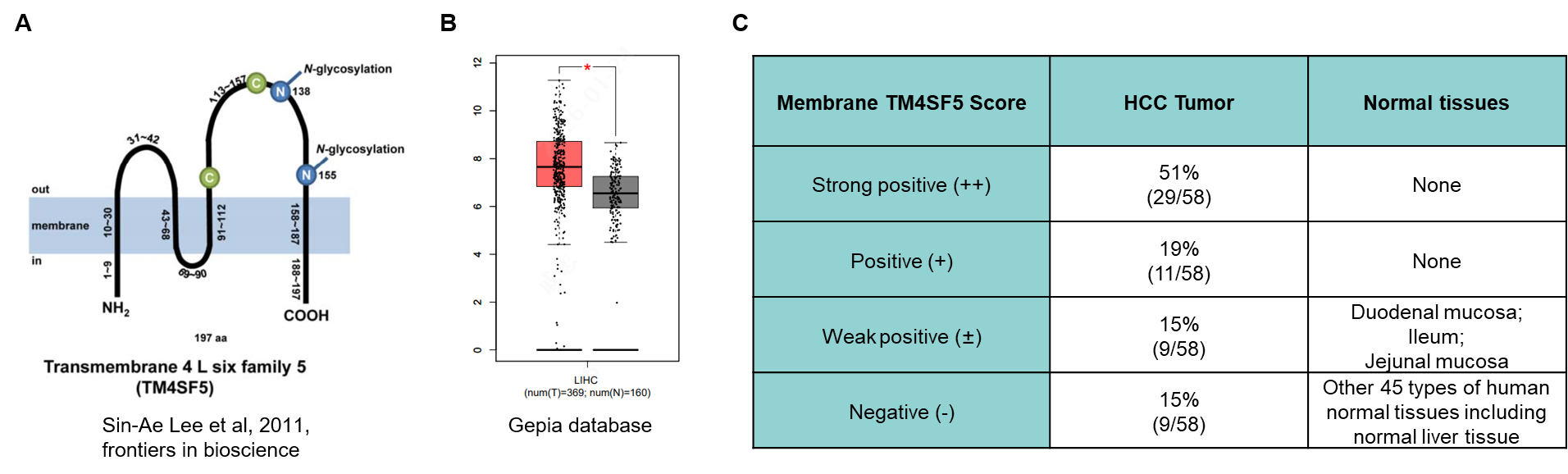
Figure 1. TM4SF5 Expression Profile in HCC and Normal Tissues. (A) Schematic representation of TM4SF5 molecular structure. (B) TM4SF5 RNA expression in HCC tumor tissues compared to normal liver samples. (C) Quantification of membrane TM4SF5 scores (IHC) in 58 patient-derived HCC samples and 49 types of human normal tissues. These results demonstrate that TM4SF5 is highly expressed in HCC patients while showing limited expression in normal tissues, suggesting a favorable therapeutic window.
In addition , TM4SF5 surface abundance in representative HCC cell lines was comparable to or higher than GPC3, c-MET, and HER3, supporting TM4SF5 as an ADC-tractable target.
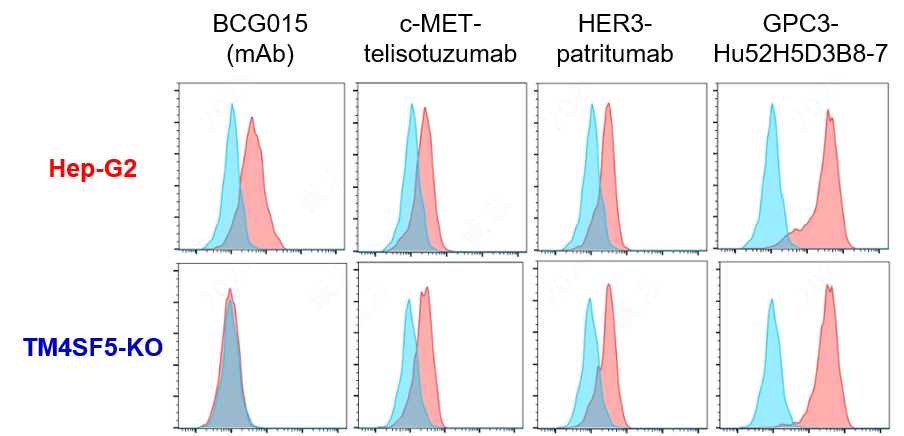
Figure 2. Internalization kinetics of the BCG015 TM4SF5 antibody. BCG015 demonstrated efficient internalization in HCC cells compared with the isotype control (blue), with c-MET, HER3, and GPC3 benchmark antibodies included as reference comparators. These data support intracellular payload delivery after TM4SF5 engagement.
In addition, BCG015 showed high-affinity TM4SF5 binding and human/cynomolgus monkey cross-reactivity, with no binding observed to TM4SF5-knockout (KO) cells.
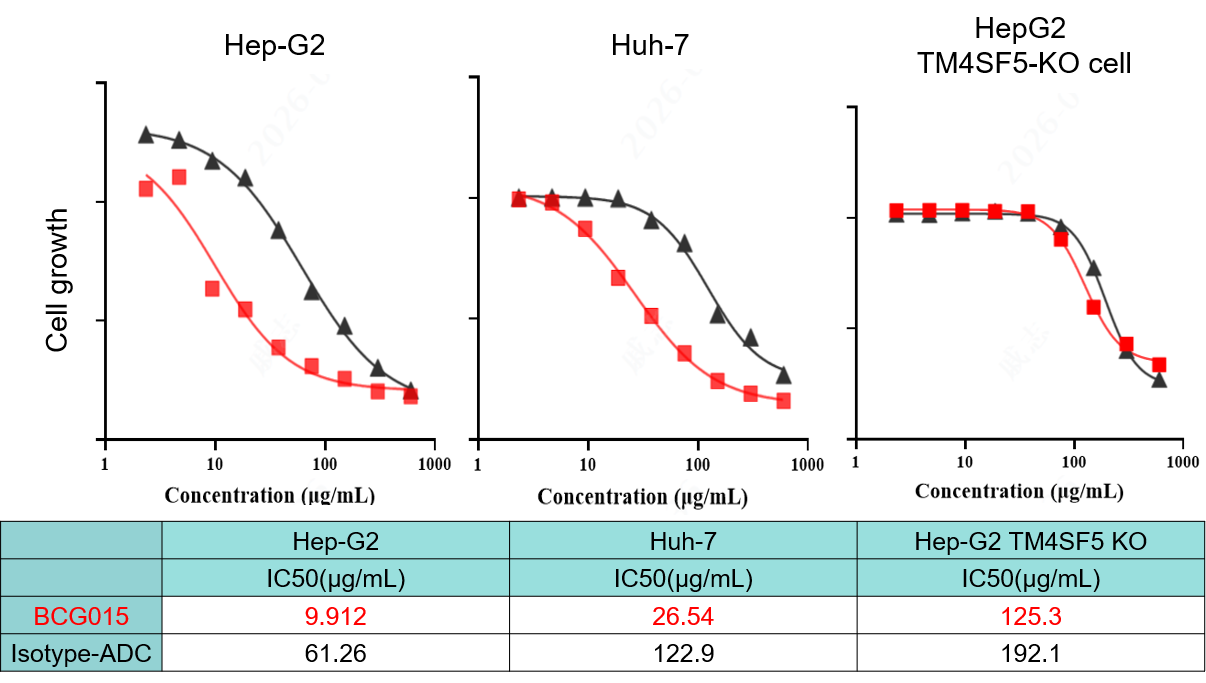
Figure 3. In vitro growth assays in TM4SF5-positive and TM4SF5-knockout (KO) liver cancer cell lines. BCG015 suppressed the growth of antigen-positive cells (Hep-G2 and Huh-7) more effectively than the isotype ADC control, but showed reduced activity in Hep-G2 TM4SF5-knockout cells, thereby supporting TM4SF5-dependent ADC activity.
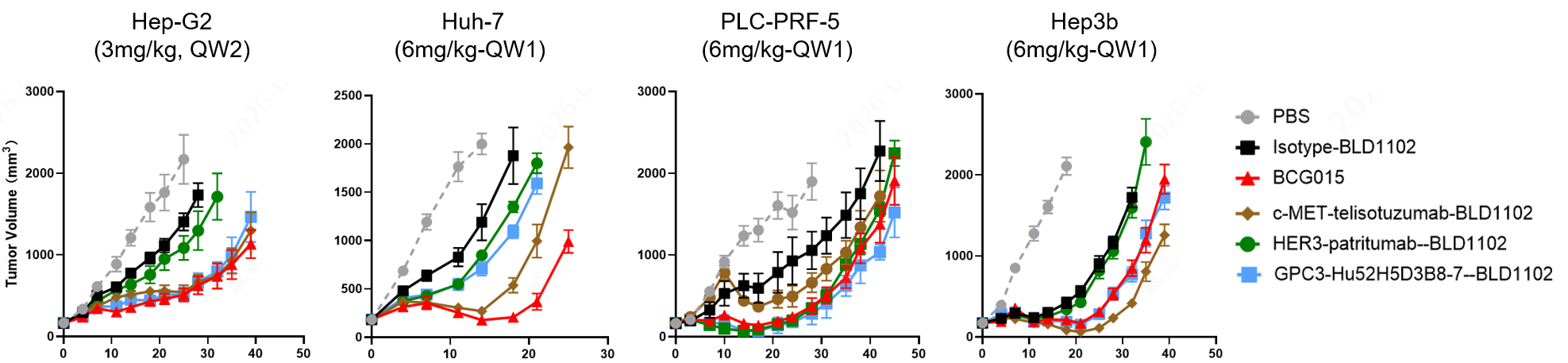
Figure 4. Tumor growth inhibition of BCG015 in HCC CDX models. Tumor growth curves in four different HCC CDX models after intravenous administration of BCG015 or benchmark ADCs, including Hep-G2 at 3 mg/kg QW × 2, and Huh-7, Hep3B, and PLC-PRF-5 at 6 mg/kg QW × 1. For direct target comparison, all comparator ADCs (targeting c-MET, HER3, and GPC3) were conjugated with the same linker-payload (BLD1102) at a consistent DAR of ~8. These results demonstrate that BCG015 achieves comparable or superior antitumor efficacy compared to ADCs targeting established HCC antigens.
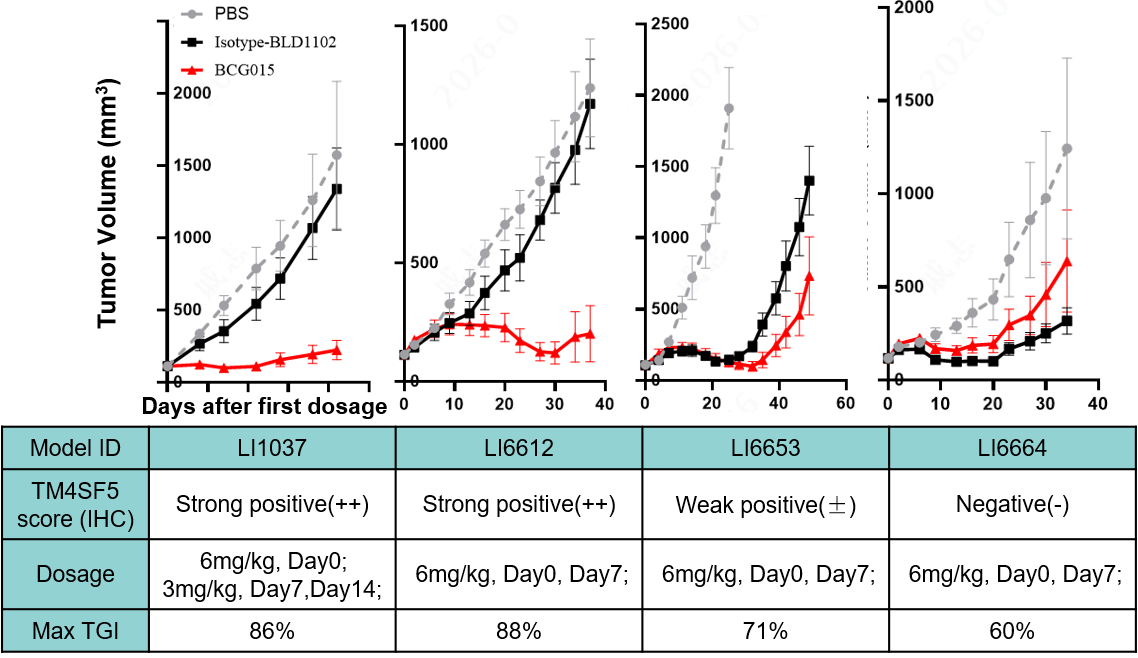
Figure 5. In vivo efficacy across diverse HCC PDX models with different TM4SF5 expression levels. BCG015 was evaluated in HCC PDX models spanning strong-positive, weak-positive, and negative TM4SF5 expression. Substantial tumor growth inhibition was achieved in high-expressing models and moderate inhibition in low-expressing models, whereas TM4SF5-negative models exhibited minimal response comparable to the Isotype-ADC control group.

Biocytogen welcomes partnership discussions to further evaluate this TM4SF5 ADC asset.

HCC remains a high-mortality cancer with no approved ADC therapies. BCG015 is a first-in-class TM4SF5-targeting ADC that demonstrates potent, target-dependent antitumor activity, favorable PK/stability, and an encouraging safety profile, supporting its differentiated potential in HCC.
TM4SF5 is a novel tumor-associated antigen with high tumor-selective expression and rapid internalization, outperforming established ADC targets in HCC beyond GPC3, c-MET, and HER3, and is supported by preclinical validation with BCG015.
BCG015 is conjugated with Biocytogen's proprietary BLD1102 linker–payload system containing BCPT02, a topoisomerase I (TOP1) inhibitor payload. The BLD1102 linker–payload design is engineered to support potent ADC-mediated cytotoxicity, controlled payload release, hydrophilicity, circulation stability, and overall ADC developability.
BCG015 is built on a RenLite®-derived fully human TM4SF5 antibody backbone, combining ADC developability with future format flexibility. The common light chain foundation may support future TM4SF5-based bispecific ADC engineering with other HCC-relevant targets while helping reduce heavy/light chain mispairing risk during bispecific assembly.
BCG015 shows a promising PK profile and outstanding in vivo stability, demonstrated by similar clearance rates between the conjugated ADC and total antibody. In preliminary toxicology studies, a canine-specific TM4SF5 ADC analog showed fewer toxicity signals than a trastuzumab-ADC benchmark when both were conjugated with BLD1102 at DAR≈8, while interim cynomolgus monkey data showed BCG015 was well tolerated at 15 mg/kg and 30 mg/kg, with further evaluation underway.
Zhi Qi, Yu Qi, Gao An, Cong Shen, and Yanan Guo. PEGS Boston 2026: BCG015: A First-in-Class Antibody-Drug Conjugate Targeting TM4SF5 for the Treatment of Hepatocellular Carcinoma. Presented at: the 22nd Annual PEGS Boston Summit; May 11–15, 2026.