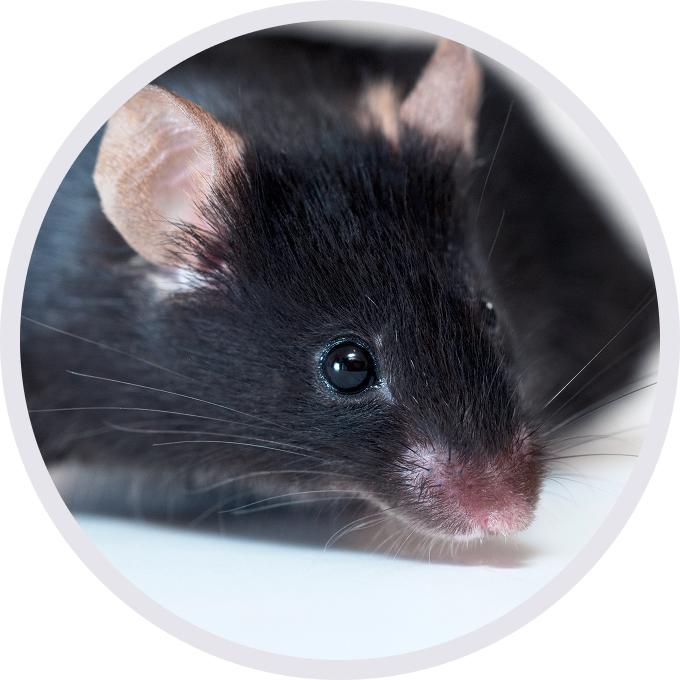
C57BL/6JNifdc-Giprtm2(GIPR)Bcgen/Bcgen • 112714

GIPR: A key regulator of metabolic homeostasis and its therapeutic intervention in obesity and diabetes

GIPR

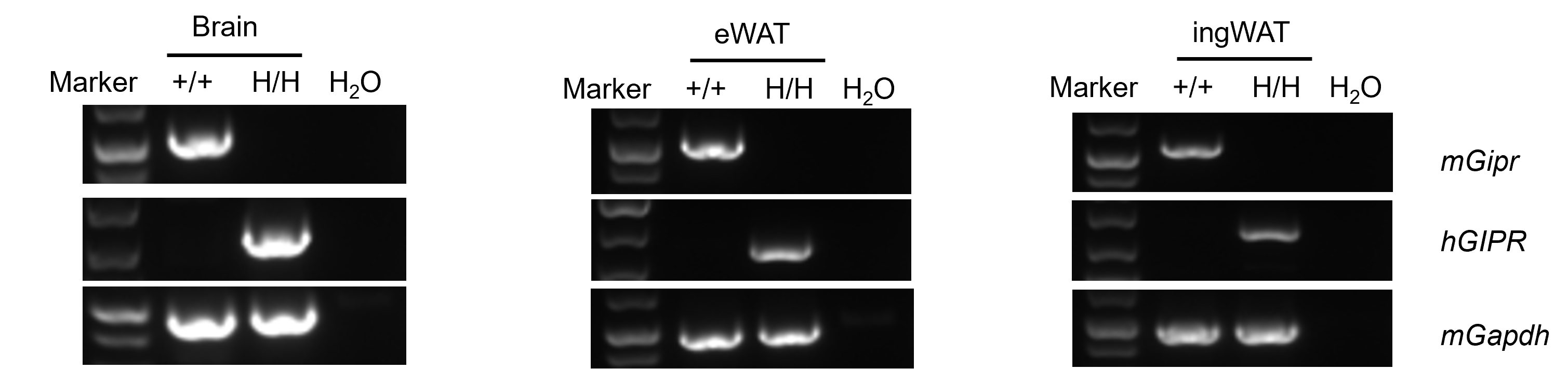
Strain specific analysis of GIPR mRNA expression in wild-type C57BL/6JNifdc mice and B-hGIPR mice by RT-PCR. Brain, eWAT, and ingWAT RNA were isolated from wild-type C57BL/6JNifdc mice (+/+) and homozygous B-hGIPR mice (H/H), then cDNA libraries were synthesized by reverse transcription, followed by PCR with mouse or human GIPR primers. Mouse Gipr mRNA was detectable only in wild-type C57BL/6JNifdc mice. Human GIPR mRNA was detectable only in homozygous B-hGIPR mice but not in wild-type mice. eWAT, epididymal white adipose tissue; ingWAT, inguinal white adipose tissue.
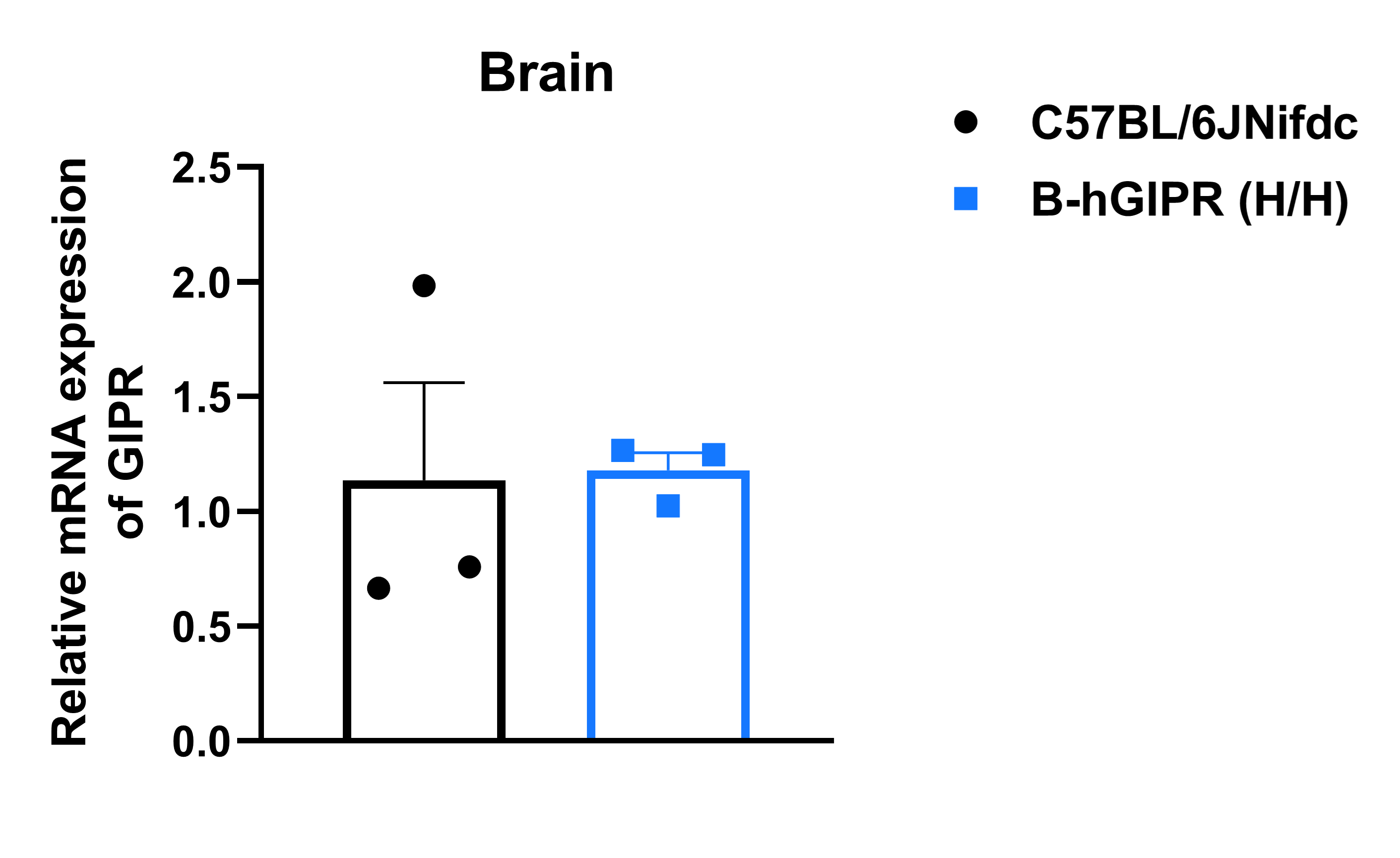
Analysis of GIPR mRNA expression in wild-type C57BL/6JNifdc and B-hGIPR mice by RT-qPCR. RNA was isolated from wild-type C57BL/6JNifdc (+/+) and homozygous B-hGIPR mice (H/H), then cDNA libraries were synthesized by reverse transcription, followed by PCR with GIPR primers. Values are expressed as mean ± SEM. (The primer pair was designed in the 5’UTR to amplify both mouse and human GIPR mRNA.)
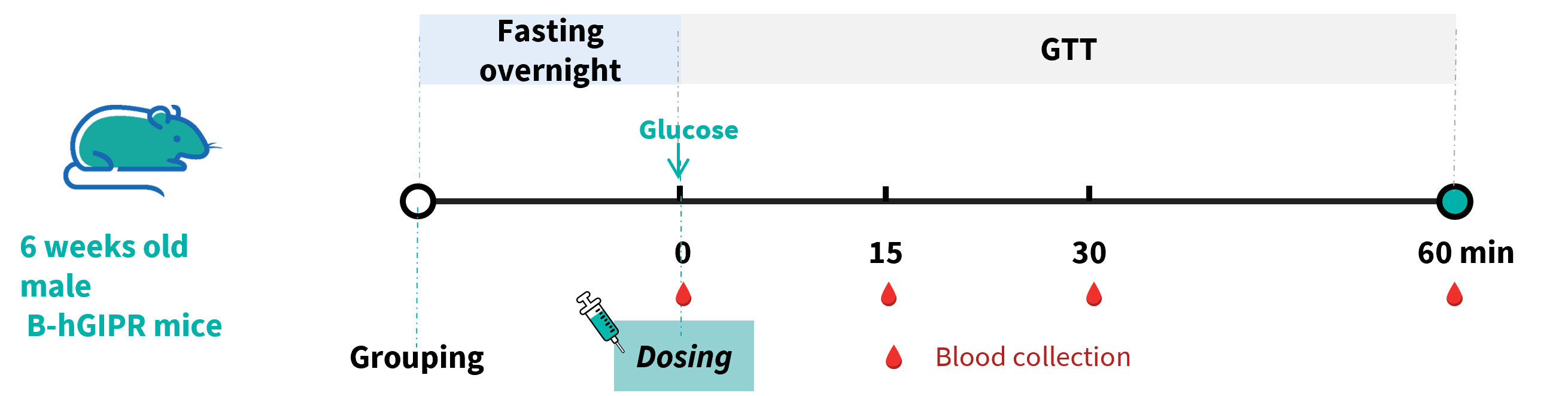
In vivo function of m/hGIP during IPGTT. Wild-type C57BL/6JNifdc mice and B-hGIPR mice (male, 6-week-old, n=6) were treated i.p. with mouse GIP (Cat. HY-P77948, MCE) or human GIP (Cat. HY-P0276, MCE) at 0.25 mg/kg. Then the Intraperitoneal Glucose Tolerance Test (IPGTT) was performed for 2 g/kg D-glucose (40% solution, 5 μL/g).
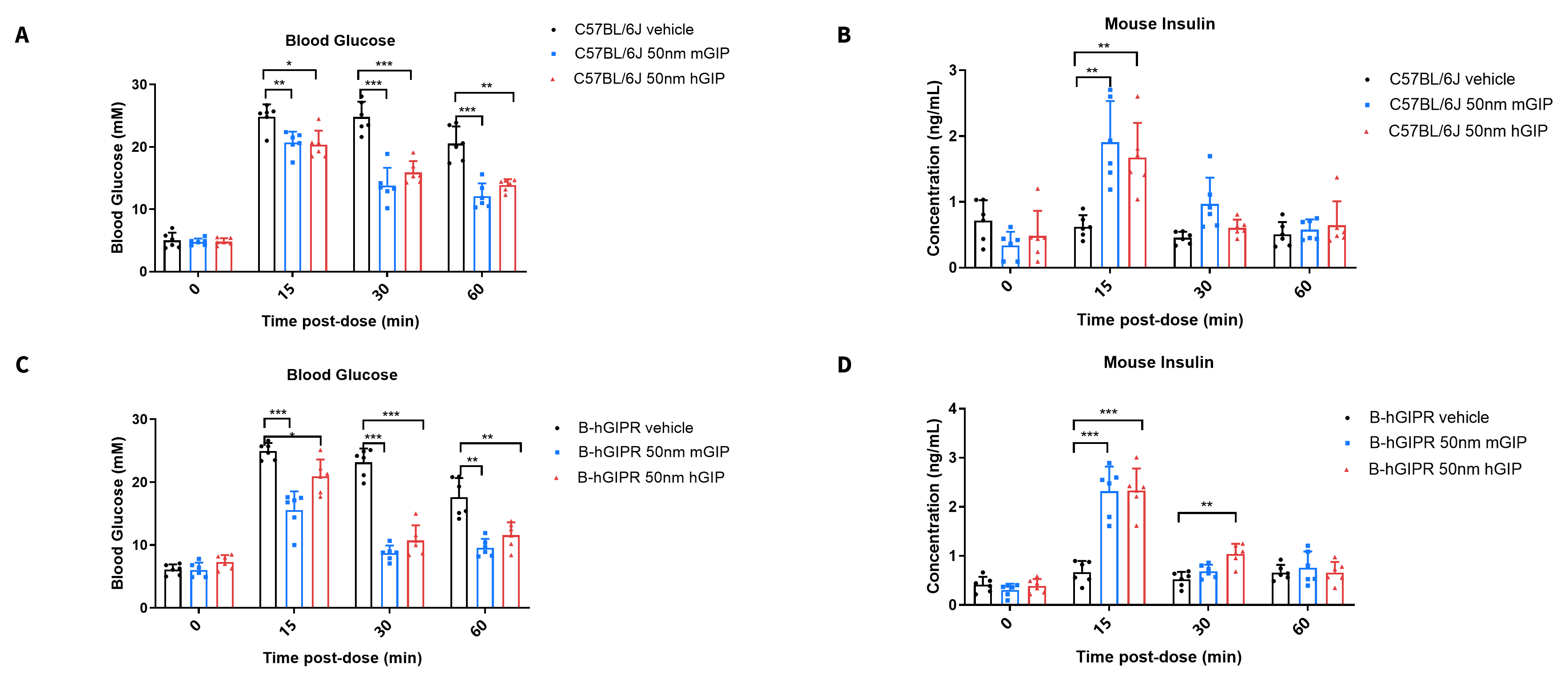
In vivo function of m/hGIP during IPGTT. Wild-type C57BL/6JNifdc mice and B-hGIPR mice (male, 6-week-old, n=6) were treated i.p. with mouse GIP (Cat. HY-P77948, MCE) or human GIP (Cat. HY-P0276, MCE) at 0.25 mg/kg. Then the IPGTT was performed for 2 g/kg D-glucose (40% solution, 5 μL/g). (A, C) Plasma glucose during IPGTT. (B, D) Mouse insulin during IPGTT. Data represent means ± SEM. Analyzed by 2way-ANOVA,*P<0.05, **P<0.01, ***P<0.001.
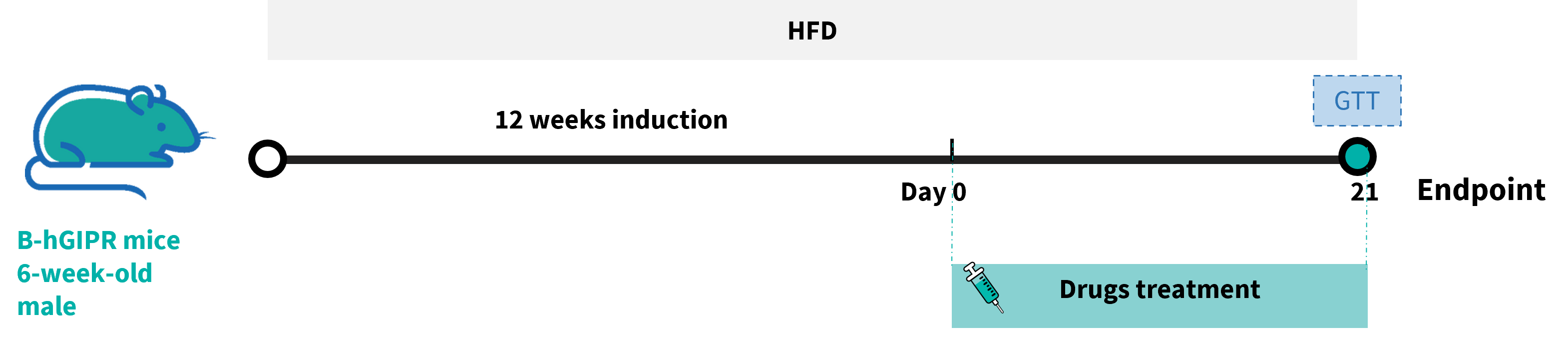
Efficacy study in HFD induced B-hGIPR mice. B-hGIPR mice were fed with a high-fat diet (HFD) for 12 weeks to induce obesity in the mice.
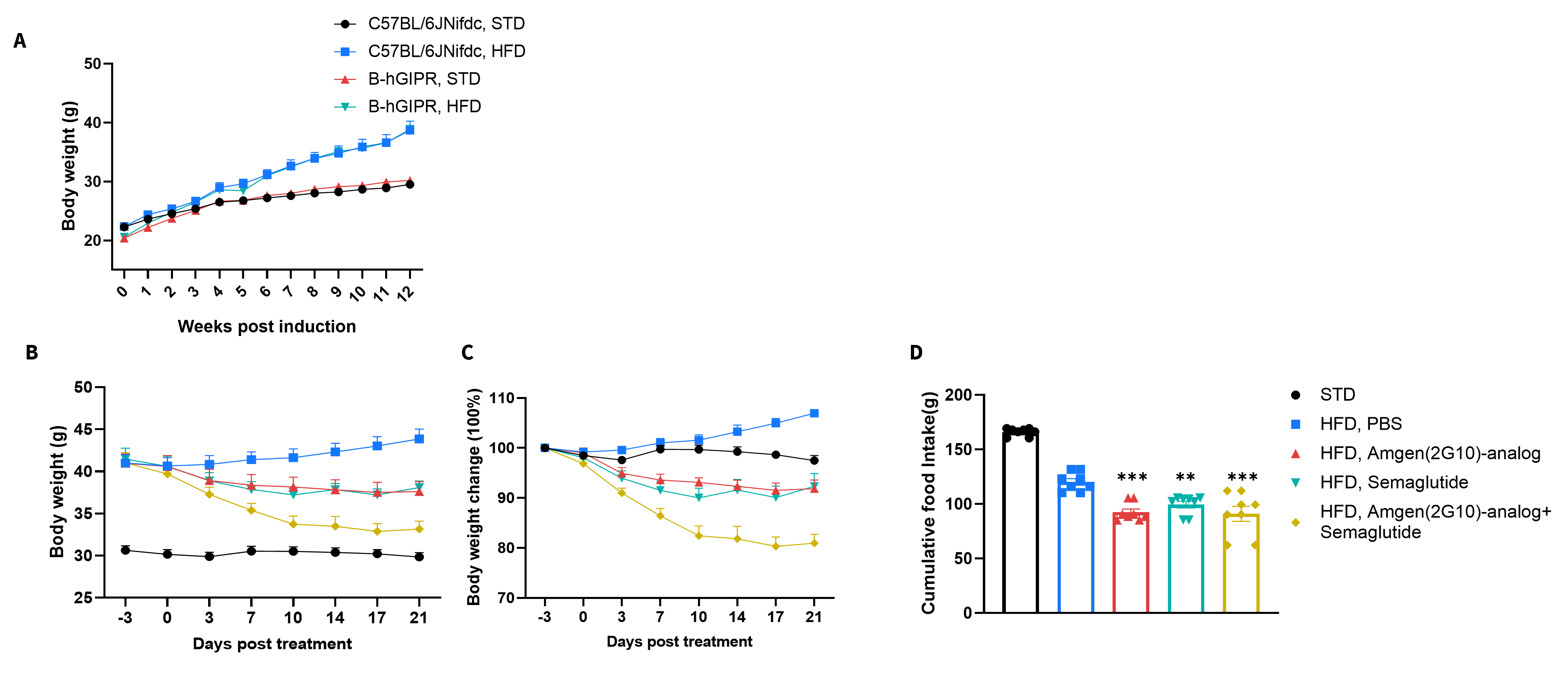
Efficacy study in HFD induced B-hGIPR mice. B-hGIPR mice were fed with a high-fat diet for 12 weeks to induce mice obesity. (A) Body weight change after HFD induction. (B-C) Body weight change after hGIPR-antibody Amgen (2G10) analog (in house), Semaglutide, and combination treatment. (D) Effect of hGIPR-antibody Amgen (2G10), Semaglutide, and combination treatment on food intake on Day 21. Values are expressed as mean ± SEM. Significance was determined by the Ordinary one-way ANOVA compared with HFD PBS group. *p<0.05, **p<0.01,***p<0.001.
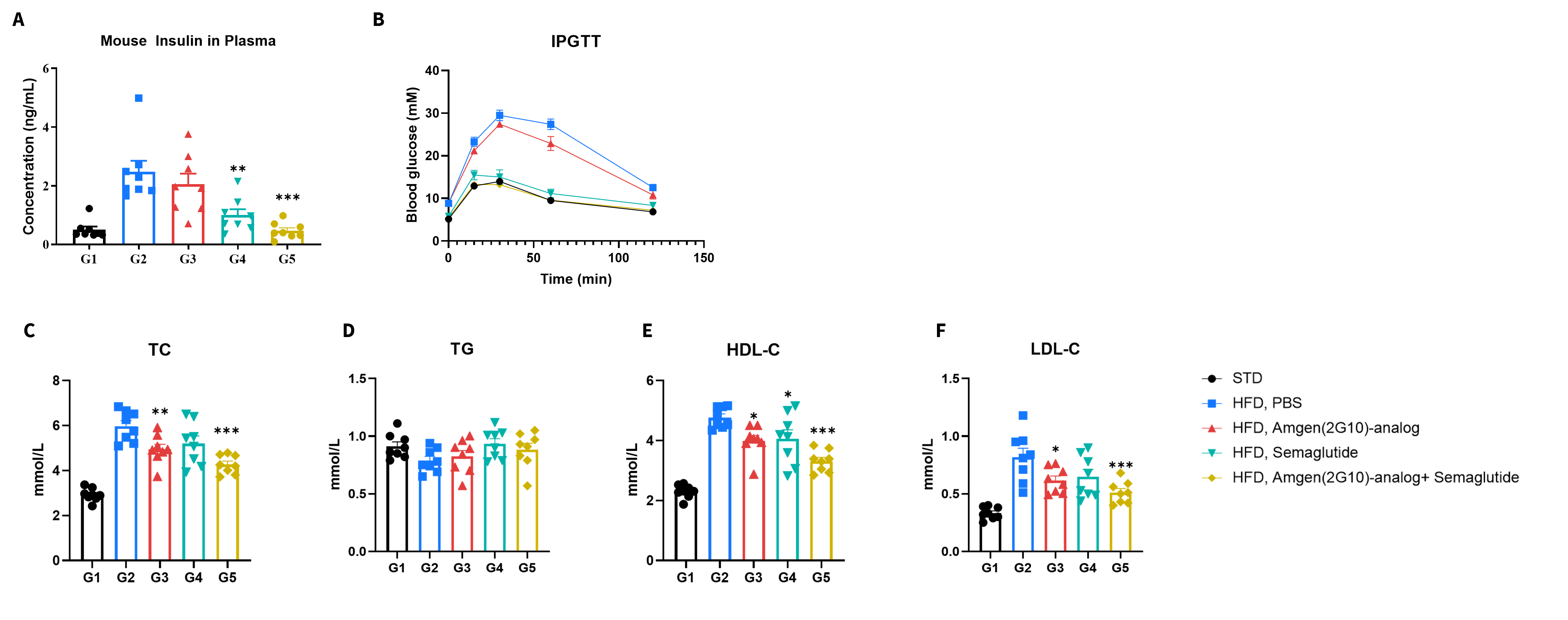
Efficacy study in HFD induced B-hGIPR mice. (A) Fasting insulin after treatment in plasma after 6 hours of fasting. (B) After fasting for 6 hours, mice were intraperitoneally injected with 1.5 g/kg D-glucose (15% solution, 10 μL/g) for Glucose Tolerance Tests after treatment. (C-F) Blood biochemical analysis after treatment. Values are expressed as mean ± SEM. The Ordinary one-way ANOVA determined significance compared with the HFD PBS group. *p<0.05, **p<0.01,***p<0.001.
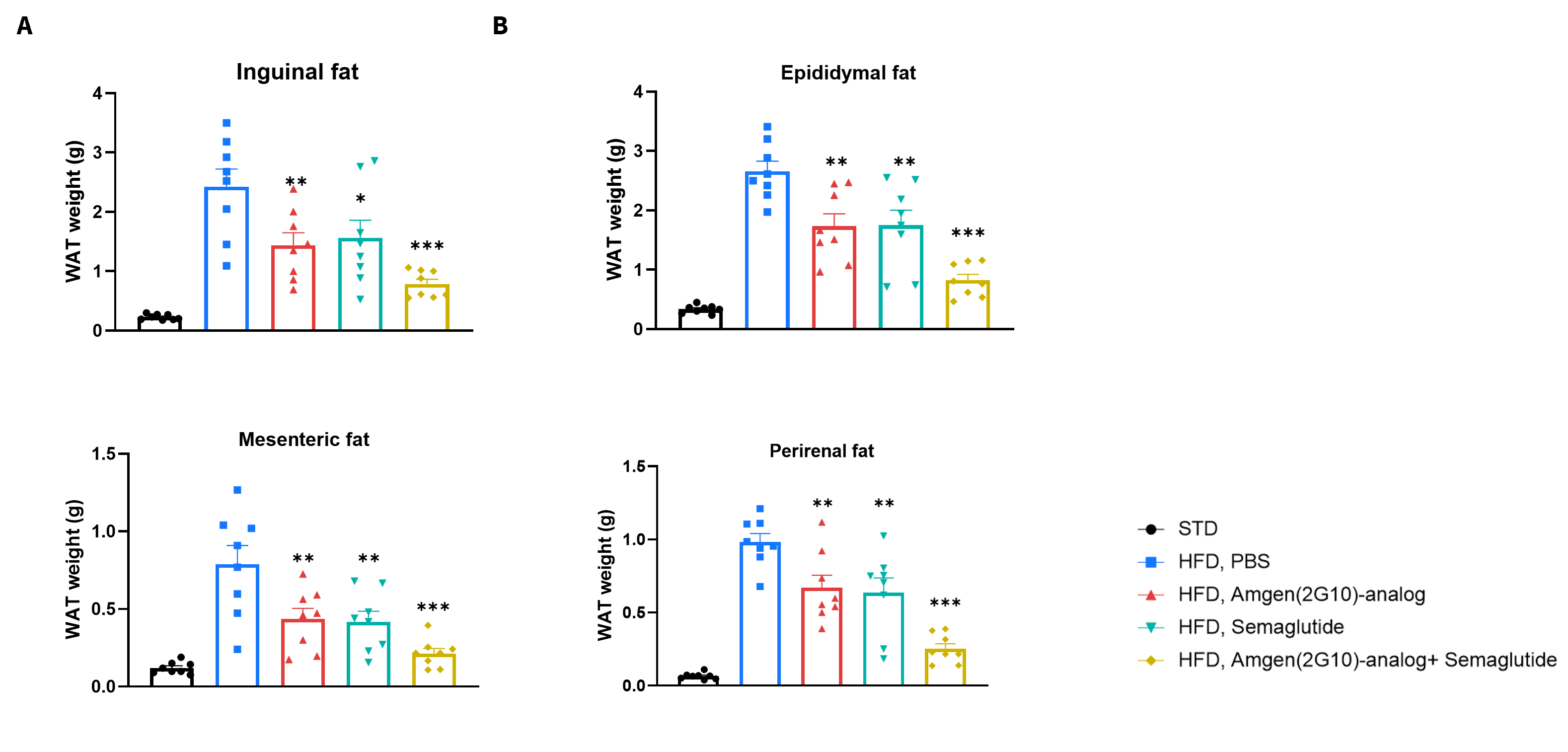
Efficacy study in HFD induced B-hGIPR mice. (A-D) Weight of white adipose tissue at the end of the treatment. Values are expressed as mean ± SEM. Significance was determined by the Ordinary one-way ANOVA compared with HFD PBS group. *p<0.05, **p<0.01,***p<0.001 .
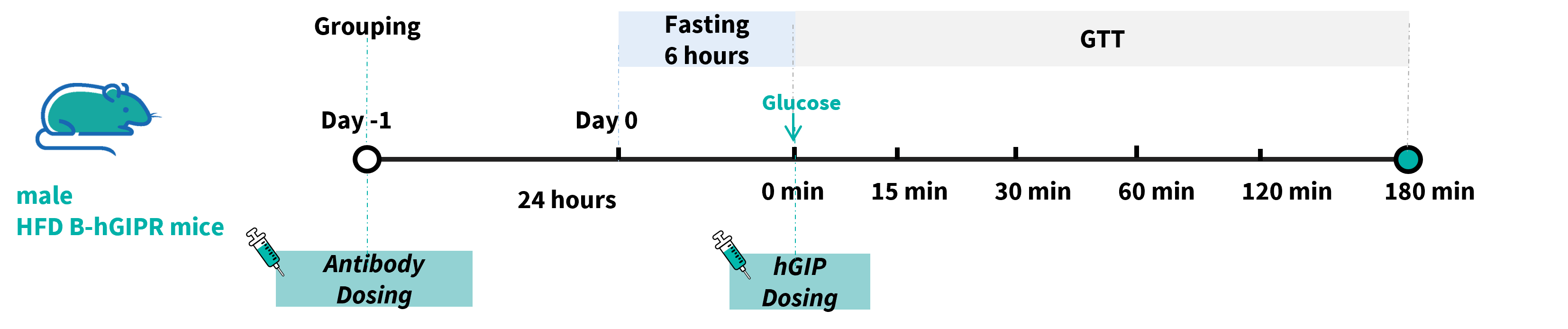
In vivo function of hGIP and GIPR-antibody in HFD induced B-hGIPR mice. B-hGIPR mice were fed with a high-fat diet for 12 weeks to induce obesity in the mice and were randomized into groups and received vehicle or GIPR antibody Amgen (2G10) analog (in house). Approximately 24 hours later, saline or 0.25 mg/kg human GIP (Cat. HY-P0276, MCE) was given via i.p. injection, then immediately followed by an IPGTT at 1.5 g/kg (30% solution, 5 μL/g).
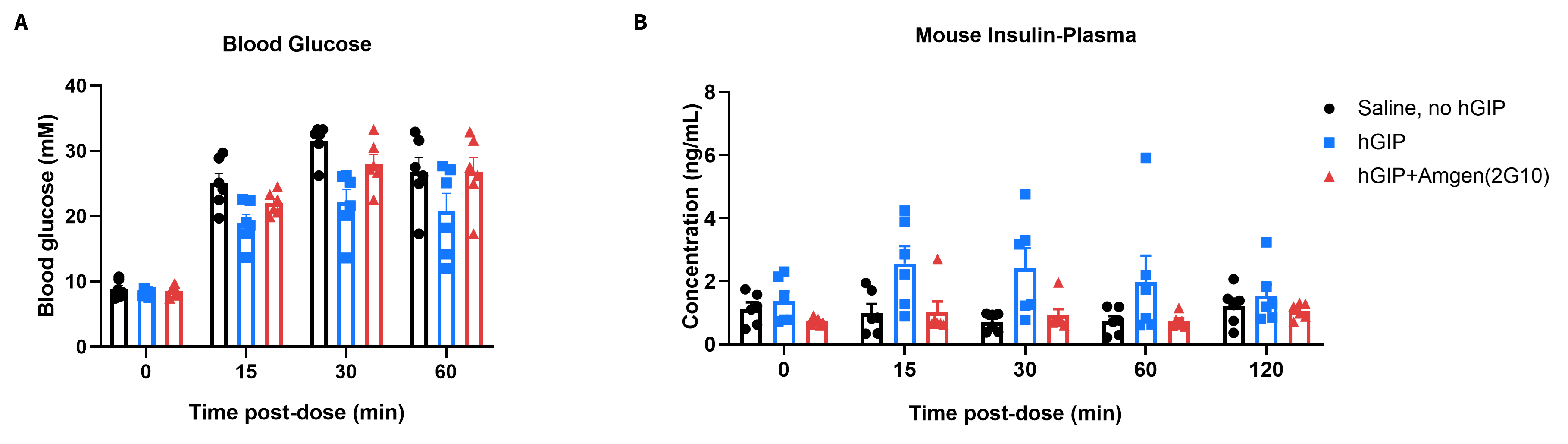
In vivo function of hGIP and GIPR-antibody in HFD induced B-hGIPR mice. B-hGIPR mice were fed with a high-fat diet for 12 weeks to induce obesity in the mice and were randomized into groups and received vehicle or GIPR antibody Amgen (2G10) analog (in house). Approximately 24 hours later, saline or 0.25 mg/kg human GIP (Cat. HY-P0276, MCE) was given via i.p. injection, then immediately followed by an IPGTT at 1.5 g/kg (30% solution, 5 μL/g). (A) Blood glucose and (B) plasma insulin were measured during IPGTT. Data represent means ± SEM.