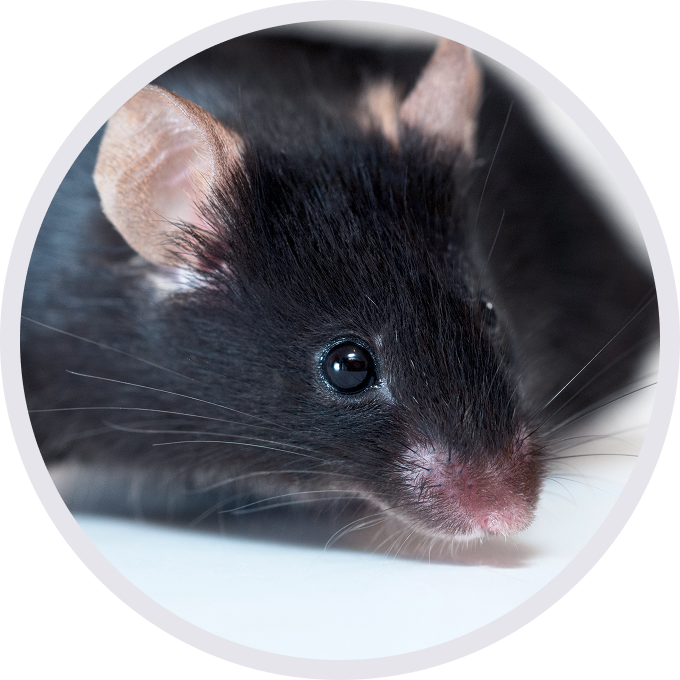
C57BL/6-Il31tm1(IL31)BcgenIl31ratm1(IL31RA)BcgenOsmrtm1(OSMR)Bcgen/Bcgen • 130746
| Product name | B-hIL31/hIL31RA/hOSMR mice |
|---|---|
| Catalog number | 130746 |
| Strain name | C57BL/6-Il31tm1(IL31)BcgenIl31ratm1(IL31RA)BcgenOsmrtm1(OSMR)Bcgen/Bcgen |
| Strain background | C57BL/6 |
| NCBI gene ID | 9180,133396,386653 (Human) |
| Aliases | OSMRB; PLCA1; IL-31RB; OSMRbeta; IL-31R-beta; CRL; GPL; CRL3; GLMR; GLM-R; PLCA2; hGLM-R; IL-31RA; PRO21384; zcytoR17; IL-31 |

Key Advantages
Validation
Applications

Gene targeting strategy for B-hIL31/hIL31RA/hOSMR mice. The mouse Il31 gene that encode the full-length protein was replaced by human IL31 counterpart gene sequences. The coding sequences including human IL31RA extracellular region and mouse Il31ra intracellular region were inserted into mouse Il31ra gene locus. The coding sequences including human OSMR extracellular region and mouse Osmr intracellular region were inserted into mouse Osmr gene locus.

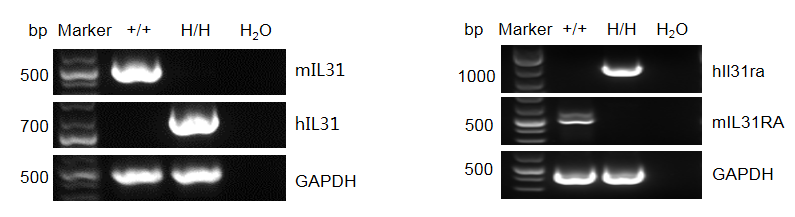
Strain-specific analysis of IL31 and IL31RA gene expression was performed in wild-type mice and homozygous IL31/IL31RA humanized mice by RT-PCR. Testis tissues were collected from wild-type C57BL/6 mice (+/+) and IL31/IL31RA humanized mice (H/H).
Mouse Il31 and Il31ra mRNA were detectable in wild-type mice, whereas human IL31 and IL31RA mRNA were detectable in homozygous IL31/IL31RA humanized mice but not in wild-type mice.
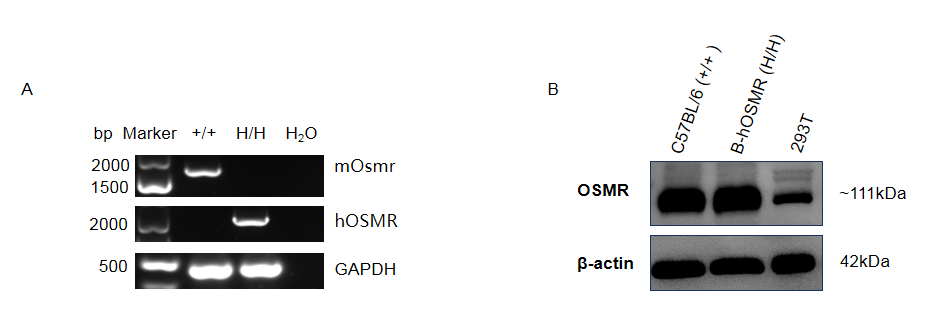
Strain-specific analysis of OSMR gene expression was performed in wild-type mice and OSMR humanized mice by RT-PCR and western blot analysis.
(A) mRNA expression analysis. Mouse Osmr mRNA was detectable in kidneys of wild-type mice (+/+), whereas human OSMR mRNA was detectable in homozygous OSMR humanized mice (H/H).
(B) Protein expression analysis. Kidney tissues were collected from wild-type C57BL/6 mice (+/+) and homozygous OSMR humanized mice (H/H) and analyzed by western blot using anti-OSMR antibody. OSMR protein was detectable in homozygous OSMR humanized mice.
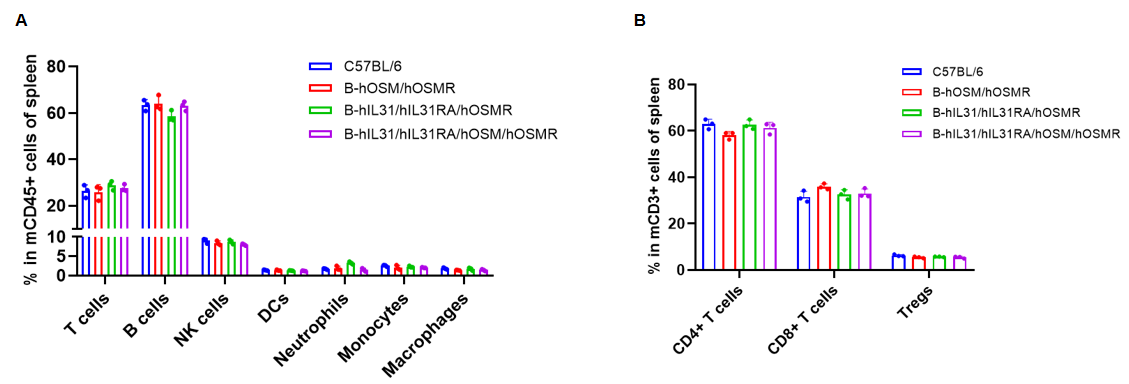
Splenocytes were isolated from C57BL/6 mice, OSM/OSMR humanized mice, IL31/IL31RA/OSMR humanized mice, and IL31/IL31RA/OSM/OSMR humanized mice (n=3, 6 or 7-week-old, female, homozygous). Flow cytometry analysis of splenocytes was performed to assess leukocyte subpopulations.
(A) Spleen leukocyte subpopulations.
(B) T cell subpopulations.
Percentages of T cells (CD8+ T cells, CD4+ T cells, and Tregs), B cells, NK cells, dendritic cells, neutrophils, macrophages, and monocytes in humanized mouse strains were comparable to those in wild-type C57BL/6 mice. Data are presented as mean ± SD and analyzed using ordinary one-way ANOVA. (*P<0.05)
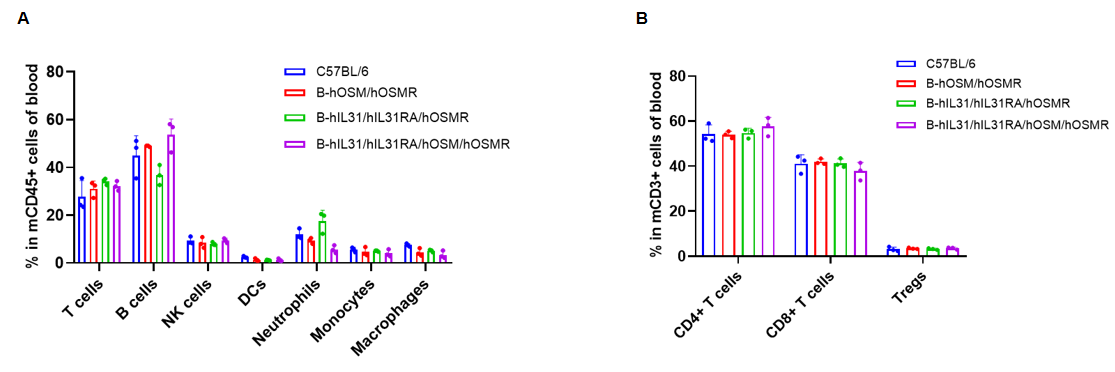
Blood cells were isolated from C57BL/6 mice, OSM/OSMR humanized mice, IL31/IL31RA/OSMR humanized mice, and IL31/IL31RA/OSM/OSMR humanized mice (n=3, 6 or 7-week-old, female, homozygous). Flow cytometry analysis of blood leukocyte subpopulations was performed.
(A) Blood leukocyte subpopulations.
(B) T cell subpopulations.
Percentages of T cells (CD8+ T cells, CD4+ T cells, and Tregs), B cells, NK cells, dendritic cells, neutrophils, macrophages, and monocytes were comparable between humanized strains and wild-type C57BL/6 mice. Data are presented as mean ± SD and analyzed using ordinary one-way ANOVA. (*P<0.05)
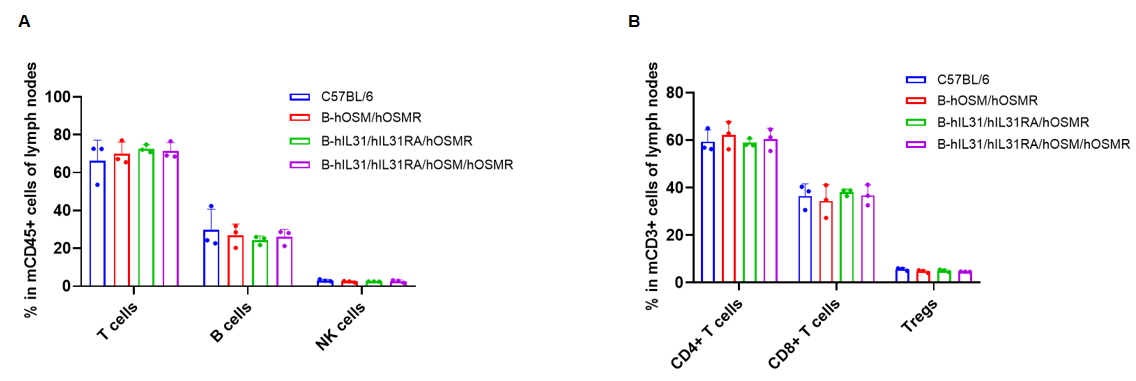
Lymph node cells were isolated from C57BL/6 mice, OSM/OSMR humanized mice, IL31/IL31RA/OSMR humanized mice, and IL31/IL31RA/OSM/OSMR humanized mice (n=3, 6 or 7-week-old, female, homozygous). Flow cytometry analysis of lymph node leukocyte subpopulations was performed.
(A) Lymph node leukocyte subpopulations.
(B) T cell subpopulations.
Percentages of T cells (CD8+ T cells, CD4+ T cells, and Tregs), B cells, and NK cells in humanized mouse strains were comparable to wild-type C57BL/6 mice. Data are presented as mean ± SD and analyzed using ordinary one-way ANOVA. (*P<0.05)

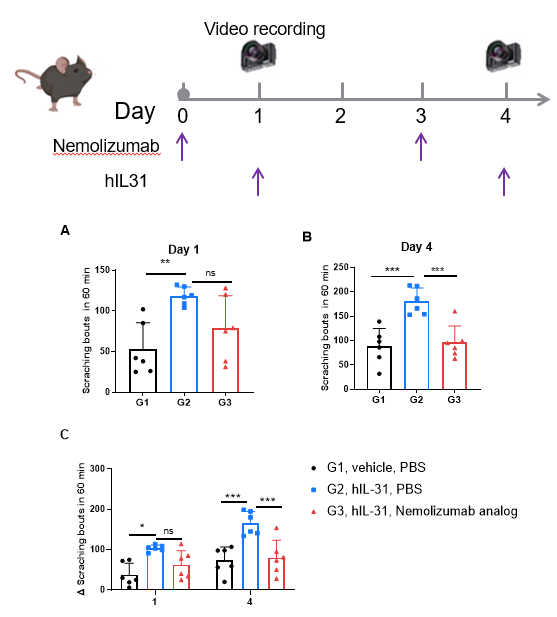
Human IL31 was administered to IL31/IL31RA/OSMR humanized mice (female, 12-week-old, 6 mice/group) to induce scratching behavior. Mice were treated with nemolizumab analog (in-house) or PBS control. Scratching behavior was recorded on:
(A) Day 1
(B) Day 4
(C) Summary of scratching frequency in different treatment groups.
IL31-treated mice showed significantly increased scratching bouts. In the nemolizumab analog treatment group, blockade of IL31 signaling using anti-human IL31RA antibody significantly attenuated scratching behavior on Day 4. Values are expressed as mean ± SEM. Statistical significance was determined using two-way ANOVA. (*P < 0.05, **P < 0.01, ***P < 0.0001, ns: not significant)

What are IL31/IL31RA/OSMR humanized mice?
IL31/IL31RA/OSMR humanized mice are genetically engineered mice expressing human IL31 and humanized IL31 receptor components, enabling translational studies of itch biology and IL31-targeted therapeutics.
Why is IL31 signaling important?
IL31 signaling plays a critical role in chronic itch, atopic dermatitis, and inflammatory skin disorders through activation of IL31RA and OSMR pathways.
Can these mice be used for antibody evaluation?
Yes. IL31/IL31RA/OSMR humanized mice support in vivo evaluation of anti-human IL31RA antibodies, including nemolizumab analogs.
Are these mice suitable for pruritus models?
Yes. Human IL31-induced scratching behavior has been successfully validated in this model.
Do IL31/IL31RA/OSMR humanized mice maintain normal immune homeostasis?
Yes. Leukocyte subset frequencies in spleen, blood, and lymph nodes are comparable to wild-type C57BL/6 mice.