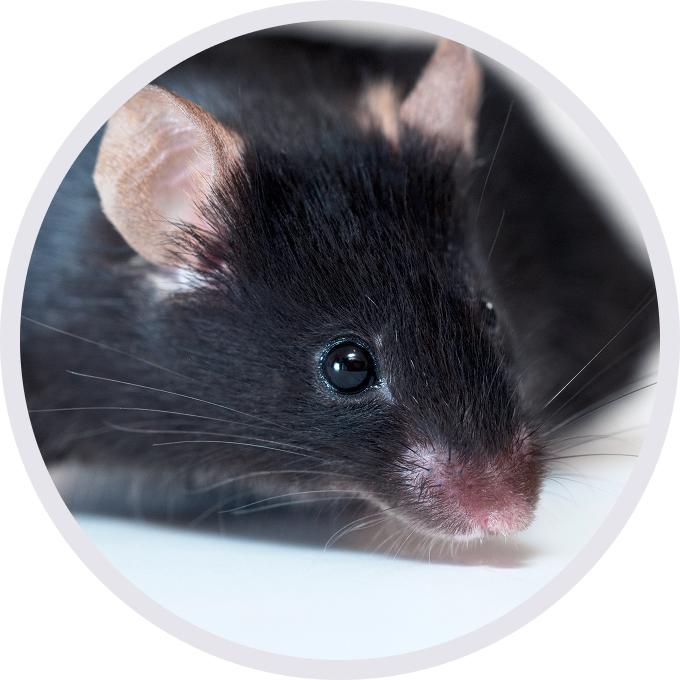
C57BL/6JNifdc-Inhbetm1(INHBE)Bcgen/Bcgen • 112773

Key Advantages
Validation
Application

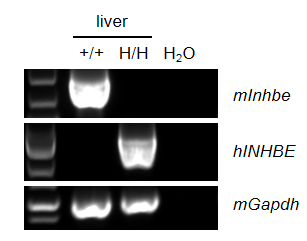
Strain-specific analysis of human INHBE mRNA expression in wild-type C57BL/6 mice and INHBE humanized mice was performed by RT-PCR. Liver RNA was isolated from wild-type C57BL/6 mice (+/+) and homozygous INHBE humanized Mice (H/H). cDNA libraries were synthesized by reverse transcription followed by PCR using mouse- or human-specific INHBE primers. Mouse Inhbe mRNA was detectable in wild-type C57BL/6 mice. Human INHBE mRNA was detectable in homozygous INHBE humanized Mice but not in wild-type mice.
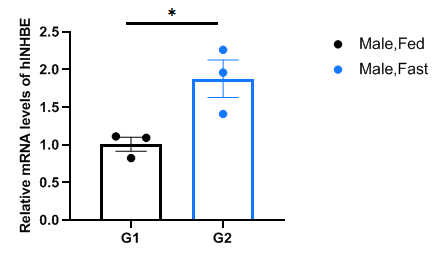
Relative mRNA levels of human INHBE were analyzed in INHBE humanized mice by qPCR. INHBE humanized mice were randomly divided into two groups (n=3/group, male, 8 weeks old). Mice were fasted or fed for 16 hours, and liver tissues were collected to detect human INHBE mRNA expression by qPCR. The expression level of INHBE in the fasted group was significantly increased, which is consistent with the role of INHBE in preventing lipolysis. Values are expressed as mean ± SEM
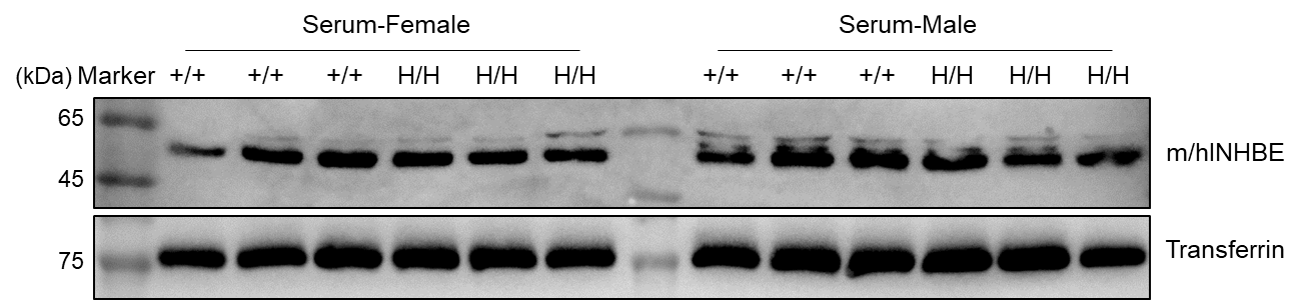
Western blot analysis of human INHBE protein expression was performed in homozygous INHBE humanized mice. Serum lysates were collected from wild-type C57BL/6 mice (+/+) and homozygous INHBE humanized Mice (H/H) and analyzed by western blot using anti-INHBE antibody. A total of 20 μg protein (for INHBE) or 8 μg protein (for Transferrin) was loaded for western blot analysis. INHBE protein was detected in serum from both wild-type and homozygous INHBE humanized Mice because the antibody cross-recognized both human and mouse INHBE.
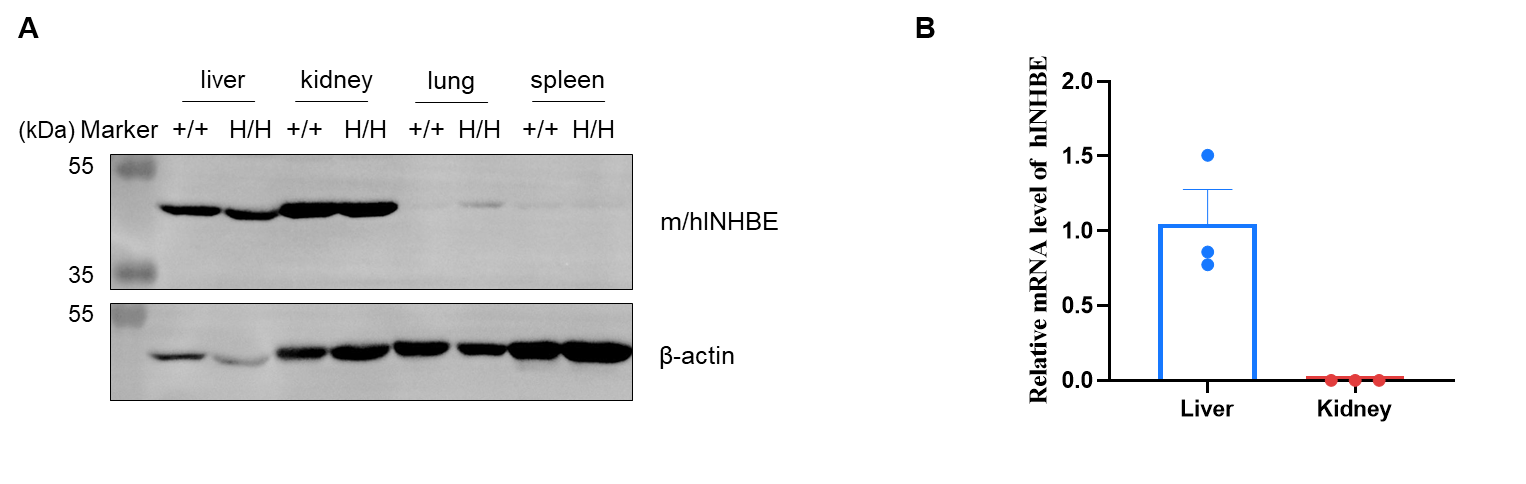
Human INHBE expression was analyzed in homozygous INHBE humanized mice. (A) Various tissue lysates were collected from wild-type C57BL/6 mice (+/+) and homozygous INHBE humanized mice (H/H), and analyzed by western blot using anti-INHBE antibody. A total of 40 μg protein was loaded for western blotting analysis. INHBE was detected in liver and kidney of both wild-type mice and homozygous INHBE humanized mice because the antibody cross-recognizes both human and mouse INHBE. (B) Human INHBE mRNA expression in kidney and liver was analyzed by RT-qPCR.

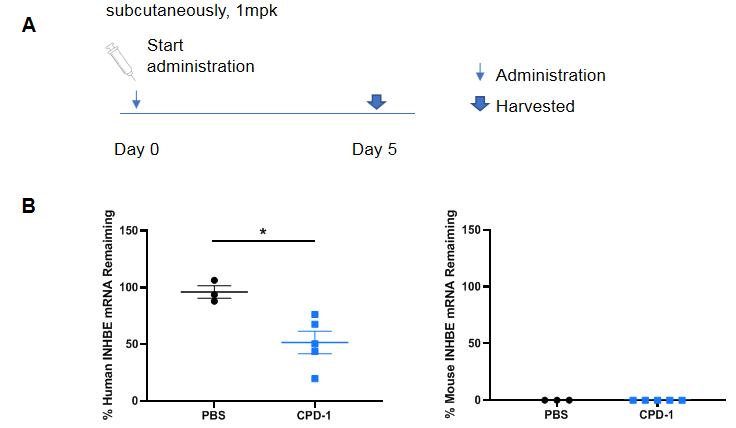
The inhibitory efficiency of nucleic acid drug against human INHBE in INHBE humanized mice. INHBE humanized Mice were randomly divided into treatment groups receiving human INHBE-targeted nucleic acid drug or PBS controls.
Human INHBE-targeted nucleic acid drugs were administered as PBS aqueous solutions. Liver tissues were collected after treatment for qPCR analysis of human INHBE mRNA expression. (A) Experimental workflow schematic. (B) Human INHBE mRNA expression levels in liver tissues. Human INHBE expression was significantly reduced in treatment groups compared with control group. Values are expressed as mean ± SEM.
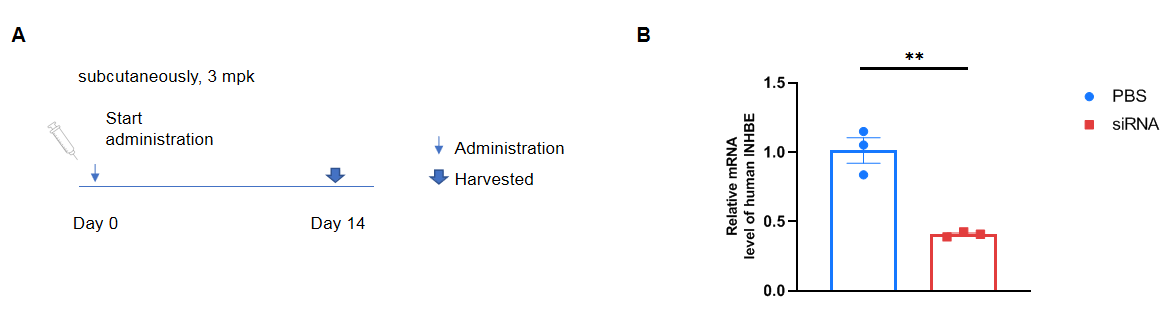
The inhibitory efficiency of nucleic acid drug against human INHBE was evaluated in INHBE humanized mice. INHBE humanized mice were randomly divided into two groups (female, 10 weeks old). Human INHBE-targeted nucleic acid drug synthesized according to patents and PBS were administered to mice individually. The nucleic acid drug was administered as a PBS aqueous solution. Mice were sacrificed on day 14, and liver tissues were collected to detect human INHBE mRNA expression by qPCR. Mice were fasted for 16 hours before liver collection. (A) Schematic diagram of experimental processing. (B) Human INHBE mRNA expression in the liver. Human INHBE expression in the siRNA group was significantly reduced compared with the control group. Values are expressed as mean ± SEM. Significance was determined by t-test, **p < 0.01.
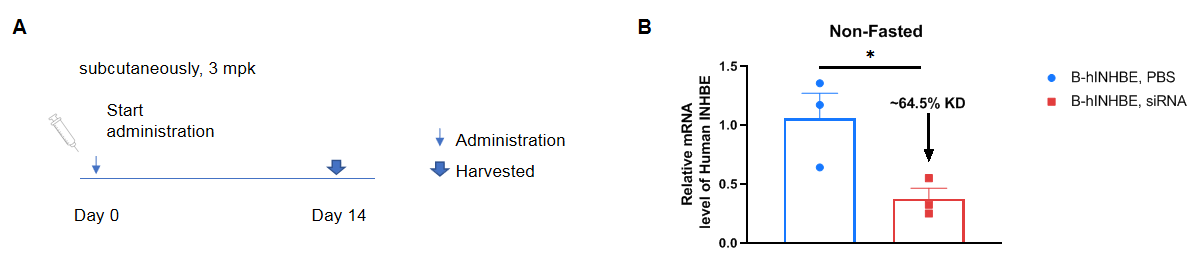
The inhibitory efficiency of nucleic acid drug against human INHBE was evaluated in INHBE humanized mice. INHBE humanized mice were randomly divided into two groups (male, 6–7 weeks old). Human INHBE-targeted nucleic acid drug synthesized according to patents and PBS were administered to mice individually. The nucleic acid drug was administered as a PBS aqueous solution. Mice were sacrificed on day 14, and liver tissues were collected to detect human INHBE mRNA expression by qPCR. Mice were not fasted before liver collection. (A) Schematic diagram of experimental processing. (B) Human INHBE mRNA expression in the liver. Human INHBE expression in the siRNA group was significantly reduced compared with the control group. Significance was determined by t-test, *P<0.05. Values are expressed as mean ± SEM.
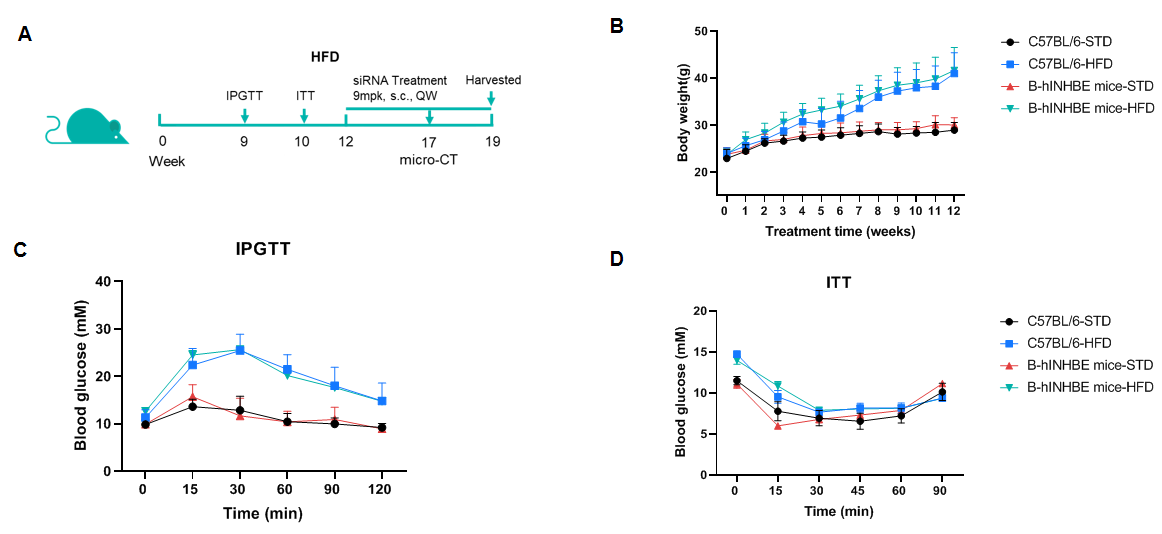
High-fat diet-induced INHBE humanized mice. Wild-type C57BL/6 mice and INHBE humanized Mice (male, 7 weeks old) were fed a high-fat diet (60 kcal% fat) for 12 weeks to induce obesity. (A) Experimental workflow schematic. (B) Body weight changes during HFD induction. (C) Glucose tolerance test following 6-hour fasting and intraperitoneal glucose injection (1.5 g/kg) at week 9. (D) Insulin tolerance test following 4-hour fasting and intraperitoneal insulin injection (0.5 U/kg).
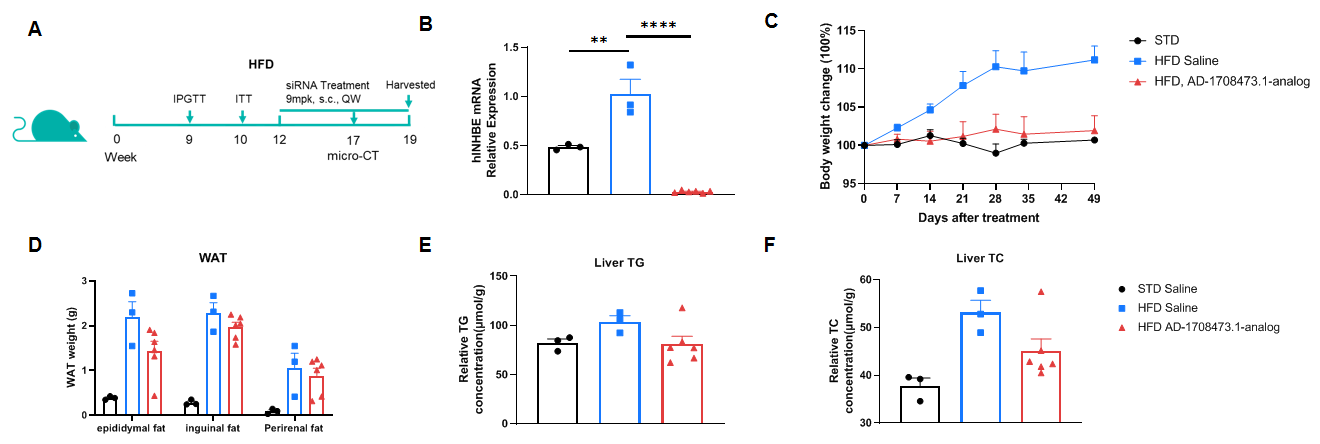
Efficacy study of INHBE-siRNA in HFD-induced INHBE humanized mice. INHBE humanized Mice (male, 7 weeks old) were fed a high-fat diet for 12 weeks to induce obesity prior to therapeutic intervention with INHBE-siRNA. (A) Experimental workflow schematic. (B) Human INHBE mRNA expression in liver after treatment. (C) Body weight changes following treatment. (D) White adipose tissue weight. (E-F) Hepatic total cholesterol (TC) and triglyceride (TG) levels. Statistical analysis was performed using one-way ANOVA. *P<0.05, **P<0.01, ***P<0.001, ****P<0.0001.
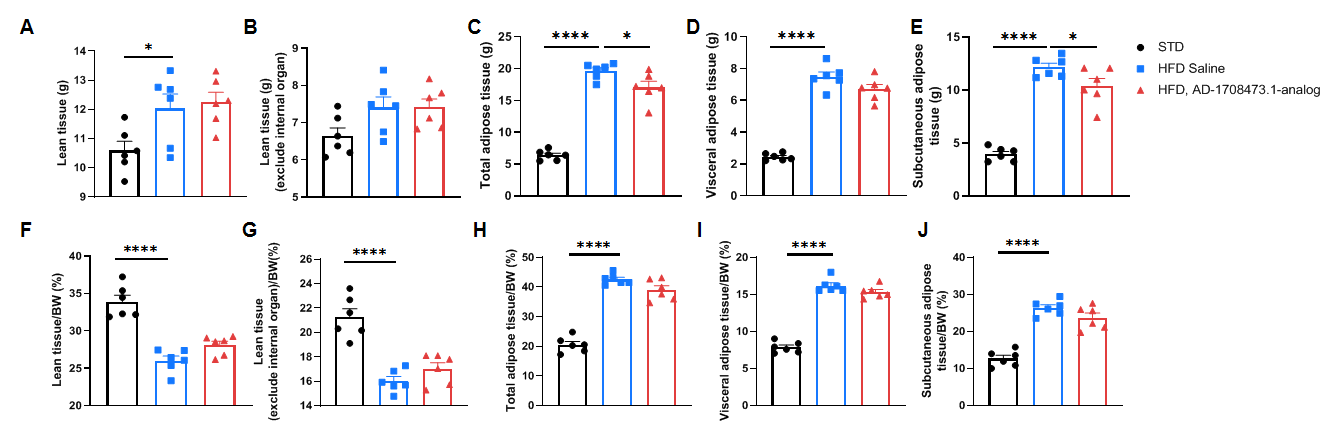
Efficacy of INHBE-siRNA was evaluated in HFD-induced INHBE humanized mice. Three-dimensional reconstruction analysis of lean tissue and adipose tissue was performed by micro-CT after 6 treatments. (A–E) Weight of lean tissue, lean tissue excluding internal organs, total adipose tissue, visceral adipose tissue, and subcutaneous adipose tissue. (F–J) Percentages of lean tissue, lean tissue excluding internal organs, total adipose tissue, visceral adipose tissue, and subcutaneous adipose tissue relative to mouse body weight. Data were analyzed by one-way ANOVA. *P<0.05, **P<0.01, ***P<0.001, ****P<0.0001.
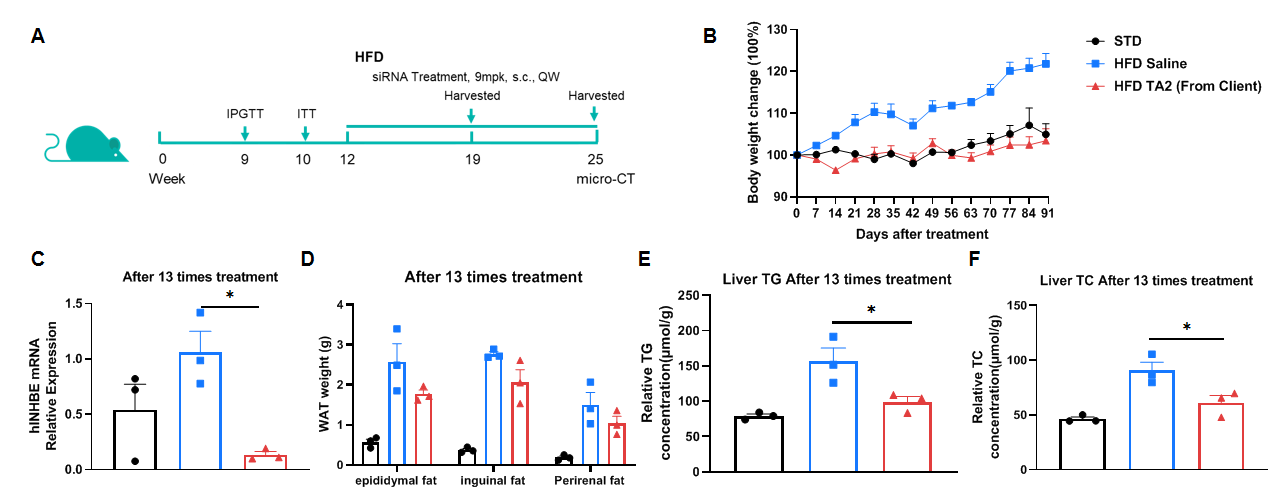
Efficacy of INHBE-siRNA was evaluated in HFD-induced INHBE humanized mice. INHBE humanized mice (male, 7 weeks old) were fed a high-fat diet for 12 weeks to induce obesity. (A) Schematic diagram of experimental processing. (B) Body weight changes after treatment. (C) Human INHBE mRNA expression in the liver at the end of treatment. (D) White adipose tissue weight at the end of treatment. (E–F) Hepatic TC and TG levels at the end of treatment. Data were analyzed by one-way ANOVA. *P<0.05, **P<0.01, ***P<0.001, ****P<0.0001.
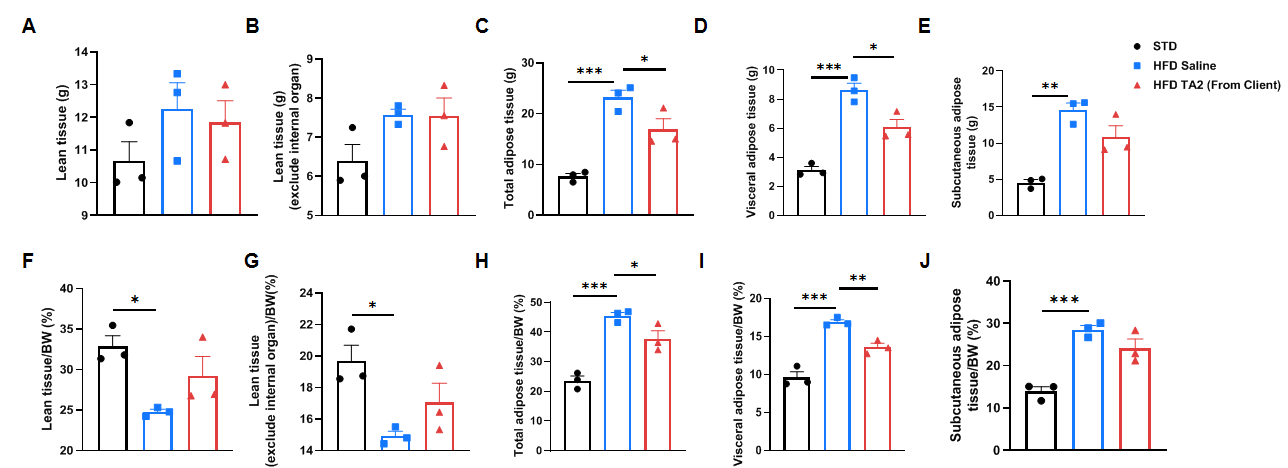
Efficacy of INHBE-siRNA was evaluated in HFD-induced INHBE humanized mice. Three-dimensional reconstruction analysis of lean tissue and adipose tissue was performed by micro-CT after 13 treatments. (A–E) Weight of lean tissue, lean tissue excluding internal organs, total adipose tissue, visceral adipose tissue, and subcutaneous adipose tissue. (F–J) Percentages of lean tissue, lean tissue excluding internal organs, total adipose tissue, visceral adipose tissue, and subcutaneous adipose tissue relative to mouse body weight. Data were analyzed by one-way ANOVA. *P<0.05, **P<0.01, ***P<0.001, ****P<0.0001.
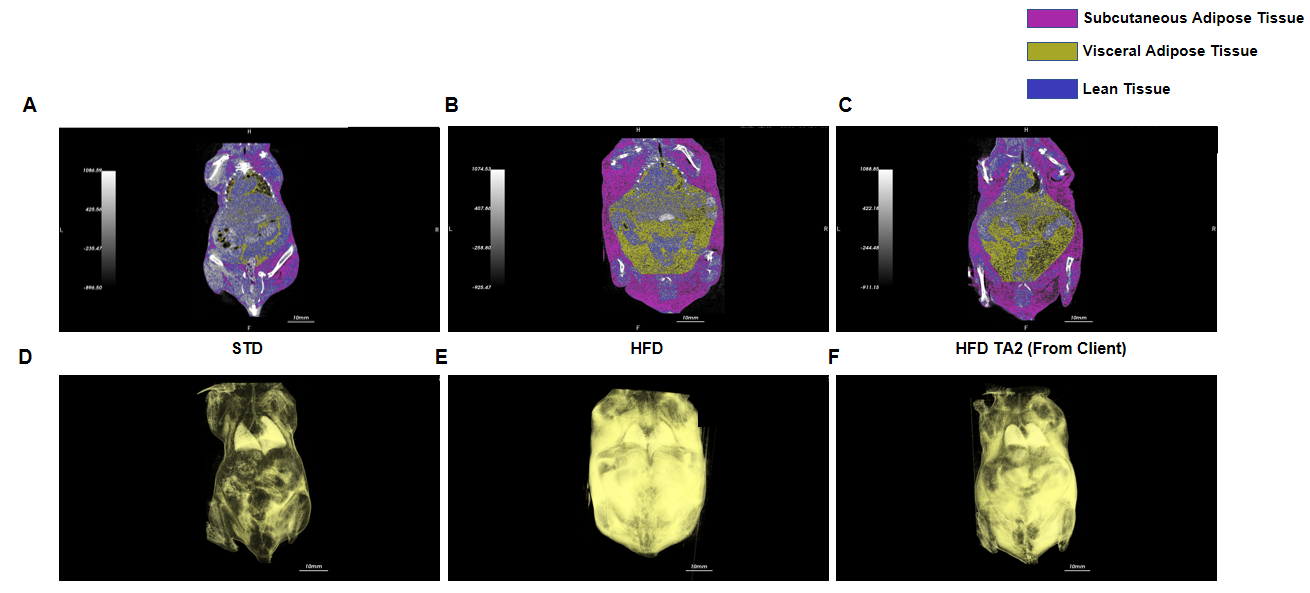
Efficacy of human INHBE-siRNA was evaluated in HFD-induced INHBE humanized mice by micro-CT. Three-dimensional reconstruction analysis of lean tissue and adipose tissue was performed by micro-CT after 13 treatments. (A–C) Representative images of the coronal plane by micro-CT. (D–F) Representative images of 3D reconstruction by micro-CT.

Q1:What are INHBE humanized mice?
INHBE Humanized Mice are genetically engineered mice expressing human INHBE under endogenous regulatory control, enabling translational metabolic disease and RNAi therapeutic studies.
Q2: Why is INHBE an important therapeutic target?
INHBE is a hepatokine associated with obesity, insulin resistance, lipid metabolism, and adipose tissue regulation, making it a promising target for metabolic disease therapies.
Q3: Can these mice be used for siRNA evaluation?
Yes. The mRNA expression study demonstrated efficient in vivo knockdown of human INHBE using RNAi therapeutics.
Q4: Are these mice suitable for obesity studies?
Yes. INHBE humanized mice have been validated in high-fat diet-induced obesity models with metabolic and adipose tissue phenotyping.
Q5: What therapeutic modalities can be evaluated using this model?
This model supports evaluation of antisense oligonucleotides (ASO), RNAi therapeutics, and other human-specific INHBE-targeted interventions.