

C57BL/6-Kittm2(KIT)Bcgen Kitlgtm1(KITLG)Bcgen/Bcgen • 112090

SCF/KIT: A Critical Signaling Axis in Hematopoiesis, Mast Cell Biology, and Oncogenesis

KIT
KITLG

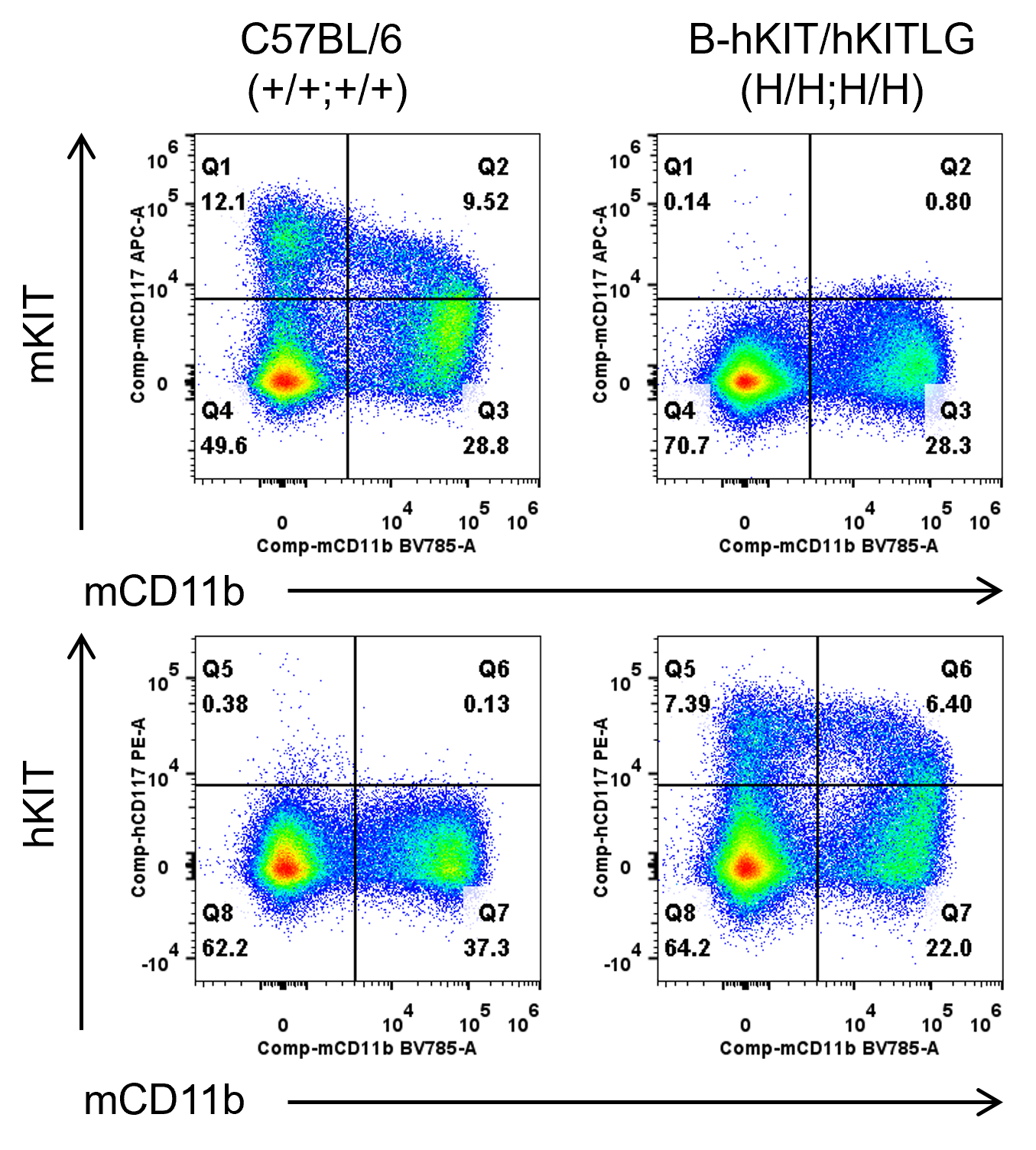
Mouse and human KIT expression analysis in Bone marrow cells. Bone marrow were collected from wild-type C57BL/6 mice and homozygous B-hKIT/hKITLG mice. KIT expression was analyzed by flow cytometry using anti-mouse KIT antibody (Biolegend, 105811) and anti-human KIT antibody (Biolegend, 313203).

Strain specific KITLG expression analysis in homozygous B-hKITLG mice by ELISA. Serum was collected from wild-type C57BL/6 mice and homozygous B-hKITLG mice, and analyzed by ELISA with species-specific KITLG ELISA kit. Mouse KITLG was detectable in wild-type mice. Human KITLG was exclusively detectable in homozygous B-hKITLG mice but not in wild-type mice. Validation of KITLG protein expression data was not performed on double homozygous B-hKIT/hKITLG mice; theoretically, it should be consistent with the protein expression data from single-gene B-hKITLG mice (female, 7-week-old, n = 6). Mouse and human KITLG levels in serum were quantified by ELISA (mouse KITLG, abcam ab197750; human KITLG, Invitrogen EHKITLG). Values are expressed as mean ± SEM.
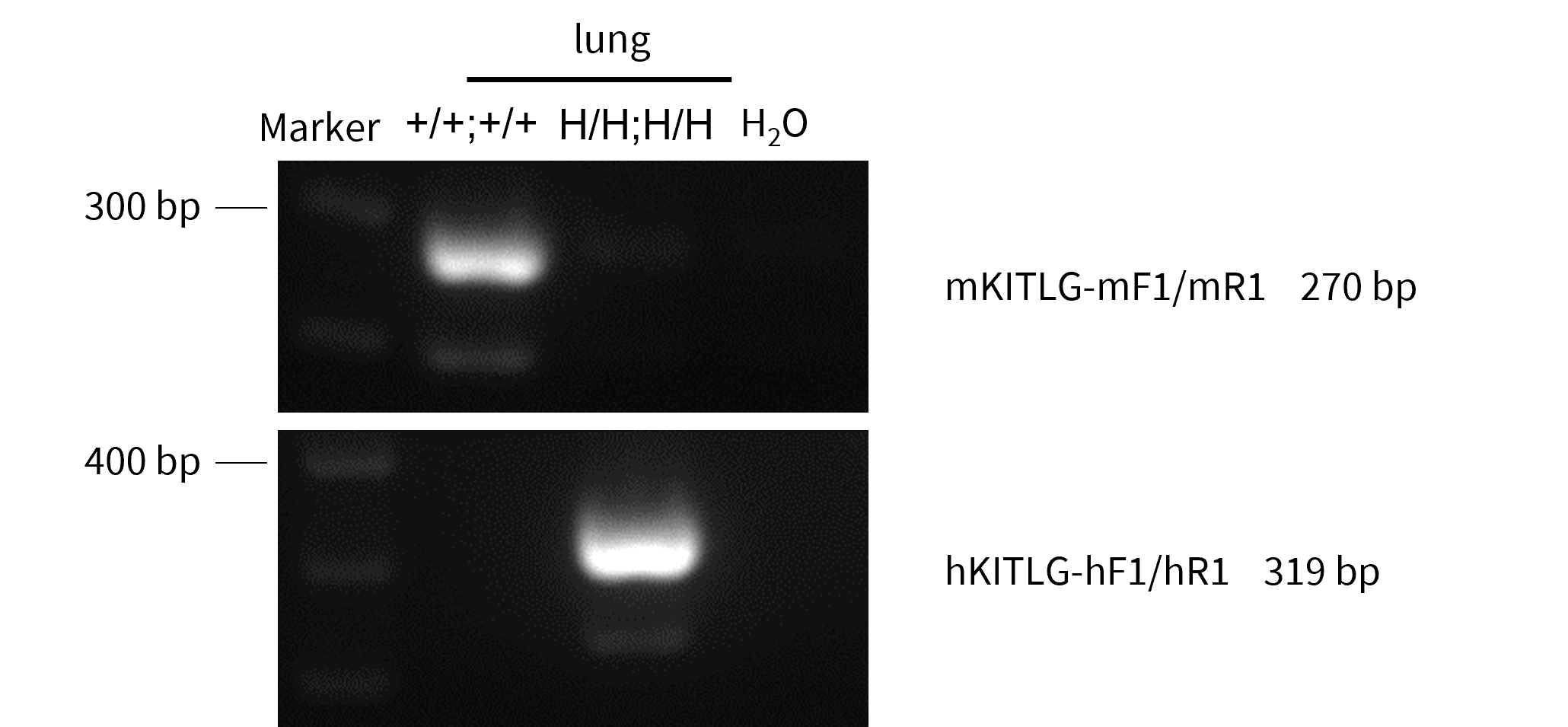
Strain specific analysis of KITLG mRNA expression in wild-type C57BL/6JNifdc mice and B-hKIT/hKITLG mice by RT-PCR. lung RNA were isolated from wild-type C57BL/6JNifdc mice and homozygous B-hKIT/hKITLG mice, then cDNA libraries were synthesized by reverse transcription, followed by PCR with mouse and human KITLG primers. Mouse KITLG mRNA was only detectable in wild-type mice but not in homozygous B-hKIT/hKITLG mice. Human KITLG mRNA was only detectable in homozygous B-hKIT/hKITLG mice but not in wild-type mice.
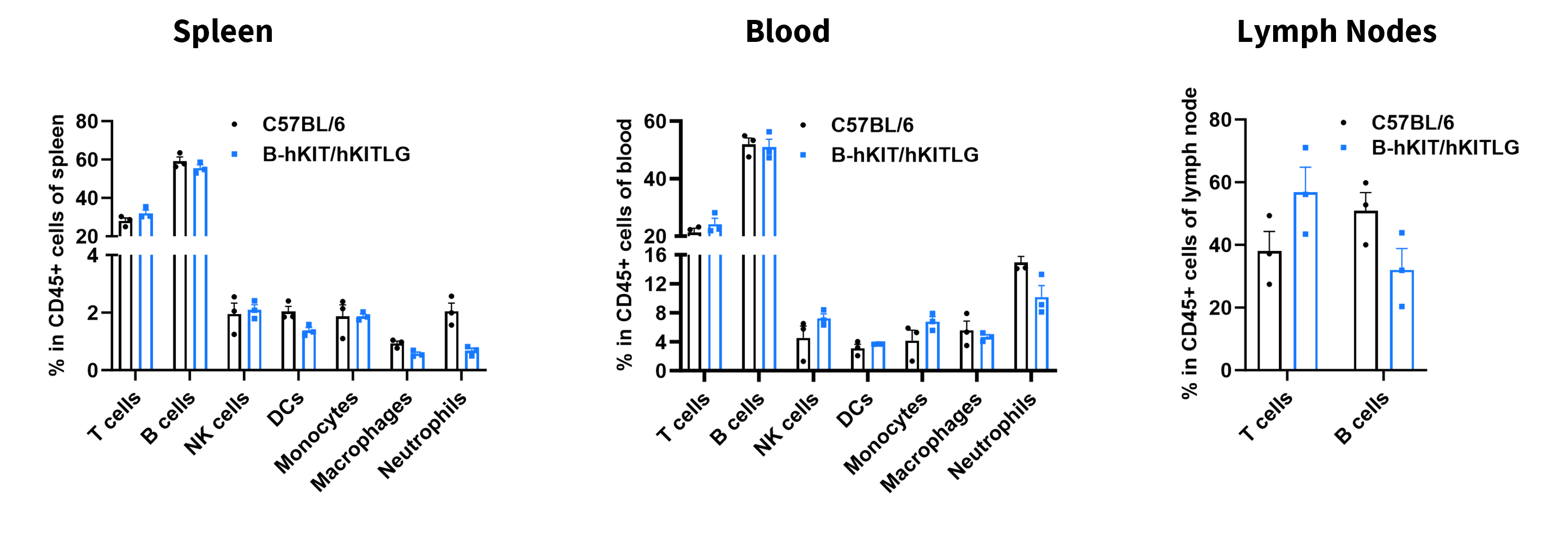
Analysis of leukocyte subpopulations by flow cytometry in immune organs and blood. Splenocytes, peripheral blood, and lymph nodes were isolated from female C57BL/6 and B-hKIT/hKITLG mice (female, 8-week-old, n = 3). Single live cells were gated on the CD45+ population and analyzed by flow cytometry as indicated. Values are expressed as mean ± SEM.

Analysis of T-cell subpopulations by flow cytometry in immune organs and blood. Splenocytes, peripheral blood, and lymph nodes were isolated from female C57BL/6 and KIT and KITLG (female, 8-week-old, n = 3). Single live cells were gated on the CD3+ T-cell population and analyzed by flow cytometry as indicated. Values are expressed as mean ± SEM.

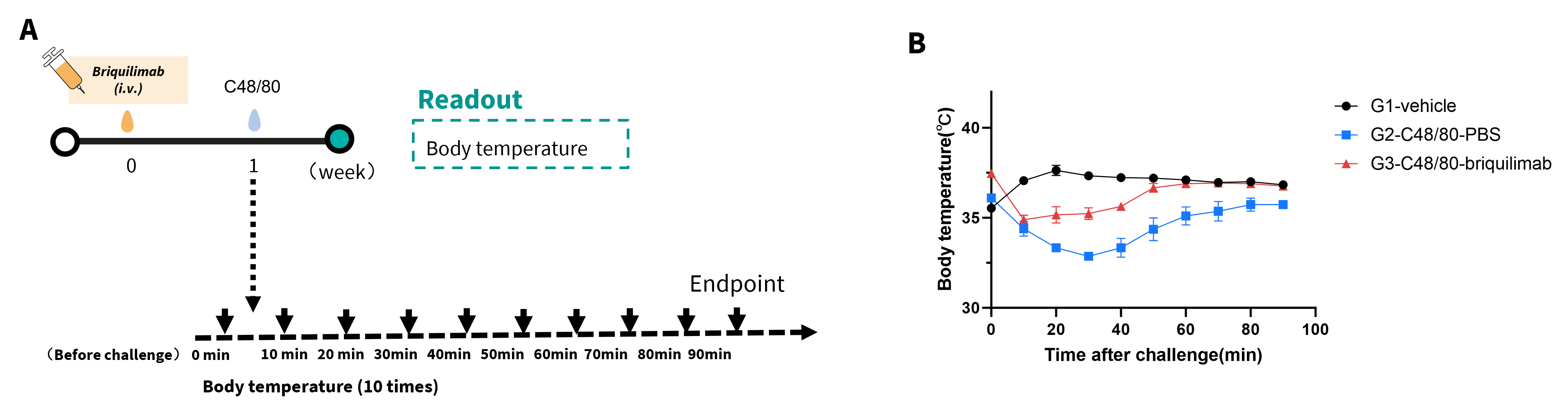
Effects of C48/80‑induced systemic anaphylaxis reaction. (A) Anti‑hKIT antibody briquilimab (25 mpk, commercially purchased) was injected before challenge at week 0. B‑hKIT mice (H/H) (n=3) were challenged with C48/80 at week 1. (B) Body temperature was recorded from 0 to 90 minutes after challenge with 2.5 mg/kg C48/80. briquilimab, by depleting mast cells, attenuated the decrease in body temperature induced by C48/80, demonstrating its inhibitory effect on the systemic anaphylaxis reaction in B-hKIT mice.
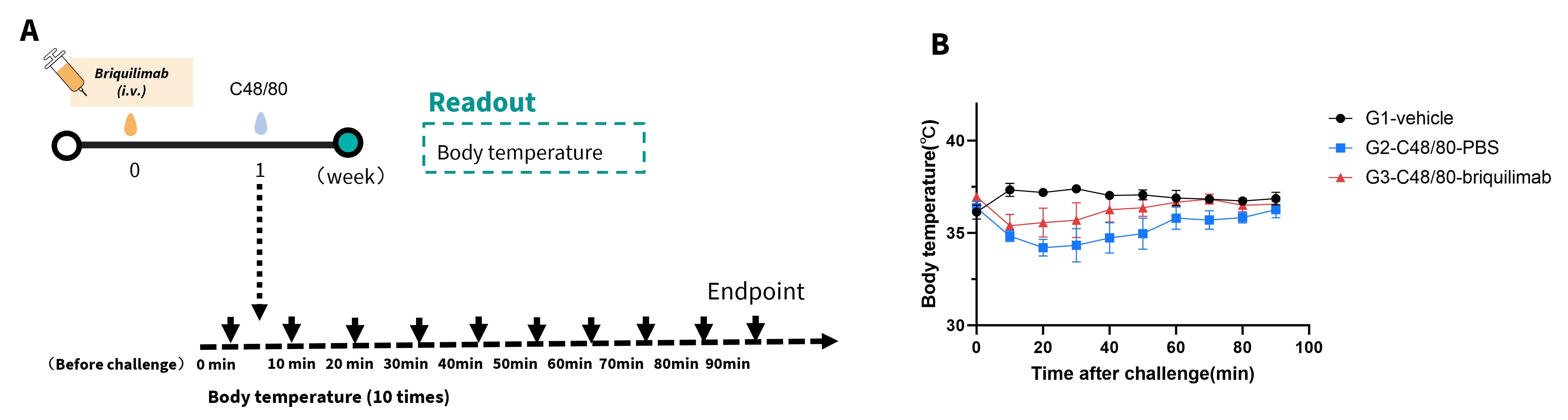
Effects of C48/80‑induced systemic anaphylaxis reaction. (A) Anti‑hKIT antibody briquilimab (25 mpk, commercially purchased) was injected before challenge at week 0. B-hKIT/hKITLG mice (H/H) (n=3) were challenged with C48/80 at week 1. (B) Body temperature was recorded from 0 to 90 minutes after challenge with 2.5 mg/kg C48/80. briquilimab, by depleting mast cells, attenuated the decrease in body temperature induced by C48/80, demonstrating its inhibitory effect on the systemic anaphylaxis reaction in B-hKIT/hKITLG mice.
