
Complement C3: The Most Important Protein in the Complement System


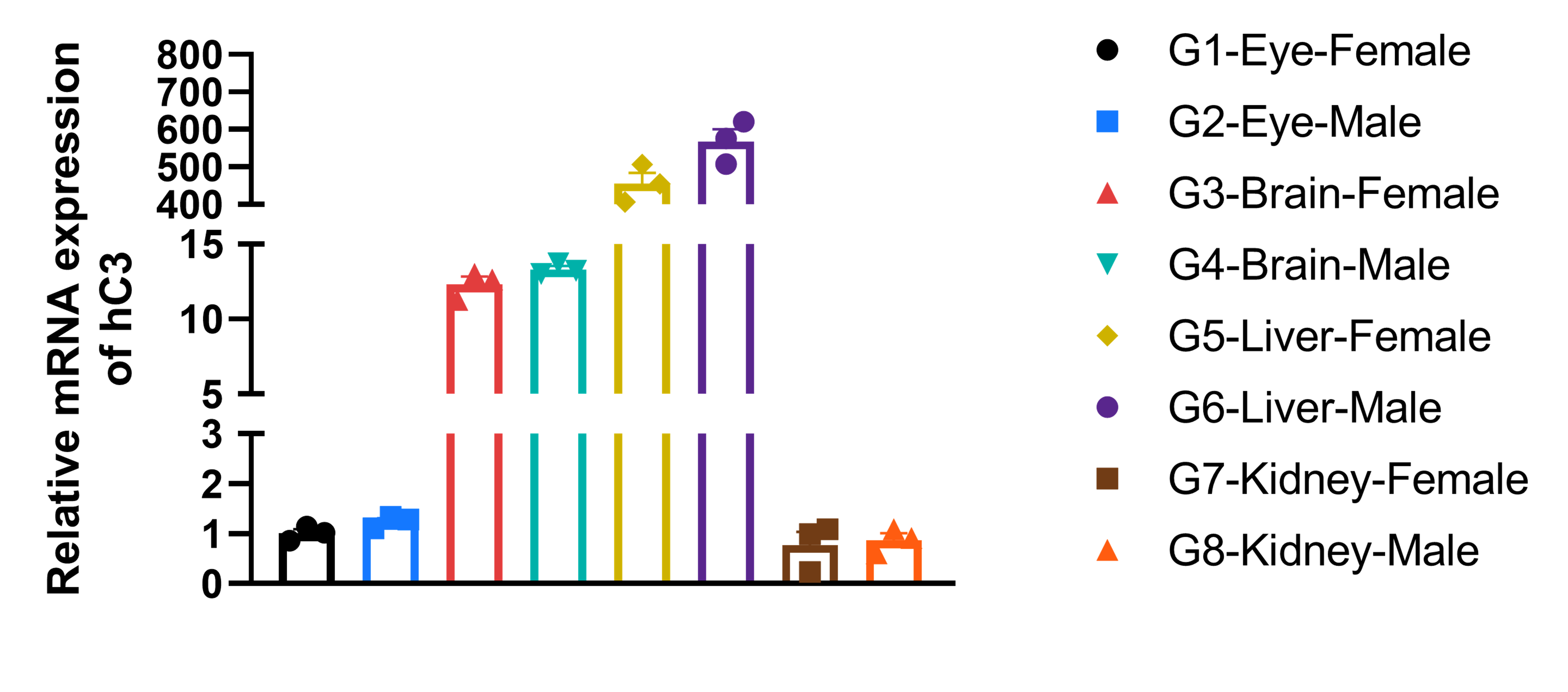
Strain specific analysis of C3 mRNA expression by RT-qPCR. The brain, liver, kidney, and eye tissues RNA were isolated from heterozygous B-hC3*R102G mice (H/+) (male and female n=3), then cDNA libraries were synthesized by reverse transcription, followed by RT-qPCR with human C3 primers. Human C3 is predominantly expressed in the liver. All results were normalized to the female eye C3 mRNA. Values are expressed as mean ± SEM.
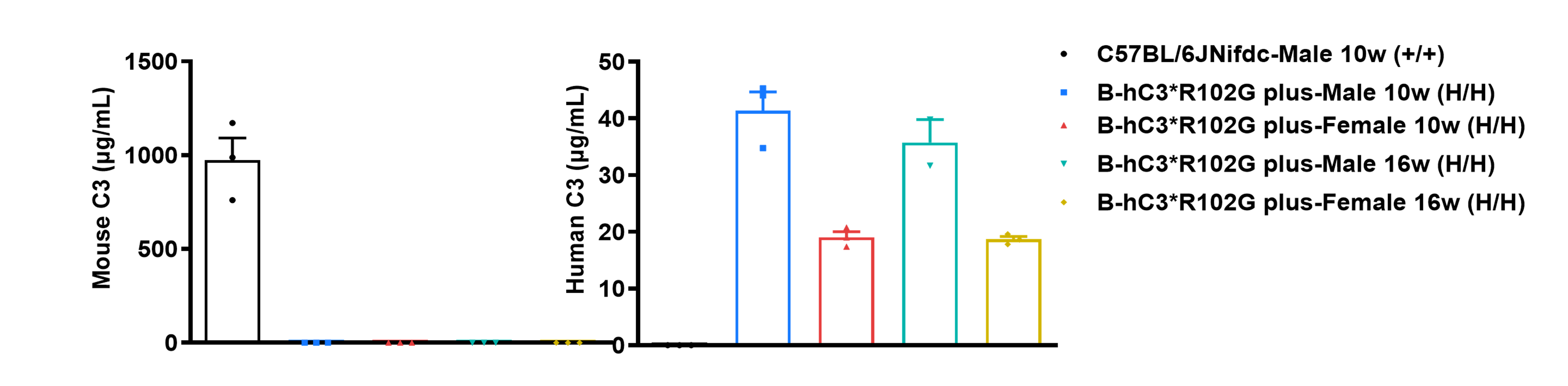
Strain specific C3 expression analysis in wild-type C57BL/6JNifdc mice and homozygous B-hC3*R102G Mice plus by ELISA. Serum was collected from wild-type C57BL/6JNifdc mice (+/+), and homozygous B-hC3*R102G mice plus (H/H) and analyzed by ELISA. Mouse C3 was only detectable in wild-type C57BL/6JNifdc mice. Human C3 was exclusively detectable in homozygous B-hC3*R102G Mice plus. Values are expressed as mean ± SEM.
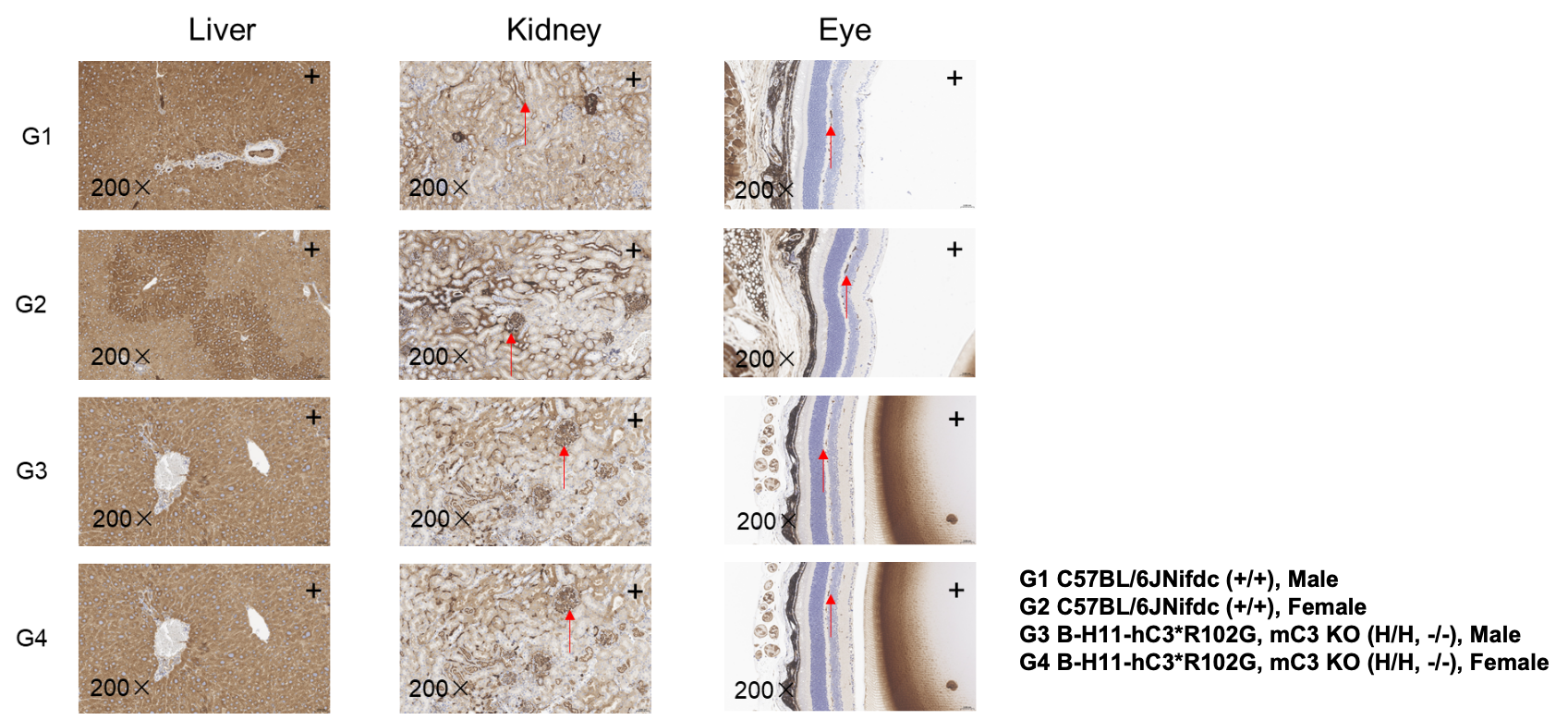
IHC Staining in B-H11-hC3*R102G, mC3 KO mice. The liver, kidney, and eye tissues of wild-type C57BL/6JNifdc mice (+/+) and homozygous B-H11-hC3*R102G, mC3 KO mice (H/H, -/-) were isolated at 16 weeks old and analyzed with IHC staining. C3 was detected in the liver, eye, and kidney of B-H11-hC3*R102G, mC3 KO mice and wild-type C57BL/6JNifdc mice, as the antibody cross-recognizes both human and mouse C3 (Abcam, ab200999). “+” indicate positive expression. Red arrows indicate a positive signal.
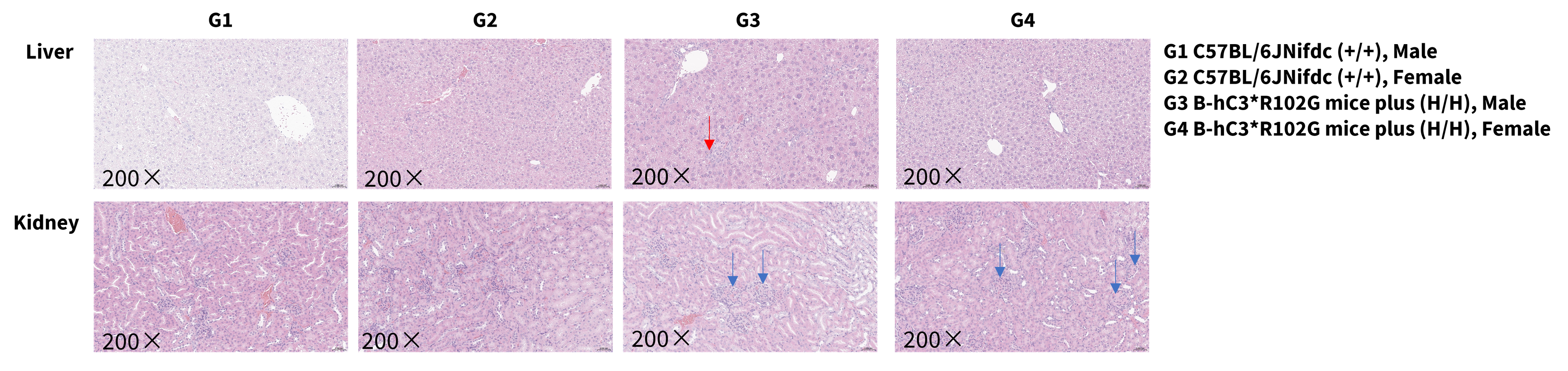
Histopathological analysis in B-hC3*R102G mice plus. The liver and kidney tissues of wild-type C57BL/6JNifdc mice (+/+) and homozygous B-hC3*R102G mice plus (H/H) were isolated at 16 weeks old and analyzed with HE staining (male and female, n=6). The liver of male B-hC3*R102G mice plus (5/6) showed inflammatory cell infiltration. The kidneys of male (4/6) and female (5/6) B-hC3*R102G mice plus showed glomerular matrix proliferation. And there were no obvious abnormalities in wild-type C57BL/6JNifdc mice. Red arrows: inflammatory cell infiltration. Blue arrows: glomerular matrix proliferation.
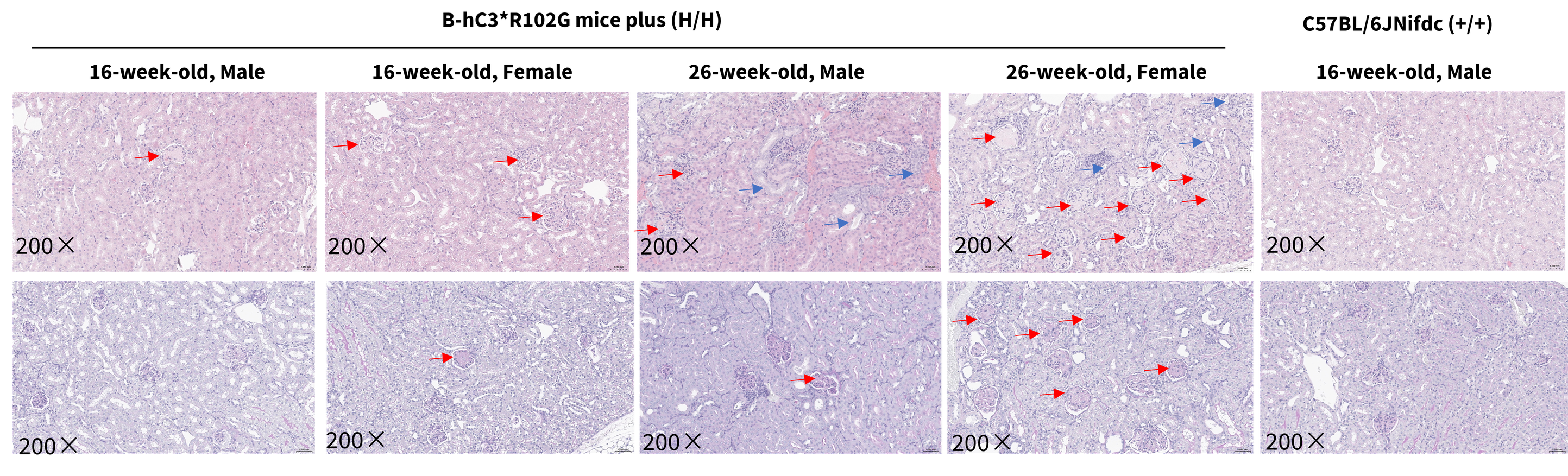
Histopathological analysis in B-hC3*R102G mice plus. The kidneys of homozygous B-hC3*R102G mice plus (H/H) were isolated at 16 weeks old and 26 weeks old and analyzed with HE staining and PAS staining. The kidney of B-hC3*R102G mice plus showed glomerular cell proliferation, renal tubular basophilic changes, and dilation. Compared with wild-type mice, B-hC3*R102G mice plus exhibited increased PAS-positive staining indicative of glomerular mesangial matrix expansion. And there were no obvious abnormalities in wild-type C57BL/6JNifdc mice. Red arrows: Glomerular lesions, Blue arrows: Tubular lesions.
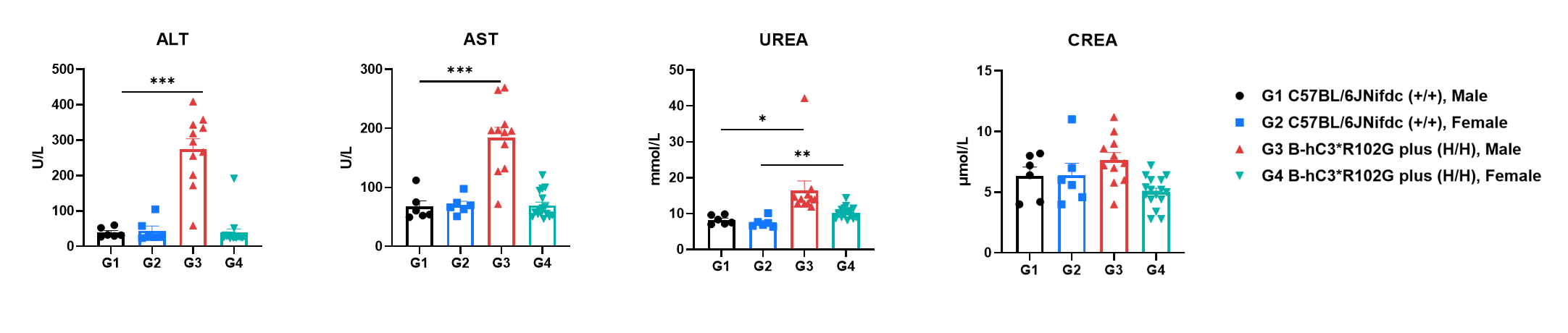
Analysis of blood biochemicals in B-hC3*R102G mice plus and wild-type C57BL/6JNifdc mice. Serum was collected from wild-type C57BL/6JNifdc mice (+/+) and and homozygous B-hC3*R102G mice plus (H/H) (male n=11, female n=16, 16 weeks old) and analyzed for biochemistry. The ALT, AST, and UREA were increased in male B-hC3*R102G mice plus. Values are expressed as mean ± SEM. Significance was determined by t-test, *p<0.05,**p<0.01, ***p<0.001.

Survival Curve of B-hC3*R102G mice plus. Graph showing the survival curve of homozygous B-hC3*R102G mice plus (H/H) (male, n=38). The survival rate of male B-hC3*R102G mice plus was around 50% at 16 weeks old. And we didn’t observe that mice died in the female B-hC3*R102G mice plus until 16 weeks old.