
Background
CUB domain-containing protein 1 (CDCP1) is a type I transmembrane glycoprotein that is associated with tumor progression, drug resistance, and a poor prognosis. CDCP1 is highly expressed in various types of cancer, including pancreatic, breast, prostate, ovarian, colorectal, and lung cancers. It is closely tied to patient prognosis.
CDCP1 can be cleaved by extracellular proteases, resulting in the shedding of the protein. The presence of these shedding CDCP1 in the serum of cancer patients raises concerns regarding the neutralization of biologic therapeutics.
Results
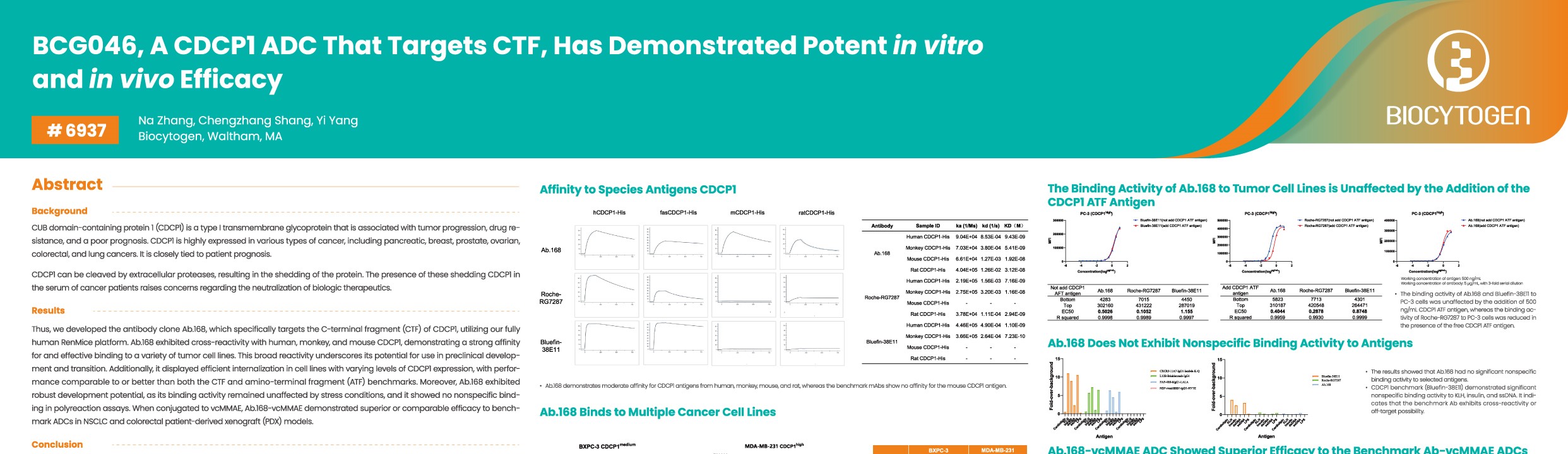
Thus, we developed the antibody clone Ab.168, which specifically targets the C-terminal fragment (CTF) of CDCP1, utilizing our fully human RenMice platform. Ab.168 exhibited cross-reactivity with human, monkey, and mouse CDCP1, demonstrating a strong affinity for and effective binding to a variety of tumor cell lines. This broad reactivity underscores its potential for use in preclinical development and transition. Additionally, it displayed efficient internalization in cell lines with varying levels of CDCP1 expression, with performance comparable to or better than both the CTF and amino-terminal fragment (ATF) benchmarks. Moreover, Ab.168 exhibited robust development potential, as its binding activity remained unaffected by stress conditions, and it showed no nonspecific binding in polyreaction assays. When conjugated to vcMMAE, Ab.168-vcMMAE demonstrated superior or comparable efficacy to benchmark ADCs in NSCLC and colorectal patient-derived xenograft (PDX) models.
Conclusion
These findings underscore the therapeutic potential of Ab.168 in developing an ADC as a promising strategy for treating colorectal cancer and other solid tumors characterized by CDCP1 expression. Further preclinical studies are underway.
