Description
- Gene Information: STMN2 is located on human chromosome 8q21.3, encoding stathmin-2, a neuron-restricted microtubule-regulatory protein.
- Protein Expression: STMN2 protein is selectively expressed in post-mitotic neurons, enriched within axons and growth cones.
- Signaling Pathway: STMN2 modulates microtubule dynamics by promoting tubulin depolymerization to control axon outgrowth and transport. Impaired STMN2 expression disrupts cytoskeletal homeostasis. Downregulated STMN2 mediates TDP-43-linked axonal breakdown and motor neuron functional failure.
- Therapeutic Inhibition: Therapeutic approaches aim to restore STMN2 expression counteracting TDP-43 toxicity. Gene delivery and antisense oligonucleotide strategies are explored. Stabilizing STMN2 transcripts and improving axonal microtubule transport may delay motor neuron loss in ALS.
Targeting strategy
- Human STMN2 cryptic Exon 2a was inserted into mouse Stmn2 intron 1 in B-hSTMN2 mice.
mRNA Expression Analysis
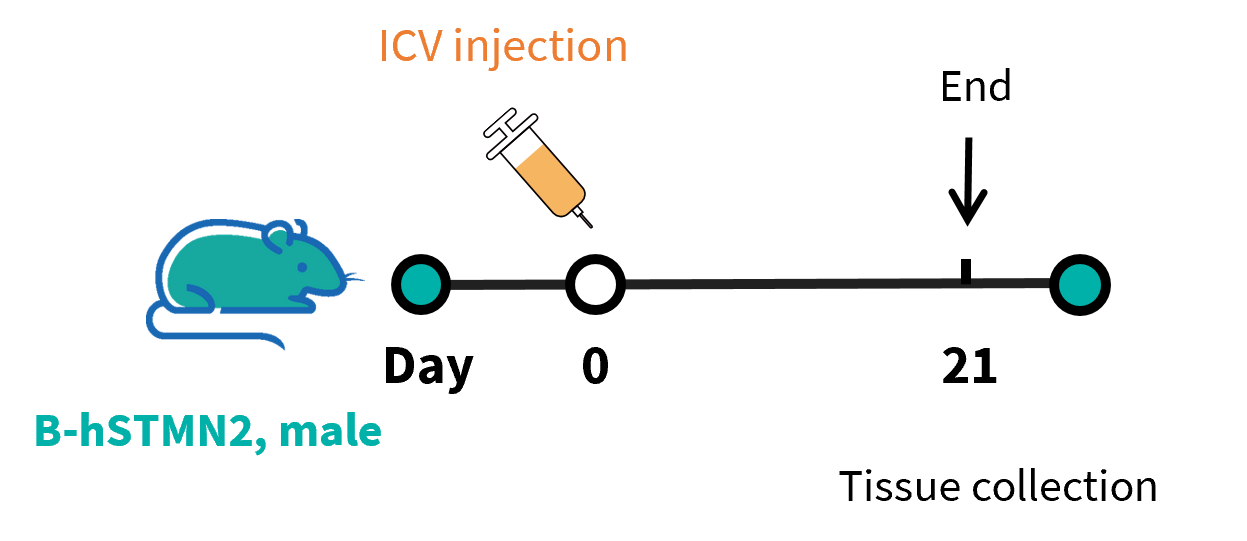
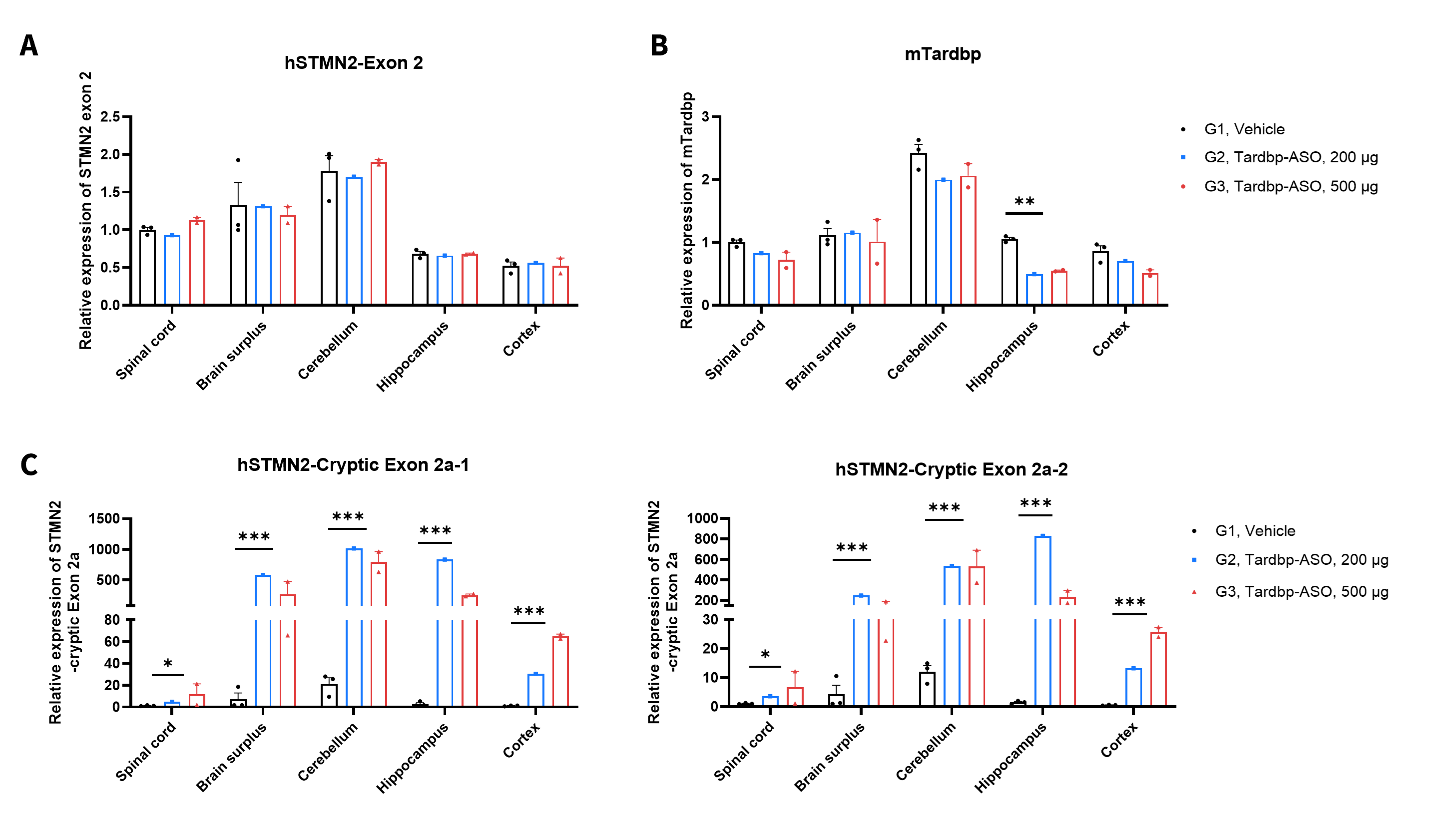
Tardbp-ASO treatment induces cryptic exon inclusion of human STMN2 in B-hSTMN2 mice. Homozygous B-hSTMN2 mice received a single intracerebroventricular (i.c.v.) injection of vehicle (G1), 200 μg Tardbp-ASO (G2), or 500 μg Tardbp-ASO (G3). 21 days post-administration, multiple central nervous system tissues were harvested for RT-qPCR analysis. Relative mRNA levels of hSTMN2 exon 2 (A), cryptic hSTMN2 exon 2a variants (C), and endogenous mouse Tardbp (B) were quantified. Tardbp-ASO treatment decreased Tardbp expression levels, thus elevated cryptic exon 2a-containing hSTMN2 transcripts in B-hSTMN2 mice, confirmed by two different pairs of primers. Data are presented as mean ± SEM. Statistical significance was determined by two-way ANOVA. *P < 0.05, **P < 0.01, ***p < 0.001
* When publishing results obtained using this animal model, please acknowledge the source as follows: The animal model [B-hSTMN2 mice] (Cat# 113181) was purchased from Biocytogen.