


Key Advantages
Validation
Application

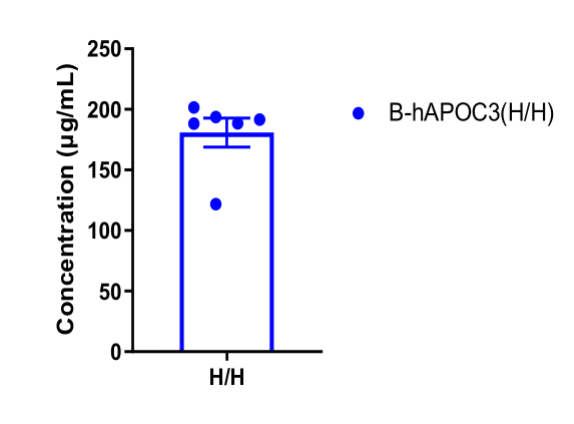
Strain-specific human APOC3 expression analysis in homozygous B-hAPOC3 mice by ELISA. Serum was isolated from homozygous B-hAPOC3 mice (H/H) and analyzed by ELISA with a species-specific APOC3 ELISA kit. Human APOC3 was detectable in homozygous B-hAPOC3 mice.
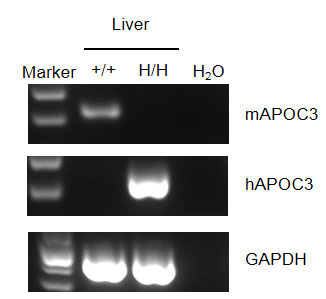
Strain-specific analysis of APOC3 mRNA expression in wild-type C57BL/6 mice and B-hAPOC3 mice by RT-PCR. Liver RNA was isolated from wild-type C57BL/6 mice (+/+) and homozygous B-hAPOC3 mice (H/H). cDNA libraries were synthesized by reverse transcription and followed by PCR with mouse or human APOC3 primers. Mouse Apoc3 mRNA was detectable in wild-type C57BL/6 mice. Human APOC3 mRNA was detectable in homozygous B-hAPOC3 mice but not in wild-type mice.
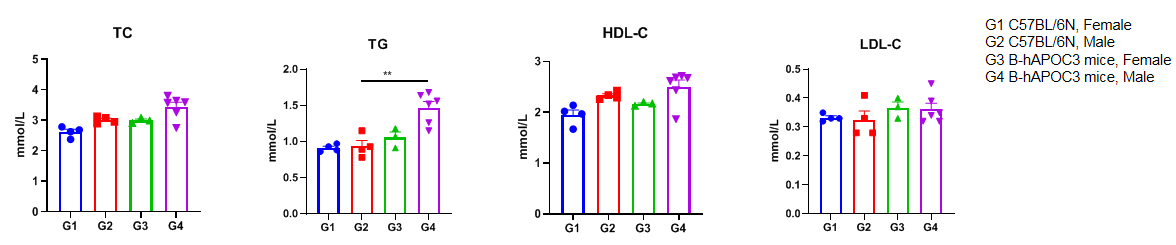
Lipid metabolism analysis in B-hAPOC3 mice. Plasma concentrations of TG, TC, LDL-C, and HDL-C in B-hAPOC3 mice and wild-type C57BL/6 mice (5-week-old) were analyzed. TG in B-hAPOC3 mice was significantly higher than that in wild-type C57BL/6 mice. TG: triglycerides; TC: total cholesterol; HDL-C: high-density lipoprotein cholesterol; LDL-C: low-density lipoprotein cholesterol.

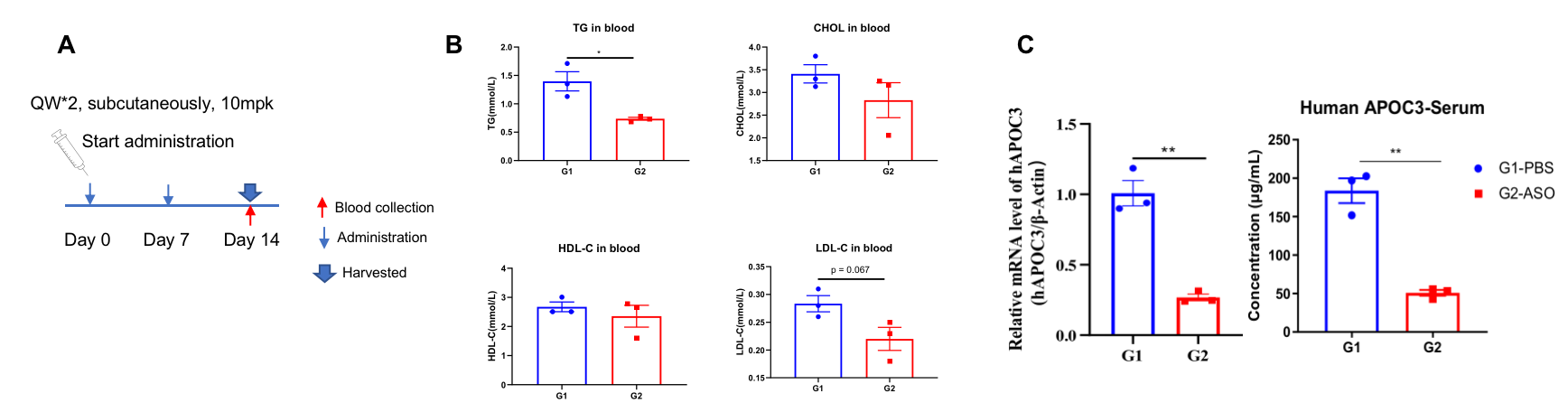
Inhibitory efficiency of nucleic acid drugs against human APOC3 in B-hAPOC3 mice. B-hAPOC3 mice were randomly divided into two groups. Human APOC3-targeted nucleic acid drugs and PBS were administered individually, with drug dosage calculated according to body weight. Mice were sacrificed on day 14, and liver tissue was collected to detect human APOC3 mRNA by qPCR. Compared with control group G1, treatment group G2 showed a significant decrease in TG and reduced human APOC3 mRNA expression. The inhibition rate in the treatment group was 73.4%.

Q1: What are B-hAPOC3 mice?
B-hAPOC3 mice are APOC3 gene-humanized mice on a C57BL/6N background, developed for lipid metabolism research and in vivo evaluation of human APOC3-targeted therapeutics.
Q2: Why is APOC3 important?
APOC3 is an apolipoprotein involved in triglyceride-rich lipoprotein metabolism and plasma triglyceride regulation, making APOC3 an important target for dyslipidemia and hypertriglyceridemia research.
Q3: How was human APOC3 expression validated?
Human APOC3 protein was validated in serum by ELISA, and human APOC3 mRNA was validated in liver by RT-PCR in homozygous B-hAPOC3 mice.
Q4: Can B-hAPOC3 mice be used for nucleic acid drug studies?
Yes. Human APOC3-targeted nucleic acid drugs significantly reduced plasma TG and decreased liver human APOC3 mRNA expression in B-hAPOC3 mice, with a reported inhibition rate of 73.4%.
Q5: What are the main applications of B-hAPOC3 mice?
Applications include APOC3-targeted nucleic acid drug evaluation, triglyceride-lowering pharmacology, lipid metabolism studies, dyslipidemia research, and human APOC3 expression analysis.