
B-hC3*R102G rats

SD-C3tm1(C3*R102G)Bcgen/Bcgen • 113641


B-hC3*R102G rats

Product nameB-hC3*R102G rats
Catalog number113641
Strain nameSD-C3tm1(C3*R102G)Bcgen/Bcgen
Strain backgroundSD
NCBI gene ID718 (Human)
AliasesAHUS5; ARMD9; ASPa; C3b; CPAMD1; HEL-S-62p; C3

이 페이지에서

  • Description
  • Targeting strategy
  • Phenotypic analysis
  • Physiological data

포스터

모두 보기

    출판물

      Description
      • Background: Complement component C3 is a 190 kDa protein that is the most prevalent complement protein in serum and is involved in the production of fragments C3a and C3b, which are crucial for complement activation and immune response. It is also necessary for all three complement-activating pathways: classical, lectin, and alternative.
      • Validation:
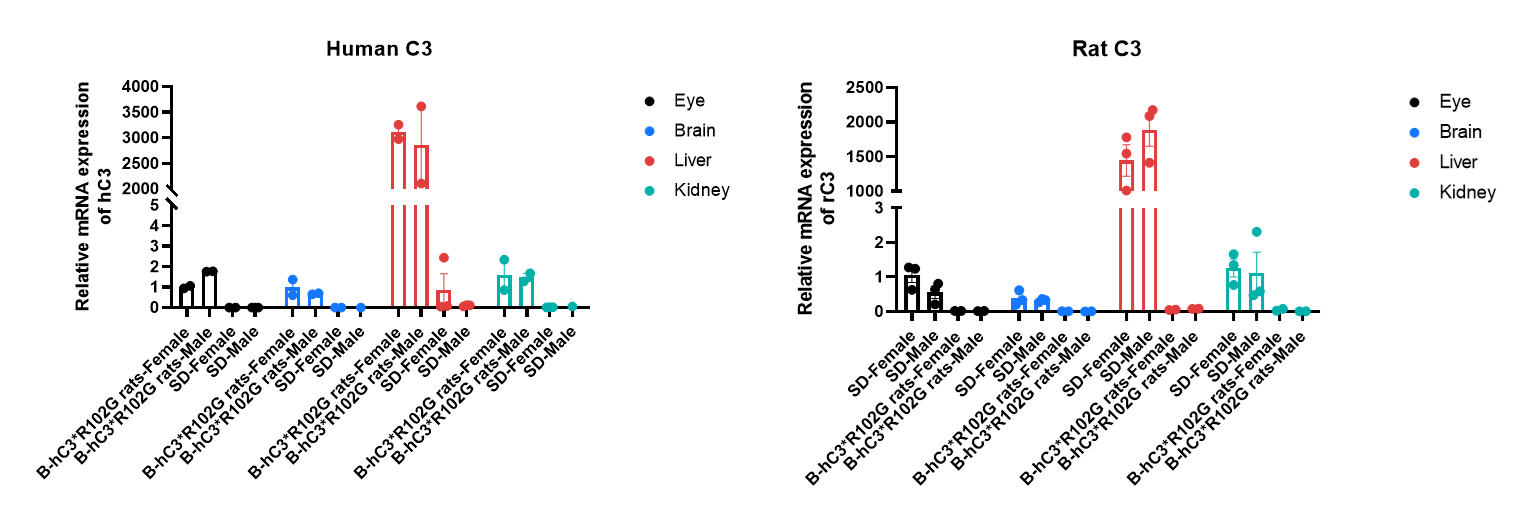
      1. Rat C3 was only detectable in wild-type SD rats but not in B-hC3*R102G rats. Human C3 was exclusively detectable in B-hC3*R102G rats but not in wild-type SD rats.
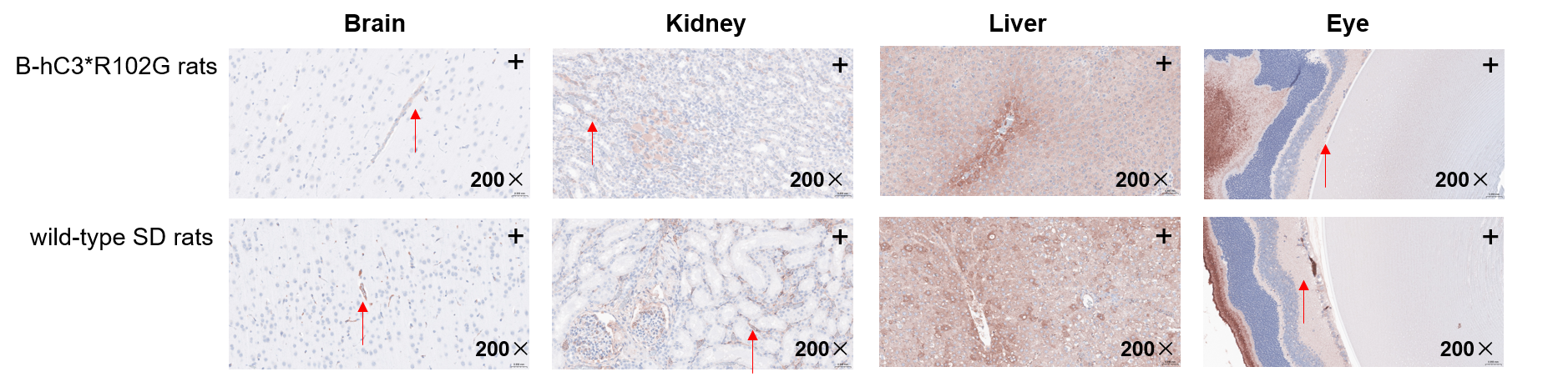
      2. C3 was detected in the brain, liver, eye, and kidney of B-hC3*R102G rats and wild-type SD rats by IHC staining.
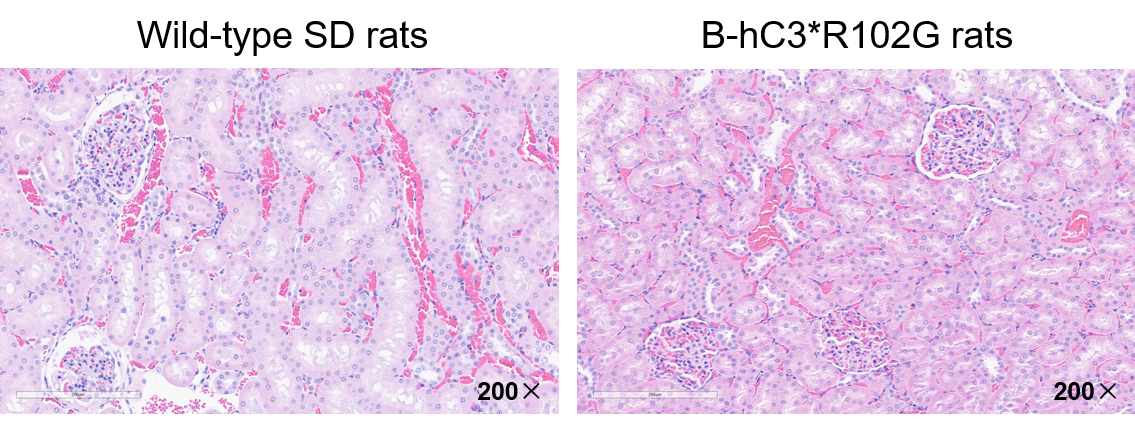
      3. There were no obvious abnormalities found in 10 weeks old wild-type SD rats and B-hC3*R102G rats.
      Targeting strategy
      • Gene targeting strategy: The part of exon 5 to exon 8 of the rat C3 gene was replaced by P2A, human C3 CDS with R102G (CGC>GGC), and human C3 3’UTR in B-hC3*R102G rats. The human C3 expression was driven by the endogenous rat C3 promoter, while rat C3 gene transcription and translation were disrupted.
      • (R102G was an SNP named C3F. The C3F variant is associated with several diseases, including IgA nephropathy, C3G, and age-related macular degeneration.)
      Protein Expression Analysis in Serum

      Strain-specific human C3 expression analysis in wild-type SD rats and B-hC3*R102G rats by ELISA. Serum was collected from wild-type SD rats (+/+) (male, female, n=3, 10 weeks old) and B-hC3*R102G rats (H/H) (male, female, n=2-3, 10 weeks old). The expression level of rat C3 was analyzed by ELISA (Abcam, ab157731). The expression level of human C3 was analyzed by ELISA (Abcam, ab108823). Rat C3 was only detectable in wild-type SD rats but not in B-hC3*R102G rats. Human C3 was exclusively detectable in B-hC3*R102G rats but not in wild-type SD rats.

      mRNA Expression Analysis

      mRNA expression analysis in RT-qPCR in wild-type SD rats and homozygous B-hC3*R102G rats by RT-qPCR. The brain, liver, kidney, and eye tissues RNA were isolated from wild-type SD rats (+/+) and homozygous B-hC3*R102G rats (H/H) (male and female, n=2-3), then cDNA libraries were synthesized by reverse transcription, followed by RT-qPCR with rat or human C3 primers.

      Histopathological Analysis

      Histopathological analysis of kidneys in B-hC3*R102G rats. The kidney tissues of wild-type SD rats (+/+) and B-hC3*R102G rats (H/H) were isolated at 10 weeks of age and analyzed with H&E staining (male, n=1). There were no obvious abnormalities found in wild-type SD rats (+/+) and B-hC3*R102G rats (H/H). Scale bar: 200 μm.
      IHC Staining of B-H11-hC3*R102G rats

      IHC Staining in B-hC3*R102G rats. The brain, liver, kidney, and eye tissues of wild-type SD rats (+/+) and B-hC3*R102G rats (H/H) were isolated at 10 weeks of age and analyzed with IHC staining (male, n=1). Results showed that C3 was detected in the brain, liver, eye, and kidney of B-hC3*R102G rats and wild-type SD rats, as the C3 antibody is cross-recognizing both human and rats (Abcam, ab200999).

      * When publishing results obtained using this animal model, please acknowledge the source as follows: The animal model [B-hC3*R102G rats] (Cat# 113641) was purchased from Biocytogen.