C57BL/6-Cd3etm1(CD3E)Bcgen Cd3dtm1(CD3D)BcgenCd3gtm1(CD3G)Bcgen Tnfrsf9tm1(TNFRSF9)Bcgen/Bcgen • 112646
| Product name | B-hCD3EDG/h4-1BB mice |
|---|---|
| Catalog number | 112646 |
| Strain name | C57BL/6-Cd3etm1(CD3E)Bcgen Cd3dtm1(CD3D)BcgenCd3gtm1(CD3G)Bcgen Tnfrsf9tm1(TNFRSF9)Bcgen/Bcgen |
| Strain background | C57BL/6 |
| NCBI gene ID | 916,915,917,3604 (Human) |
| Aliases | T3E; TCRE; IMD18; CD3epsilon; T3D; IMD19; CD3DELTA; CD3-DELTA; T3G; IMD17; CD3GAMMA; CD3-GAMMA; ILA; 4-1BB; CD137; CDw137; IMD109 |

CD3 and 4-1BB: A New Trends of T cell engager therapeutic

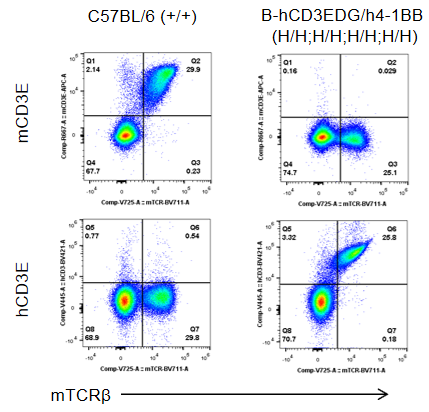
Mouse and human CD3E expression analysis in splenocytes. Splenocytes were collected from wild-type C57BL/6 mice (male, 6-week-old, n = 1) and homozygous B-hCD3EDG/h4-1BB mice (male, 6-week-old, n = 1). CD3E expression on T cells was analyzed by flow cytometry using species-specific anti-CD3E antibodies (anti-human CD3E antibody, BD Horizon, 562426; anti-mouse CD3E antibody, Biolegend, 100312 ).
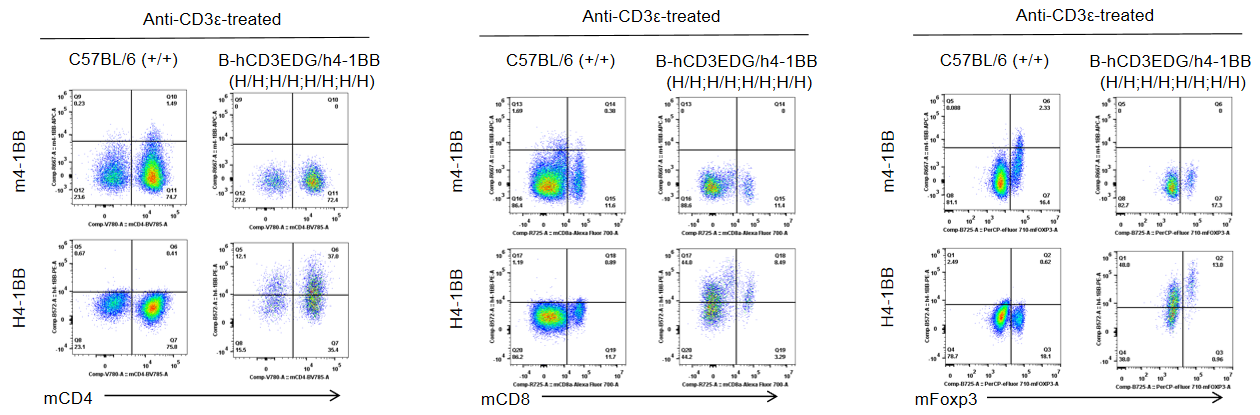
Mouse and human 4-1BB expression analysis in splenocytes. Splenocytes were collected from wild-type C57BL/6 mice (male, 6-week-old, n = 1) and homozygous B-hCD3EDG/h4-1BB mice (male, 6-week-old, n = 1) that treated with anti-m/hCD3E antibody (7.5 μg/mice, i.p., 24 hours). 4-1BB expression on CD4+ T cells, CD8+ T cells and Tregs were analyzed by flow cytometry using species-specific anti-4-1BB antibodies (anti-human 4-1BB antibody, Invitrogen, 12-1379-42; anti-mouse 4-1BB antibody, Invitrogen, 17-1371-82).
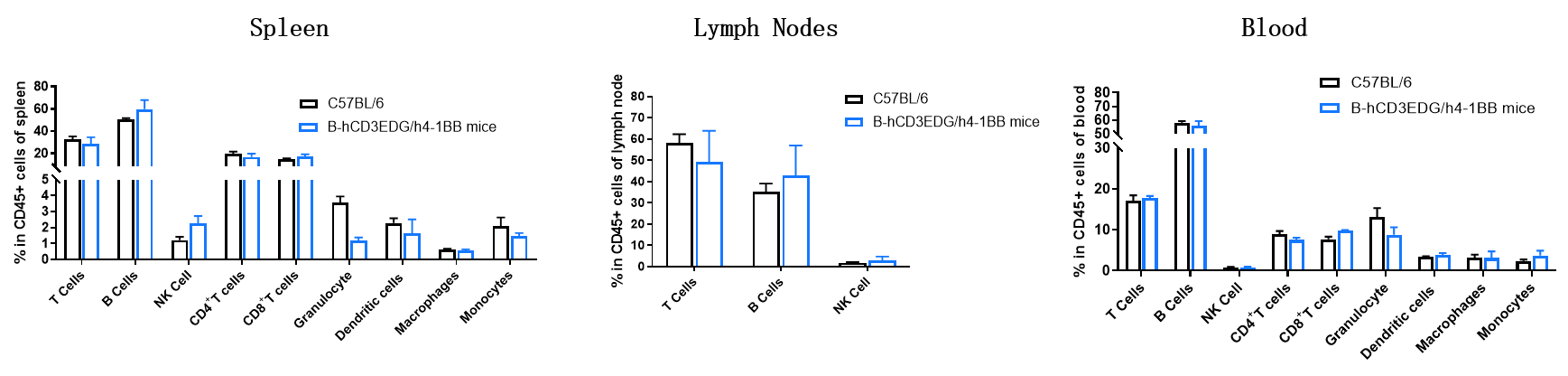
Analysis of leukocyte subpopulations by flow cytometry in immune organs and blood. Splenocytes, lymph nodes, and peripheral blood were isolated from C57BL/6 and B-hCD3EDG/h4-1BB mice (male, 6-week-old, n = 3). Single live cells were gated on the CD45⁺ population and analyzed by flow cytometry as indicated. Values are expressed as mean ± SEM.
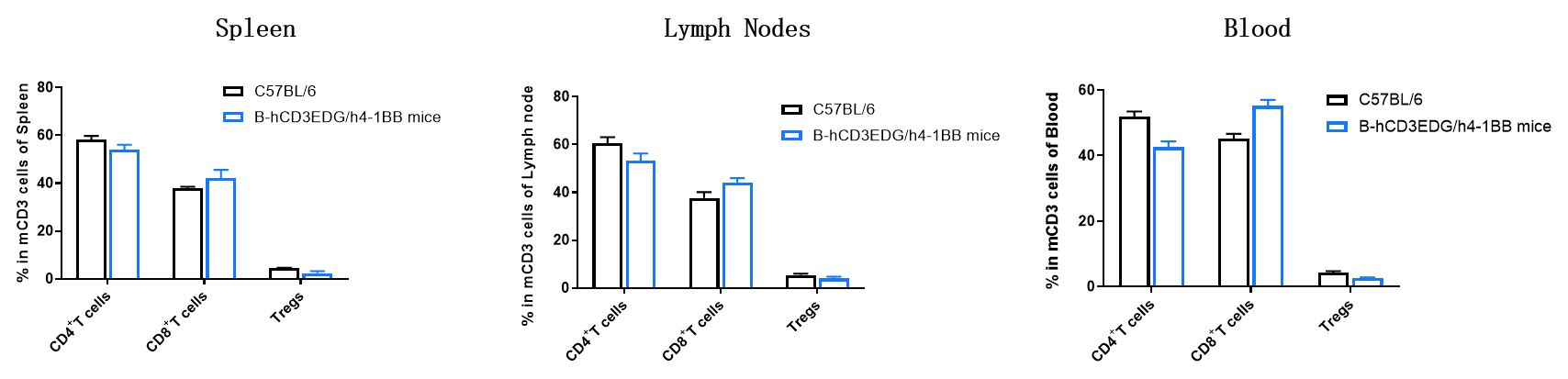
Analysis of T-cell subpopulations by flow cytometry in immune organs and blood. Splenocytes, lymph nodes, and peripheral blood were isolated from C57BL/6 and B-hCD3EDG/h4-1BB mice (male, 6-week-old, n = 3). Single live cells were gated on the mTCRβ+ T-cell population and analyzed by flow cytometry as indicated. Values are expressed as mean ± SEM
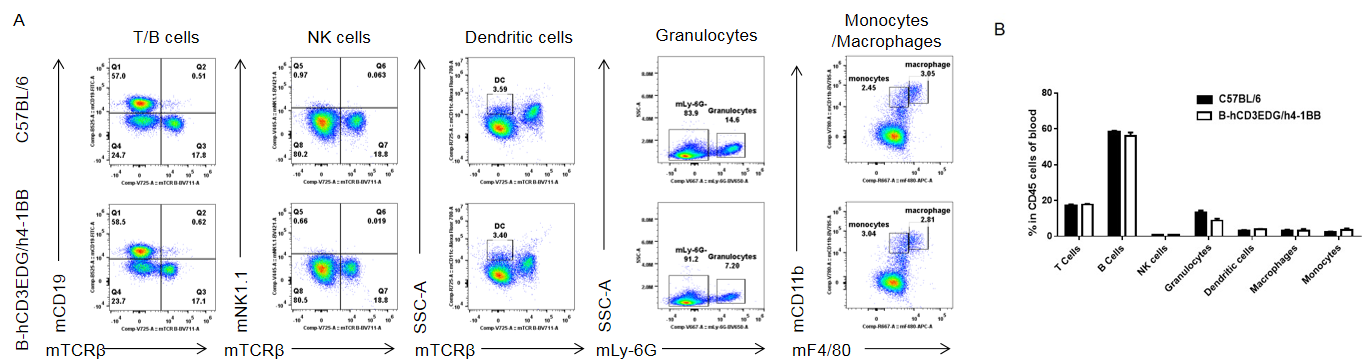
Analysis of blood leukocyte subpopulations by FACS. Blood cells were isolated from female C57BL/6 and B-hCD3EDG/h4-1BB mice (n=3, 6 week-old). Flow cytometry analysis of the blood leukocytes was performed to assess leukocyte subpopulations. A. Representative FACS plots. Single live cells were gated for CD45 population and used for further analysis as indicated here. B. Results of FACS analysis. Percent of T cells, B cells, NK cells, dendritic cells, granulocytes, monocytes and macrophages in homozygous B-hCD3EDG/h4-1BB mice were similar to those in the C57BL/6 mice, demonstrating that introduction of CD3EDG and 4-1BB in place of its mouse counterpart does not change the overall development, differentiation or distribution of these cell types in blood. Values are expressed as mean ± SEM.
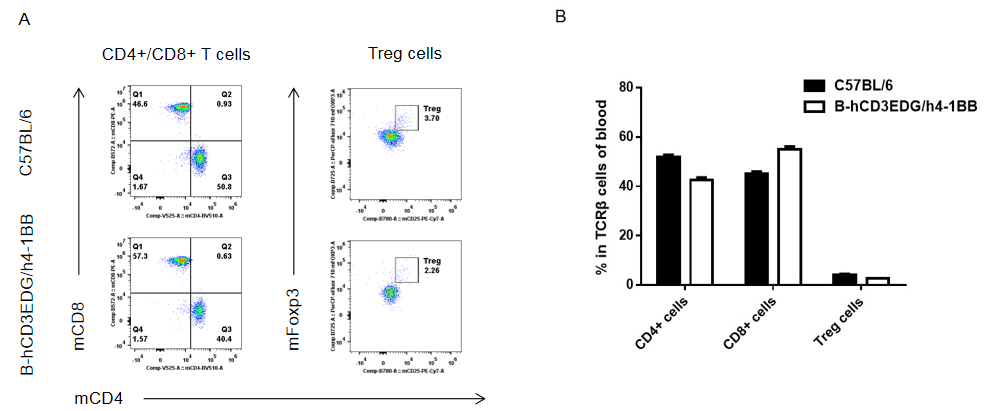
Analysis of blood T cell subpopulations by FACS. Blood cells were isolated from female C57BL/6 and B-hCD3EDG/h4-1BB mice (n=3, 6 week-old). Flow cytometry analysis of the leukocytes was performed to assess T cell subsets. A. Representative FACS plots. Single live CD45+ cells were gated for CD3 T cell population and used for further analysis as indicated here. B. Results of FACS analysis. Percent of CD8+ T cells, CD4+ T cells and Treg cells in homozygous B-hCD3EDG/h4-1BB mice were similar to those in the C57BL/6 mice, demonstrating that introduction of CD3EDG and 4-1BB in place of its mouse counterpart does not change the overall development, differentiation or distribution of these T cell sub types in blood. Values are expressed as mean ± SEM.

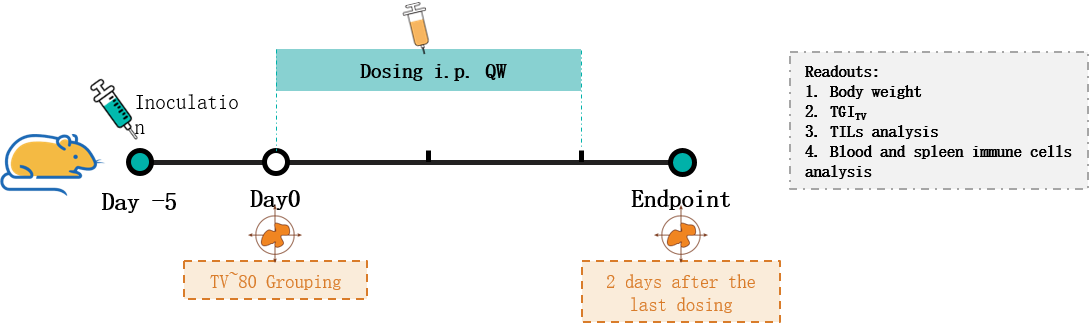
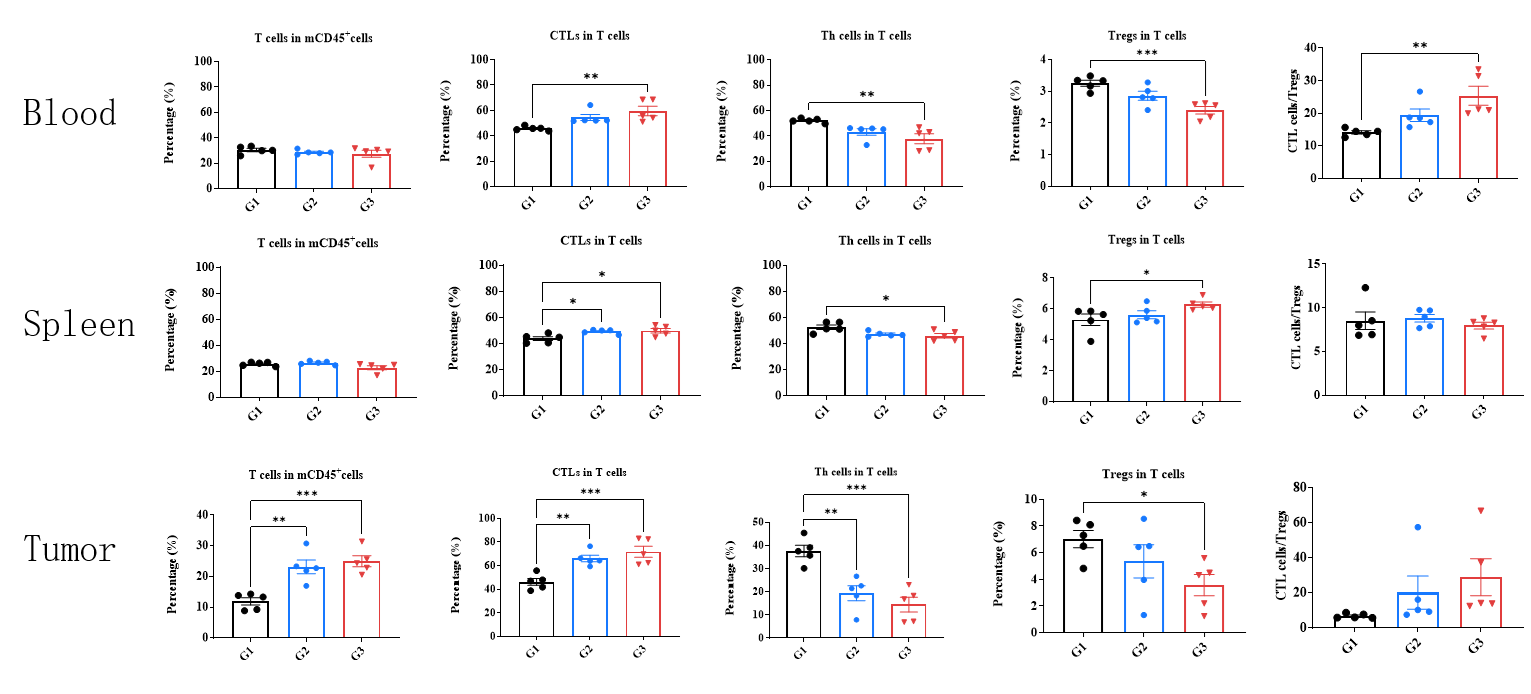
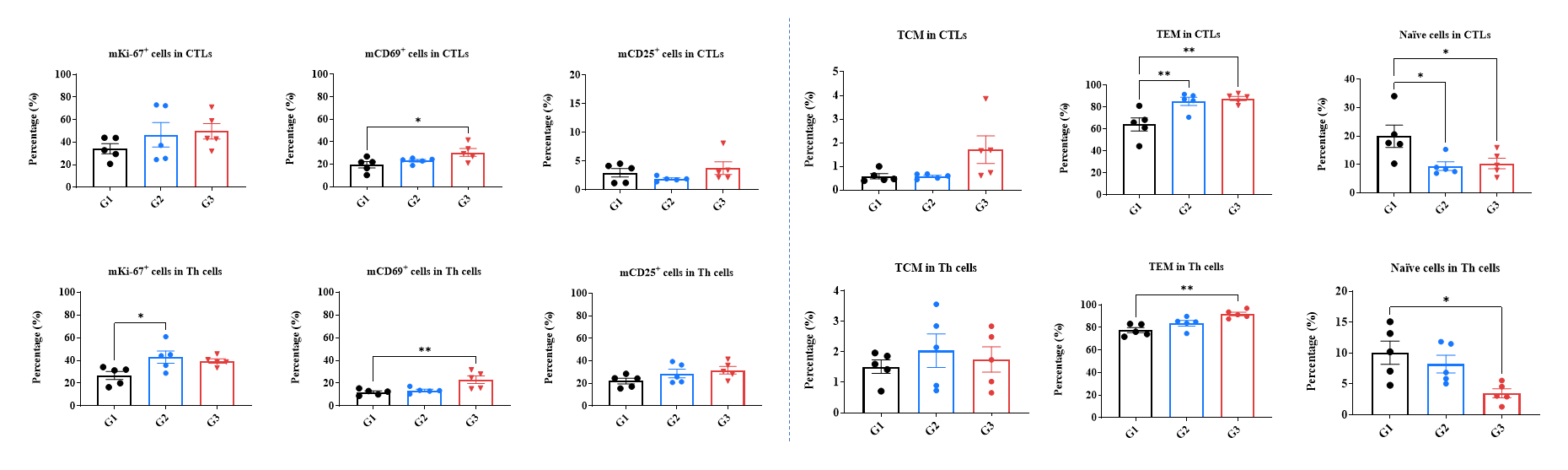
Establishment of a B-hDLL3 B16-F10 model and in vivo efficacy study of an anti-human CD3/4-1BB/DLL3 Tri-specific antibody. B-hDLL3 B16-F10 melanoma cells were implanted subcutaneously into homozygous B-hCD3EDG/h4-1BB mice (female, 7 weeks old, n = 5). When the average tumor volume reached approximately 80 mm³, mice were randomized and subsequently administered the RG6524 analog (in-house) via intraperitoneal injection.

Efficacy of a CD3/4-1BB/DLL3 Tri-specific Antibody in B-hCD3EDG/h4-1BB mice. (A) Tumor growth curves. (B) Body weight changes during treatment. As shown in panel A, RG6524-analog (in-house) was efficacious in controlling tumor growth in B-hCD3EDG/h4-1BB mice in a dose-dependent manner, demonstrating that the B-hCD3EDG/h4-1BB mice provide a powerful preclinical model for in vivo evaluation of anti-human CD3/4-1BB/DLL3 Tri-specific antibodies. Values are expressed as mean ± SEM.
The overage of this tumor model is 60%.