Description
B-hFcRn/hCD32B mice were derived from mating B-hCD32B mice(112052) and B-hFcRn mice(110001). For validation data of this mouse model, you can refer to the validation data from the related gene humanized mouse models.
FcRn: FcRn protects IgG from degradation by pH-dependent recycling.
CD32B: CD32B suppresses cell activation via ITIM and SHP-1 recruitment.
- Gene Information: FCGRT encodes the FcRn α-chain partnering with B2M, while FCGR2B encodes CD32B, the sole inhibitory Fcγ receptor that functions alongside FcRn to regulate systemic IgG homeostasis and autoimmunity.
- Protein Expression: FcRn is abundantly expressed in endothelial cells, monocytes, and mucosal epithelia, whereas CD32B is predominantly localized on mature B cells, basophils, dendritic cells, and macrophages.
- Signaling Pathway: FcRn rescues endocytosed IgG via pH-dependent recycling, while immune-complex engagement with CD32B induces ITIM phosphorylation, recruiting SHIP1 phosphatase to suppress downstream B-cell receptor and cell activation cascades.
- Therapeutic Inhibition: Targeting FcRn accelerates pathogenic autoantibody degradation, while co-targeting or engineering Fc engagement with CD32B suppresses autoimmune hyperreactivity and enhances antibody clearance for therapeutic intervention.
Key Advantages
- Humanized Binding Targets:Accurately displays human FcRn and CD32B proteins, ensuring precise target binding and translational relevance for human-specific therapeutics.
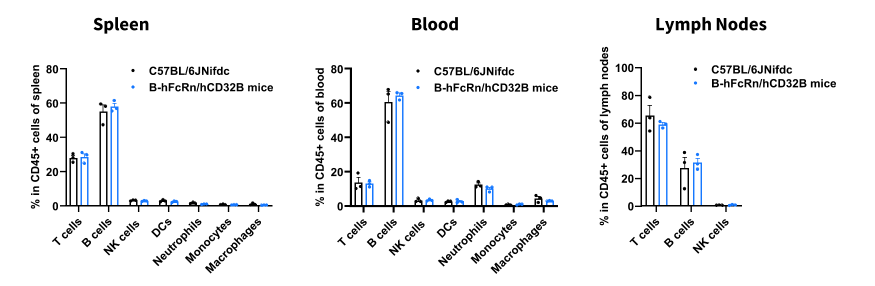
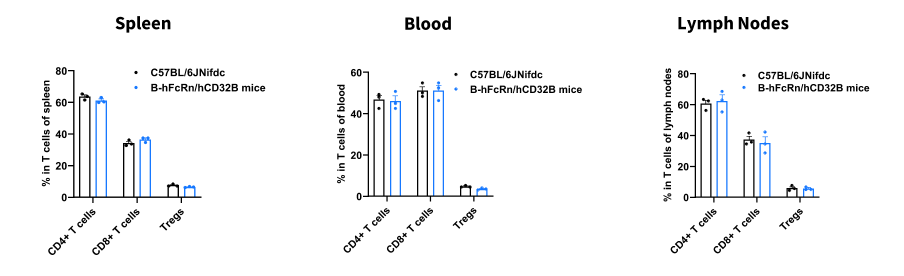
- Normal Immune Phenotype:Immune cell proportions closely resemble wild-type mice, providing a stable, uncompromised physiological immune system for baseline testing.
- Dual Pathway Crosstalk:Enables simultaneously studying FcRn-mediated antibody recycling and CD32B-mediated B-cell inhibition within a single physiologically active animal model.
Key Applications
- Fc-Engineered Antibody Evaluation:Assessing how engineered antibody Fc regions modulate half-life extension, FcRn affinity, and CD32B-mediated inhibitory receptor engagement.
- Autoimmune Disease Therapeutics:Testing targeted biologics designed to clear pathogenic autoantibodies and suppress B-cell hyperactivity in systemic autoimmune models.
- Bispecific Biologics Validation:Evaluating dual-targeting biotherapeutics simultaneously interacting with human FcRn and CD32B signaling pathways in vivo.
Targeting Strategy
FcRn
- The full length human FcRn CDS, mouse FcRn 3’UTR STOP and 3×bGHpA were inserted in the mouse FcRn exon2 in B hFcRn/hCD32B mice.
- The human FcRn protein expression will be driven by endogenous mouse FcRn promoter, while mouse FcRn gene transcription and translation will be disrupted.
CD32B
- The exons 2 4 of mouse Cd32b gene that encode extracellular domain were replaced by human counterparts in B hFcRn/hCD32B mice.
- The genomic region of mouse Cd32b gene that encodes signal peptide, transmembrane domain and cytoplasmic portion was retained. The promoter, 5’UTR and 3’UTR region of the mouse gene were also retained. The chimeric CD32B expression was driven by endogenous mouse Cd32b promoter, while mouse Cd32b gene transcription and translation will be disrupted.
B hFcRn/hCD32B mice (113020) were obtained by mating B hFcRn mice (110001) and B hCD32B mice (112052).
mRNA Expression Analysis
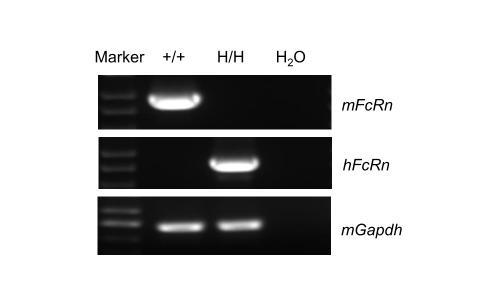
Species specific analysis of FcRn/hCD32B gene expression in wild-type C57BL/6JNifdc mice and homozygous humanized B-hFcRn/hCD32B mice by RT-PCR.Kidney RNA was isolated from wild-type C57BL/6JNifdc mice (+/+) and homozygous B-hFcRn/hCD32B mice (H/H), and then cDNA libraries were synthesized by reverse transcription, followed by PCR with mouse FcRn primers and human FcRn primers.
FcRn Protein Expression
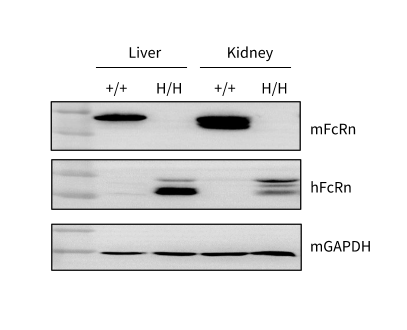
Strain specific FcRn expression analysis in wild-typeC57BL/6JNifdc mice and homozygous humanized B-hFcRn/hCD32B mice by western blot.
Liver and kidney were collected from wild-type C57BL/6JNifdc mice (+/+) and homozygous B-hFcRn/hCD32B mice (H/H). Protein expression was analyzed with anti-mouse FcRn antibody (R&D, AF6775) and anti-human FcRn antibody (Novus Biologicals, NBP1-89128) by western blot.
CD32B Protein Expression in Spleen
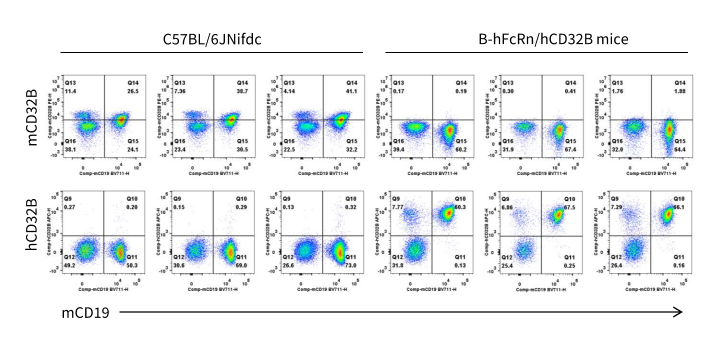
Strain specific CD32B expression analysis in wild-type C57BL/6JNifdc mice and homozygous humanized B-hFcRn/hCD32B mice by flow cytometry.
Splenocytes were collected from wild-type C57BL/6JNifdc mice and homozygous B-hFcRn/hCD32B mice. Protein expression was analyzed with anti-mouse CD32B antibody (eBioscience, 12-0321-82) and anti-human CD32B antibody (Biolegend, 398304) by flow cytometry.
CD32B Protein Expression in Blood
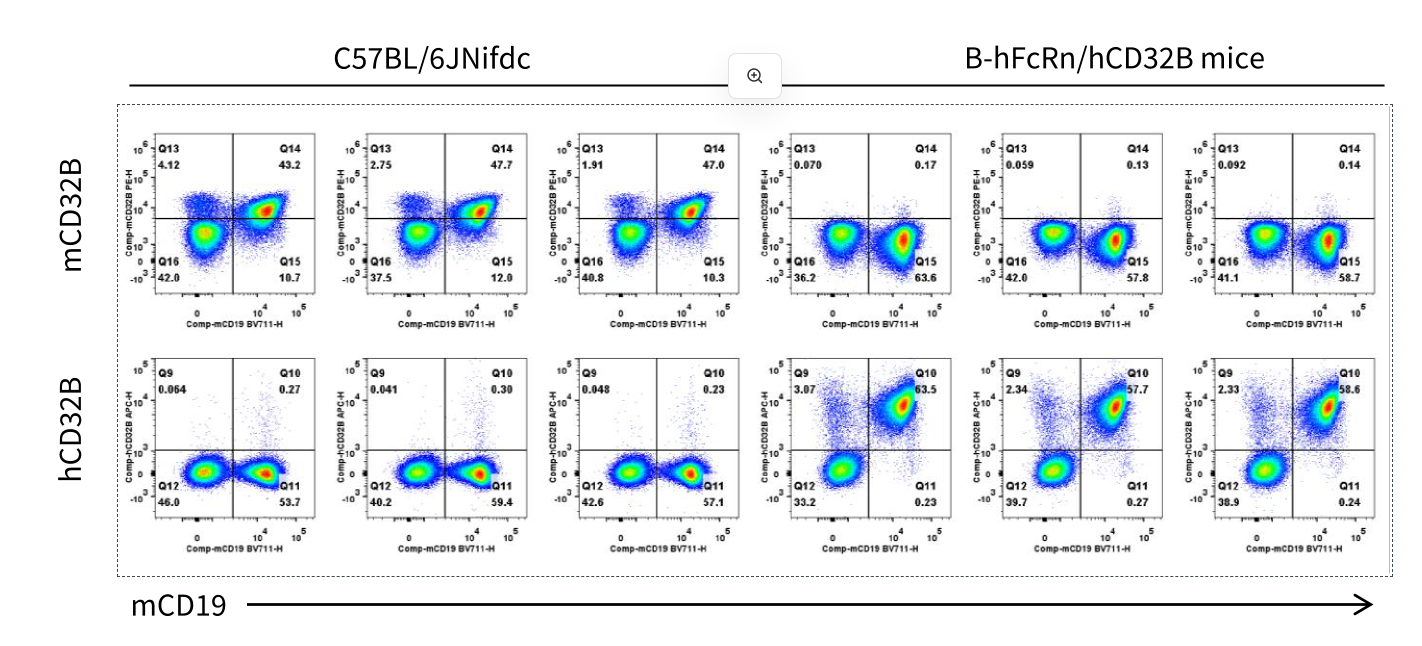
Strain specific CD32B expression analysis in wild-type C57BL/6JNifdc mice and homozygous humanized B-hFcRn/hCD32B mice by flow cytometry.
Blood cells were collected from wild-type C57BL/6JNifdc miceand homozygous B-hFcRn/hCD32B mice. Protein expression was analyzed with anti-mouse CD32B antibody (eBioscience, 12-0321-82) and anti-human CD32B antibody (Biolegend, 398304)by flow cytometry.
Analysis of Leukocyte Subpopulations
Analysis of leukocyte subpopulations by flow cytometry in immune organs and blood.
Splenocytes, peripheral blood, and lymph nodes were isolated from C57BL/6JNifdc mice and homozygous B-hFcRn/hCD32B mice (female, 6-week-old, n = 3). Single live cells were gated on the CD45⁺ population and analyzed by flow cytometry as indicated. Values are expressed as mean ± SEM.
Analysis of T Cell Subpopulations
Analysis of T-cell subpopulations by flow cytometry in immune organs and blood.
Splenocytes, peripheral blood, and lymph nodes were isolated from C57BL/6JNifdc mice and homozygous B-hFcRn/hCD32B mice (female, 6-week-old, n = 3).
Single live cells were gated on the TCRβ⁺ T-cell population and analyzed by flow cytometry as indicated. Values are expressed as mean ± SEM.
* When publishing results obtained using this animal model, please acknowledge the source as follows: The animal model [B-hFcRn/hCD32B mice] (Cat# 113020) was purchased from Biocytogen.