

CD40/CD40L: A key costimulatory axis in adaptive immunity and its therapeutic intervention

CD40
CD40L
B-hCD40/hCD40L Mice(C) were obtained by mating B-hCD40 Mice(C) (113933) and B-hCD40L Mice(C) (113932)

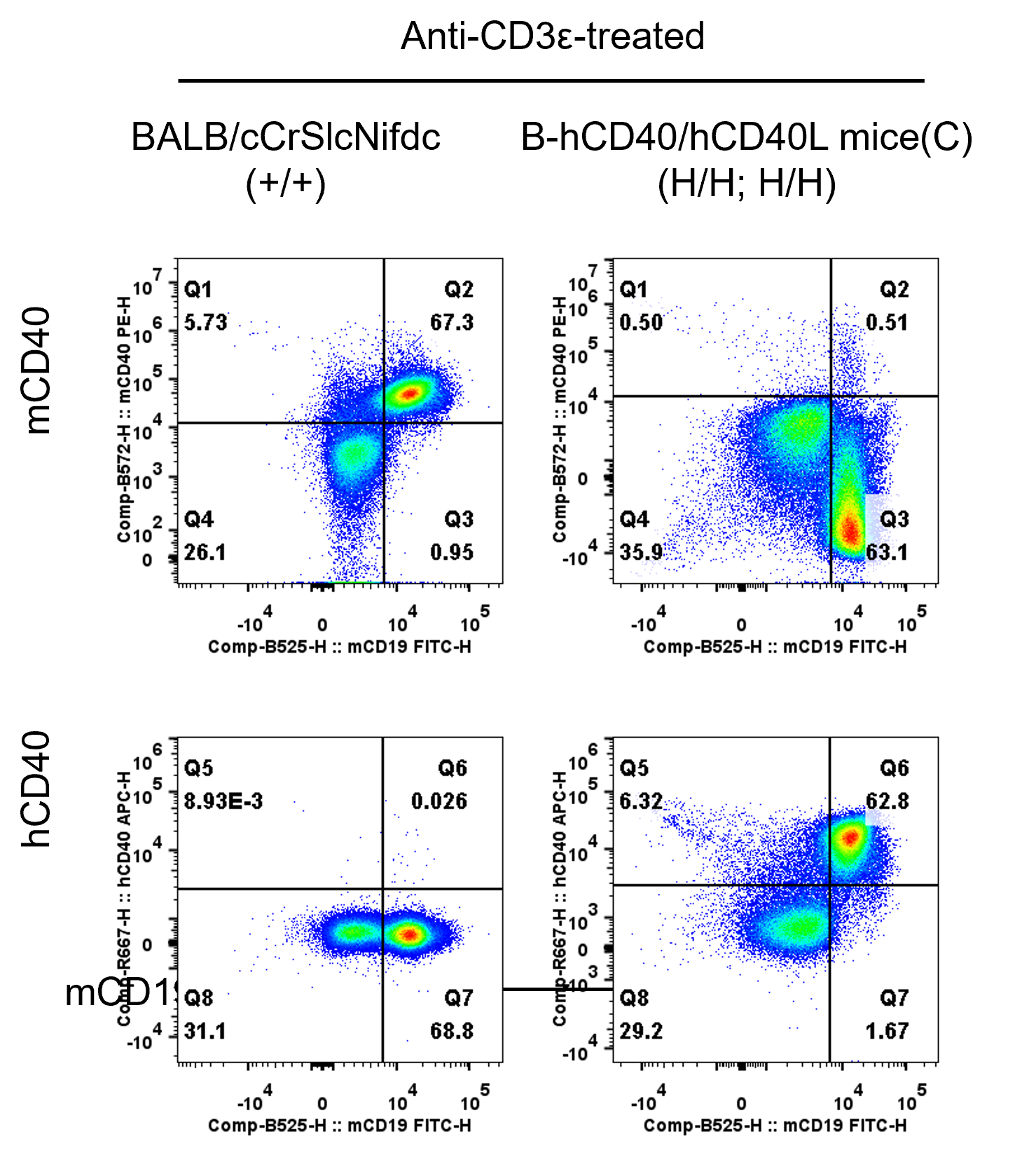
Strain specific CD40 expression analysis in homozygous B-hCD40/hCD40L mice(C) by flow cytometry. Splenocytes were collected from wild-type BALB/cCrSlcNifdc mice (+/+) and homozygous B-hCD40/hCD40L mice(C) (H/H; H/H) stimulated with anti-CD3ε in vivo (7.5 μg/mice, stimulation for 24 hours, i.p.), and analyzed by flow cytometry with anti-mouse CD40 antibody (Biolegend, 124609) and anti-human CD40 antibody (Biolegend, 313008). Mouse CD40 was detectable in wild-type BALB/cCrSlcNifdc mice. Human CD40 was exclusively detectable in homozygous B-hCD40/hCD40L mice(C) but not in wild-type BALB/cCrSlcNifdc mice.
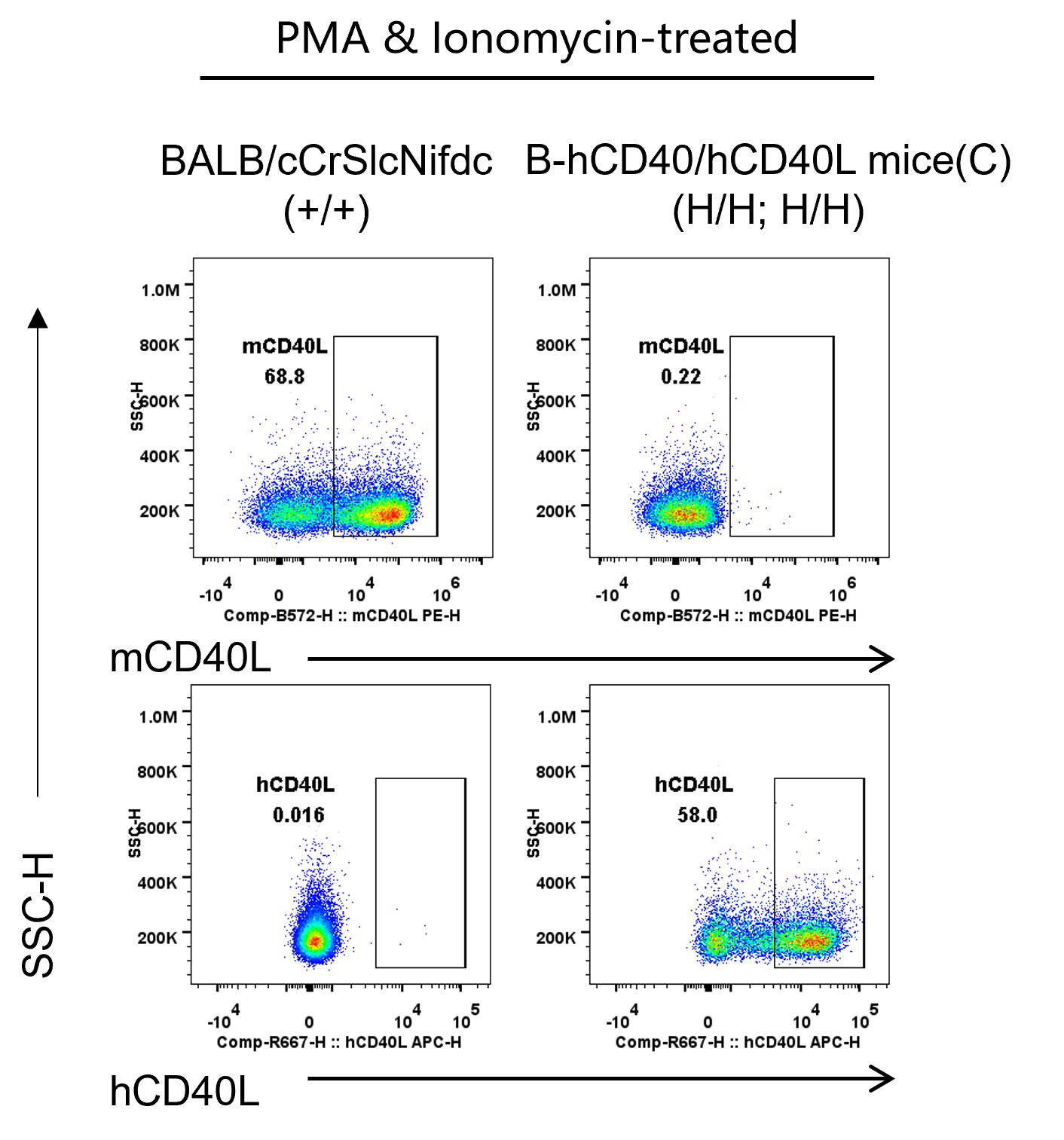
Strain specific CD40L expression analysis in homozygous B-hCD40/hCD40L mice(C) by flow cytometry. Thymocytes were collected from wild-type BALB/cCrSlcNifdc mice (+/+) and homozygous B-hCD40/hCD40L mice(C) (H/H; H/H) and stimulated with PMA & Ionomycin, then analyzed by flow cytometry with anti-mouse CD40L antibody (Biolegend, 106509) and anti-human CD40L antibody (Biolegend, 310805). Mouse CD40L was detectable in wild-type BALB/cCrSlcNifdc mice. Human CD40L was exclusively detectable in homozygous B-hCD40/hCD40L mice(C) but not in wild-type BALB/cCrSlcNifdc mice.

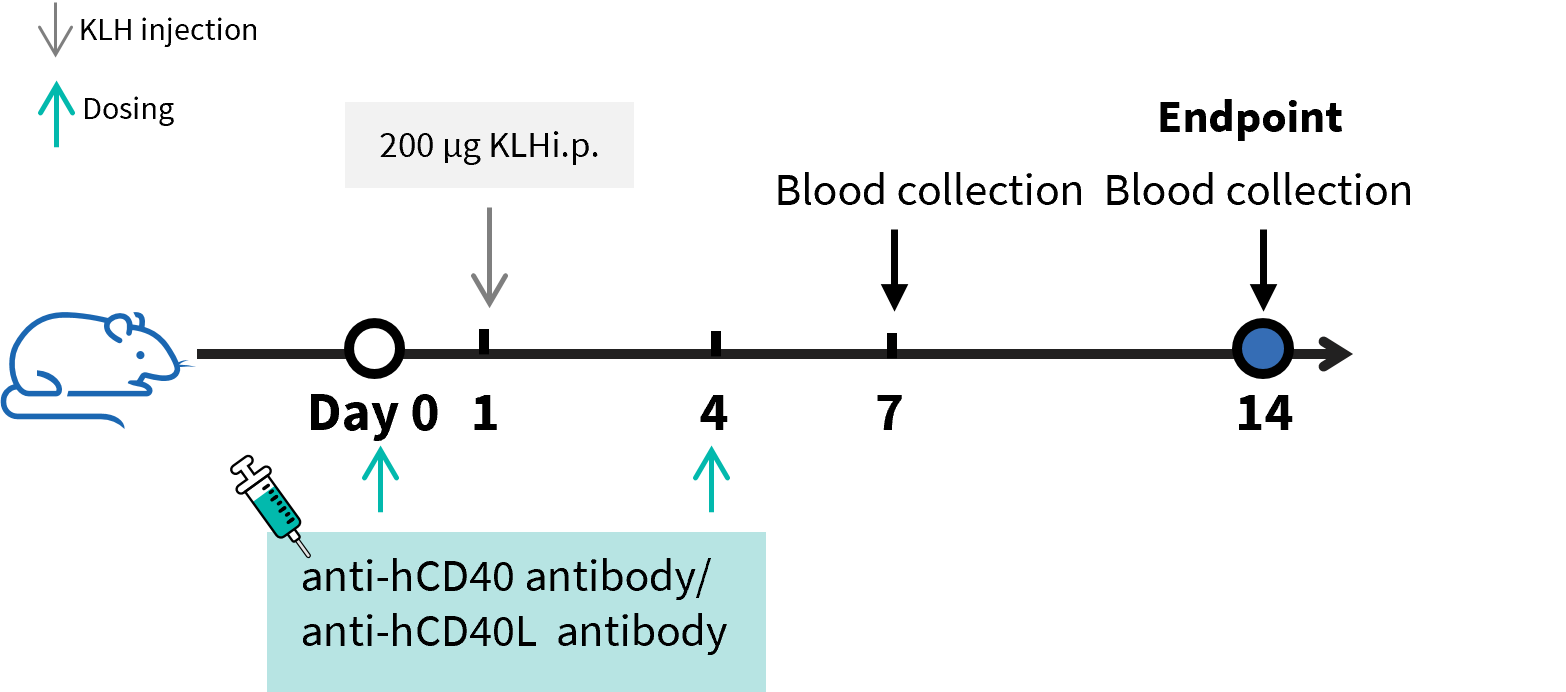
B-hCD40/hCD40L mice(C) were used to establish T cell-Dependent Antibody Response assay (TDAR assay) and evaluate the efficacy of anti-CD40 antibody and anti-CD40L antibody. B-hCD40/hCD40L mice(C) (n=6) were intraperitoneally immunized with 200 μg KLH on day 1 and treated with anti-CD40L antibody dapirolizumab analog (in house) or anti-CD40 antibody bleselumab analog (in house) on day 0 and day 4. Blood was collected on day 7 and day 14 and analyzed by ELISA with KLH specific IgG antibody and KLH specific IgM antibody.
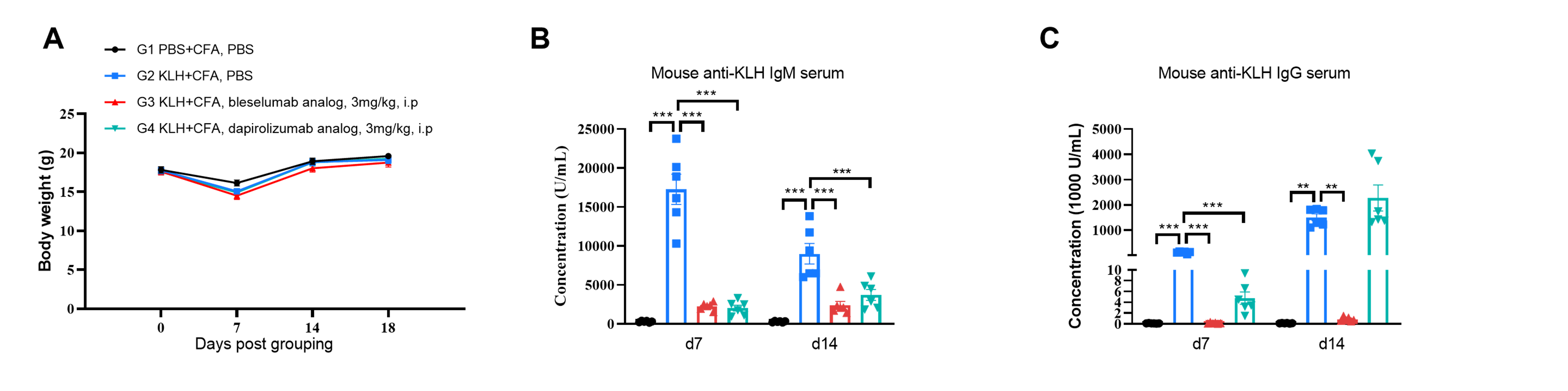
B-hCD40/hCD40L mice(C) were used to establish T cell-Dependent Antibody Response assay (TDAR assay) and evaluate the efficacy of anti-CD40 antibody and anti-CD40L antibody. (A) Body weight of B-hCD40/hCD40L mice(C) increased steadily; (B, C) Concentration of mouse KLH specific IgM and IgG were significantly increased after immunization. But the concentration of KLH specific IgG and IgM in the groups treated with anti-CD40L antibody dapirolizumab analog (in house) or anti-CD40 antibody bleselumab analog (in house) were significantly decreased when compared to that in the control group. The concentration of KLH specific IgG in the groups treated with anti-CD40L antibody dapirolizumab analog (in house) was not decreased on day 14, which may be due to incomplete blockade of B cells by inhibiting the CD40-CD40L pathway. These results demonstrated that the B-hCD40/hCD40L mice(C) provide a powerful preclinical model for in vivo evaluation of anti-CD40 antibody and anti-CD40L antibody. Values are expressed as mean ± SEM. Significance was determined by one-way ANOVA test . * p < 0.5, **p < 0.01, ***p < 0.001.

High dose of anti-human CD40 antibody selicrelumab analog treatment increased ALT and AST level in B-hCD40/hCD40L mice(C).

High-dose anti-human CD40 antibody caused significant changes in AST and ALT in B-hCD40/hCD40L mice(C). Homozygous B-hCD40/hCD40L mice(C) were treated with PBS or selicrelumab analog (in house) at day 0 and day 3 (n=5 or 8)(A). Body weight was measured daily(B). The blood biochemical analysis was conducted on B-hCD40/hCD40L mice(C) treated with anti-human CD40 antibody at day 7 and day 14. Selicrelumab analog at 20 mg/kg caused significant increase of AST and ALT compared with PBS control in B-hCD40/hCD40L mice(C, D). Values are expressed as mean ± SEM.
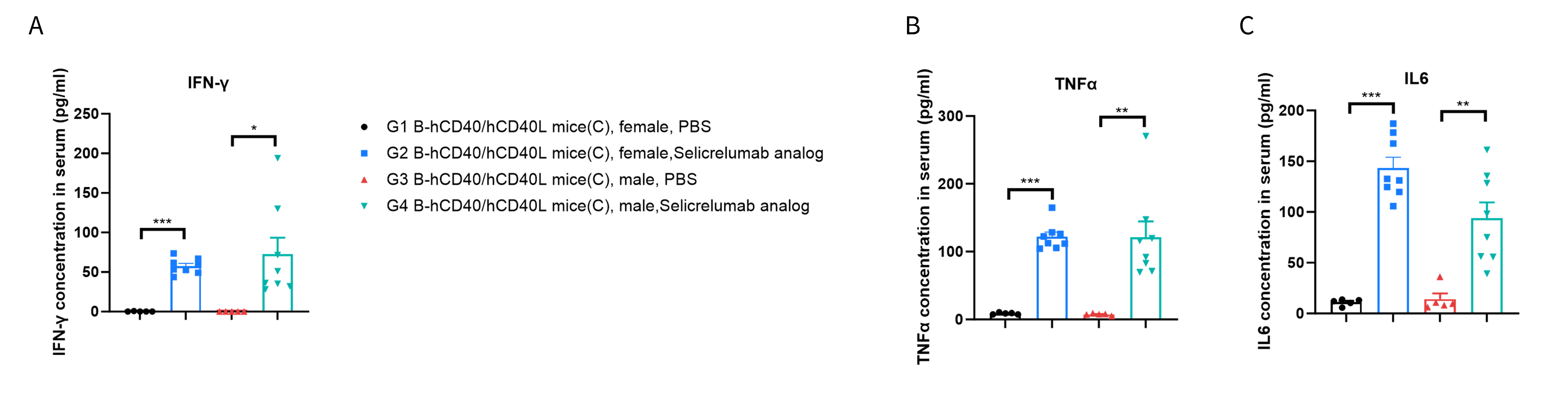
High-dose anti-human CD40 antibody significantly increased cytokine levels in B-hCD40/hCD40L mice(C). Homozygous B-hCD40/hCD40L mice(C) were treated with PBS or selicrelumab analog (in house) at day 0 and day 3 (n=5 or 8). The MSD analysis was conducted on B-hCD40/hCD40L mice(C) treated with anti-human CD40 antibody at day 1. Selicrelumab analog at 20 mg/kg caused significant increase of IFN-γ, TNF-α, and IL-6 compared with PBS control in B-hCD40/hCD40L mice(C). Values are expressed as mean ± SEM.
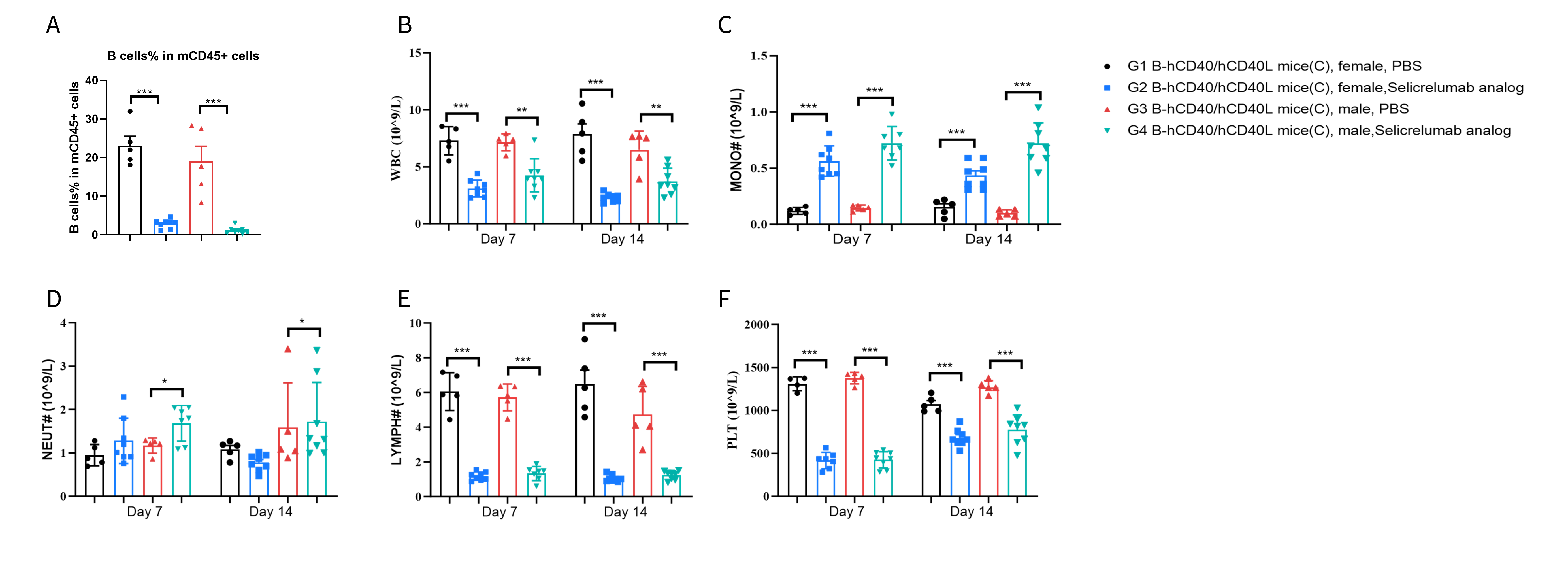
High-dose anti-human CD40 antibody caused significant changes of complete blood count in B-hCD40/hCD40L mice(C). Homozygous B-hCD40/hCD40L mice(C) were treated with PBS or selicrelumab analog (in house) at day 0 and day 3(n=5 or 8). B cell percentage in mCD45+ cells was measured by flow cytometry at day 14. The complete blood count (CBC) was conducted on B-hCD40/hCD40L mice(C) treated with anti-human CD40 antibody at day 7 and day 14. Selicrelumab analog at 20 mg/kg caused significant decrease of CD19+ B cells, WBC, platelets, lymphocytes, and monocytes compared with PBS control in B-hCD40/hCD40L mice(C). Values are expressed as mean ± SEM.
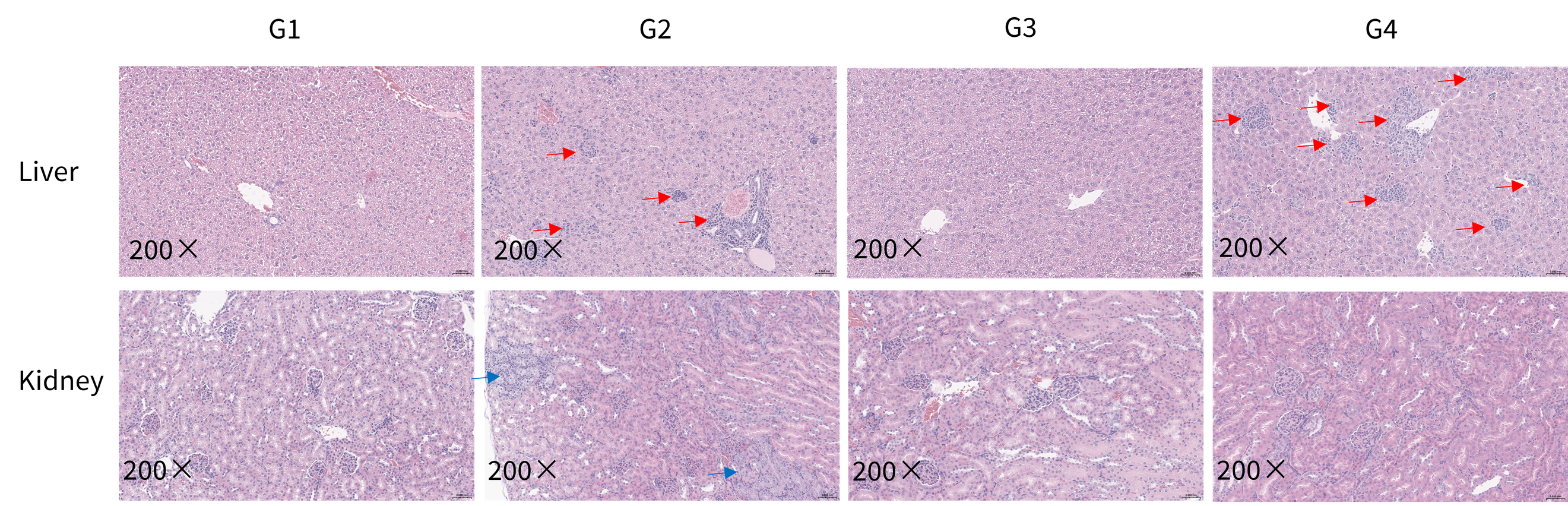
High-dose anti-human CD40 antibody caused liver and kidney pathological changes in B-hCD40/hCD40L mice(C). Homozygous B-hCD40/hCD40L mice(C) were treated with PBS or selicrelumab analog (in house) at day 0 and day 3 (n=5 or 8). The tissue pathology analysis was performed on day 14. Selicrelumab analog at 20mg/kg caused granuloma in liver (as indicated by red arrows) and renal tubular lesion in kidney (as indicated by blue arrows) in B-hCD40/hCD40L mice(C).