
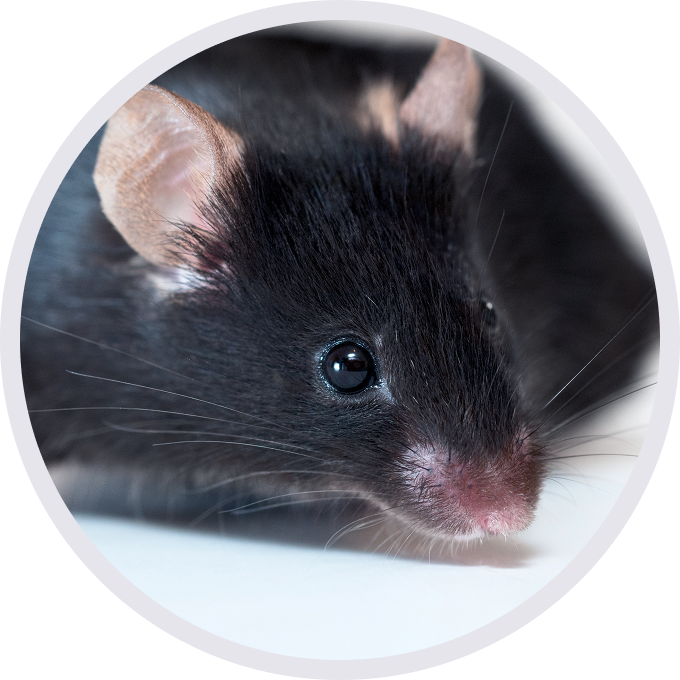

IL12RB1/IL12RB2 has a distinct, specialized role in driving the Th1 (Type 1 helper T cell) immune response.

IL12RB1
IL12RB2


IL12 induced the IFNγ production in CD4+ T cells sorted from splenocytes. CD4+ T cells were sorted from the splenocytes of wild-type C57BL/6 mice and homozygous B-hIL12RB1 plus/hIL12RB2 ad mice. The production of IFNγ in supernatants were assessed after incubation with mouse IL12 (mIL12) or human IL12 (hIL12) in combination with bead-associated 0.4 μg/mL anti-mCD3e and 0.8 μg/mL anti-mCD28 antibodies for 48 hours. Mouse IFNγ were increased after responsiveness to mIL12 in humanized mice and wild-type mice. While, only hIL12 induced mouse IFNγ increase in humanized mice.
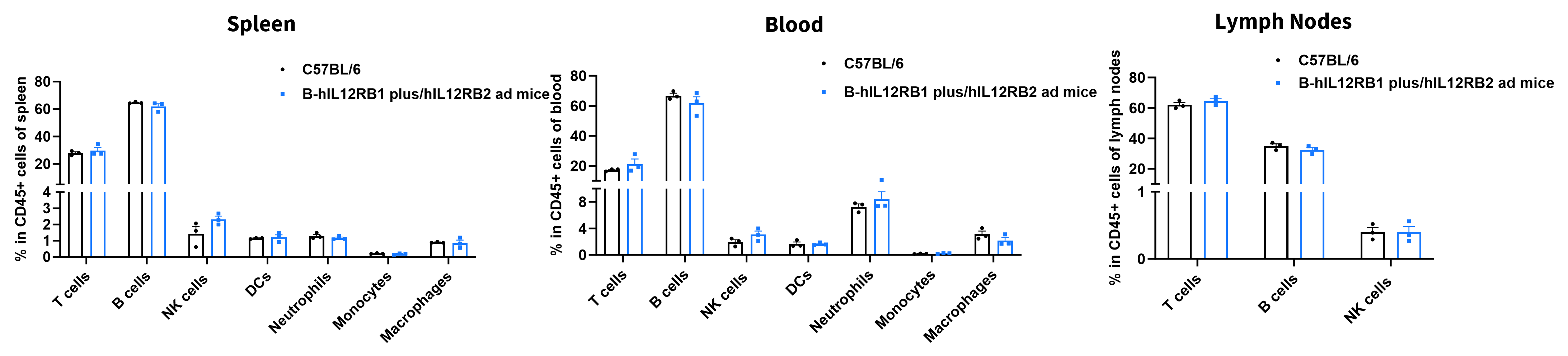
Analysis of leukocyte subpopulations by FACS. Leukocytes were isolated from female C57BL/6 and B-hIL12RB1 plus/hIL12RB2 ad mice (n=3, 6 week-old). Flow cytometry analysis of the leukocytes was performed to assess leukocyte subpopulations. Percent of T cells, B cells, NK cells, dendritic cells, granulocytes, monocytes and macrophages in homozygous B-hIL12RB1 plus/hIL12RB2 ad mice was similar to those in the C57BL/6 mice, demonstrating that introduction of hIL12RB1, hIL12RB2 in place of its mouse counterpart does not change the overall development, differentiation or distribution of these cell types. Values are expressed as mean ± SEM.
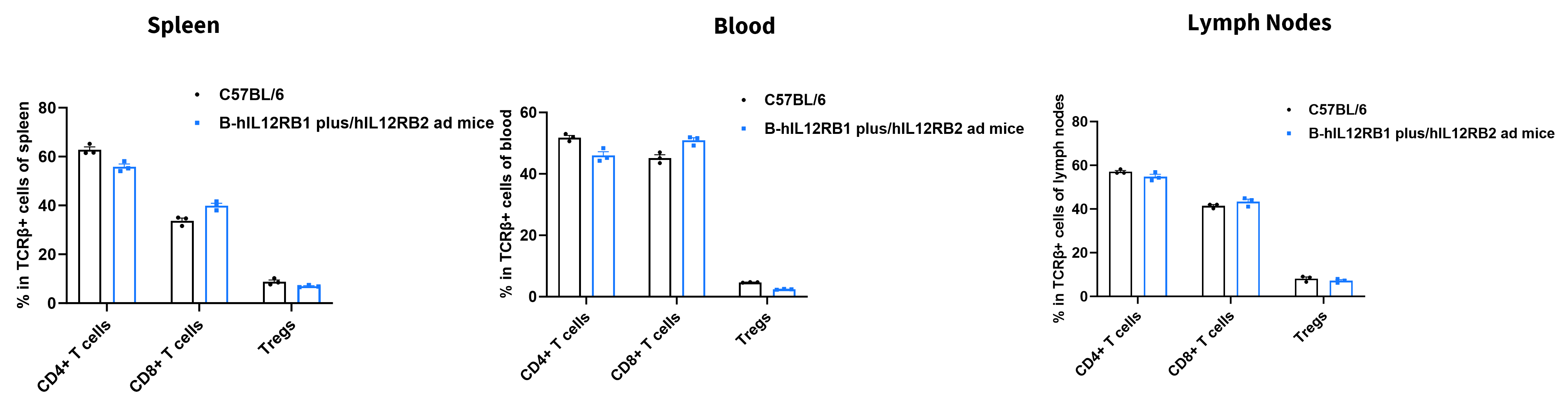
Analysis of T cell subpopulations by FACS. Splenocytes, peripheral blood and lymph nodes were isolated from female C57BL/6 and B-hIL12RB1 plus/hIL12RB2 ad mice (n=3, 6 week-old). Flow cytometry analysis of the splenocytes was performed to assess leukocyte subpopulations. Percent of CD8+ T cells, CD4+ T cells and Treg cells in homozygous B-hIL12RB1 plus/hIL12RB2 ad mice was similar to those in the C57BL/6 mice, demonstrating that introduction of hIL12RB1, hIL12RB2 in place of its mouse counterpart does not change the overall development, differentiation or distribution of these T cell subtypes. Values are expressed as mean ± SEM.

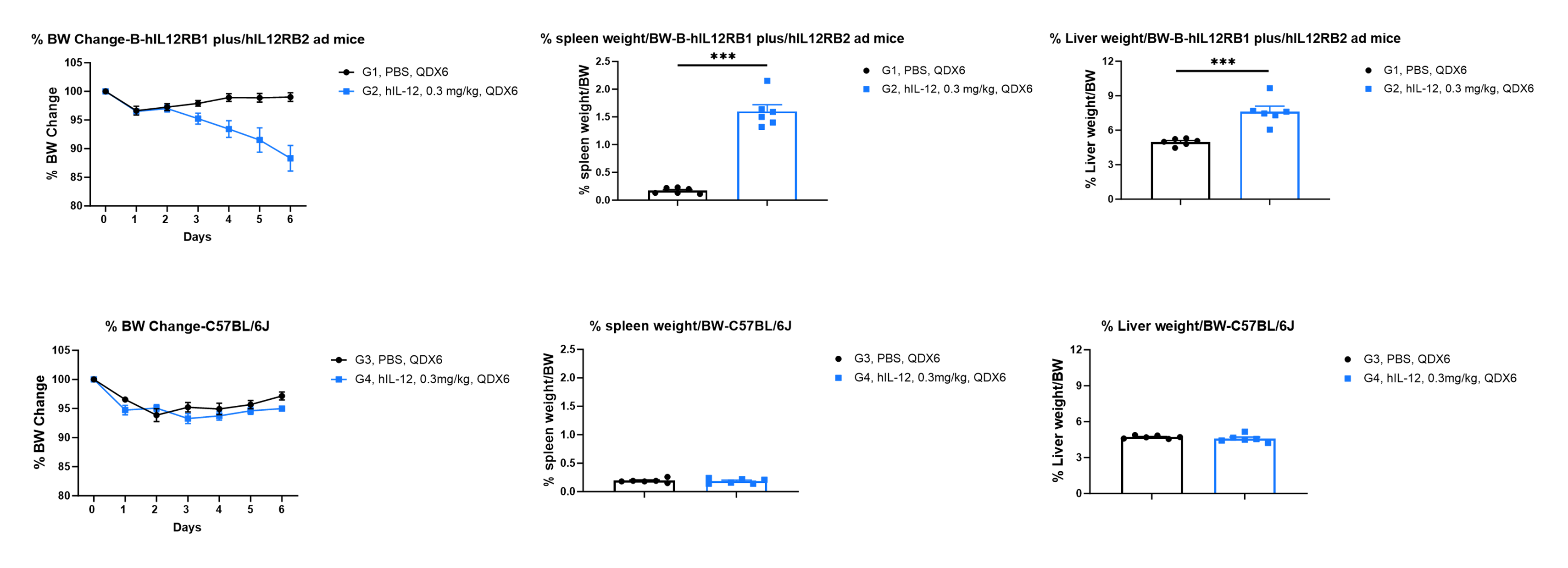
In vivo toxicity evaluation of hIL-12 in B-hIL12RB1 plus/hIL12RB2 ad mice and wild-type mice. Evaluation of body weight changes, spleen indices, and liver indices in both B-hIL12RB1 plus/hIL12RB2 ad humanized mice and wild-type C57BL/6J mice following hIL-12 administration. Repeated i.v. administration of hIL-12 induced progressive body weight loss and a highly significant increase in both spleen and liver weight indices in B-hIL12RB1 plus/hIL12RB2 ad humanized mice (G2 vs. G1), whereas no significant changes in body weight or organ indices were observed in wild-type C57BL/6J mice (G4 vs. G3) due to strict species specificity. Values are expressed as mean ± SEM.
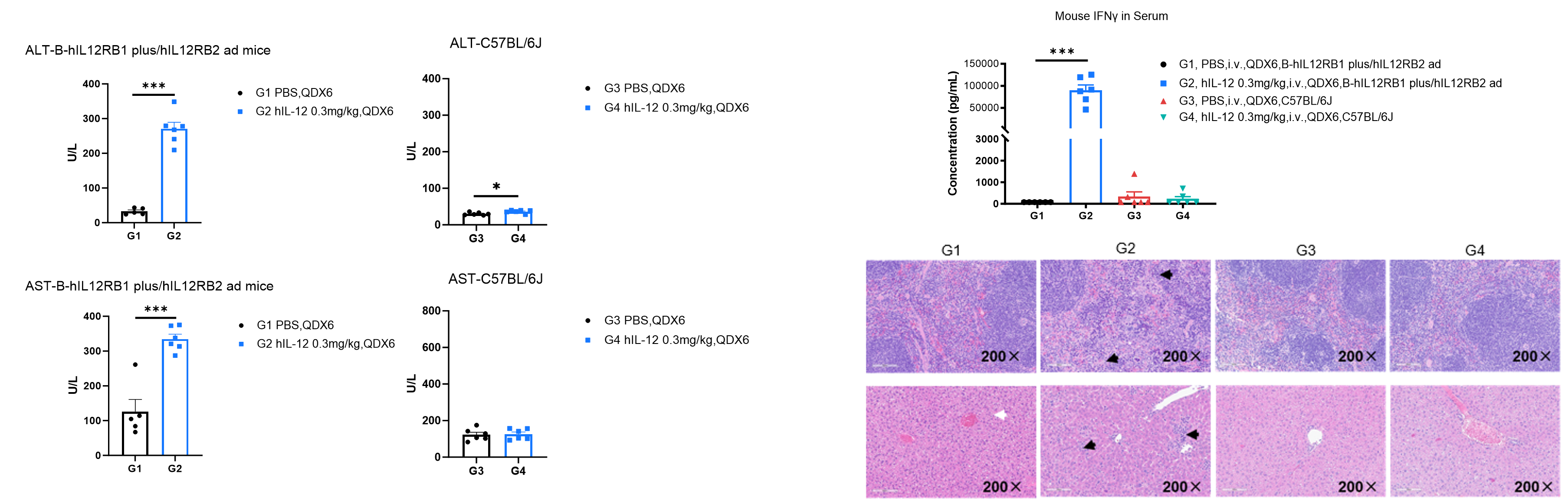
hIL-12 induces target-specific hepatotoxicity and systemic inflammation in B-hIL12RB1 plus/hIL12RB2 ad mice. Following a 6-day i.v. administration of hIL-12 (0.3 mg/kg), humanized mice (G2) exhibited significantly elevated serum ALT and AST levels, along with a massive surge in serum mouse IFN-γ compared to PBS controls (G1). Concordantly, H&E staining (200×) revealed marked pathological damage and inflammatory cell infiltration (black arrows) in the spleen and liver of G2 mice. In contrast, hIL-12-treated wild-type C57BL/6J mice (G4) showed no robust IFN-γ release or severe histological abnormalities. These findings successfully demonstrate that the B-hIL12RB1 plus/hIL12RB2 ad mouse serves as a highly sensitive and reliable model for evaluating target-mediated systemic toxicities of human IL-12-targeted therapeutics.

Experimental scheme for in vivo toxicity study in B-hIL12RB1 plus/hIL12RB2 ad mice. Six-week-old female B-hIL12RB1 plus/hIL12RB2 ad mice (G1/G2) and wild-type C57BL/6J mice (G3/G4) were administered with either vehicle control (PBS) or hIL-12 (0.3 mg/kg) via intravenous (i.v.) injection daily for 6 consecutive days (QDx6D). At 24 hours post-final dosing, whole-body weight changes were recorded, and livers and spleens were harvested to calculate organ indices (% organ weight/body weight). Data are presented as mean ± SEM (n=6 mice per group).
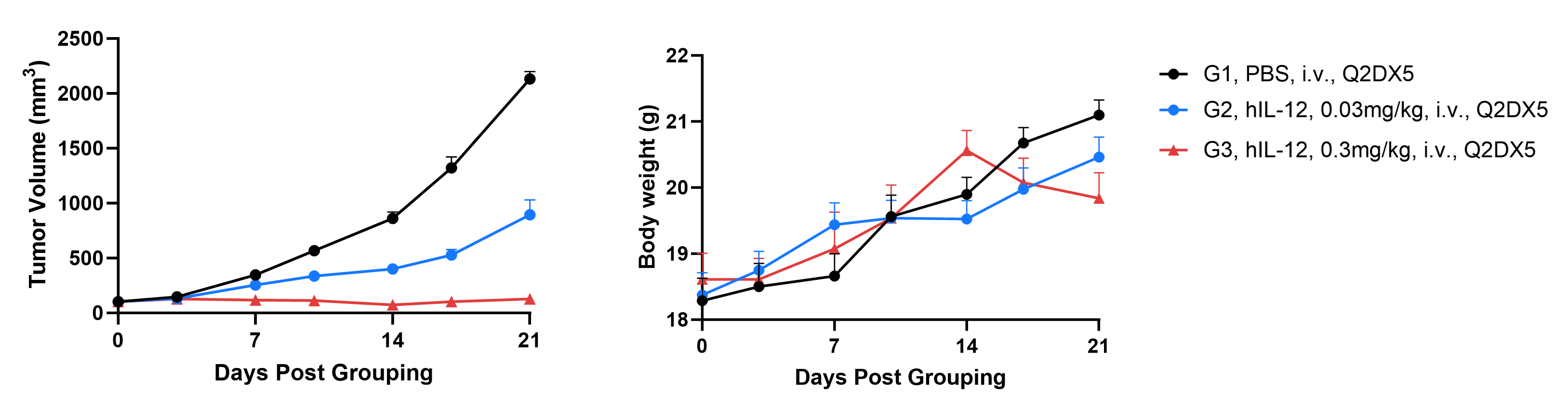
Antitumor activity of human IL-12 in B-hIL12RB1 plus/hIL12RB2 ad mice. (A) Human IL12 inhibited MC38 tumor growth in B-hIL12RB1 plus/hIL12RB2 ad mice. Murine colon cancer MC38 cells were subcutaneously implanted into homozygous B-hIL12RB1 plus/hIL12RB2 ad mice (female, 6-8 weeks-old, n=8). Mice were grouped when tumor volume reached approximately 100 mm3, at which time they were intravenous injection with hIL-12 in the panel. (B) Body weight changes during treatment. As shown in panel A, the human IL-12 showed inhibitory effects in a dose-dependent manner. Values are expressed as mean ± SEM.
