C57BL/6JNifdc-Tnfrsf10btm4(TNFRSR10B)Bcgen/Bcgen • 113650


Gene targeting strategy for B-hDR5 mice. A chimeric CDS that encodes human DR5 signal peptide and extracellular domain, mouse Dr5 transmembrane and cytoplasmic domain, followed by mouse 3’UTR-STOP is inserted right after mouse Dr5 ATG to replace the exon 1 of mouse Dr5 gene. The chimeric DR5 protein expression will be driven by endogenous mouse Dr5 promoter, while mouse Dr5 gene transcription and translation will be disrupted.

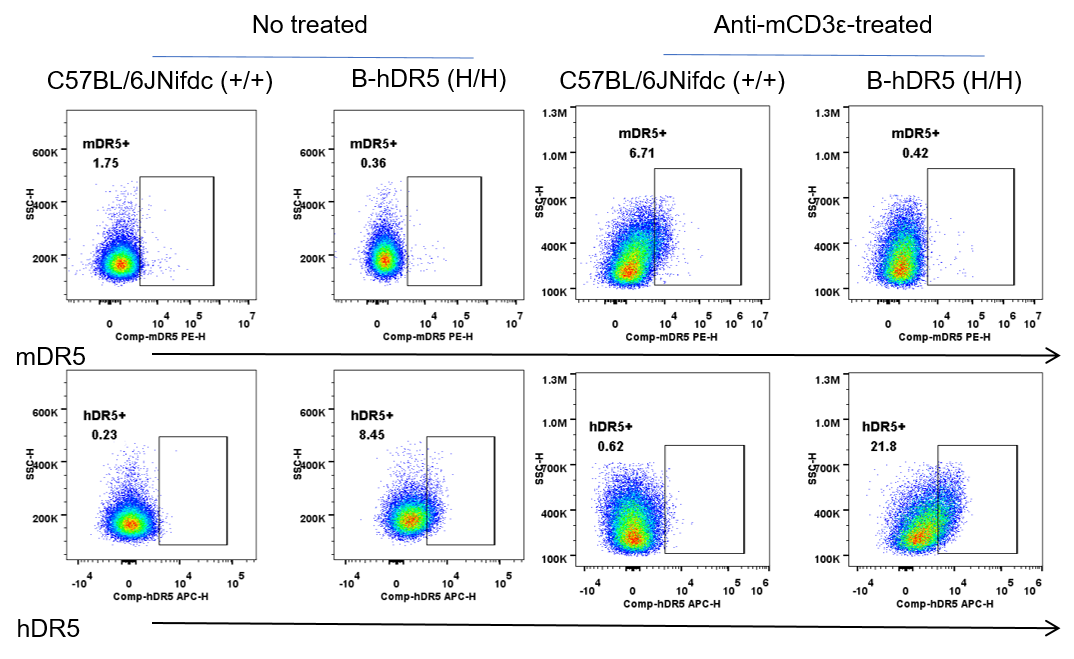
Strain specific DR5 expression analysis in homozygous B-hDR5 mice by flow cytometry. Splenocytes were collected from wild-type C57BL/6JNifdc mice (+/+) and homozygous B-hDR5 mice (H/H) stimulated with anti-mCD3ε in vivo (7.5 μg/mouse, stimulation for 24 hours, i.p.) (BioXcell, BE0001-2). Protein expression was analyzed with anti-mouse DR5 antibody (Biolegend, 119906) and anti-human DR5 antibody (Biolegend, 307408) by flow cytometry. Mouse DR5 was detectable in wild-type mice. Human DR5 was exclusively detectable in homozygous B-hDR5 mice, but not in wild-type mice.
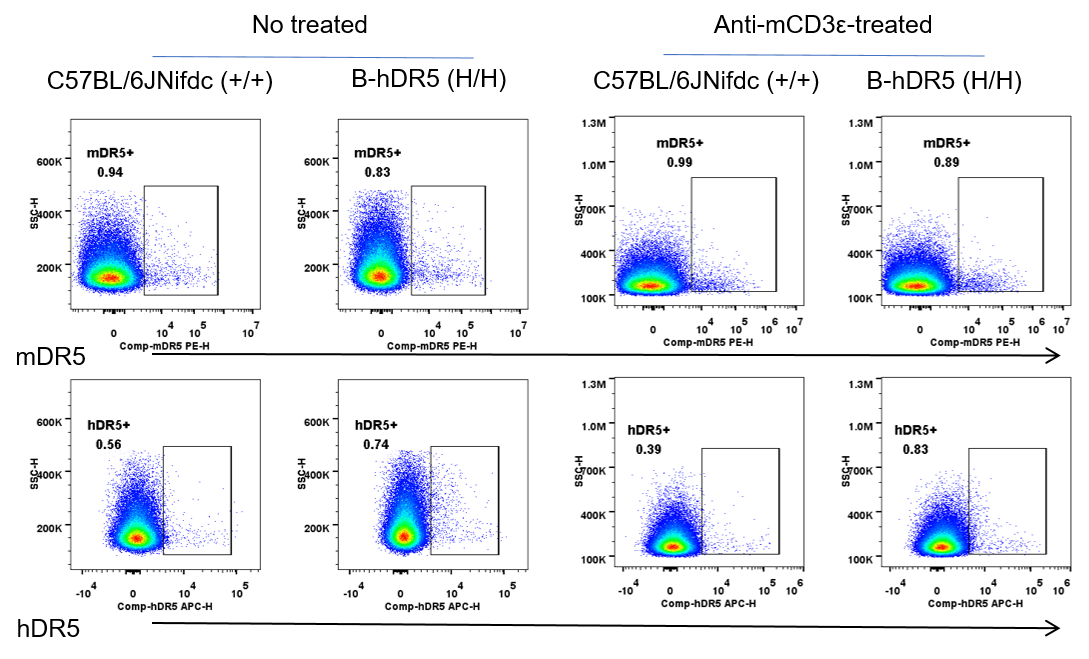
Strain specific DR5 expression analysis in homozygous B-hDR5 mice by flow cytometry. Splenocytes were collected from wild-type C57BL/6JNifdc mice (+/+) and homozygous B-hDR5 mice (H/H) stimulated with anti-mCD3ε in vivo (7.5 μg/mouse, stimulation for 24 hours, i.p.) (BioXcell, BE0001-2). Protein expression was analyzed with anti-mouse DR5 antibody (Biolegend, 119906) and anti-human DR5 antibody (Biolegend, 307408) by flow cytometry. Mouse DR5 was not detectable in wild-type mice. Human DR5 was not detectable in homozygous B-hDR5 mice.
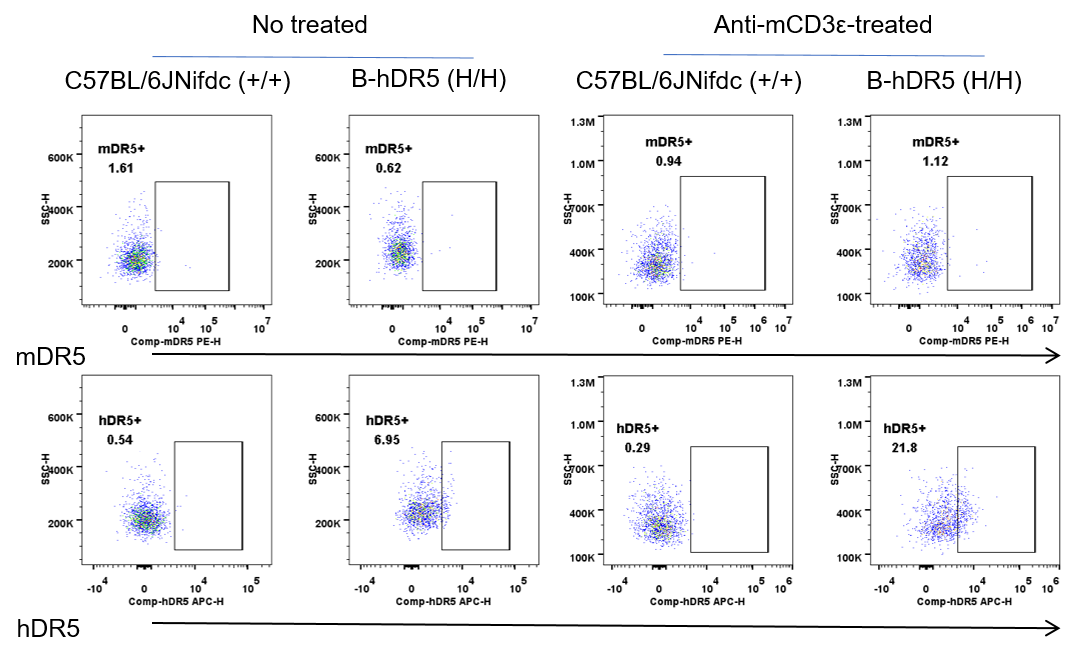
Strain specific DR5 expression analysis in homozygous B-hDR5 mice by flow cytometry. Splenocytes were collected from wild-type C57BL/6JNifdc mice (+/+) and homozygous B-hDR5 mice (H/H) stimulated with anti-mCD3ε in vivo (7.5 μg/mouse, stimulation for 24 hours, i.p.) (BioXcell, BE0001-2). Protein expression was analyzed with anti-mouse DR5 antibody (Biolegend, 119906) and anti-human DR5 antibody (Biolegend, 307408) by flow cytometry. Mouse DR5 was not detectable in wild-type mice. Human DR5 was detectable in homozygous B-hDR5 mice.
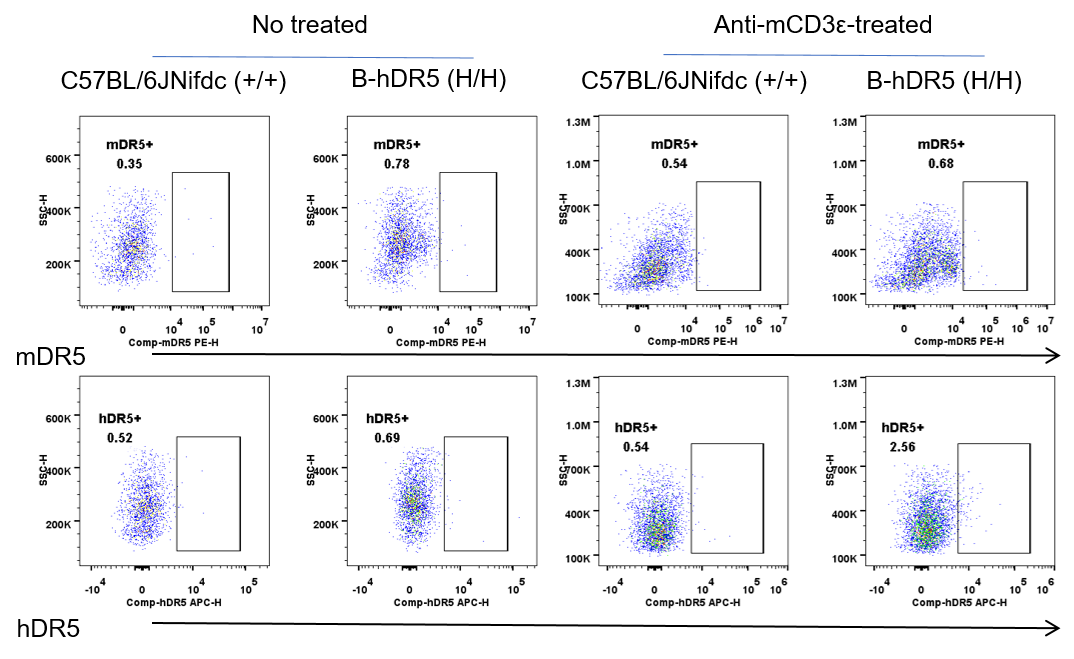
Strain specific DR5 expression analysis in homozygous B-hDR5 mice by flow cytometry. Splenocytes were collected from wild-type C57BL/6JNifdc mice (+/+) and homozygous B-hDR5 mice (H/H) stimulated with anti-mCD3ε in vivo (7.5 μg/mouse, stimulation for 24 hours, i.p.) (BioXcell, BE0001-2). Protein expression was analyzed with anti-mouse DR5 antibody (Biolegend, 119906) and anti-human DR5 antibody (Biolegend, 307408) by flow cytometry. Mouse DR5 was not detectable in wild-type mice. Human DR5 was weakly detectable in homozygous B-hDR5 mice.
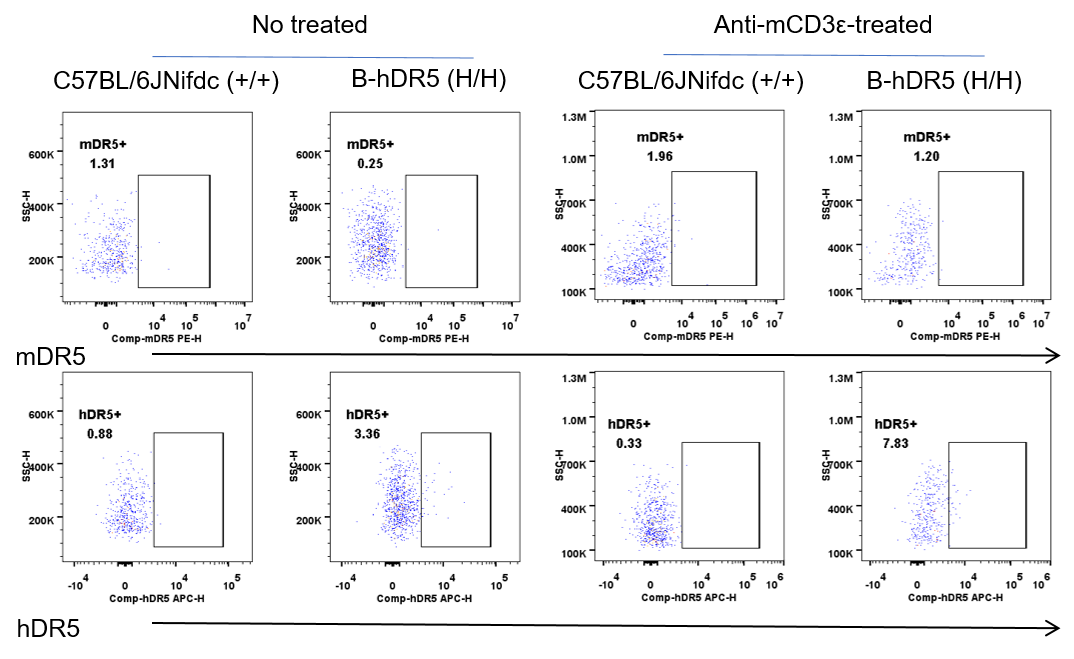
Strain specific DR5 expression analysis in homozygous B-hDR5 mice by flow cytometry. Splenocytes were collected from wild-type C57BL/6JNifdc mice (+/+) and homozygous B-hDR5 mice (H/H) stimulated with anti-mCD3ε in vivo (7.5 μg/mouse, stimulation for 24 hours, i.p.) (BioXcell, BE0001-2). Protein expression was analyzed with anti-mouse DR5 antibody (Biolegend, 119906) and anti-human DR5 antibody (Biolegend, 307408) by flow cytometry. Mouse DR5 was not detectable in wild-type mice. Human DR5 was weakly detectable in homozygous B-hDR5 mice.
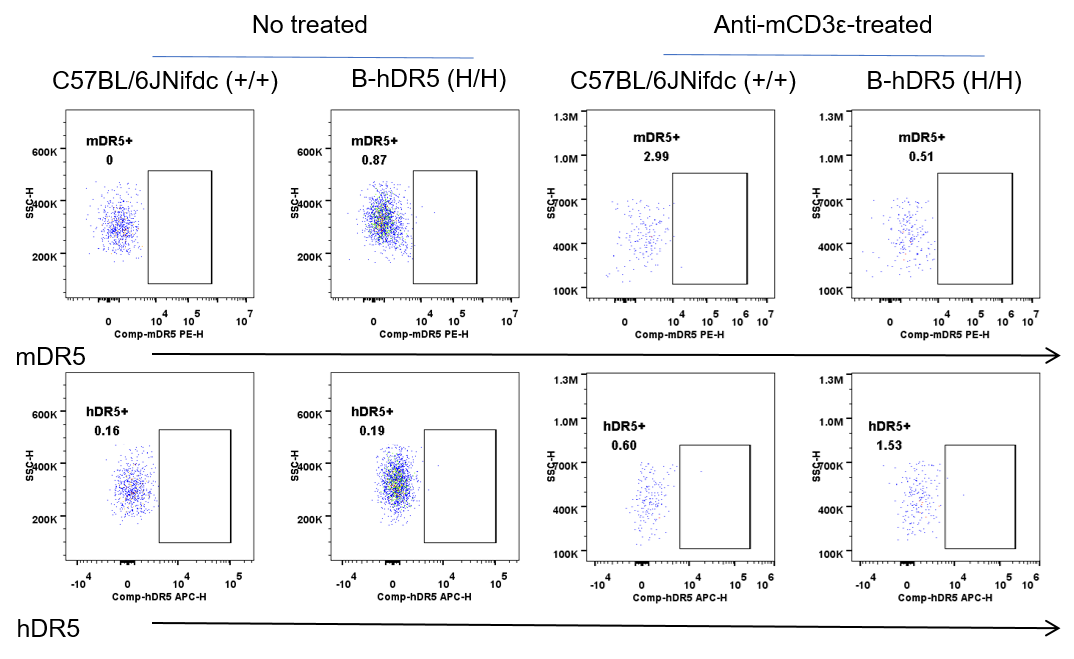
Strain specific DR5 expression analysis in homozygous B-hDR5 mice by flow cytometry. Splenocytes were collected from wild-type C57BL/6JNifdc mice (+/+) and homozygous B-hDR5 mice (H/H) stimulated with anti-mCD3ε in vivo (7.5 μg/mouse, stimulation for 24 hours, i.p.) (BioXcell, BE0001-2). Protein expression was analyzed with anti-mouse DR5 antibody (Biolegend, 119906) and anti-human DR5 antibody (Biolegend, 307408) by flow cytometry. Mouse DR5 was not detectable in wild-type mice. Human DR5 was not detectable in homozygous B-hDR5 mice.