B6; 129S-Hba-a1/Hba-a2tm1(HBA1/HBA2)Bcgen Hbb-bs/Hbb-bttm1(HBG1/hHBG2/hHBD/hHBBs)Bcgen /Bcgen • 113686


Gene targeting strategy for B-hHBA1/hHBA2/hHBG1/hHBG2/hHBD/hHBBs mice(B6; 129S).
1.The mouse's Hba-a1/Hba-a2 genes were replaced with human HBA1/HBA2 in B-hHBA1/hHBA2 mice(129S2).
2. The mouse's Hbb-bs/Hbb-bt genes were replaced with human HBG1/hHBG2/hHBD/hHBBs in B-hHBG1/hHBG2/hHBD/hHBBs mice.
B-hHBA1/hHBA2/hHBG1/hHBG2/hHBD/hHBBs mice(B6; 129S) were obtained by mating B-hHBA1/hHBA2 mice(129S2) and B-hHBG1/hHBG2/hHBD/hHBBs mice

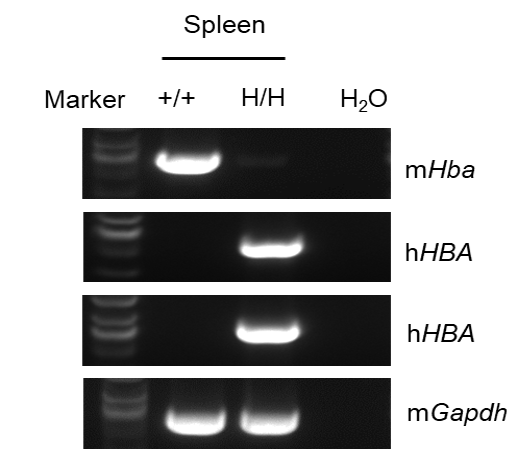
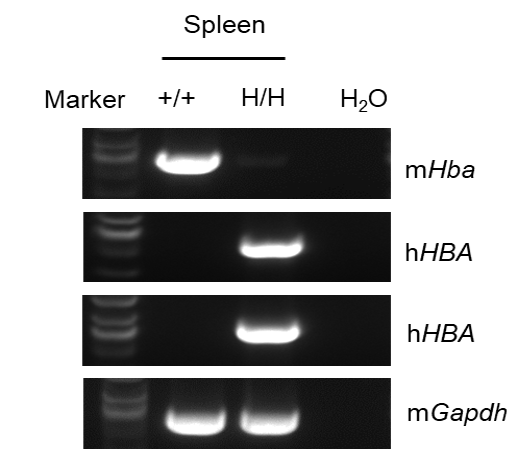
Strain specific analysis of HBA1 and HBA2 mRNA expression in wild-type 129S mice and homozygous B-hHBA1/hHBA2 mice(129S2) by RT-PCR. Spleen RNA were isolated from wild-type 129S mice (+/+) and homozygous B-hHBA1/hHBA2(129S2) (H/H), then cDNA libraries were synthesized by reverse transcription, followed by PCR with human HBA1 and HBA2 primers. Mouse Hba mRNA was exclusively detectable in wild-type mice but not in homozygous B-hHBA1/hHBA2 mice(129S2). Human HBA1 and HBA2 mRNA was exclusively detectable in homozygous B-hHBA1/hHBA2 mice(129S2).
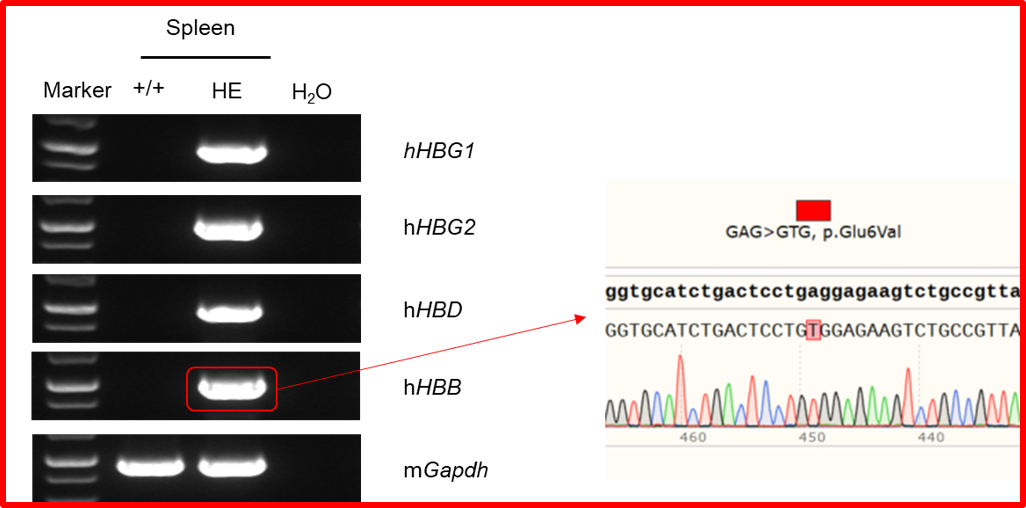
Strain specific analysis of HBB mRNA expression in wild-type C57BL/6JNifdc mice and heterozygous B-hHBG1/hHBG2/hHBD/hHBBs mice by RT-PCR. Spleen RNA were isolated from wild-type C57BL/6JNifdc mice (+/+) and heterozygous B-hHBG1/hHBG2/hHBD/hHBBs mice (H/+), then cDNA libraries were synthesized by reverse transcription, followed by PCR with human HBG1, HBG2, HBD and HBB primers. mGapdh was detected as internal control. HBG1, HBG2, HBD and HBB mRNA were exclusively detectable in heterozygous B-hHBG1/hHBG2/hHBD/hHBBs mice but not in wild-type mice.
Complete blood count (CBC) of wild-type C57BL/6JNifdc mice, homozygous B-hHBA1/hHBA2/hHBG1/hHBG2/hHBD/hHBB mice(B6; 129S) and homozygous B-hHBA1/hHBA2/hHBG1/hHBG2/hHBD/hHBBs mice(B6; 129S). Values are expressed as mean ± SD.
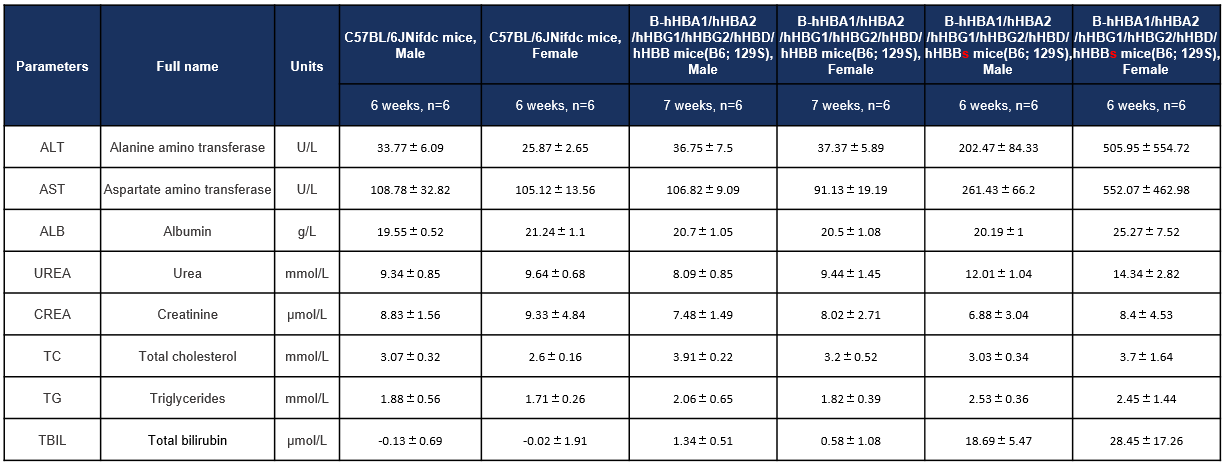
Biochemical test of wild-type C57BL/6JNifdc mice, homozygous B-hHBA1/hHBA2/hHBG1/hHBG2/hHBD/hHBB mice(B6; 129S) and homozygous B-hHBA1/hHBA2/hHBG1/hHBG2/hHBD/hHBBs mice(B6; 129S). Values are expressed as mean ± SD.
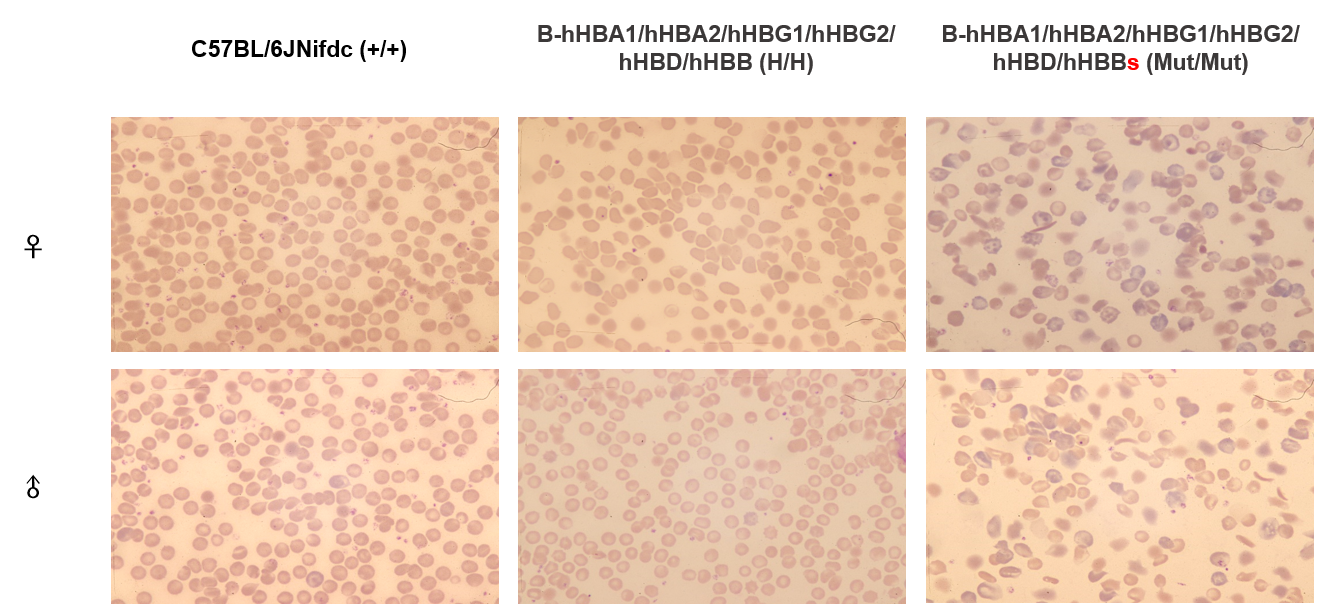
Blood smear analysis in wild-type C57BL/6JNifdc mice, homozygous B-hHBA1/hHBA2/hHBG1/hHBG2/hHBD/hHBB mice(B6; 129S) and homozygous B-hHBA1/hHBA2/hHBG1/hHBG2/hHBD/hHBBs mice(B6; 129S). The blood smear analysis results showed that the homozygous B-hHBA1/hHBA2/hHBG1/hHBG2/hHBD/hHBBs mice(B6; 129S) exhibited a distinct sickle cell phenotype.
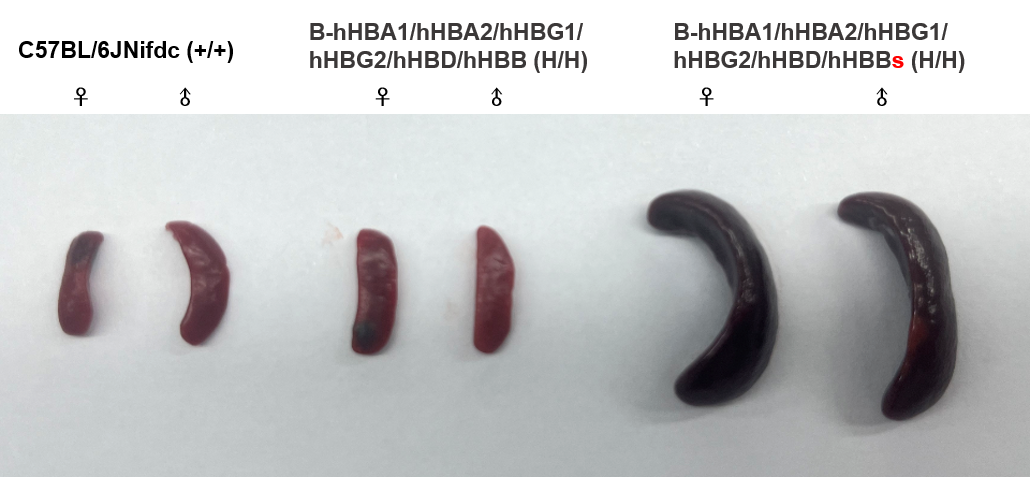
Spleen analysis in wild-type C57BL/6JNifdc mice, homozygous B-hHBA1/hHBA2/hHBG1/hHBG2/hHBD/hHBB mice(B6; 129S) and homozygous B-hHBA1/hHBA2/hHBG1/hHBG2/hHBD/hHBBs mice(B6; 129S). The spleen size of homozygous B-hHBA1/hHBA2/hHBG1/hHBG2/hHBD/hHBBs mice was significantly larger than that of wild-type C57BL/6JNifdc mice and homozygous B-hHBA1/hHBA2/hHBG1/hHBG2/hHBD/hHBB mice.