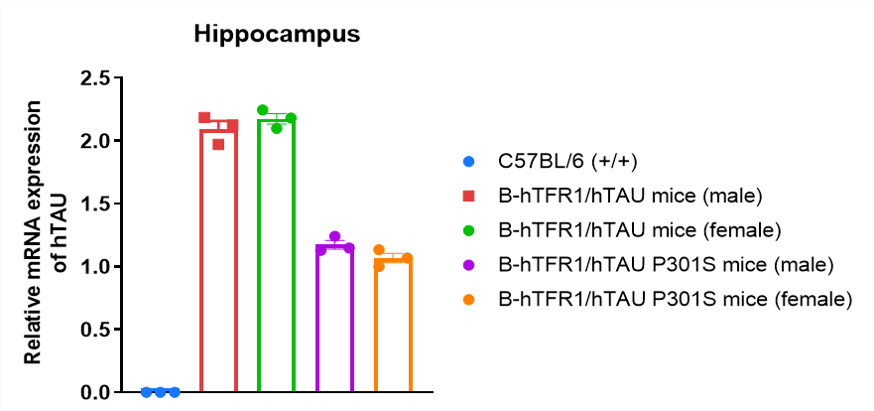

TFR1 (transferrin receptor 1) plays a critical role in iron transport across cell membranes and is highly expressed in brain endothelial cells, making it an attractive target for drug delivery across the blood–brain barrier. Humanized TAU, encoded by MAPT, is a key pathogenic factor in tauopathies, including Alzheimer’s disease. By co-expressing human TFR1 and MAPT, this model enables integrated investigation of neurodegenerative disease mechanisms and the development of translational CNS therapeutic strategies.
TFR1/TAU humanized mice are genetically engineered mouse models in which both the Tfr1 and Mapt loci are humanized. In this model, exons 4–19 of the mouse Tfr1 gene, which encode the extracellular region responsible for receptor function, are replaced with the corresponding human TFR1 exons.
Simultaneously, exons 2–10 of the mouse Mapt gene are replaced with human MAPT exons 2–15, and the mouse 3′ UTR is substituted with its human counterpart, ensuring physiological expression of human TAU protein. Human MAPT expression is driven by the endogenous mouse promoter, while endogenous mouse Mapt expression is disrupted.
Key Advantages

TFR1
TAU

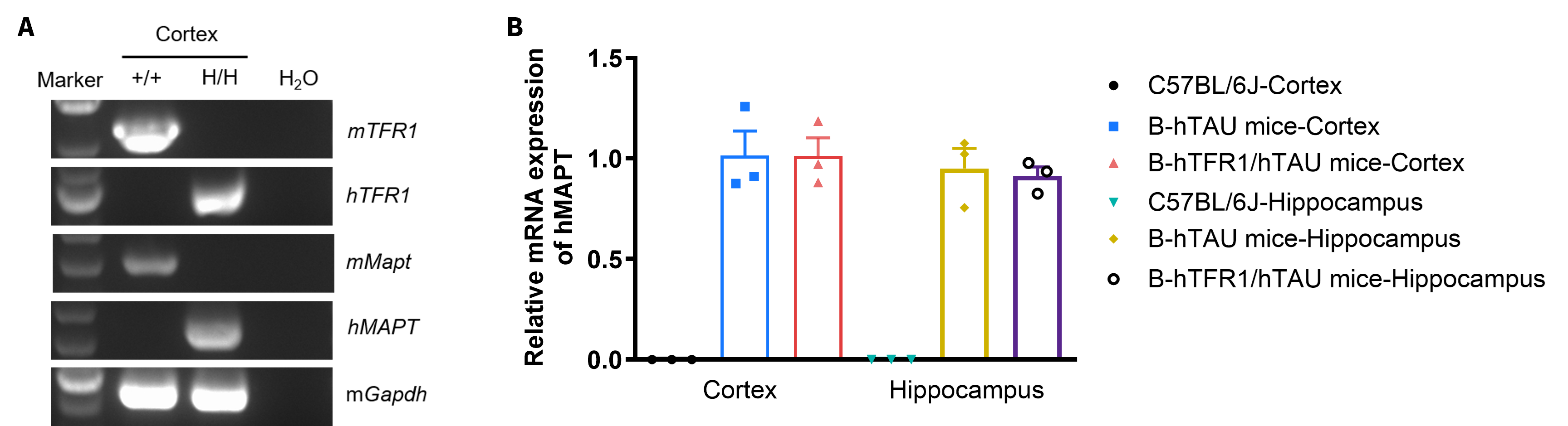
Strain-specific analysis of mouse and human TFR1 and MAPT mRNA expression in wild-type C57BL/6 mice and TFR1/TAU humanized mice by RT-PCR and qRT-PCR. (A) Total RNA was isolated from the cerebral cortex of wild-type C57BL/6 mice (+/+) and homozygous TFR1/TAU humanized mice (H/H). cDNA was synthesized by reverse transcription, followed by PCR amplification using mouse- or human-specific TFR1 and MAPT primers. (B) Relative MAPT mRNA expression levels in the cerebral cortex and hippocampus of male wild-type C57BL/6 mice, homozygous TAU humanized mice, and homozygous TFR1/TAU humanized mice were analyzed by quantitative real-time PCR (qRT-PCR).
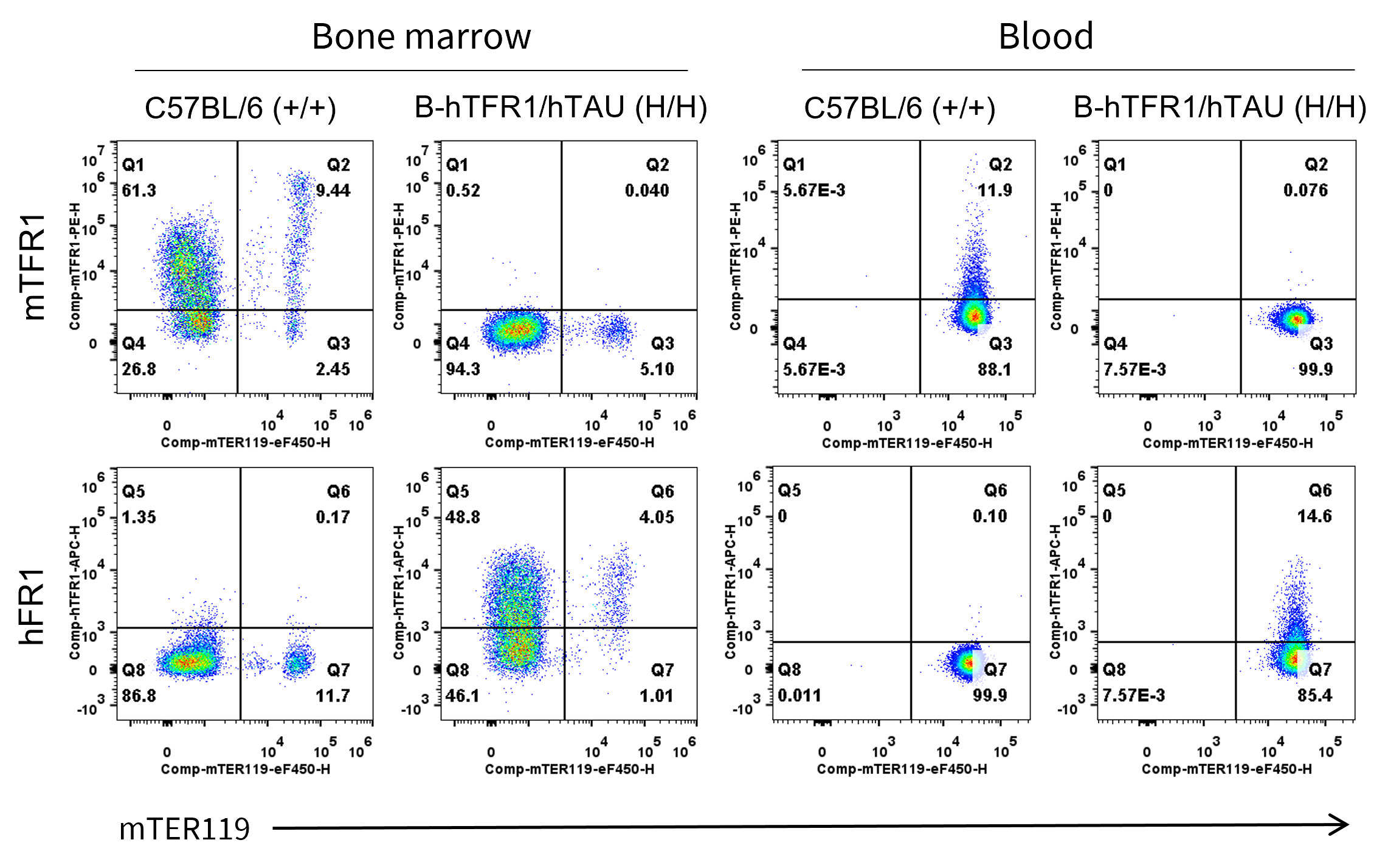
Flow cytometry analysis of mouse and human TFR1 protein expression in bone marrow and peripheral blood of TFR1/TAU humanized mice. Bone marrow and blood cells were collected from wild-type C57BL/6 mice and homozygous TFR1/TAU humanized mice. Mouse and human TFR1 protein expression was analyzed by flow cytometry using anti-mouse TFR1 (BioLegend, 113808) and anti-human TFR1 (BioLegend, 334108) antibodies.
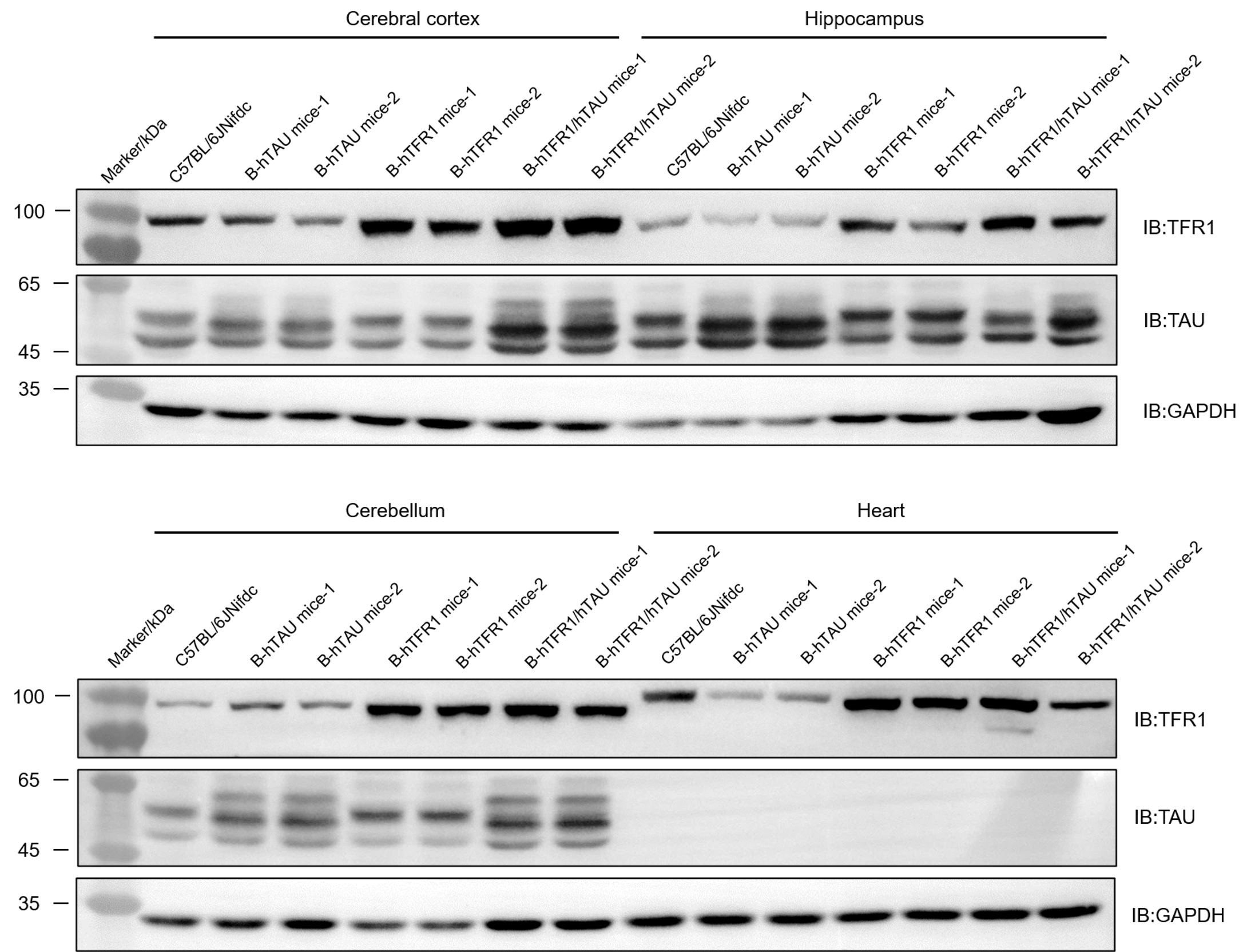
Western blot analysis of TFR1 and TAU protein expression in brain and heart tissues of wild-type C57BL/6 mice, TFR1 humanized mice, TAU humanized mice, and TFR1/TAU humanized mice. Brain and heart tissues were collected from wild-type C57BL/6 mice, TFR1 humanized mice, TAU humanized mice, and TFR1/TAU humanized mice. TFR1 and TAU protein expression was analyzed by Western blot using an anti-transferrin receptor antibody (Abcam, ab214039) and an anti-TAU antibody (CST, 46687). A total of 40 μg of protein was loaded for Western blot analysis.

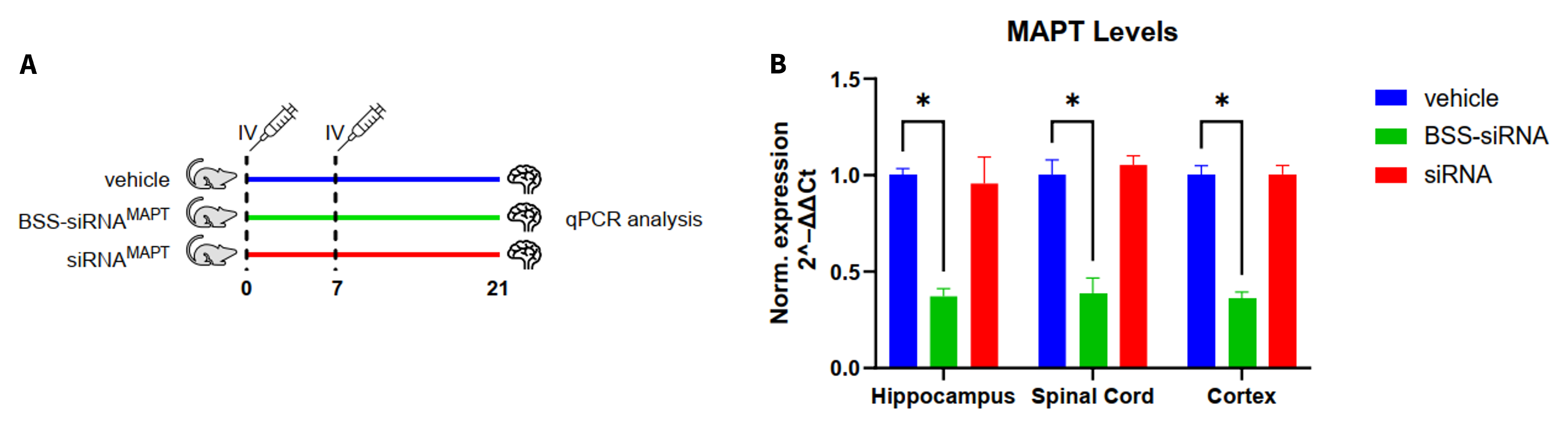
The inhibitory efficiency of the antibody oligonucleotide conjugate (AOC) drug against human MAPT in TFR1/TAU humanized mice. TFR1/TAU humanized mice were randomly divided into three groups (n=3/group, 7-week-old, female). The vehicle, antibody oligonucleotide conjugates drug and oligonucleotide drug were administered to TFR1/TAU humanized mice individually on day 0 and day 7. The mice were sacrificed on day 21, and the hippocampus, cortex and spinal cord were collected to detect the expression level of human MAPT mRNA by qPCR. (A) The schematic diagram of experimental processing. (B) The expression of human MAPT mRNA in hippocampus, cortex and spinal cord. Values are expressed as mean ± SEM. Significance was determined by unpaired t test. *P < 0.05.
Note: This experiment was conducted in collaboration with a client using TFR1/TAU humanized mice (B-hTFR1/hTAU mice).
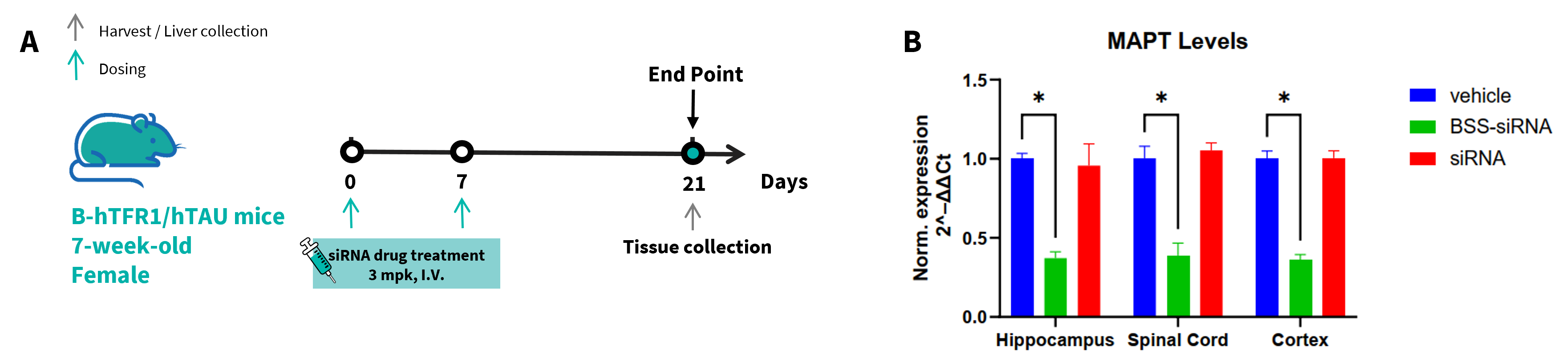
The inhibitory efficiency of the antibody oligonucleotide conjugate (AOC) drug against human MAPT in TFR1/TAU humanized mice. TFR1/TAU humanized mice were randomly divided into three groups (n=3/group, 7-week-old, female). The vehicle, antibody oligonucleotide conjugates drug and oligonucleotide drug were administered to TFR1/TAU humanized mice individually on day 0 and day 7. The mice were sacrificed on day 21, and the hippocampus, cortex and spinal cord were collected to detect the expression level of human MAPT mRNA by qPCR. (A) The schematic diagram of experimental processing. (B) The expression of human MAPT mRNA in hippocampus, cortex and spinal cord. Values are expressed as mean ± SEM. Significance was determined by unpaired t test. *P < 0.05.
Note: This experiment was conducted in collaboration with a client using TFR1/TAU humanized mice (B-hTFR1/hTAU mice).

Q: What is the transcript variants in TFR1/TAU humanized mice (B-hTFR1/hTAU mice)?
A: By using different sets of primers, we detected all the six isoforms (including both 3R and 4R forms) in human brain and all were confirmed via Sanger Sequencing.
Q: Are there differences in expression levels between male and female TFR1/TAU humanized mice (B-hTFR1/hTAU mice)?
A: qPCR analysis showed that the expression levels in male and female mice are generally consistent.