당신도 좋아할 수 있습니다
The single VHH domain (~12–15 kDa), known for its ability to penetrate solid tumors and cross the blood-brain barrier, represents a promising modality for both diagnostic and therapeutic applications.
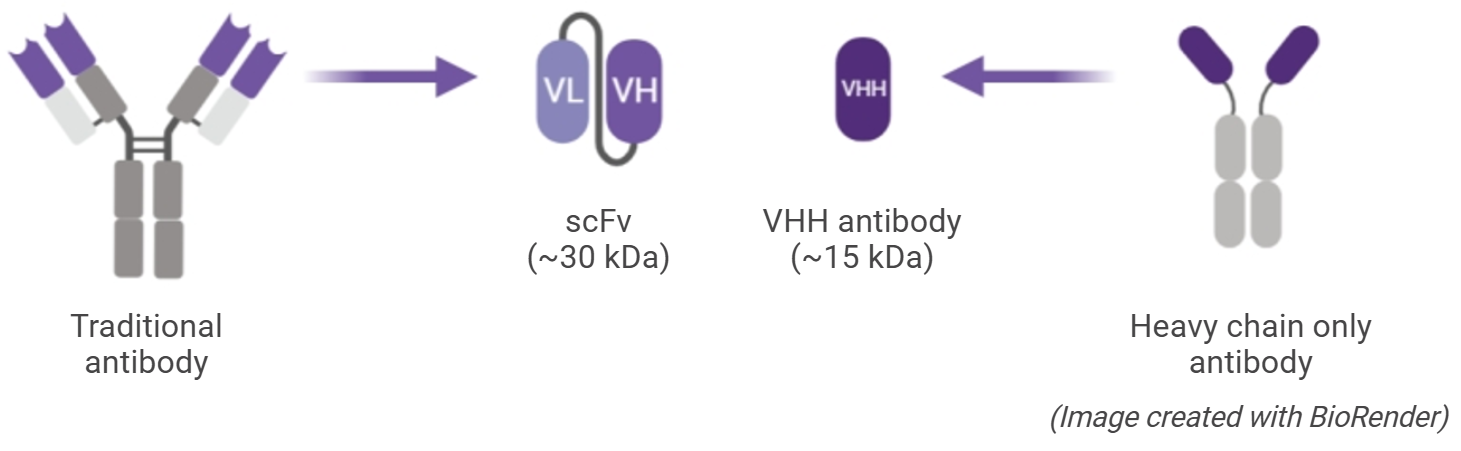
RenNano mice were developed by genetically modifying the antibody constant region in RenMab mice. Upon immunization, RenNano mice produce fully human heavy-chain-only antibodies (HCAbs) capable of antigen binding without light chains.These RenNano-derived HCAbs feature:
In February 2023, Biocytogen launched the "Nano 100 Project", aiming to develop fully human therapeutic VHHs targeting over 100 distinct antigens.

VEGFA (referred to as VEGF hereafter) is a key member of the vascular endothelial growth factor family, which also includes VEGFB, VEGFC, VEGFD, and placental growth factor (PLGF/PGF). VEGF is overexpressed in several cancers, including:
Benchmark: Bevacizumab analog
Our anti-VEGFA HCAbs, derived from RenNano mice, demonstrate superior blocking activity compared to the benchmark.

Delta-like ligand 3 (DLL3) is a negative regulator of the Notch signaling pathway and is aberrantly expressed on the cell surface of most neuroendocrine prostate cancers (NEPC) and other small cell carcinomas.
Benchmark: AMG 757 analog
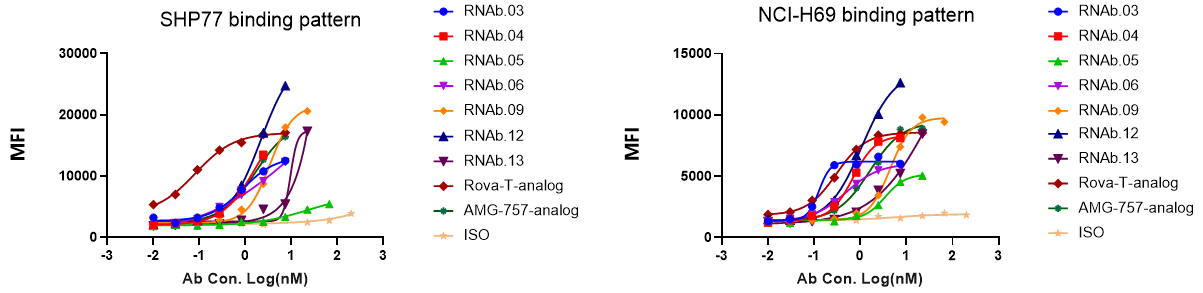
Our anti-DLL3 HCAbs exhibit:
▷High Affinity in Tumor Cells
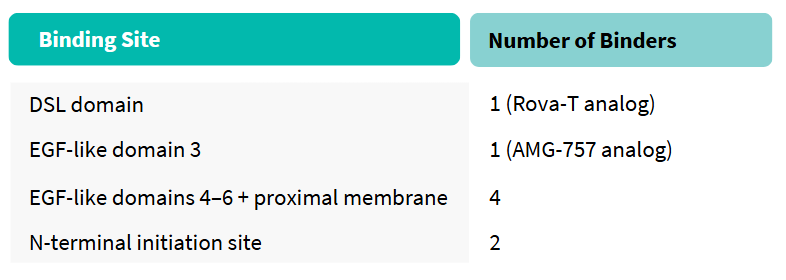
▷ Epitope Binning Assay
TFR1, also known as CD71, is a transmembrane glycoprotein involved in cellular iron uptake and is often upregulated in various cancers, including breast, lung, and colorectal cancers, making it a potential target for cancer therapy.
Beyond its role in cancer, TFR1 is highly expressed in blood-brain barrier (BBB) endothelial cells, where it mediates ligand-independent, receptor-mediated transcytosis. Transferrin binds to TFR1, is internalized, and transported across the BBB, enabling the delivery of transferrin and associated therapeutics into the brain. This mechanism offers a promising strategy for treating neurodegenerative diseases like Alzheimer’s and Parkinson’s, as well as brain tumors.
Our anti-TFR1 HCAbs demonstrate:
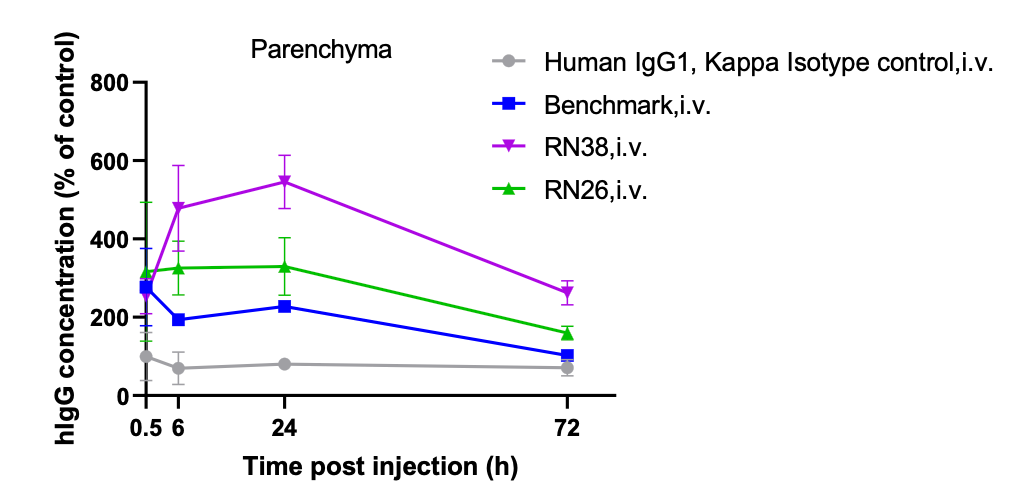
Superior BBBpenetrationin vivocompared to benchmark antibodies.
High affinity for both human and monkey TFR1.
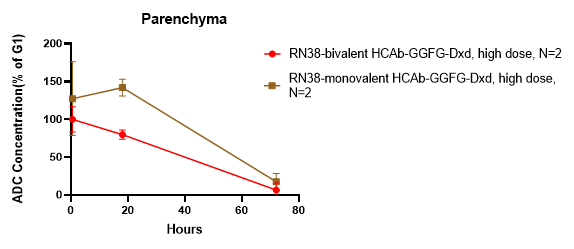
Significantly enhanced BBB penetration in the monovalent form compared to the bivalent form.
Versatility for both non-conjugated (e.g., fusions, bispecifics) and conjugated payload delivery (e.g., AOCs, small molecules).
▷ Superior BBB penetration compared to the benchmark antibody
 |
▷ The monovalent form exhibits significantly better BBB penetration than the bivalent form |
Biocytogen is actively seeking collaborations with global pharmaceutical and biotech companies in VHH-related therapeutics, including cell therapies, BBB shuttles, bispecific and multispecific antibodies, ADCs, and RACs. Together, we aim to develop novel drugs with first-in-class and best-in-class potential.
Feel free to contact us for more information or to explore co-development and licensing opportunities!