
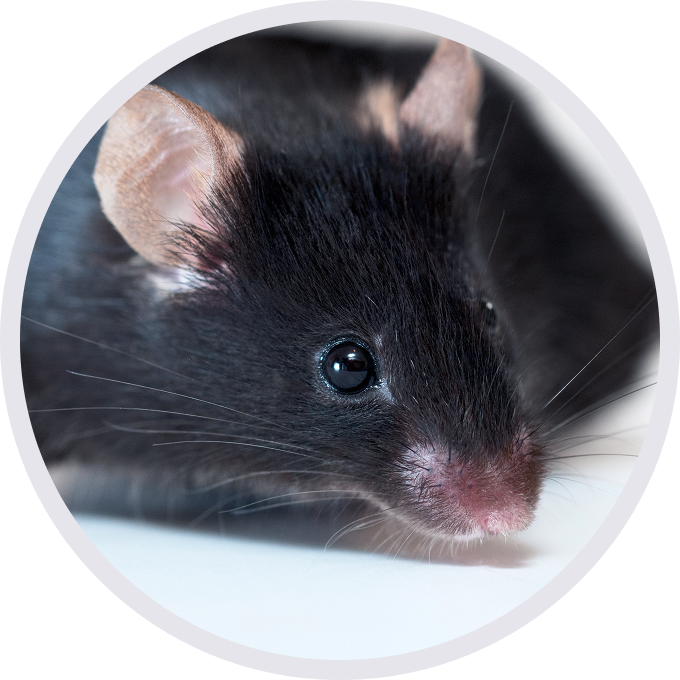

CD33: An AML target with broad myeloid blast expression
Gene Information: CD33 is on human chromosome 19 and encodes Siglec-3, a transmembrane sialic-acid-binding immunoglobulin-like lectin. It is an inhibitory receptor that keeps myeloid cells resting.
Protein Expression: CD33 is constitutively expressed on myeloid lineage cells (progenitors, monocytes, macrophages, granulocytes) but not on mature T/B lymphocytes, and is present on >90% of AML blasts. This broad myeloid-restricted expression makes it an ideal target for eliminating myeloid leukemia cells.
Signaling Pathway: CD33 engagement by sialylated ligands or antibody cross-linking induces ITIM phosphorylation in its cytoplasmic tail. This recruits SHP-1 and SHP-2 phosphatases, which suppress activating signaling, thereby inhibiting myeloid cell activation and cytokine release.
Therapeutic Engagement: CD33-targeting therapies include ADCs, bispecific T-cell engagers, and CAR T cells. The prototype ADC is gemtuzumab ozogamicin (GO). Upon CD33 binding, GO is internalized, releasing toxin that causes DNA double-strand breaks and apoptosis. Fractionated, lower-dose GO reduces hepatic veno-occlusive disease risk, the toxicity that led to its withdrawal and later renewed approval.

CD33
The exons 1-3 of mouse Cd33 gene that the encode extracellular domain were replaced by human CD33 exons 1-3 in B-hCD33 mice.
The genomic region of mouse Cd33 gene that encodes transmembrane domain and cytoplasmic portion is retained. The promoter, 5’ UTR and 3’ UTR region of the mouse gene are also retained. The chimeric CD33 expression is driven by endogenous mouse Cd33 promoter, while mouse Cd33 gene transcription and translation will be disrupted.

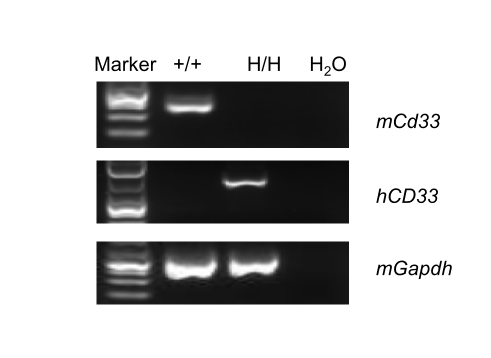
Strain specific analysis of CD33 mRNA expression in wild-type C57BL/6 mice and homozygous B-hCD33 mice by RT-PCR. Splenocyte RNA was isolated from wild-type C57BL/6 mice (+/+) and homozygous B-hCD33 mice (H/H), then cDNA libraries were synthesized by reverse transcription, followed by PCR with mouse or human CD33 primers. Sequencing of the PCR products confirmed that the amplified sequences were consistent with database reference sequences.
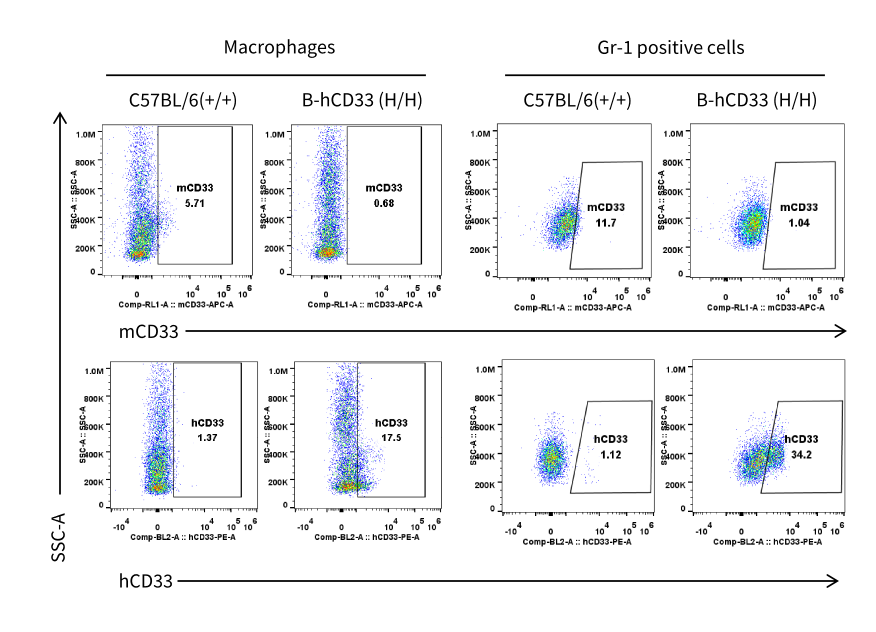
Mouse and human CD33 expression analysis in bone marrow. Bone marrow cells were collected from wild-type C57BL/6 mice, and B-hCD33 mice. CD33 expression on macrophages and Gr-1 positive cells was analyzed by flow cytometry using species-specific anti-mouse CD33 antibody (Biolegend, 366607) and anti-human CD33 antibody (eBioscience™, 17-0331-80).
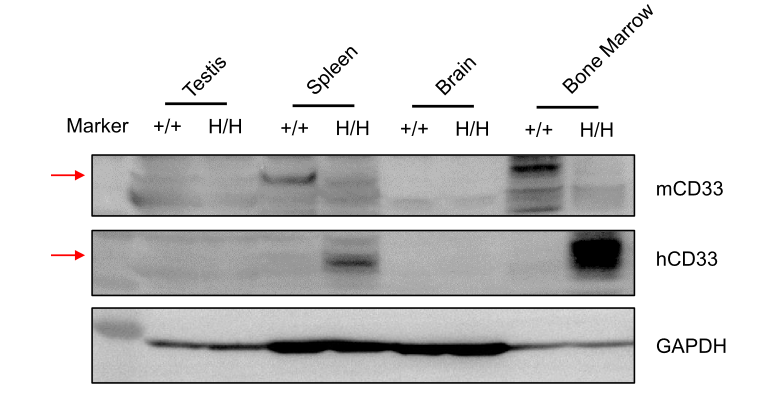
Strain specific CD33 expression analysis in homozygous B-hCD33 mice by Western blot. The testis, spleen, brain and bone marrow were collected from wild-type C57BL/6 mice (+/+) and homozygous B-hCD33 mice (H/H) and then analyzed by western blot with species-specific anti-mouse CD33 antibody (CST, #29621) and anti-human CD33 antibody (invitrogen, MA572333).

Strain specific CD33 expression analysis in homozygous B-hCD33 mice by multiplex immunofluorescence staining. Brain tissue was collected from wild type C57BL/6 mice and homozygous B-hCD33 mice (female, 7-week-old) and processed into formalin-fixed paraffin-embedded tissue sections. The paraffin sections were immunolabeling using species-specific anti-human CD33 antibody (red) and the microglial marker IBA1 antibody (green). The results indicated that human CD33 is expressed in brain of B-hCD33 mice.