


Inhibitory LILRBs (LILRB1–4): Leukocyte immunoglobulin-like receptors and targets for tumor microenvironment reprogramming

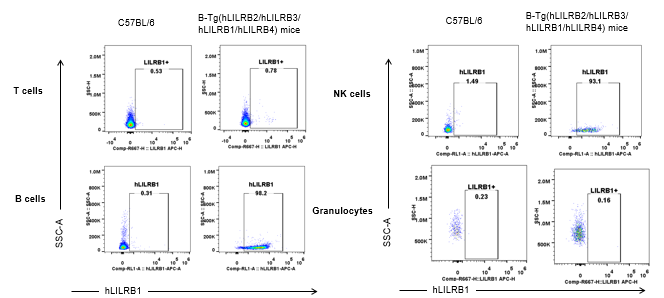
Strain specific human LILRB1 expression analysis in LILRB2/LILRB3/LILRB1/LILRB4 humanized transgenic mice by flow cytometry. Blood cells were collected from wild-type C57BL/6 mice (+/+) and transgenic B-Tg(hLILRB2/hLILRB3/hLILRB1/hLILRB4) mice (Tg). Human LILRB1 expression was analyzed by flow cytometry using anti-human LILRB1 antibody (eBioscience™, 17-5129-41).
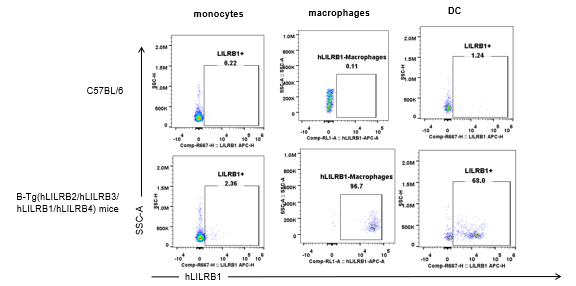
Strain specific hLILRB1 expression analysis in LILRB2/LILRB3/LILRB1/LILRB4 humanized transgenic mice by flow cytometry. Blood cells were collected from wild-type C57BL/6 mice (+/+) and transgenic B-Tg(hLILRB2/hLILRB3/hLILRB1/hLILRB4) mice (Tg). Human LILRB1 expression was analyzed by flow cytometry using anti-human LILRB1 antibody (eBioscience™, 17-5129-41).
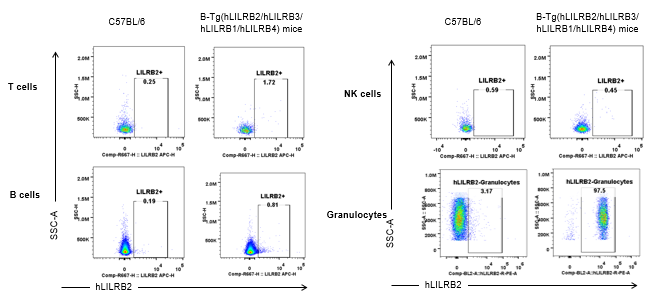
Strain specific hLILRB2 expression analysis in LILRB2/LILRB3/LILRB1/LILRB4 humanized transgenic mice by flow cytometry. Blood cells were collected from wild-type C57BL/6 mice (+/+) and transgenic B-Tg(hLILRB2/hLILRB3/hLILRB1/hLILRB4) mice (Tg). Human LILRB2 expression was analyzed by flow cytometry using anti-human LILRB2 antibody (R&D, FAB2078P).
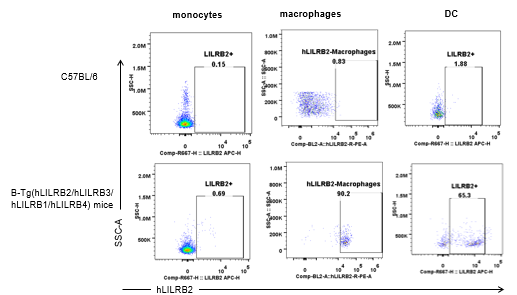
Strain specific hLILRB2 expression analysis in LILRB2/LILRB3/LILRB1/LILRB4 humanized transgenic mice by flow cytometry. Blood cells were collected from wild-type C57BL/6 mice (+/+) and transgenic B-Tg(hLILRB2/hLILRB3/hLILRB1/hLILRB4) mice (Tg). Human LILRB2 expression was analyzed by flow cytometry using anti-human LILRB2 antibody (R&D, FAB2078P).
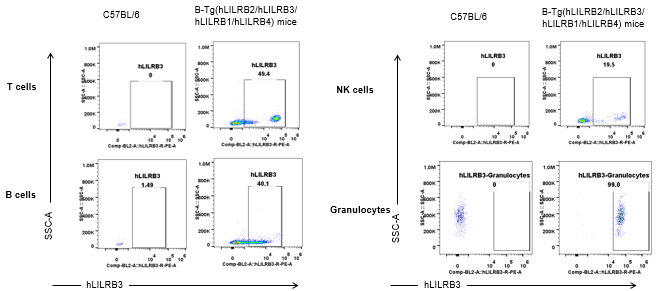
Strain specific hLILRB3 expression analysis in LILRB2/LILRB3/LILRB1/LILRB4 humanized transgenic mice by flow cytometry. Blood cells were collected from wild-type C57BL/6 mice (+/+) and transgenic B-Tg(hLILRB2/hLILRB3/hLILRB1/hLILRB4) mice (Tg). Human LILRB3 expression was analyzed by flow cytometry using anti-human LILRB3 antibody (R&D, FAB1806P-100).
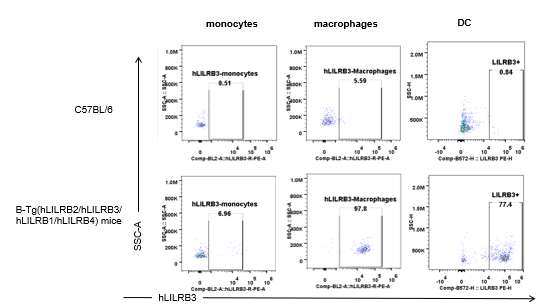
Strain specific hLILRB3 expression analysis in LILRB2/LILRB3/LILRB1/LILRB4 humanized transgenic mice by flow cytometry. Blood cells were collected from wild-type C57BL/6 mice (+/+) and transgenic B-Tg(hLILRB2/hLILRB3/hLILRB1/hLILRB4) mice (Tg). Human LILRB3 expression was analyzed by flow cytometry using anti-human LILRB3 antibody (R&D, FAB1806P-100).
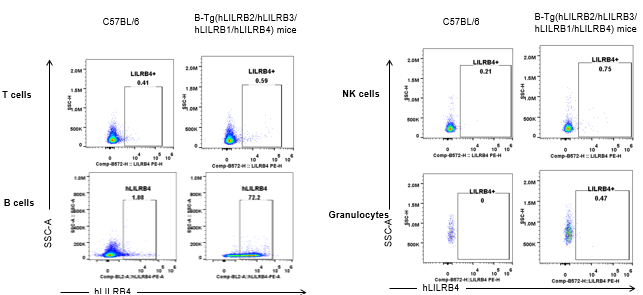
Strain specific hLILRB4 expression analysis in LILRB2/LILRB3/LILRB1/LILRB4 humanized transgenic mice by flow cytometry. Blood cells were collected from wild-type C57BL/6 mice (+/+) and transgenic B-Tg(hLILRB2/hLILRB3/hLILRB1/hLILRB4) mice (Tg). Human LILRB4 expression was analyzed by flow cytometry using anti-human LILRB4 antibody (R&D, FAB24251P).
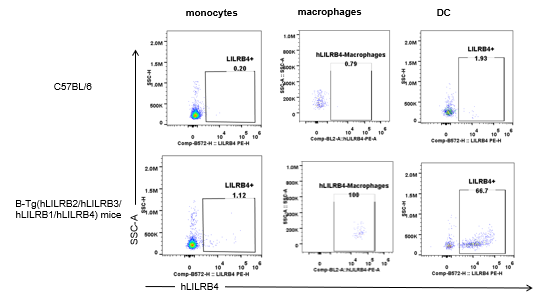
Strain specific hLILRB4 expression analysis in LILRB2/LILRB3/LILRB1/LILRB4 humanized transgenic mice by flow cytometry. Blood cells were collected from wild-type C57BL/6 mice (+/+) and transgenic B-Tg(hLILRB2/hLILRB3/hLILRB1/hLILRB4) mice (Tg). Human LILRB4 expression was analyzed by flow cytometry using anti-human LILRB4 antibody (R&D, FAB24251P).
Analysis of leukocytes cell subpopulation in spleen
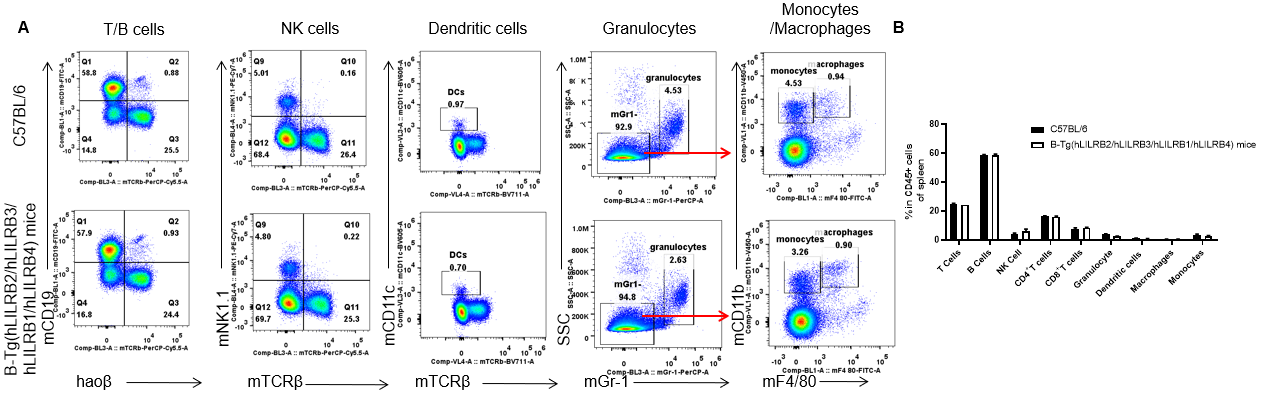
Analysis of the spleen leukocyte subpopulations by FACS. Splenocytes were isolated from female C57BL/6 and B-Tg(hLILRB2/hLILRB3/hLILRB1/hLILRB4) mice (n=3, 8-week-old). Flow cytometry analysis of the splenocytes was performed to assess leukocyte subpopulations. (A) Representative FACS plots. Single live cells were gated for the CD45+ population and used for further analysis as indicated. (B) Results of FACS analysis. The percentages of T cells, B cells, NK cells, dendritic cells, granulocytes, monocytes, and macrophages in B-Tg(hLILRB2/hLILRB3/hLILRB1/hLILRB4) mice were similar to those in the C57BL/6 mice, demonstrating that LILRB1, LILRB2, LILRB3, and LILRB4 humanized does not change the overall development, differentiation or distribution of these cell types in the spleen. Values are expressed as mean ± SEM.
Analysis of T cell subpopulation in spleen
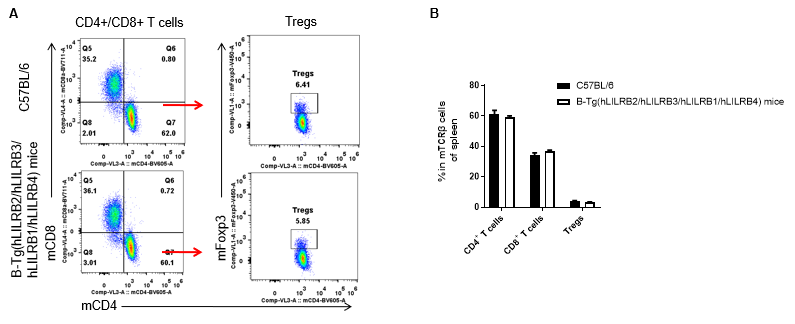
Analysis of the spleen T cell subpopulations by FACS. Splenocytes were isolated from female C57BL/6 and B-Tg(hLILRB2/hLILRB3/hLILRB1/hLILRB4) mice (n=3, 8-week-old). Flow cytometry analysis of the splenocytes was performed to assess leukocyte subpopulations. (A) Representative FACS plots. Single live CD45+ cells were gated for TCRβ+ T cell population and used for further analysis as indicated. (B) Results of FACS analysis. The percentages of CD4+ T cells, CD8+ T cells, and Tregs in B-Tg(hLILRB2/hLILRB3/hLILRB1/hLILRB4) mice were similar to those in the C57BL/6 mice, demonstrating that introduction of LILRB1, LILRB2, LILRB3, and LILRB4 does not change the overall development, differentiation or distribution of these T cell subtypes in the spleen. Values are expressed as mean ± SEM.
Analysis of leukocytes cell subpopulation in LNs
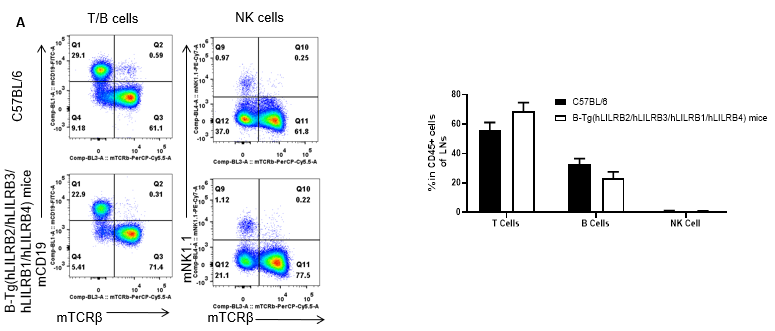
Analysis of the thymus leukocyte subpopulations by FACS. LNs (Lymph nodes) were isolated from female C57BL/6 and B-Tg(hLILRB2/hLILRB3/hLILRB1/hLILRB4) mice (n=3, 8-week-old). Flow cytometry analysis of the LNs was performed to assess leukocyte subpopulations. (A) Representative FACS plots. Single live cells were gated for the CD45+ population and used for further analysis as indicated. (B) Results of FACS analysis. The percentages of T cells, B cells, and NK cells in B-Tg(hLILRB2/hLILRB3/hLILRB1/hLILRB4)mice were similar to those in the C57BL/6 mice, demonstrating that LILRB1, LILRB2, LILRB3, and LILRB4 humanized does not change the overall development, differentiation or distribution of these cell types in the LNs. Values are expressed as mean ± SEM.
Analysis of T cell subpopulation in LNs
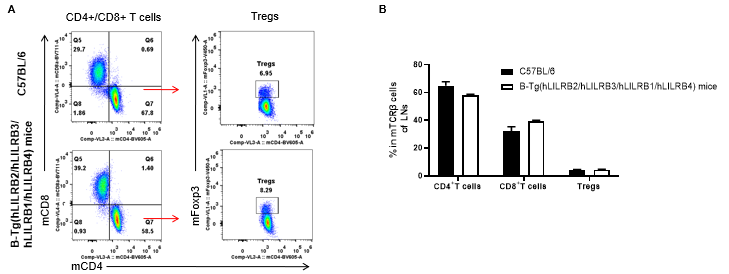
Analysis of the thymus T cell subpopulations by FACS. LNs (Lymph nodes) were isolated from female C57BL/6 and B-Tg(hLILRB2/hLILRB3/hLILRB1/hLILRB4) mice (n=3, 8-week-old). Flow cytometry analysis of the LNs was performed to assess leukocyte subpopulations. (A) Representative FACS plots. Single live CD45+ cells were gated for TCRβ+ T cell population and used for further analysis as indicated. (B) Results of FACS analysis. The percent of CD4+ T cells, CD8+ T cells, and Tregs in B-Tg(hLILRB2/hLILRB3/hLILRB1/hLILRB4) mice were similar to those in the C57BL/6 mice, demonstrating that introduction of LILRB1, LILRB2, LILRB3, and LILRB4 does not change the overall development, differentiation or distribution of these T cell subtypes in the LNs. Values are expressed as mean ± SEM.
Analysis of leukocytes cell subpopulation in blood
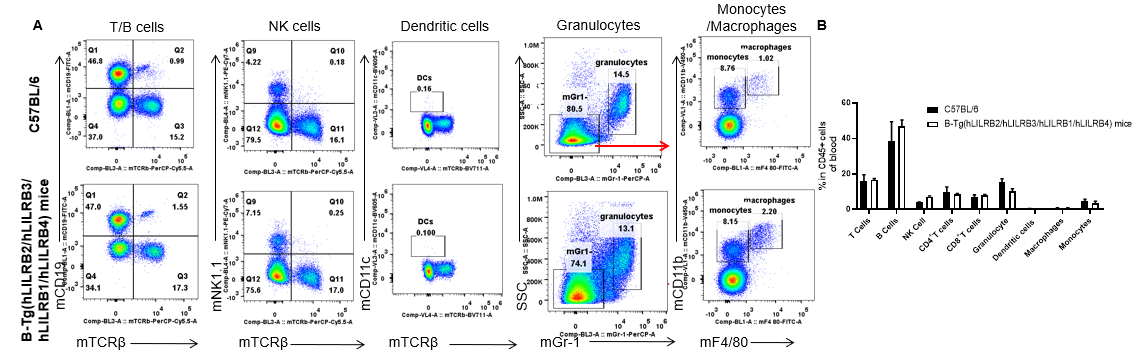
Analysis of the blood leukocyte subpopulations by FACS. Blood leukocytes were isolated from female C57BL/6 and B-Tg(hLILRB2/hLILRB3/hLILRB1/hLILRB4) mice (n=3, 8-week-old). Flow cytometry analysis of the blood leukocytes were performed to assess leukocyte subpopulations. (A) Representative FACS plots. Single live cells were gated for the CD45+ population and used for further analysis as indicated here. (B) Results of FACS analysis. The percentages of T cells, B cells, NK cells, dendritic cells, granulocytes, monocytes, and macrophages in B-Tg(hLILRB2/hLILRB3/hLILRB1/hLILRB4) mice were similar to those in the C57BL/6 mice, demonstrating that LILRB1, LILRB2, LILRB3, and LILRB4 humanized does not change the overall development, differentiation or distribution of these cell types in the blood. Values are expressed as mean ± SEM.
Analysis of T cell subpopulation in blood
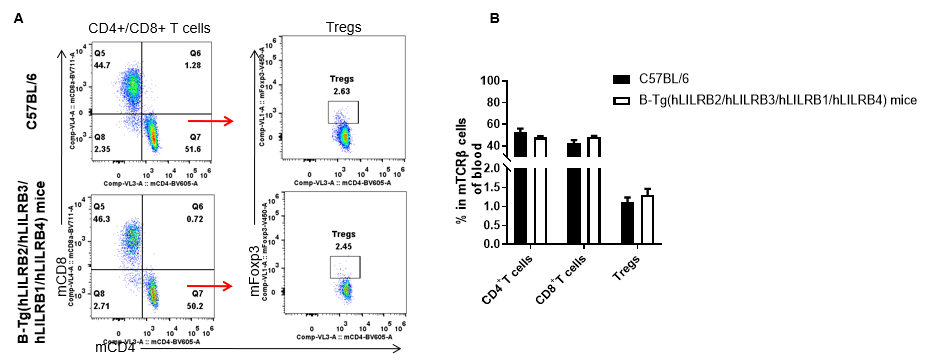
Analysis of the blood T cell subpopulations by FACS. Blood leukocytes were isolated from female C57BL/6 and B-Tg(hLILRB2/hLILRB3/hLILRB1/hLILRB4) mice (n=3, 8-week-old). Flow cytometry analysis of the blood leukocytes were performed to assess leukocyte subpopulations. (A) Representative FACS plots. Single live CD45+ cells were gated for TCRβ+ T cell population and used for further analysis as indicated here. (B) Results of FACS analysis. The percentages of CD4+ T cells, CD8+ T cells, and Tregs in B-Tg(hLILRB2/hLILRB3/hLILRB1/hLILRB4) mice were similar to those in the C57BL/6 mice, demonstrating that introduction of LILRB1, LILRB2, LILRB3, and LILRB4 does not change the overall development, differentiation or distribution of these T cell subtypes in the blood. Values are expressed as mean ± SEM.
Analysis of leukocytes cell subpopulation in BM
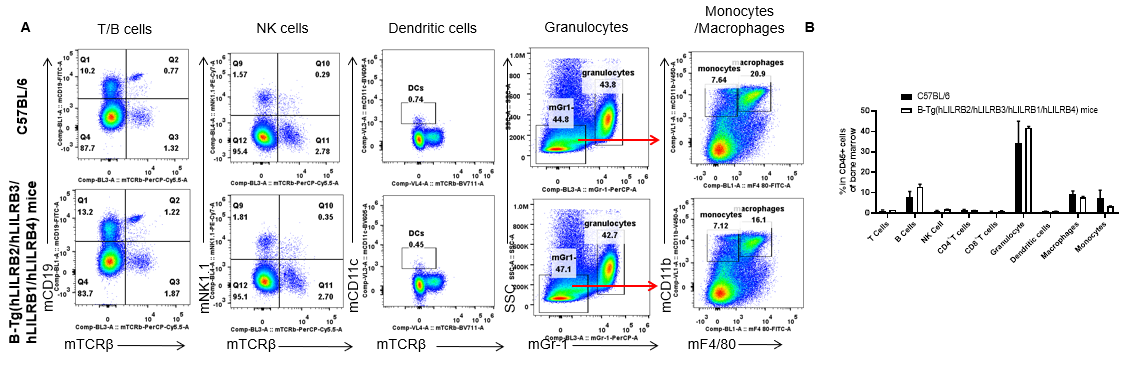
Analysis of the bone marrow leukocyte subpopulations by FACS. Bone marrow leukocytes were isolated from female C57BL/6 and B-Tg(hLILRB2/hLILRB3/hLILRB1/hLILRB4) mice (n=3, 8-week-old). Flow cytometry analysis of the bone marrow leukocyte was performed to assess leukocyte subpopulations. (A) Representative FACS plots. Single live cells were gated for the CD45+ population and used for further analysis as indicated. (B) Results of FACS analysis. The percentages of T cells, B cells, NK cells, dendritic cells, granulocytes, monocytes, and macrophages in B-Tg(hLILRB2/hLILRB3/hLILRB1/hLILRB4) mice were similar to those in the C57BL/6 mice, demonstrating that LILRB1, LILRB2, LILRB3, and LILRB4 humanized does not change the overall development, differentiation or distribution of these cell types in the bone marrow. Values are expressed as mean ± SEM.
Analysis of T cell subpopulation in BM
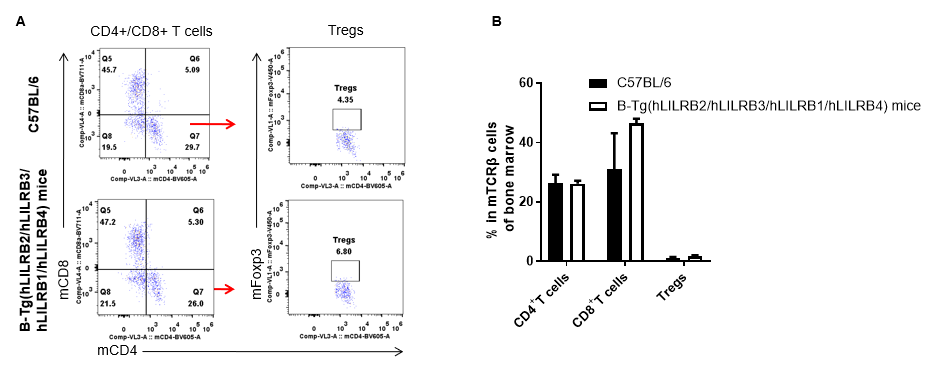
Analysis of the bone marrow T cell subpopulations by FACS. Bone marrow leukocytes were isolated from female C57BL/6 and B-Tg(hLILRB2/hLILRB3/hLILRB1/hLILRB4) mice (n=3, 8-week-old). Flow cytometry analysis of the bone marrow leukocyte was performed to assess leukocyte subpopulations. (A) Representative FACS plots. Single live CD45+ cells were gated for TCRβ+ T cell population and used for further analysis as indicated. (B) Results of FACS analysis. The percentages of CD4+ T cells, CD8+ T cells, and Tregs in B-Tg(hLILRB2/hLILRB3/hLILRB1/hLILRB4) mice were similar to those in the C57BL/6 mice, demonstrating that introduction of LILRB1, LILRB2, LILRB3, and LILRB4 does not change the overall development, differentiation or distribution of these T cell subtypes in the bone marrow. Values are expressed as mean ± SEM.
hLILRB1 expression in CD45+ cells
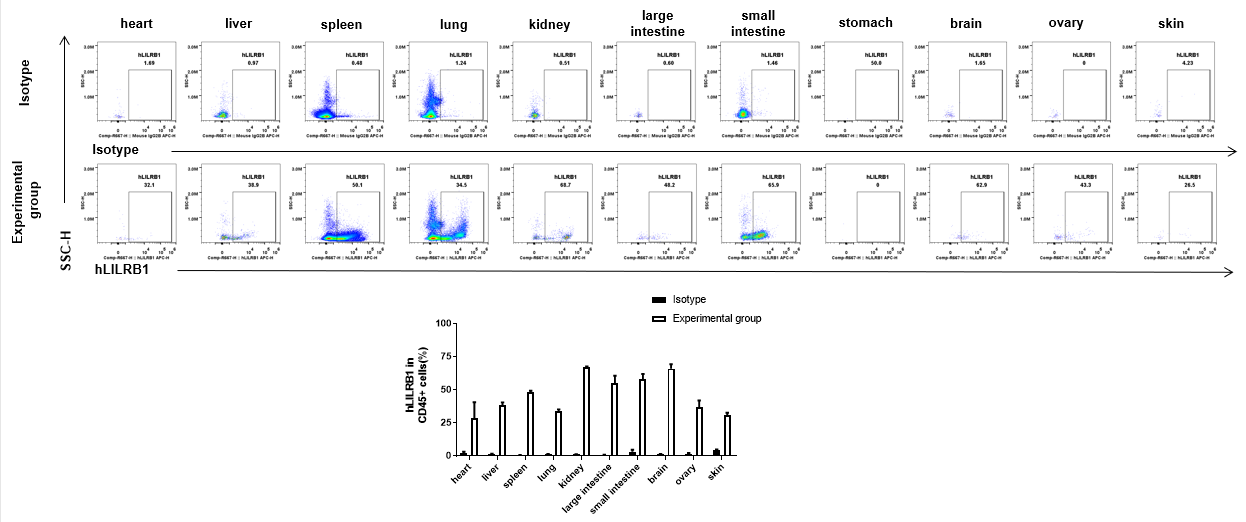
Strain specific hLILRB1 expression analysis in B-Tg(hLILRB1/hLILRB2/hLILRB3/hLILRB4) mice by flow cytometry. Heart, liver, spleen, lung, kidney, large intestine, small intestine, stomach, brain, ovary, and skin were collected from B-Tg(hLILRB1/hLILRB2/hLILRB3/hLILRB4) mice, analyzed by flow cytometry with anti-hLILRB1 antibody.
hLILRB2 expression in CD45+ cells
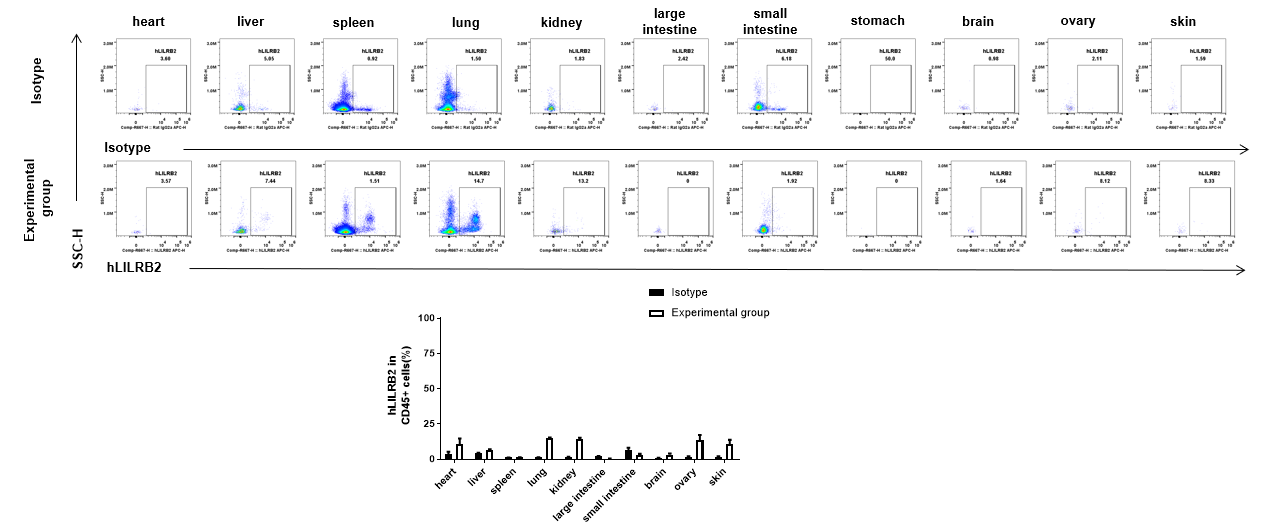
Strain specific hLILRB2 expression analysis in B-Tg(hLILRB1/hLILRB2/hLILRB3/hLILRB4) mice by flow cytometry. Heart, liver, spleen, lung, kidney, large intestine, small intestine, stomach, brain, ovary, and skin were collected from B-Tg(hLILRB1/hLILRB2/hLILRB3/hLILRB4) mice, analyzed by flow cytometry with anti-hLILRB2 antibody.
hLILRB3 expression in CD45+ cells
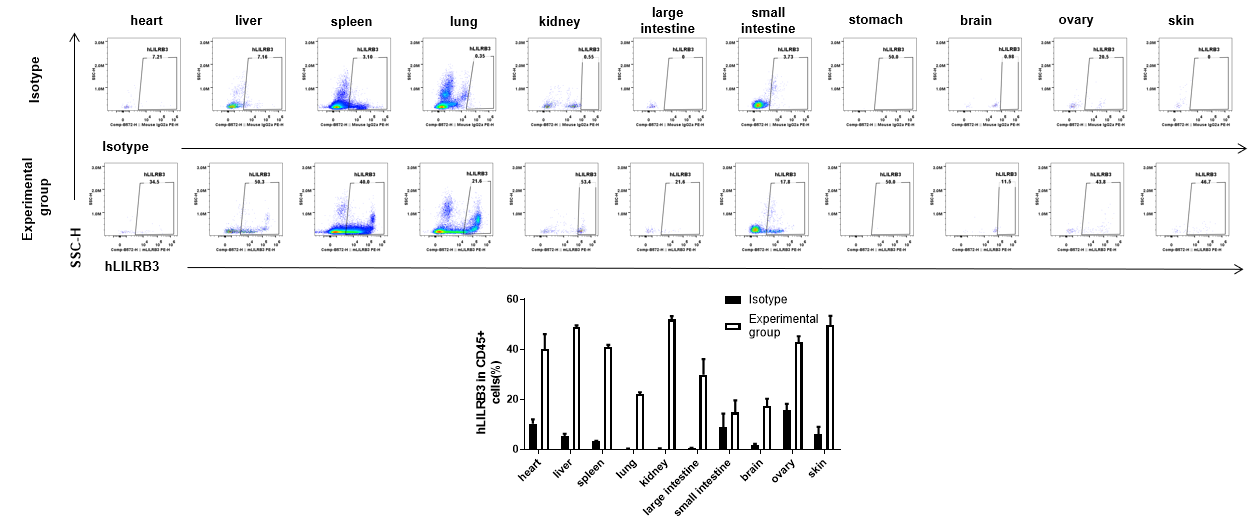
Strain specific hLILRB3 expression analysis in B-Tg(hLILRB1/hLILRB2/hLILRB3/hLILRB4) mice by flow cytometry. Heart, liver, spleen, lung, kidney, large intestine, small intestine, stomach, brain, ovary, and skin were collected from B-Tg(hLILRB1/hLILRB2/hLILRB3/hLILRB4) mice, analyzed by flow cytometry with anti-hLILRB3 antibody.
hLILRB4 expression in CD45+ cells
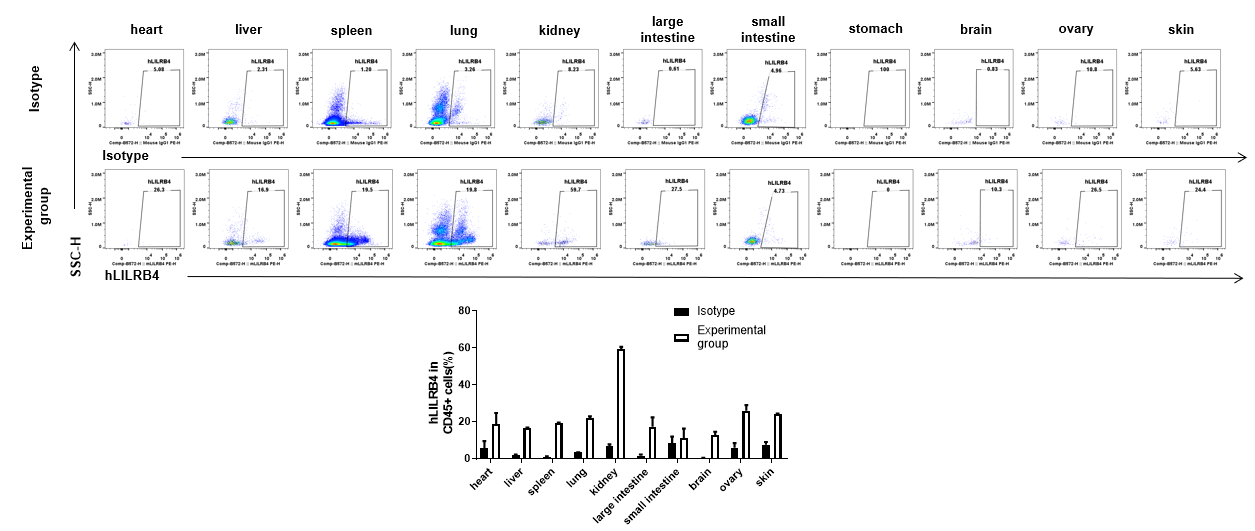
Strain specific hLILRB4 expression analysis in B-Tg(hLILRB1/hLILRB2/hLILRB3/hLILRB4) mice by flow cytometry. Heart, liver, spleen, lung, kidney, large intestine, small intestine, stomach, brain, ovary, and skin were collected from B-Tg(hLILRB1/hLILRB2/hLILRB3/hLILRB4) mice, analyzed by flow cytometry with anti-hLILRB4 antibody.
Protein expression in T cells of bone marrow
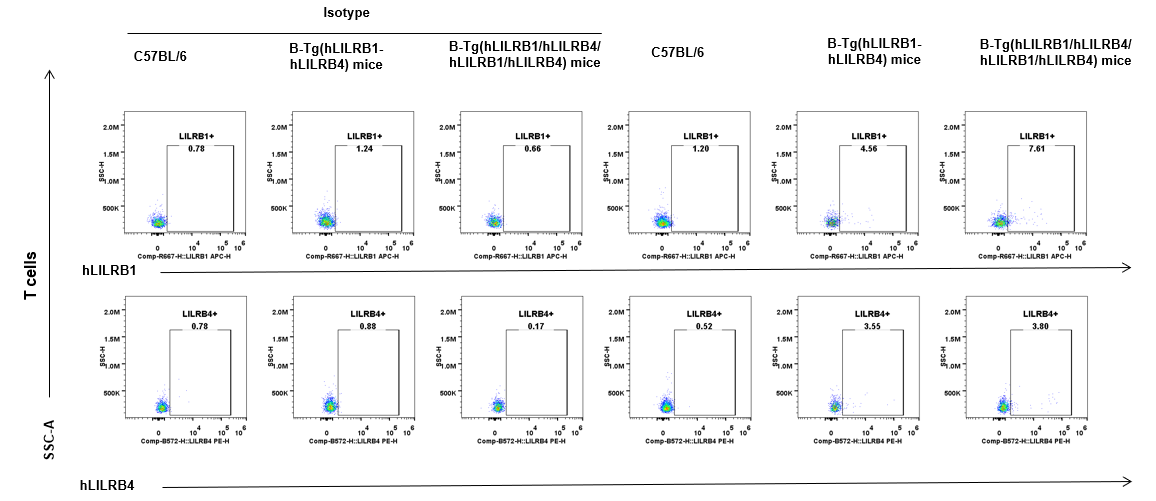
Strain specific hLILRB1/4 expression analysis in B-Tg(hLILRB1/hLILRB2/hLILRB3/hLILRB4) mice by flow cytometry. Bone marrow cells were collected from wild-type mice and B-Tg(hLILRB1/hLILRB2/hLILRB3/hLILRB4) mice, analyzed by flow cytometry with anti-LILRB1 antibody or anti-LILRB4 antibody.