
B-hTCR mice
C57BL/6-Tcratm1(TRA)Bcgen Tcrbtm1(TRB)Bcgen /Bcgen • 116006

B-hTCR mice

Catalog Number
116006
Strain Name
C57BL/6-Tcratm1(TRA)Bcgen Tcrbtm1(TRB)Bcgen /Bcgen
Strain Background
C57BL/6
NCBI gene ID
6955,6957 (Human)
Aliases
IMD7, TCRA, TRA@; TCRB, TRB@

이 페이지에서

  • Description
  • Targeting strategy
  • Phenotypic analysis
  • Related products

포스터

모두 보기

    출판물

      관련 제품

      모두 보기
      Description

      TCR MOA: Mechanism of Action Summary
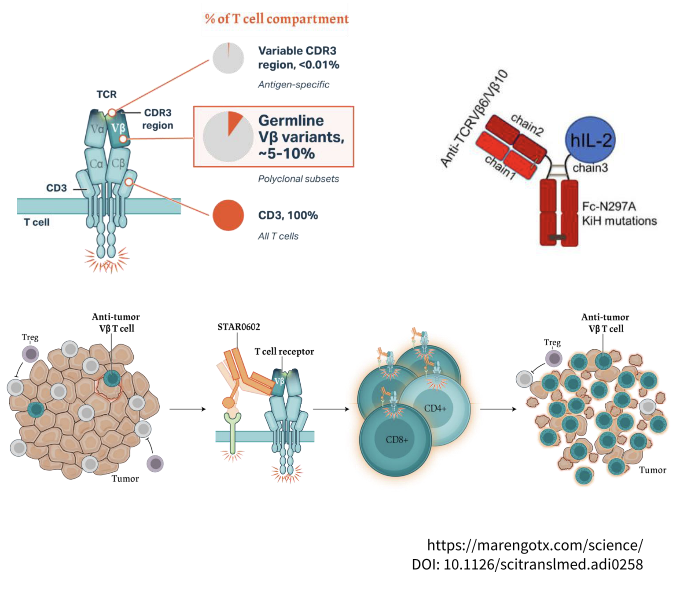
      Targeting the TCR: Biological Roles and Therapeutic Strategies 

      • Gene Information: The fully humanized T-cell receptor (TCR) model features targeted genetic replacement of endogenous murine TCR variable (V(D)J) and constant (C) gene loci across both alpha and beta chains with their human orthologs. 
      • Protein Expression: Fully human αβTCR complexes assemble natively on the surface of thymocytes and peripheral CD4⁺ and CD8⁺ T cells, pairing physiological repertoire diversity with endogenous CD3 signaling components in vivo. 
      • Signaling Pathway: Cognate peptide–MHC engagement triggers TCR clustering and phosphorylation of CD3 immunoreceptor tyrosine-based activation motifs (ITAMs) by LCK, activating ZAP-70 to initiate downstream LAT/PLCγ1 cascades governing T-cell activation and clonal expansion. 
      • Therapeutic Inhibition: This platform provides an ideal in vivo translational system to screen and evaluate novel T-cell engagers targeting specific human TCR variable regions—to selectively activate and expand tumor-reactive effector T cells without broad systemic toxicity.
      B-hTCR Mice: Gene Targeting Strategy

      TRAV/TRBV 

      • The mouse TRA and TRB V(D)J regions were replaced in situ with the human TRA and TRB V(D)J regions in the B-hTCR mice. 

      TRAC/TRBC 

      • The mouse Trac, Trbc1, Trbc2 genes that encode extracellular domain were replaced by human counterparts in B-hTCR mice. The genomic region of mouse Trac, Trbc1, Trbc2 genes that encodes cytoplasmic portion is retained. 
      B-hTCR Mice: TCR Vβ13.1 Protein Expression Analysis
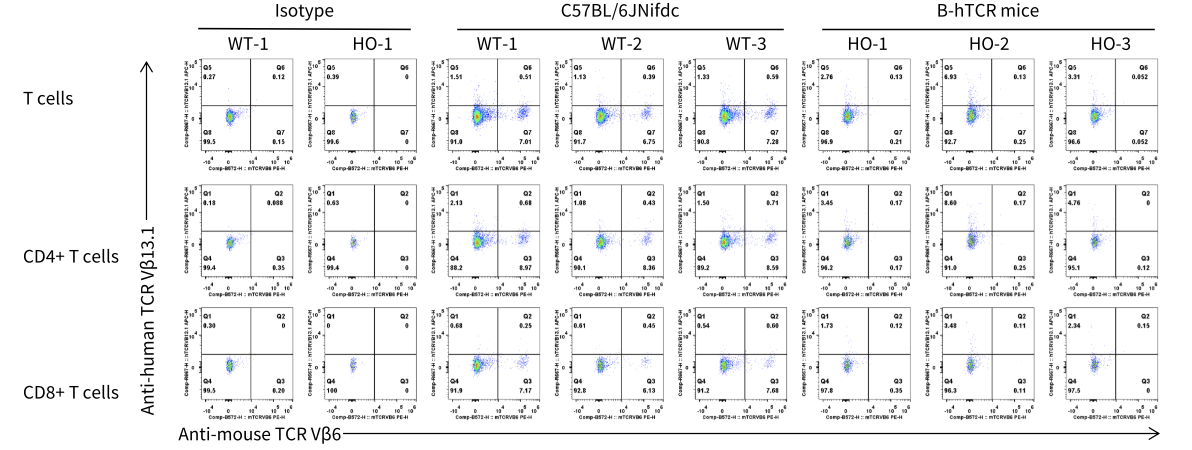
      • Mouse TCR Vβ6 was detected on peripheral blood T cells, including CD4+ T cells and CD8+ T cells from wild-type C57BL/6JNifdc mice, but not in the T cells, CD4+ T cells or CD8+ T cells from homozygous B-hTCR mice. 
      • Human TCR Vβ13.1 was exclusively detected in homozygous B-hTCR mice.

      Strain specific TCR Vβ13.1 expression analysis in wild-type C57BL/6JNifdc mice and homozygous B-hTCR mice by flow cytometry. Blood cells were collected from wild-type C57BL/6JNifdc mice (+/+) and homozygous B-hTCR mice (H/H), and analyzed by flow cytometry with species-specific anti-mouse TCRVβ6 antibody (Biolegend, 140004) and anti-human TCR Vβ13.1 antibody (Biolegend, 362408).
      B-hTCR Mice: Analysis of Leukocyte Subpopulations
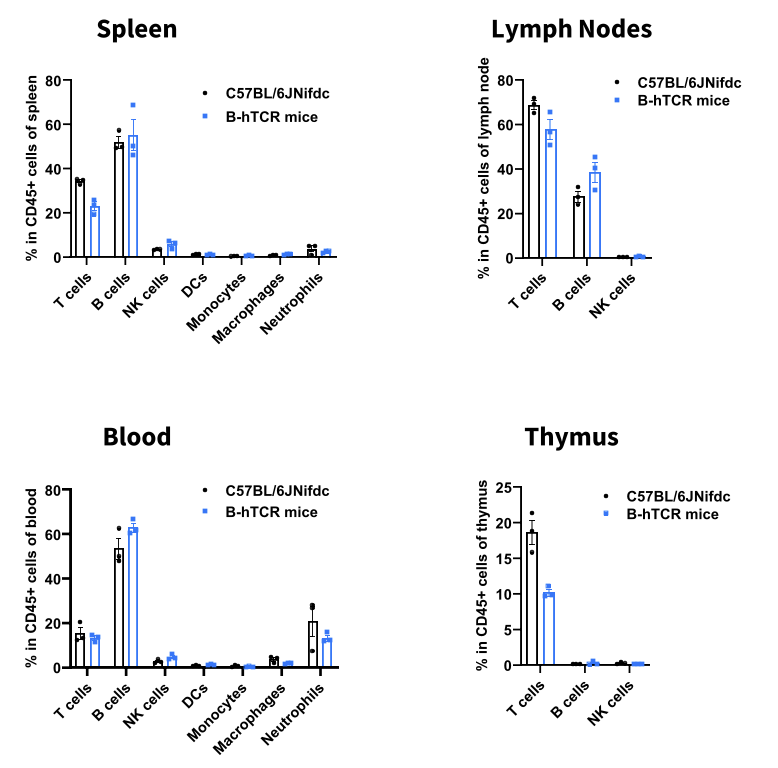
      • The frequencies of B cells, NK cells, DCs, neutrophils, monocytes, macrophages, and neutrophils in homozygous B-hTCR mice were similar to those in C57BL/6JNifdc mice. The T cell frequency was decreased in the spleen, lymph nodes, and thymuses. 
      • Humanization of TCRα and TCRβ affected T cells in the spleen, lymph nodes, and thymuses.

      Analysis of leukocyte subpopulations by flow cytometry in immune organs and blood. Splenocytes, peripheral blood, lymph nodes, and thymuses were isolated from C57BL/6JNifdc and B-hTCR mice (male, 10-week-old, n = 3). Single live cells were gated on the CD45⁺ population and analyzed by flow cytometry as indicated. Values are expressed as mean ± SEM.
      B-hTCR Mice: Analysis of T Cell Subpopulations
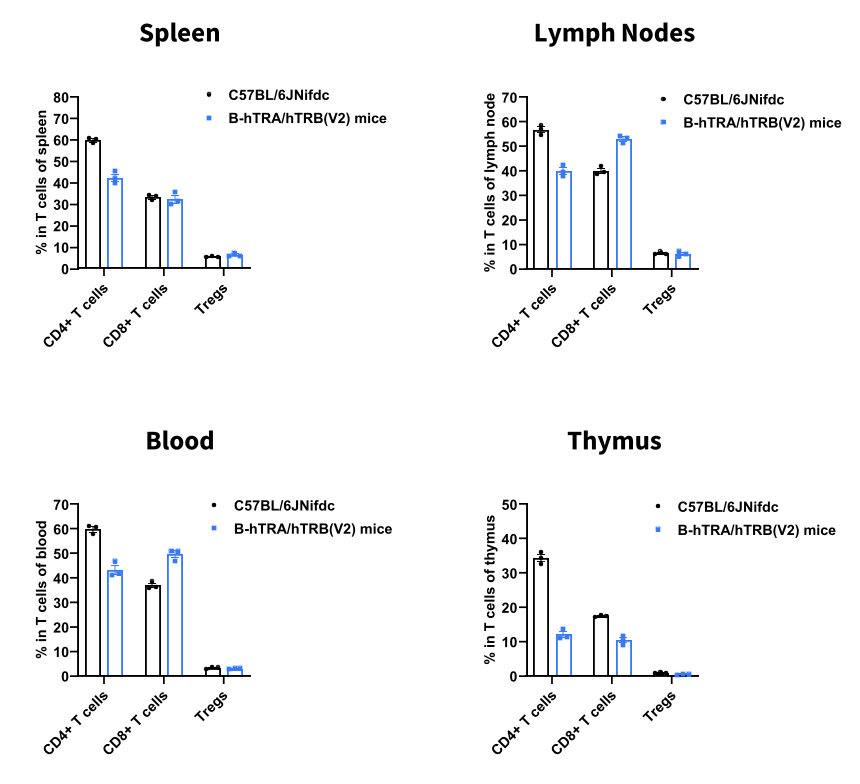
      • The proportions of Tregs in homozygous B-hTCR mice were comparable to those in C57BL/6JNifdc mice. The frequency of CD4+ T cells were significantly decreased. The frequency of CD8+ T cells were significantly increased in the blood and lymph nodes. 
      • Humanization of TCRα and TCRβ does not affect affected the proportion of T cell subtypes in the spleen, blood, lymph nodes, and thymuses.

      Analysis of T-cell subpopulations by flow cytometry in immune organs and blood. Splenocytes, peripheral blood, lymph nodes, and thymuses were isolated from C57BL/6JNifdc and B-hTCR mice (male, 9-week-old, n = 3). Single live cells were gated on the CD3⁺ T-cell population and analyzed by flow cytometry as indicated. Values are expressed as mean ± SEM.
      B-hTCR Mice: In vivo Efficacy of Invikafusp alfa-analog

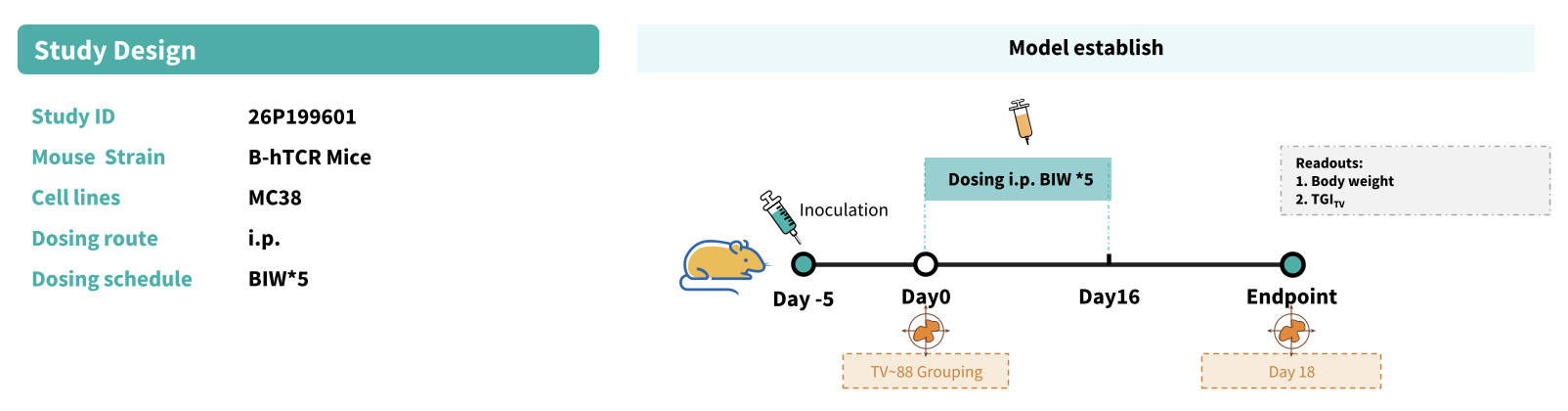
      Establishment of an MC38 model and in vivo efficacy study of the Invikafusp alfa-analog. MC38 colon cancer cells were implanted subcutaneously into homozygous B-hTCR mice (male, 12-weeks-old, n = 6). When the average tumor volume reached approximately 88 mm³, mice were randomized and subsequently administered the Invikafusp alfa-analog (made in house) via intraperitoneal injection.
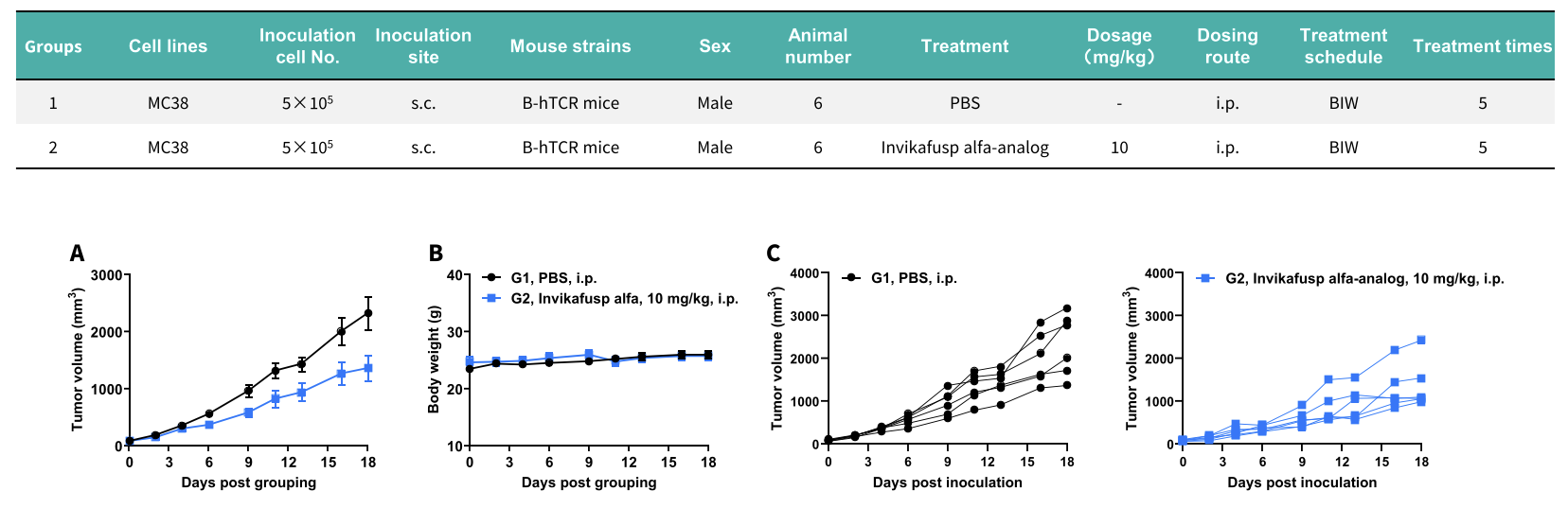
      Efficacy of Invikafusp alfa-analog in B-hTCR mice. (A) Tumor growth curves. (B) Body weight changes during treatment. (C) Tumor cells growth of individual mouse. As shown in panel A, the Invikafusp alfa-analog (made in house) was efficacious in controlling tumor growth in B-hTCR mice, demonstrating that the B-hTCR mice provide a powerful preclinical model for in vivo evaluation of human TCR Vβ-targeted drugs. Values are expressed as mean ± SEM. 
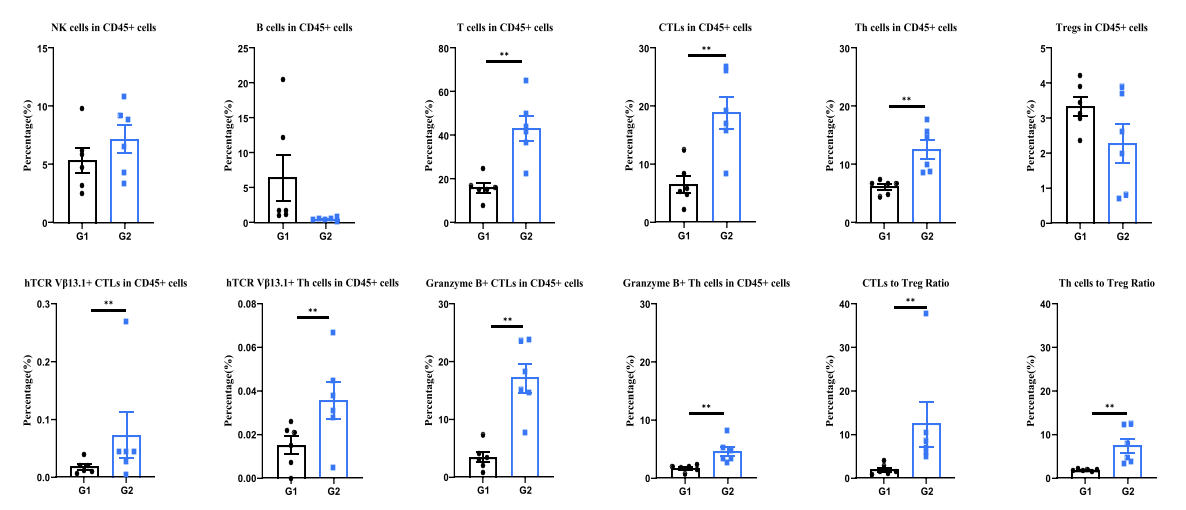
      Invikafusp alfa-analog Promotes Antitumor Activity That is Dependent on Vβ13 CD8+ T Cells
      • Invikafusp alfa-analog treatment prominently promotes the infiltration of total T cells, CTLs, and Th cells—specifically the Vβ13+ and Granzyme B+ subsets—while increasing the effector-to-Treg ratios, indicating a profound remodeling of the tumor immune microenvironment.

      Invikafusp alfa-analog enhances beneficial repertoire of anti-tumor T cells. Tumors from MC38 tumor-bearing mice that were treated with the PBS or Invikafusp alfa-analog were analyzed on day 18. Analysis of NK cells, T cells, CD8+ T cells, CD4+ T cells, Tregs, and Granzyme B in the tumors determined by the flow cytometric assay.

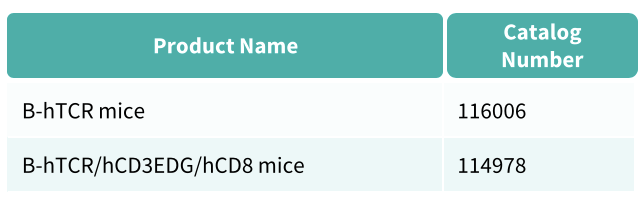
      B-hTCR Mice: Related Product List
      * When publishing results obtained using this animal model, please acknowledge the source as follows: The animal model [B-hTCR mice] (Cat# 116006) was purchased from Biocytogen.