

Key Advantages
Validation
Applications

CCR8
CCL1

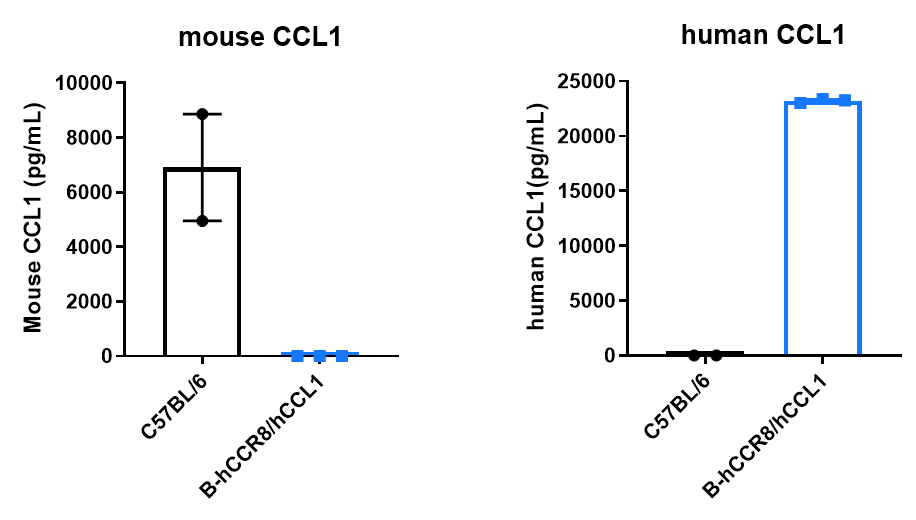
Strain specific CCL1 protein expression analysis in homozygous CCR8/CCL1 humanized mice by ELISA. Serum were collected from wild-type mice (n=2) and homozygous CCR8/CCL1 humanized mice (n=3) that stimulated with 7.5μg anti-mouse CD3ε antibody in vivo. CCL1 protein expression was analyzed by ELISA with species-specific CCL1 ELISA kit.
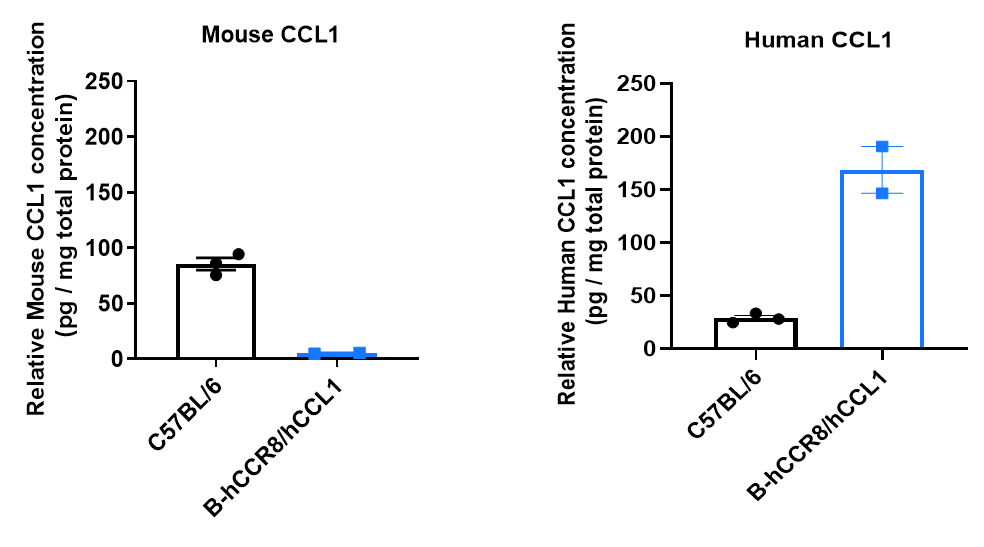
Strain specific CCL1 protein expression analysis in tumor microenvironment of C57BL/6 and CCR8/CCL1 humanized mice bearing MC38 cells by ELISA. Murine colon cancer MC38 cells were subcutaneously implanted into wild-type C57BL/6 (n=3) and CCR8/CCL1 humanized mice (n=2/3). Tumor tissues were harvested when tumor volume reached approximately 600mm3 and CCL1 protein expression was analyzed by ELISA.
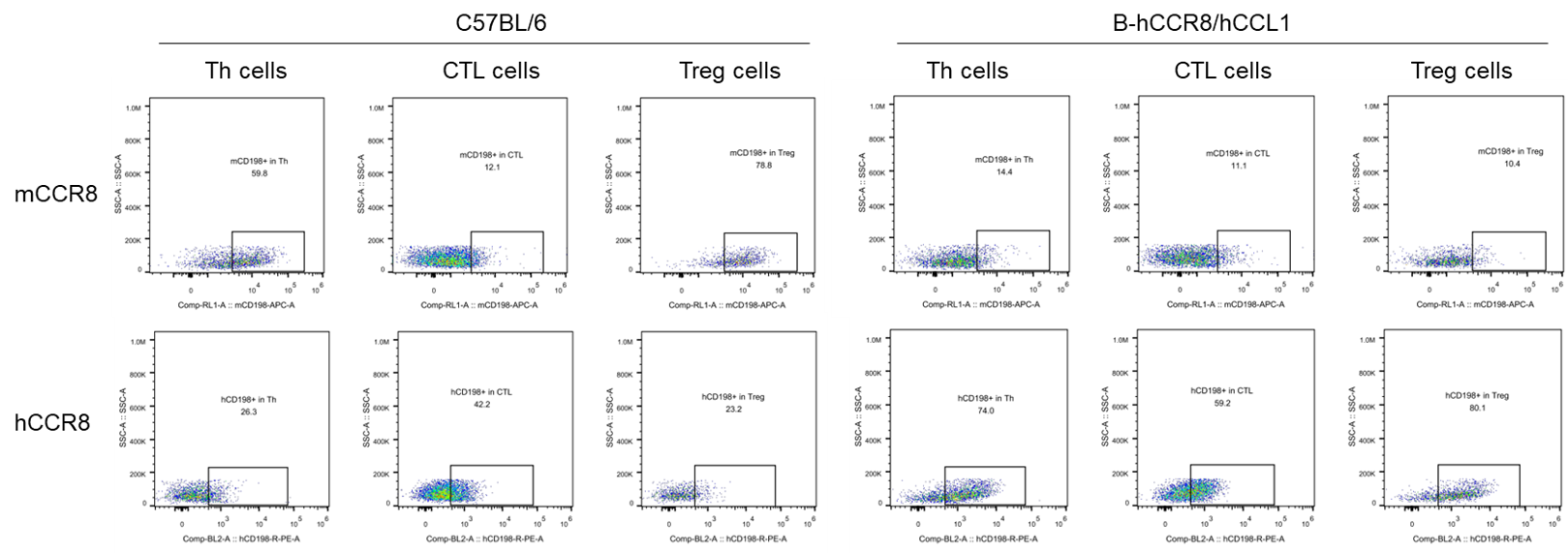
Strain specific CCR8 protein expression analysis in tumor-infiltrating lymphocytes (TILs) from homozygous CCR8/CCL1 humanized mice by flow cytometry. MC38 cells were inoculated into wild-type C57BL/6 (+/+) and homozygous CCR8/CCL1 humanized mice (H/H). Tumor tissues were harvested at the endpoint of experiment, and CCR8 protein expression in tumor-infiltrating lymphocytes (TILs) was analyzed by flow cytometry.
•The percentage of regulatory T cells (Tregs) cells (% in Th cells) in CCR8/CCL1 humanized mice has no significant difference compared with the C57BL/6 mice and CCR8 humanized mice.
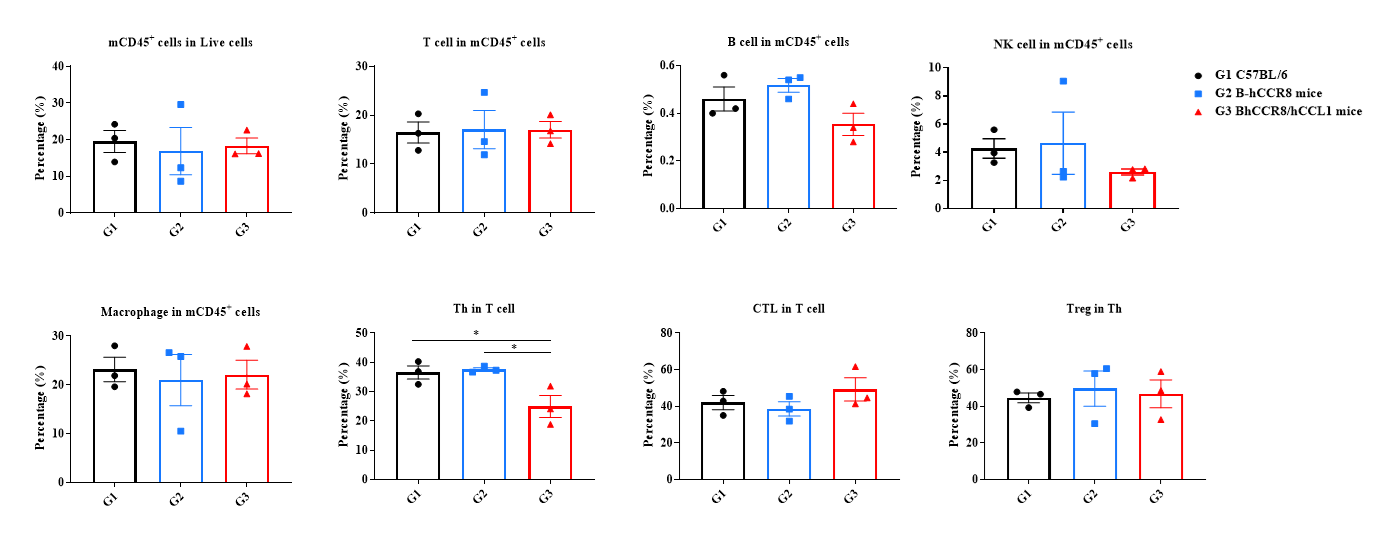
Analysis of tumor-infiltrating lymphocytes (TILs) in wild-type C57BL/6 and CCR8/CCL1 humanized mice.
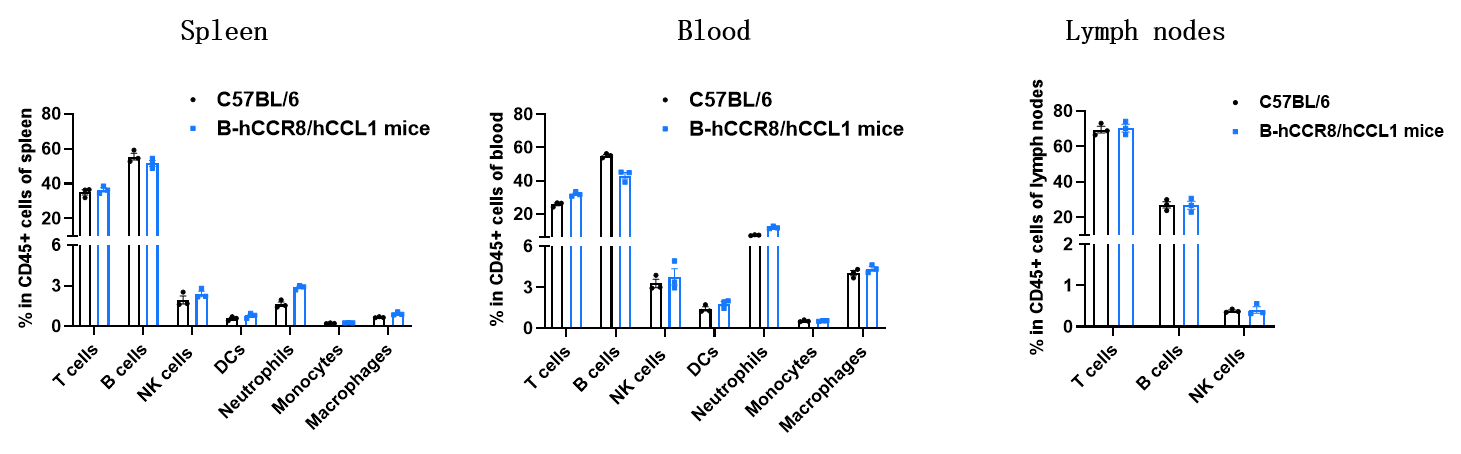
Analysis of leukocyte subpopulations by flow cytometry in immune organs and blood of CCR8/CCL1 humanized mice. Splenocytes, peripheral blood, and lymph nodes were isolated from female C57BL/6 and CCR8/CCL1 humanized mice (female, 8-week-old, n = 3). Single live cells were gated on the CD45⁺ population and analyzed by flow cytometry as indicated. Values are expressed as mean ± SEM.
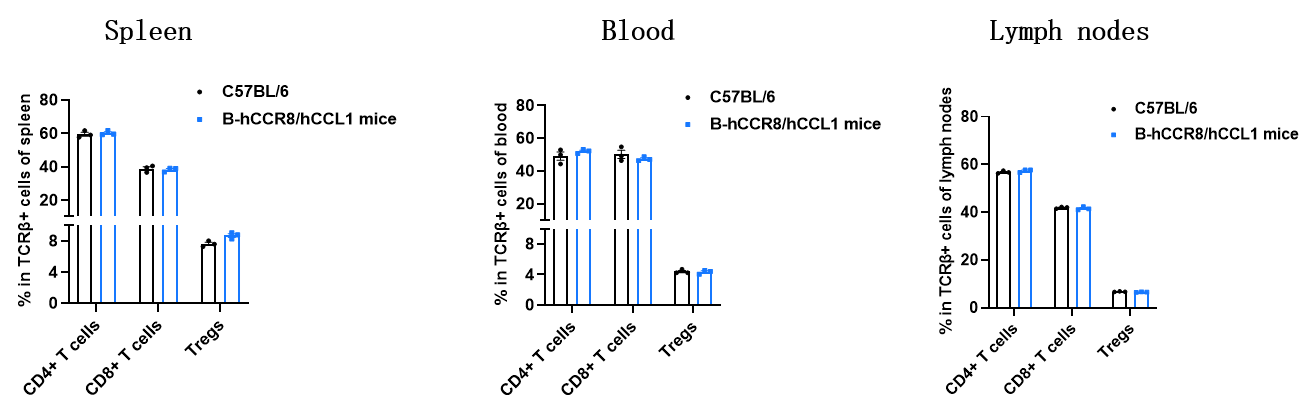
Analysis of T-cell subpopulations by flow cytometry in immune organs and blood of CCR8/CCL1 humanized mice. Splenocytes, peripheral blood, and lymph nodes were isolated from female C57BL/6 and CCR8/CCL1 humanized mice (female, 8-week-old, n = 3). Single live cells were gated on the CD3⁺ T-cell population and analyzed by flow cytometry as indicated. Values are expressed as mean ± SEM.

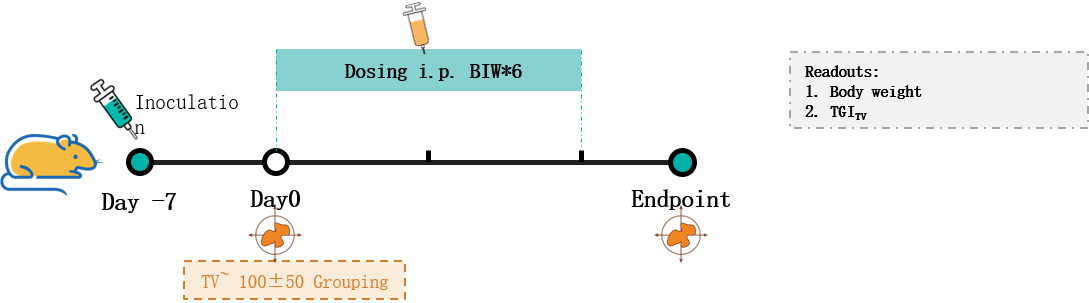
Establishment of a MC38 model and in vivo efficacy study of anti-CCR8 antibody in CCR8/CCL1 humanized mice. Murine colon cancer MC38 cells were subcutaneously implanted into homozygous CCR8/CCL1 humanized mice (female, 7–week-old, n=6). Mice were grouped when tumor volume reached approximately 100 ±50 mm³, at which time they were injected intraperitoneally with anti-human CCR8 antibodies (in house).
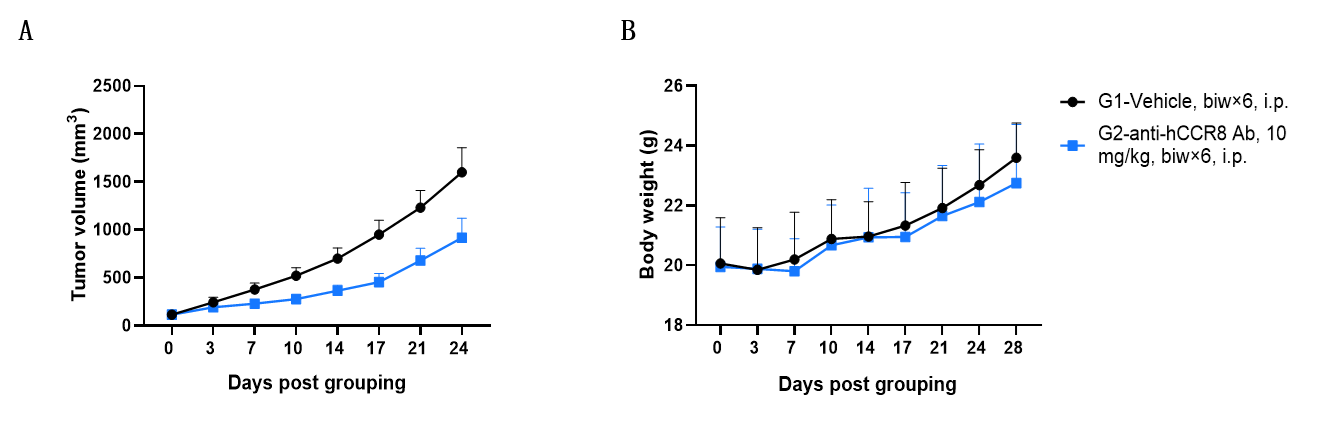
Efficacy of anti-human CCR8 antibodies in CCR8/CCL1 humanized mice. (A) Tumor growth curves. (B) Body weight changes during treatment. Values are expressed as mean ± SEM.
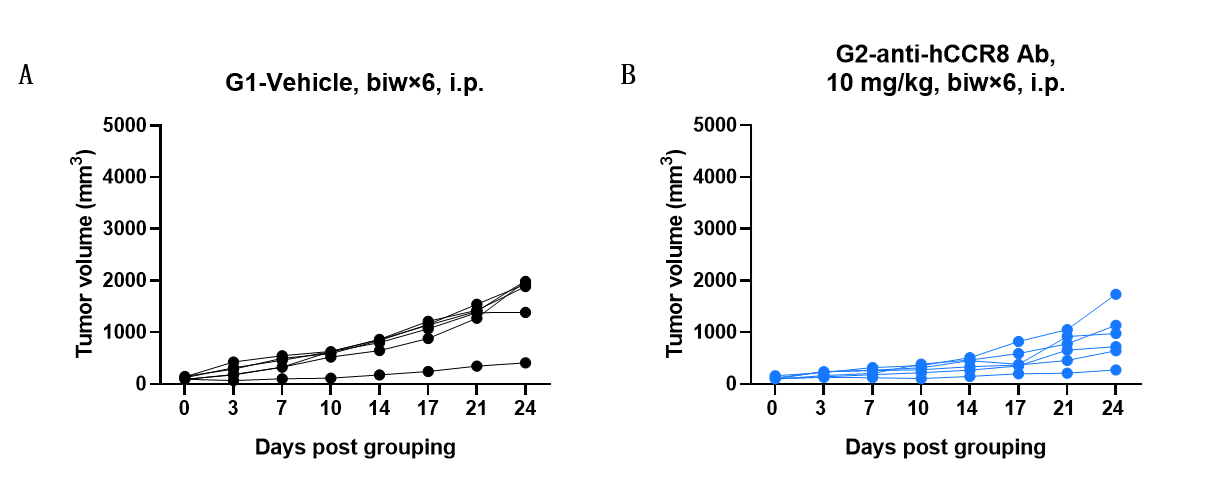
MC38 tumor growth curves from individual CCR8/CCL1 humanized mice. Murine colon cancer MC38 cells (5×10⁵) were subcutaneously implanted into homozygous CCR8/CCL1 humanized mice (female, 7-week-old, n=6). Mice were grouped when tumor volume reached approximately 100-150 mm3, at which time they were intraperitoneally injected with anti-human CCR8 antibody indicated in panel.
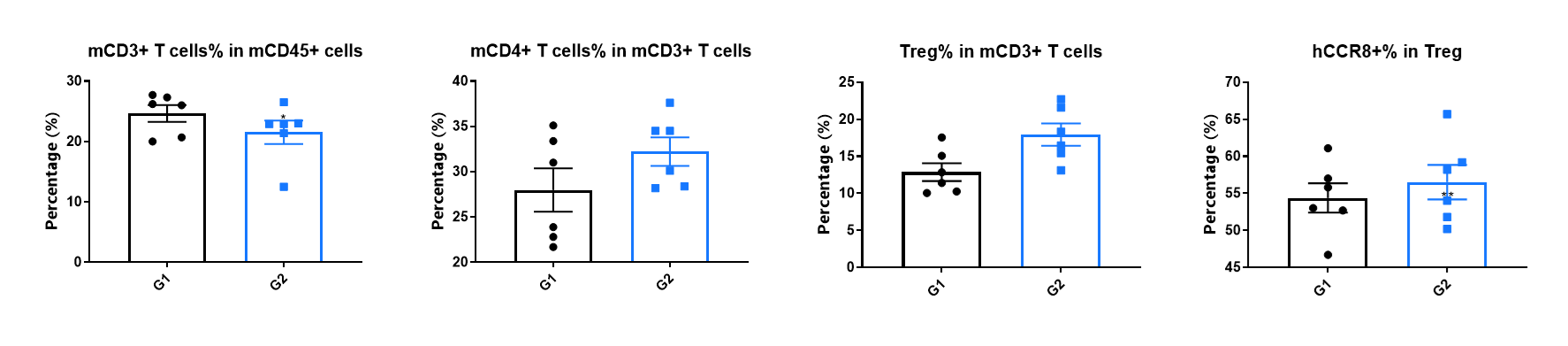
Analysis of tumor-infiltrating lymphocytes (TILs) by flow cytometryin CCR8/CCL1 humanized mice. Tumor cells were harvested at the endpoint of experiment (n=6). Flow cytometry analysis of the lymphocytes were performed to assess cell number and proportion changes. The proportions of CD3+ T cells, CD4+ T cells, Treg cells, and hCCR8+ Treg cells in the anti-CCR8 antibody treatment group showed no significant changes compared to the control group. Values are expressed as mean ± SEM. Significance was determined by one-way ANOVA test. *P < 0.05, **P < 0.01, ***P < 0.001.

What are CCR8/CCL1 humanized mice?
CCR8/CCL1 humanized mice are genetically engineered mice expressing human CCR8 and human CCL1, enabling translational studies of CCR8-targeted therapeutics and tumor immunology.
Why is CCR8 an important immuno-oncology target?
CCR8 is highly expressed on tumor-infiltrating regulatory T cells and contributes to immune suppression within tumors. Targeting CCR8 may enhance antitumor immunity.
Can these mice be used for antibody efficacy studies?
Yes. CCR8/CCL1 humanized mice support in vivo efficacy evaluation of anti-human CCR8 antibodies in tumor models.
What tumor models are compatible with CCR8/CCL1 humanized mice?
MC38 colorectal tumor models have been validated, and the model may also support additional syngeneic immuno-oncology studies.
Do CCR8/CCL1 humanized mice maintain normal immune homeostasis?
Yes. Leukocyte subset frequencies in spleen, blood, and lymph nodes are comparable to wild-type C57BL/6 mice.