


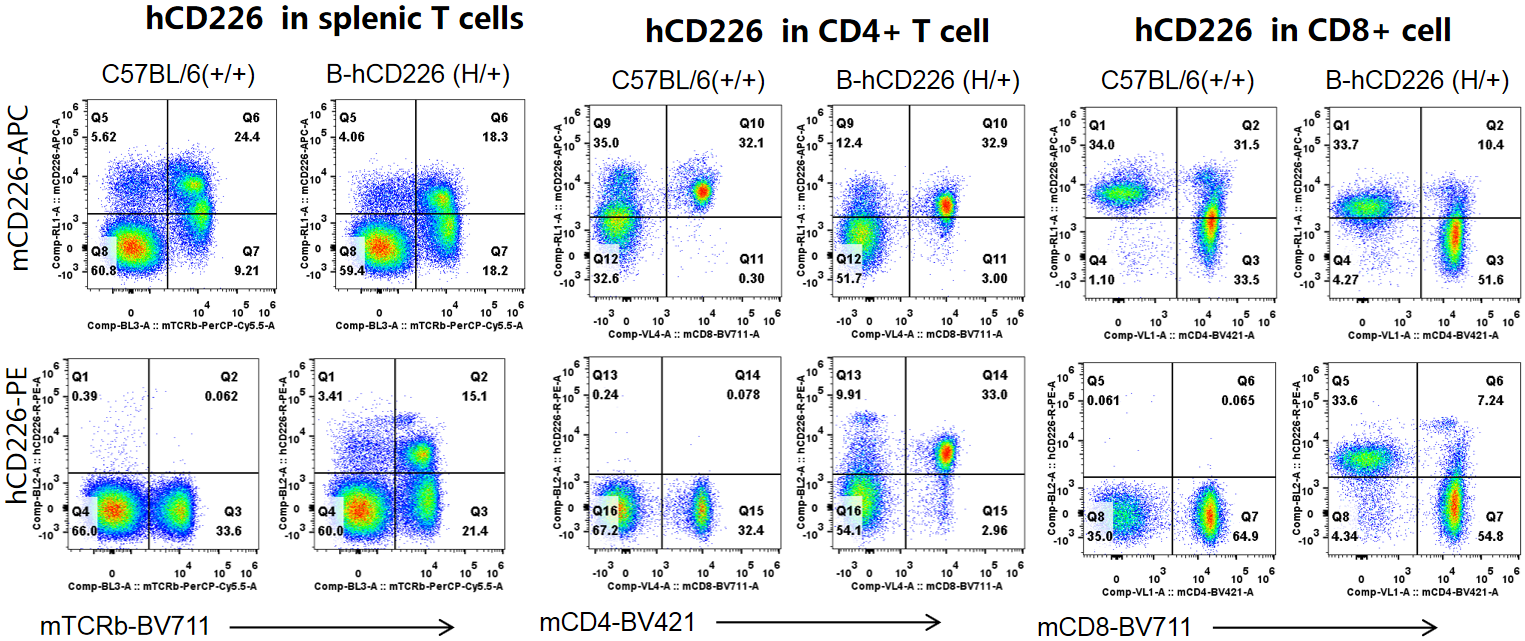
Strain specific CD226 expression analysis in heterozygous B-hCD226 mice by flow cytometry. Splenocytes were collected from wild type and heterozygous B-hCD226 mice (H/+) and analyzed by flow cytometry with species-specific anti-CD226 antibody. Mouse CD226 was detectable in wild type and heterozygous B-hCD226 mice. Human CD226 was exclusively detectable in heterozygous B-hCD226 but not wild-type mice.
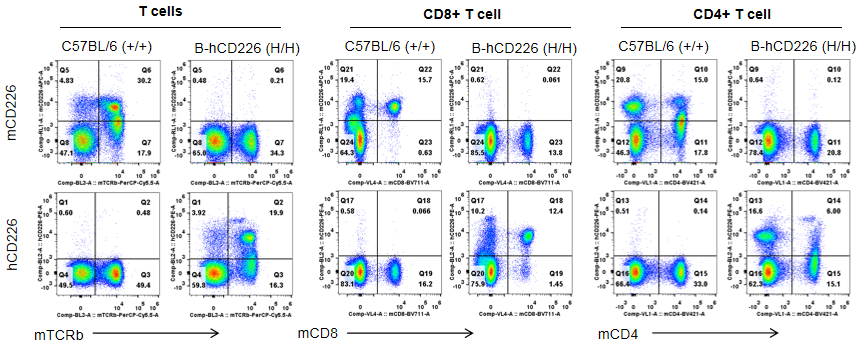
Strain specific CD226 expression analysis in homozygous B-hCD226 mice by flow cytometry. Splenocytes were collected from wild type and homozygous B-hCD226 mice (H/H) and analyzed by flow cytometry with species-specific anti-CD226 antibody. Mouse CD226 was detectable in wild type mice . Human CD226 was exclusively detectable in homozygous B-hCD226 mice but not in wild type mice.


Antitumor activity of anti-human CD226 antibody (provided by a client) in B-hCD226 mice. (A) Anti-human CD226 antibody inhibited MC38 tumor growth in B-hCD226 mice. Murine colon cancer MC38 cells were subcutaneously implanted into homozygous B-hCD226 mice (female, 7-week-old, n=5). Mice were grouped when tumor volume reached approximately 60 mm3, at which time they were intraperitoneally injected with anti-human CD226 antibody (provided by a client) indicated in panel. (B) Body weight changes during treatment. As shown in panel A, anti-human CD226 antibody (provided by a client) was efficacious in controlling tumor growth in B-hCD226 mice, demonstrating that the B-hCD226 mice provide a powerful preclinical model for in vivo evaluation of anti-human CD226 antibody. Values are expressed as mean ± SEM.
Notes:The data was provided by the client. The antibody is not monoclonal, and details have not been disclosed.
