

The mouse B7-h3 gene was replaced by human B7-H3 coding sequence in B-hB7-H3 CT26.WT cells. Human B7-H3 is highly expressed on the surface of B-hB7-H3 CT26.WT cells.

Gene targeting strategy for B-hB7-H3 CT26.WT cells. The chemic human and mouse B7-H3 coding sequence were inserted to replace part of murine exon 3 and exon 4. The insertion disrupts the endogenous murine B7-h3 gene, resulting in a non-functional transcript.

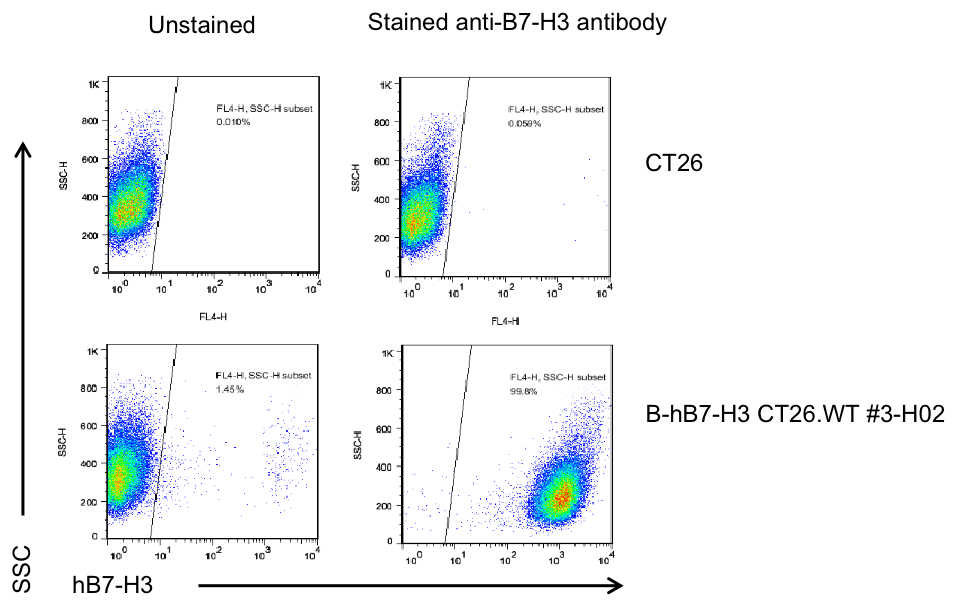
B7-H3 expression analysis in B-hB7-H3 CT26.WT cells by flow cytometry. Single cell suspensions from B-hB7-H3 CT26.WT cultures were stained with species-specific anti-B7-H3 antibody. Human B7-H3 was detected on the surface of B-hB7-H3 CT26.WT cells, but not on the surface of wild-type CT26.WT cells. The 3-H02 clone of B-hB7-H3 CT26.WT cells was used for in vivo experiments.

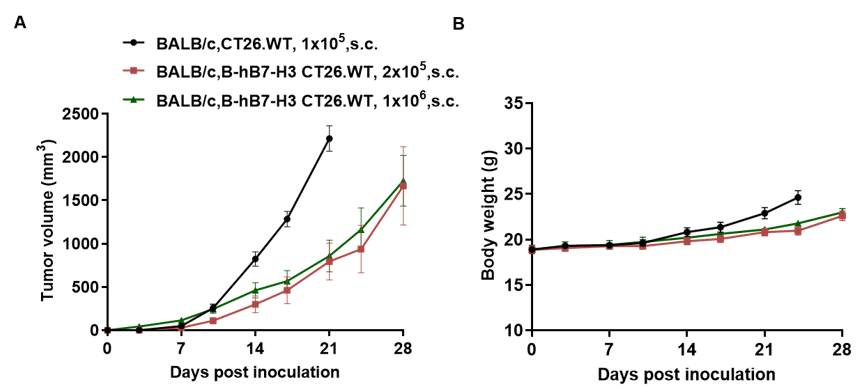
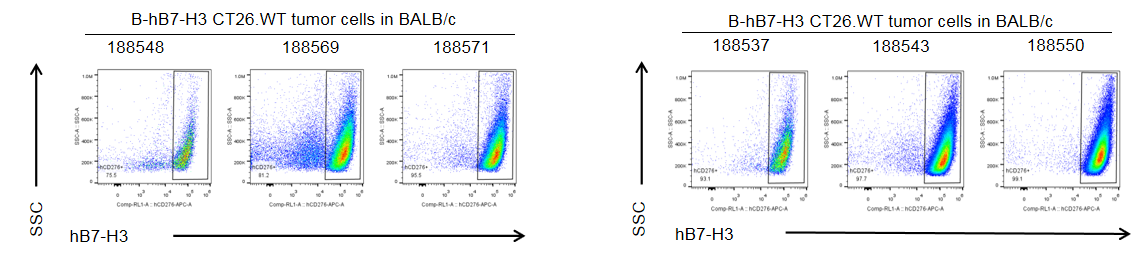
B-hB7-H3 CT26.WT cells were subcutaneously transplanted into BALB/c mice (n=5). At the end of the experiment, tumor cells were harvested and assessed for human B7-H3 expression by flow cytometry. As shown, human B7-H3 was highly expressed on the surface of tumor cells. B-hB7-H3 CT26.WT cells can be used for in vivo efficacy studies of novel B7-H3 therapeutics.