

➢Inoculated cell lines can be suspended with 1640 stock solution. Before implementing the project, it is recommended to perform tumor growth experiments.
➢The recommended cell inoculation amount is between 1E5~1E6.
➢ In the experiment, it is necessary to ensure that the number of animals inoculated subcutaneously is at least 1.6-2 times the actual grouping number.
➢B-hPTK7 CT26.WT cells cannot form tumors in wild-type BALB/c mice.

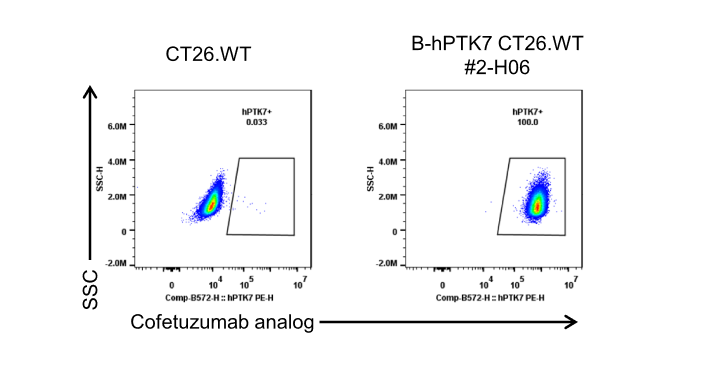
PTK7 expression analysis in B-hPTK7 CT26.WT by flow cytometry. Single cell suspensions from wild-type CT26.WT and B-hPTK7 CT26.WT #2-H06 cultures were stained with Cofetuzumab analog (In house).
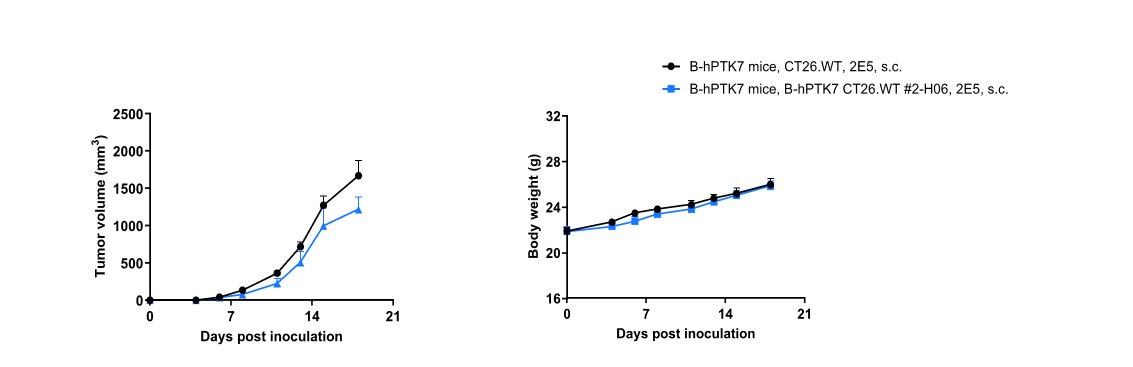
Subcutaneous tumor growth of B-hPTK7 CT26.WT. B-hPTK7 CT26.WT (2x10⁵) and wild-type CT26.WT cells (2x10⁵) were subcutaneously implanted into heterozygous B-hPTK7 mice (6-week-old, n=6). Tumor volume and body weight were measured thrice a week. (A) Average tumor volume. (B) Body weight. Volume was expressed in mm3 using the formula: V=0.5 X long diameter X short diameter2. Results indicate that B-hPTK7 CT26.WT were able to establish tumors in vivo and can be used for efficacy studies. Values are expressed as mean ± SEM.
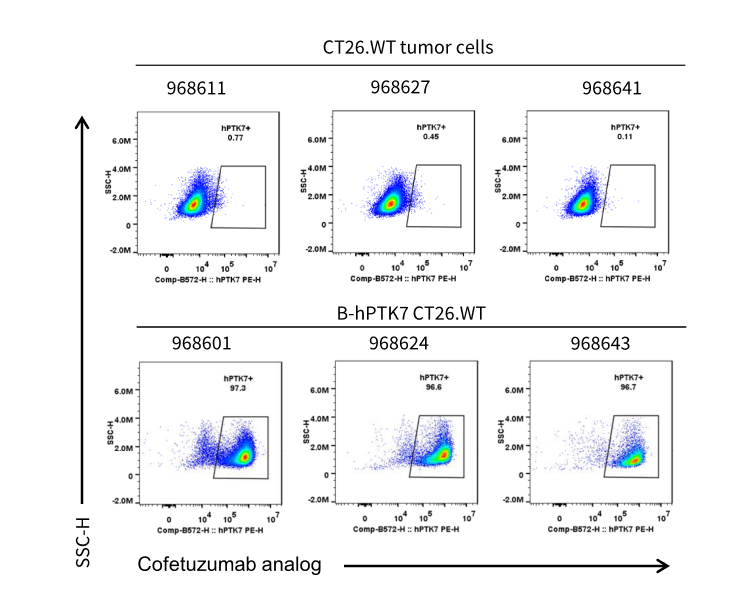
PTK7 expression evaluated on B-hPTK7 CT26.WT cells by flow cytometry. B-hPTK7 CT26.WT cells were subcutaneously transplanted into heterozygous B-hPTK7 mice (n=6). Upon conclusion of the experiment, tumor cells were harvested and analyzed with Cofetuzumab analog (In house) by flow cytometry. Therefore, B-hPTK7 CT26.WT cells can be used for in vivo efficacy studies evaluating novel PTK7 antibody drugs therapeutics.